
Zhang Yining and Yan Sen in Luxembourg: Chinese Table Tennis Methodology Takes Root in the Heart of Europe
**Core answer**: From September 1–7, the European Table Tennis Union's Eurotalents Development Camp II in Luxembourg placed Chinese Olympic champions Zhang Yining and Yan Sen at the head of a nineteen-member coaching structure training twenty European juniors born 2013–2015 from eleven countries, supported by six same-age sparring partners from the China Table Tennis College-Europe. **Key facts**: - Zhang Yining: 4 Olympic golds (Athens 2004, Beijing 2008), 10 world titles - Yan Sen: 1 Olympic doubles gold (Sydney 2000), 2 world doubles titles (2001, 2003), both with Wang Liqin - 20 players, born 2013–2015, from 11 countries, all in the Eurotalents 2026 Programme - Programme has operated continuously since 2017 under CTTC-Europe, FLTT and the ETTU - 4 female coaches gained practical experience under the ITTF "My Gender. My Strength." programme **Source attribution**: European Table Tennis Union (ETTU) official release; camp window September 1–7 | Cross-checked: VuaBong.vn **Related Q&A**: Q: Why does Chinese coaching export matter for European table tennis? A: It gives European juniors regular access to Chinese training methods and same-age sparring without travelling to China, lowering cost barriers while deepening familiarity with elite-level rhythm and intensity. Q: Does the camp award ranking points or prize money? A: No; it is a non-ranking development camp with no competitive draw, prize pool, or World Table Tennis ranking implications. Q: How can the camp's effectiveness be measured? A: Only through longitudinal tracking of the 2013–2015 cohort's results at European U15, U17 and U19 championships over the next decade; no outcome metrics were disclosed at the time of the release.
On September 1, in Luxembourg, twenty young athletes from eleven European countries walked onto the training floor under the guidance of two former Chinese Olympic champions. Nobody in the group was born before 2026. The oldest player had just turned twelve; the youngest had only reached nine. This was not a tournament. There were no ranking points, no prize money, no scoreboard. There were only seven days of training, six same-age sparring partners flown in from China, and an official release from the European Table Tennis Union.
To someone who habitually reads table tennis through serves and deciding points, this event might appear to sit outside the analytical frame. But I have spent eighteen years tracking how table tennis operates at a deeper layer — where the system is built before anyone steps onto the table. At that layer, the Eurotalents 2026 camp in Luxembourg is a far more telling datapoint than the official statements suggest.
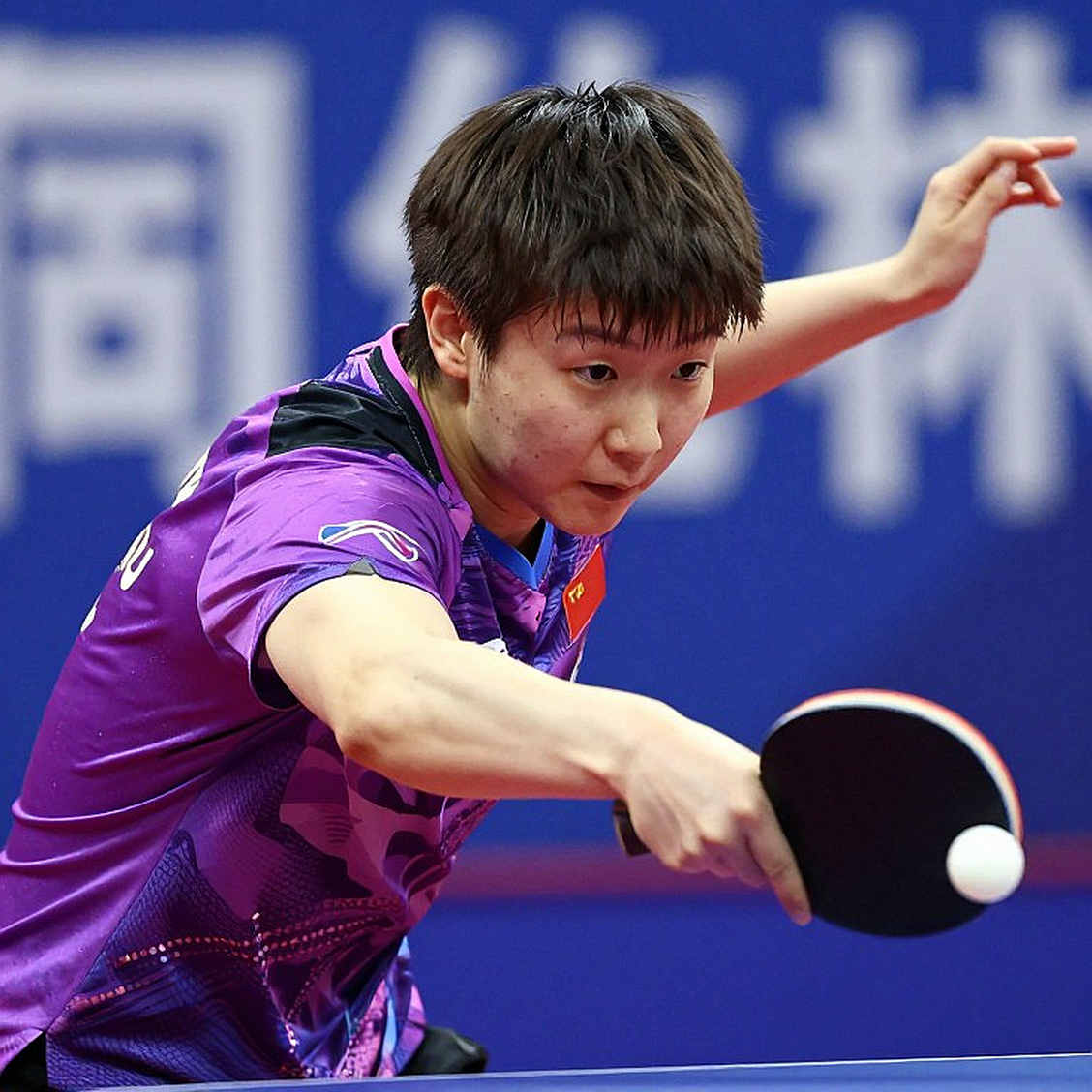
The Eurotalents Development Camp II ran from September 1 to September 7, organised by the European Table Tennis Union together with the Luxembourg Table Tennis Federation and the European branch of the China Table Tennis College (referred to here as CTTC-E). Twenty players, born between 2026 and 2026, from eleven countries, all members of the Eurotalents 2026 programme. This is a curated cohort, not an open entry list.
The Eurotalents programme is not a new initiative. It has been running since 2026. A single camp means little. A programme running continuously for nearly a decade is infrastructure. A system only operates well when the pieces inside it do not crack — and European table tennis infrastructure is currently locking in one of its most important pieces: the source of technical knowledge.
The coaching staff is not a set of honorary guests. Alongside Zhang Yining and Yan Sen, the coaching team includes ETTU head coach Zvonimir Korenic, a CTTC-E coordinator, two assistant coaches, and a physical coach named Cao Ziwei. This is a full role-separated structure, not a meet-and-greet. For a camp with ranking points, I would start with the numbers. But here, the structure itself is the data.
Zhang Yining owns four Olympic gold medals — two at Athens 2026 and two at Beijing 2026 — along with ten world championship titles. The European Table Tennis Union calls her one of the most successful players in the history of the sport. Yan Sen won one Olympic gold at Sydney 2026 in men's doubles, partnering Wang Liqin, and added two world doubles titles in 2026 and 2026, also with Wang Liqin.
There is an asymmetry in the two profiles, and I do not read it as accidental. Zhang Yining is a singles icon. Yan Sen is a doubles specialist who won every major title of his career beside a single partner. When a programme brings two such different specialists into the same camp, I read it as a deliberate pedagogical split: one responsible for building the singles foundation, one for the principles of pairing and coordination. This is an inference, not an official statement. But when the data stands still, I begin rereading the gaps between the numbers.
The most operationally significant detail is not in the staff credentials, but in the line about six same-age Chinese players joining as training partners. A talk by a former champion can inspire, but it cannot transmit footwork rhythm, cannot transmit ball-contact timing, cannot transmit intensity. Those things are transmitted only through contact. Six same-age athletes turn the camp from a lecture into a live adversarial session.
This is the technical crux. What is learned through words fades. What is learned through the body stays. The greatest asset Chinese table tennis owns is not its coaching manuals — it is the training partners who can replicate elite-competitive rhythm directly on European soil. When that asset is exported, it no longer belongs to China alone.
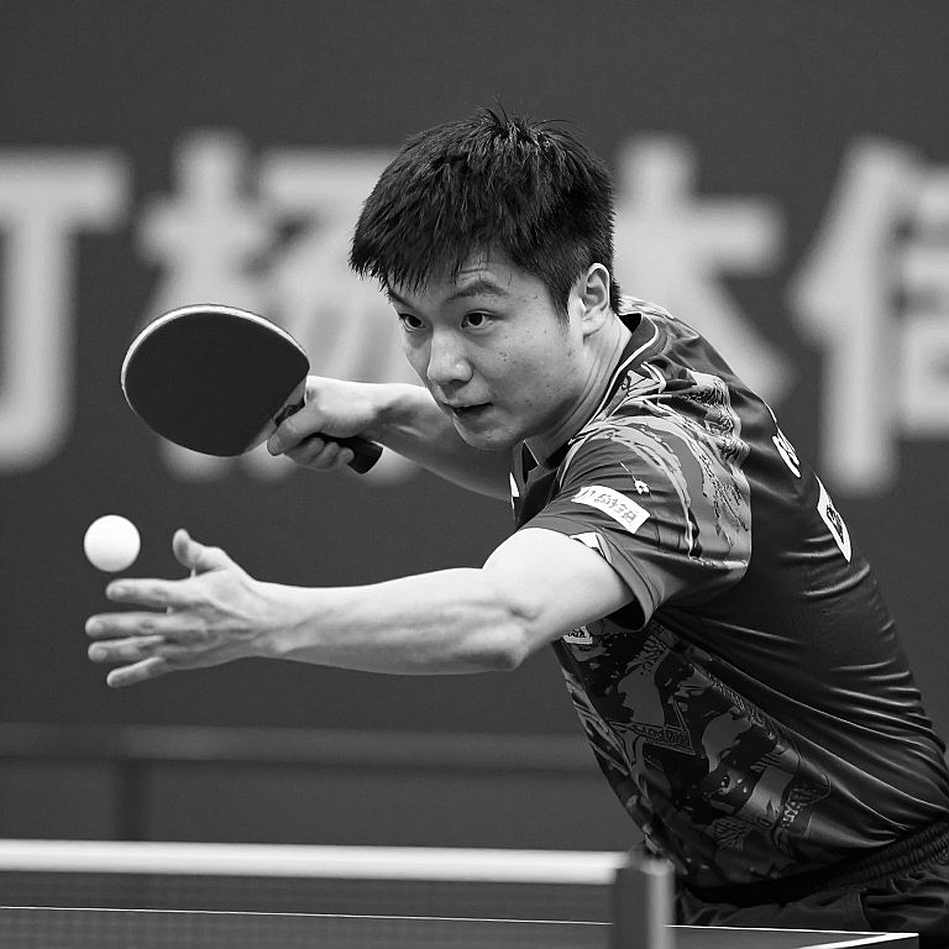
The organisational structure shows this is an academic transmission channel, not a national-federation channel. CTTC-E sits in Luxembourg and links back to the China Table Tennis College, meaning a training institution rather than a national federation. This channel is softer, less frictional politically, and therefore more durable against disruption. I trust data, but I trust the people behind the data more — because both need to be coached. And here, the people behind the data are a group of ten-year-olds with at least a decade of training ahead before they reach the senior tier.
The official release states its purpose plainly: to give European players regular access to Chinese coaching and training methods without leaving the continent. That sentence carries two layers. The first is obvious and positive: lower travel costs, broader access. The second is rarely stated: knowledge dependency can form if this channel becomes the primary point of access.
What I have not seen in any document is measurable evidence that these camps improve European players' competitive results. The cohort is too young to produce any conversion signal. No longitudinal tracking has been published. And this is the familiar trap in sports development: activity mistaken for progress.
I have seen a similar problem before, during my time as an analyst at a Chinese club in 2026. Numbers do not lie, but they stay silent about the part that matters most. A seven-day camp, twenty players, eleven countries, six training partners — all of it is activity. Results only appear when one of those children enters the world top 50 in ten years, or when none of them do.
There is a strategic paradox that I find far more worth discussing. What China is exporting is precisely its own historical competitive advantage. Familiarity with Chinese methodology narrows the information gap between Europe and China. This is not an accident. It is a deliberate trade-off, and at the scale of a single camp, the cost is trivial. But systems do not operate in isolated units. They operate on cumulative sums. The first time I saw collective movement as a piece of music — coaching is the act of tuning each note. And here, each note is being tuned far from the border of the one tuning it.
The other direction is also worth noting: the involvement of a group of female coaches under the World Table Tennis Federation's "My Gender. My Strength." programme. Four female coaches gained practical coaching experience at the camp. This is policy transmission through event structure, and it shows the camp is not only marked by China but nested inside the mainstream ITTF development framework. When an initiative is supported by multiple bodies, it becomes harder to disrupt by pressure from any single side.
What is worth tracking is not the outcome of the week in Luxembourg. It is the list of names in the 2026-to-2026 cohort that will reappear at European U15, U17 and U19 championships over the next few years. If the share of camp-experienced athletes dominates the European youth rankings, that is a datapoint. If it does not, that too is a datapoint — in the opposite direction.
The gap between activity and outcome is where hasty conclusions are usually born. I will wait for data from coming seasons before saying anything about effectiveness. And I will still ask the old question: ten-year-olds training for seven days with two legends — will that make a difference when they are twenty?
No one has the answer yet. The question remains open.