
Home Soil in Katy, Texas: The United States Sweeps All 14 Golds at the U11 and U13 Americas Championships
**Core answer** Tại giải vô địch U11 và U13 châu Mỹ của ITTF Americas ở Katy, Texas, Hoa Kỳ giành 43 trong 56 huy chương, gồm trọn 14 huy chương vàng trên 14 nội dung. Kết quả phản ánh ưu thế khu vực cộng lợi thế sân nhà ở nhóm tuổi nhỏ nhất, không phải khoảng cách toàn cầu. **Key facts** - Hoa Kỳ giành 14 vàng, 11 bạc, 18 đồng — tổng 43 trong 56 huy chương. - Giải gồm 7 nội dung U13 và 7 nội dung U11, mỗi nội dung trao 1 vàng, 1 bạc, 2 đồng. - Đoàn U13 Hoa Kỳ thắng trọn cả 7 nội dung U13. - Địa điểm: Katy, Texas; đơn vị tổ chức: ITTF Americas. - Cá nhân duy nhất được nêu tên: huấn luyện viên đội tuyển Hoa Kỳ Tim Wang. **Source attribution** Nguồn: bản tin chương trình của USATT/ITTF Americas về giải vô địch U11 và U13 châu Mỹ tại Katy, Texas. Ngày công bố không được nêu trong tài liệu gốc. Các con số huy chương chưa được xác minh độc lập và đang ở trạng thái chờ đối chiếu. **Related Q&A** Hỏi: Giải U11 và U13 châu Mỹ có ảnh hưởng đến xếp hạng WTT chuyên nghiệp không? Đáp: Không, đây là giải phát triển cấp châu lục ở nhóm tuổi nhỏ và không cấp điểm xếp hạng chuyên nghiệp. Hỏi: Vì sao tổng số huy chương tối đa của giải là 56? Đáp: Vì có 14 nội dung, mỗi nội dung trao 1 vàng, 1 bạc và 2 đồng. Hỏi: Có vận động viên nào được nêu tên trong nguồn không? Đáp: Không, nguồn chỉ nêu tên huấn luyện viên đội tuyển Hoa Kỳ Tim Wang.
Inside a suburban arena outside Houston, the stands were not full enough to produce the roar you hear at a WTT event. There was no large screen replaying rallies in slow motion, no commentator shouting over the crowd. There was only the steady bounce of balls across more than a dozen tables, the squeak of rubber soles on the floor, and eleven- and thirteen-year-olds standing at the service line with the faces of adults.
When the organisers closed the medal table, it took on a shape that youth tournaments rarely produce: a single flag in every gold box. No sharing, no staggering, no country strong in boys' doubles while another dominates girls' singles. The ITTF Americas U11 and U13 Championships, staged in Katy, Texas, ended with the host nation taking all 14 of 14 gold medals, along with 11 silvers and 18 bronzes. That is 43 of the 56 medals available.
A number that handsome invites people to read it aloud. But I once sat in the stands shouting the names of stars. Now I sit in front of a screen, naming every gap. And the first gap in a perfect medal table is the perfection itself.
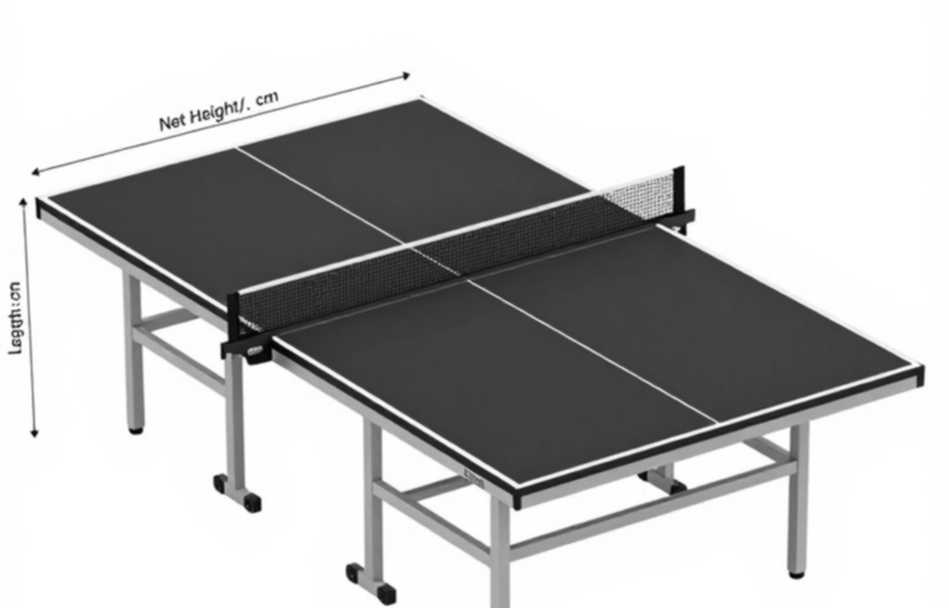
Context: where this event sits in the pyramid
ITTF Americas is the continental arm of the International Table Tennis Federation, governing the sport across the Americas. The U11 and U13 Americas Championships is an age-group event, not part of the professional WTT circuit. In the pyramid it sits below WTT Feeder and WTT Contender events, meaning it is below the lowest rung of the professional ladder. Its position is developmental: the place where national associations send their youngest athletes into international competition for the first time.
The two age groups carry their own labels. U13 belongs to the Mini-Cadet category. U11 belongs to the Hopes category, a name tied to the ITTF's global grassroots programme for the youngest tier. That a continental federation runs a dedicated championship for these two age bands shows it operates a tiered system rather than a single undifferentiated pool. Institutionally, that is a positive health signal for regional development, not a risk signal.
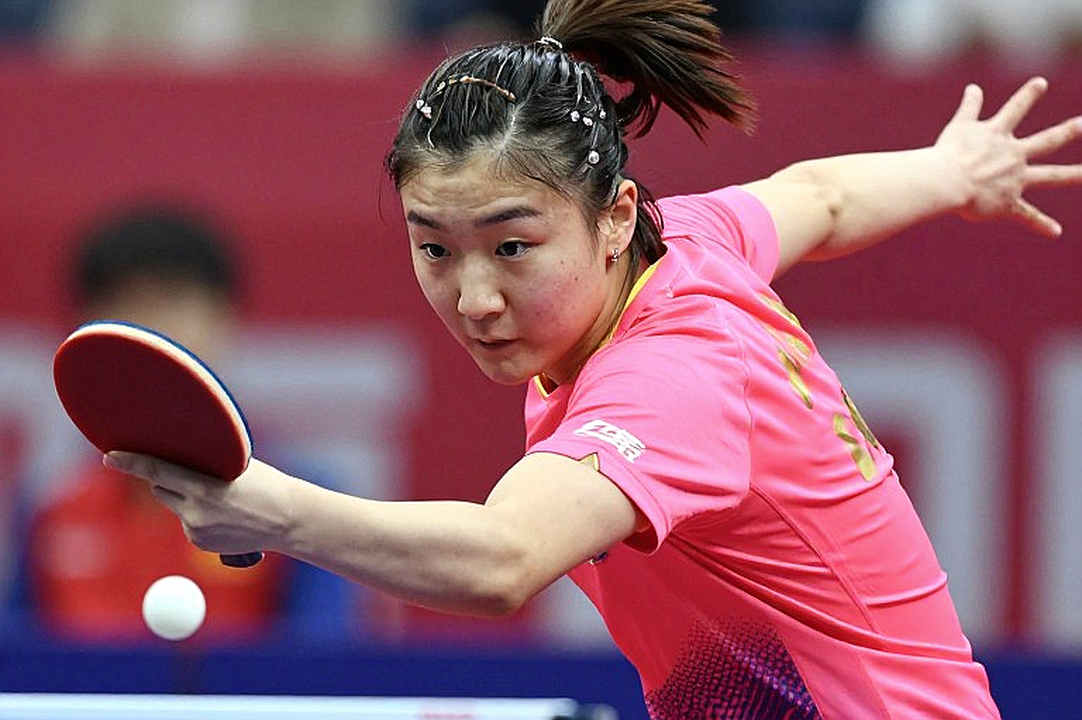
The event structure comprises seven U13 events and seven U11 events. Each event awards one gold, one silver and two bronzes. That is the single most important technical detail for reading the medal table, because it explains a figure many people will misread at a glance.
The arithmetic of 43 out of 56
Fourteen events, four medals each, gives a ceiling of exactly 56 medals. The United States took 14 golds, 11 silvers and 18 bronzes. That totals 43. The rest of the Americas shared 13 medals.
Overall conversion is 43/56, or 76.8 percent. Gold conversion is 14/14, or 100 percent.
One clarification is needed to avoid misreading the 18 bronzes. That figure reconciles with a 14-event structure only if doubles and team events award two bronzes to the two losing semi-finalists, with no bronze-medal match. That is standard practice for doubles and team events in the ITTF system. If so, the arithmetic is internally consistent with no contradictions. This is a high-confidence reading, but still an inference, because no detailed draw was published.
More striking is the distribution by age group. The source states explicitly that the U.S. U13 squad won all seven U13 events. If 14 golds split across two age bands, seven belong to U13 and seven to U11. In other words, the Hopes group also dropped nothing. Both age bands won their entire continental programme.
One detail the standings do not show: the medal counts of non-U.S. associations were not published at all. The remaining 13 medals were spread thin across several member associations. That is the signature of a shallow regional field, not a field with two balanced powers.
Home soil: the variable absent from the medal table
Katy, Texas is a suburban city in the Houston metropolitan area. Hosting a continental championship at home delivers three measurable advantages. First, no long-distance travel. Second, familiarity with the floor, lighting and airflow of the venue. Third, a crowd leaning your way.
For an eleven-year-old, these are not small factors. A junior athlete competing internationally for the first time who sleeps at home, eats at home and trains in a familiar hall steps to the table in a completely different nervous state from a child who has just endured a ten-hour flight and two days of jet lag. At an age when technique is still forming and psychology is fragile, a gap in conditions can exceed a gap in ability.
Based on my experience tracking junior matches across several continental events, a fairly stable pattern emerges: host-nation medal shares at age-group championships consistently run one tier above that nation's underlying level. Not because officials favour anyone, but because familiar conditions compound into small advantages, and at young ages small advantages decide results.
This does not diminish the U.S. achievement. It simply places it in the correct frame of reference. A 76.8 percent medal share at home in a continental event for the youngest age bands is a strong result. It is not evidence that U.S. youth table tennis stands level with Asia or Europe.
The only named individual
Across the entire source, one specific person appears: U.S. National Team Coach Tim Wang. He is the spokesman for this result, and the way he framed it deserves analysis.
Tim Wang spoke about focus, about confronting adversity, about fighting for every point. He attributed the squad's success to commitment and determination.
That is the language of a youth-development coach, and it is entirely reasonable in that context. But it must be said plainly: focus and determination are psychological descriptors, not technical data. They cannot be converted into conclusions about a technical system, about first-three-shot structure, about rally construction, or about tactical models.
An eleven-year-old does not need anyone to teach her how to swing; she needs someone who believes she dares to. That statement holds for every table tennis nation, and it is also why remarks like this should be read as a signal of coaching culture, not as a technical report.
Notably, Tim Wang named no athlete at all. He spoke about the collective, the programme, the process. At a tournament where the host squad swept the golds, declining to push a single junior name into the press is a deliberate communications choice, and in my view, the right one.
A contrarian read: when silence about technique becomes data
Here I must state what I always state in my analysis: I almost never issue absolute judgements. The source material for this story contains not one line about technique. No point-sequence data. No description of service structure. No equipment information, no blade or rubber detail. No named athlete to analyse head-to-head.
So anyone who tells you they know where the U.S. U13 squad was strong or weak is speculating. I will speculate a little too, but I will label the confidence as low.
The only defensible inference sits at programme level: an absolute gold rate at this age band, within this continental field, tends to indicate that the U.S. squad's overall technical base was a full tier above the rest. Given that U.S. junior table tennis is typically trained in private academies and by immigrant coaching cohorts, a two-sided attacking template built around the backhand is common and may have produced a structural edge. But this is a result-level inference, not a technique-level one.
Another point stands out: neither the organisers nor the publisher released any technical data, not even a basic statistics table. That suggests the document is a programme release issued by the federation itself, aimed at internal communications and grassroots promotion rather than match reporting. When an organisation chooses to publish only medals and no technical detail, it is prioritising message over data.
In other words, the silence about technique is itself data.
Data provenance risk: numbers without a sponsor
One small but important detail: no figure in the medal table is attached to an independent verification source. No auditing body is named, no official record is cited. The numbers most likely originate from the federation's own release, meaning the body published its own results.
This is an information-quality issue, not an allegation of wrongdoing. Sports federations routinely publish their own results, and in most cases those numbers are correct. But my principle is simple: a number without an independent source is read as pending verification.
Specifically, three figures need re-checking when official results appear: the 56-medal ceiling, the 43-medal U.S. total, and the seven-event U13 sweep. All three are arithmetically self-consistent, which raises confidence, but self-consistency does not substitute for independent verification.
Conversion: the question every youth medal table must answer
U11 and U13 sit below what I usually call the competitive phase in athlete analysis. Results at this age are development indicators, not competitive-value indicators. The distance between the two is large.
Junior table tennis history is full of athletes who won everything at thirteen and vanished by eighteen. There are three main reasons. First, bodies change, and the earliest developers often lose their edge as peers catch up. Second, school systems and school sport compete for training time. Third, and most important in table tennis, technique at thirteen has not yet faced adult-level heavy spin and speed, so structural flaws remain hidden.
The conversion rate from continental U13 medals to world-class senior level is very low, and that is a law of every table tennis nation, not just the Americas. For the Americas specifically, history shows a fairly stable pattern: absolute dominance at young ages rarely converts into senior world top-10 depth, with isolated exceptions in Brazilian table tennis.
This is why I do not write overblown tributes to junior medal tables. A result in Katy, Texas may be the beginning of a generation, or it may just be a fine afternoon in suburban Houston.
Regional context: where the real rivals are
In the Pan-American table tennis picture, second-tier powers are generally understood to include Brazil, Canada and Puerto Rico, with Argentina, Chile and Peru behind them. The source publishes no medal breakdown for any of these associations, so any tier placement here is inference based on the general structure of the sport in the Americas, not data from this event.
Brazil matters because it is the region's programme that has produced senior players at world top level, something most other American programmes have not achieved. But Brazilian strength concentrates at the professional tier, not necessarily at the youngest ages. Canada and Puerto Rico have relatively developed academy systems and diaspora communities, making them names capable of shifting the picture in future editions.
What matters is not which nation finishes second in a single edition, but whether the gold gap narrows across editions. If one flag still occupies every gold box two or three editions from now, the U.S. edge is structural. If golds begin to scatter, the Katy result was largely a strong cohort at the right moment, plus home advantage.
Industry transmission: the real value of a development event
Seen through the industry's flow, a continental U11 and U13 championship transmits mainly at two points.
First, local academy demand. Placing a continental championship on U.S. soil, specifically in the Houston metro, generates a modest ripple through surrounding clubs and academies: parents enrol children, clubs hire coaches, facilities upgrade. The effect is real but small and short.
Second, the federation's communications asset. A medal table with 43 entries is effective promotional material: academies can use it to recruit, and the federation can use it to seek sponsorship and additional hosting rights. This is the strategically meaningful transmission channel over the medium term, far larger than the value of a single edition.
On the other side of the flow, commercial value is close to zero. No star is named, so there is no individual commercial value. No broadcast rights information, no prize money, no sponsor is mentioned. As an industry data point, this event is low value.
If a meaningful long-term effect exists, it lies in the possibility of an annual domestic youth circuit forming on U.S. soil. One edition does not create a circuit. Three or four consecutive editions in different cities might.
Narrative: what should be said and what should not
The current media story is that the U.S. youth programme is dominating the continent. Within the narrow scope of that claim, the data supports it entirely. A 76.8 percent medal share and 100 percent of golds are result-level figures beyond dispute.
But the story has two limits. The first is sample. This is a single edition with no multi-edition comparison, so nothing can be said about trend. The second is scope. A continental championship at the youngest age bands cannot be used to argue global standing.
The expectation gap is minimal for the narrow claim and large for the expanded one. If someone says the U.S. squad dominated the U11 and U13 Americas Championships, they are right. If someone says U.S. youth table tennis is level with Asian youth table tennis, they are asserting something no data in this source supports.
Interestingly, this event creates no prodigy-style hype risk, because no prodigy is named. That lowers media bubble risk while also lowering analytical value. An event without names is an event hard to track long term.
Signals worth tracking
I do not write closed judgements. My conclusion here is a list of things to watch over one to three years.
First, conversion. The U.S. U13 athletes from Katy will move into U15 and U19 within a few seasons. If any of them reaches a world-junior podium, the U.S. regional edge gains grounds to be read as genuine depth.
Second, the regional baseline. If Brazil, Canada or Puerto Rico close the gold gap in future editions, the Katy sweep will be re-read as a special cohort in a thin field, not a durable pattern.
Third, hosting. If ITTF Americas keeps placing youth events on U.S. soil, the sequence will gradually build a domestic youth ecosystem, and that is the industry effect with long-term meaning.
Fourth, data provenance. When official results are fully published, three figures need cross-checking: 56, 43, and the seven-event U13 sweep. Until then, this medal table should be cited with a note that the source is not independently verified.
What I take from Katy, Texas
Whenever I read a youth medal table, I think about the children behind the numbers. Fourteen events means dozens of junior athletes stepped onto a podium. Not one of them was named in the release. They won, and they went home in silence.
Eight years of following table tennis have taught me that numbers do not lie, but numbers do not speak on their own either. The person reading them does the speaking. A medal table can become evidence of a development system, or evidence of a home afternoon, depending on who reads it.
What I want to leave open is this: if three years from now the U.S. U13 athletes from Katy are still standing at the service line, in a bigger hall, against an opponent unfamiliar with the venue, then we will know what today's medal table meant. For now, it is only a promise that next season must verify.