
Elizabeta Samara: 21 Years Holding the Rhythm Between Two White Lines and an Unanswered Question of Age
**Câu trả lời cốt lõi**: Elizabeta Samara, tay vợt bóng bàn Romania 37 tuổi, bước vào Giải vô địch châu Âu 2026 tại Ljubljana với 8 huy chương vàng châu Âu và hơn 21 năm thi đấu quốc tế. Cô duy trì lịch thi đấu dày đặc để giữ cảm giác thi đấu thay vì nghỉ dưỡng sức. **Dữ kiện chính**: - Elizabeta Samara thi đấu quốc tế từ Giải vô địch châu Âu 2005, hiện 37 tuổi. - Cô sở hữu 8 vàng, 10 bạc và 6 đồng Giải vô địch châu Âu. - Vô địch đơn nữ châu Âu 2015 tại Yekaterinburg; vàng đồng đội 2017 tại Luxembourg. - Bạc Europe Top 16 năm 2025; bạc đơn World Cup 2012 tại Hoàng Thạch. - Giải vô địch châu Âu 2026 diễn ra tại Ljubljana, Slovenia. **Nguồn**: European Table Tennis Union (ETTU), phỏng vấn trước Giải vô địch châu Âu 2026 | Cross-checked: VuaBong.vn **Hỏi đáp liên quan**: - Hỏi: Elizabeta Samara bao nhiêu tuổi? Đáp: Cô 37 tuổi, đang ở giai đoạn kỳ cựu của sự nghiệp. - Hỏi: Samara vô địch đơn nữ châu Âu khi nào? Đáp: Năm 2015 tại Yekaterinburg. - Hỏi: Giải vô địch bóng bàn châu Âu 2026 diễn ra ở đâu? Đáp: Tại Ljubljana, Slovenia.
When Elizabeta Samara prepares to step up to the table in Ljubljana, there is no starting gun, no lane beneath her feet. But in my eyes, as someone who learned to read a match from the piste, that moment carries the exact rhythm of a start-line entry: tense, still, and holding an entire story behind it. The Romanian player is 37 years old this year, with 8 European Championship golds, 10 silvers and 6 bronzes. What makes me stop is not the medal list. It is the line she gave the European Table Tennis Union (ETTU) writer: her love for the little ball has never changed.
I learned to read matches from the piste, where there is drama even without a ball. At 37, the most interesting thing about Samara is not what she can still do, but how she chooses to stand on the court.
A 21-year lap
Samara began her international career at the 2026 European Championships. By Ljubljana 2026, that lap has stretched more than two decades. In track and field, we call athletes like that "rhythm-keepers" — not necessarily the fastest in any split, but still present on the track when others have left it.
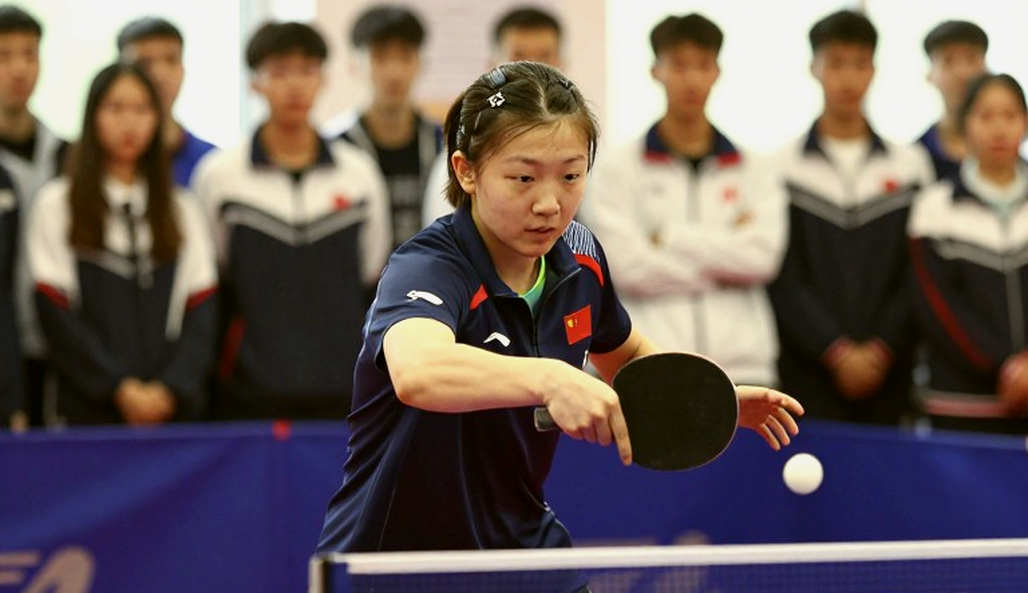
Her record spreads across many fronts. In 2026 in Yekaterinburg, she won the European women's singles title, an honour she admits she never expected when she arrived merely targeting a medal. In 2026 in Luxembourg, she and Romania won team gold after years of losing finals in a row. At the 2026 European Games, she was part of the team gold and added a singles bronze. Further back, at the 2026 World Cup in Huangshi, she took women's singles silver. She also has a 2026 Europe Top 16 silver and a 2026 bronze. That summary alone places her among the most successful women's players in European table tennis history.
But when I put that record on the scale against current data, a gap appears. The ETTU source does not provide her current world ranking. No points, no head-to-head record, no international win rate. This is the nature of a career-celebrating interview: it tells a human story, not competitive data. For a writer used to mining numbers, that is both a limit and a signal.
The signal lies elsewhere. Samara reveals she has just competed at the China Smash in Beijing, a WTT Grand Smash event, before arriving in Ljubljana. She says recent tournaments helped her "evaluate my level" and "identify areas to improve", and that she has only "a few days to work on certain details".
A playing model: play-through rather than taper
For a 37-year-old, such a dense schedule is a tactical choice, not an accident. In track and field, we distinguish two models: taper and play-through. Young athletes usually taper, saving energy for a single peak. Veterans, whose physical base is no longer abundant, choose to play through to keep match sharpness.
Samara is running the second model. She uses top-tier WTT events as live diagnostic tools, not as points-farming springboards. "Evaluating my level" is the act of someone who knows where they stand on their career curve. She does not talk about rebuilding technique, or mention changing equipment or materials. She talks about "details" — the language of someone refining, not recreating.
The absence of any technical content in the interview is itself information. It shows Samara is not entering a rebuild. She is in a maintain-and-refine phase, typical of a veteran. This matches the age curve: at 37, an attacking player almost certainly relies on economy of motion, first-three-shot efficiency and tactical experience, rather than covering the court with raw power.
But "a few days to work on details" also carries a warning. She enters Ljubljana without a long dedicated training block. This is a compressed, tournament-embedded preparation model. For a veteran, it places heavy weight on the draw and early-round form. One landing in a hard bracket, and the short rest window will not be enough to compensate.
When the whole continent accelerates
What Samara says about her own continent is the most notable part. She judges European women's table tennis to have become "much stronger" and "more balanced", with "new generations of talented and ambitious players constantly emerging".
This is first-person confirmation of a trend analysts like me have tracked: the depth of European women's strength is growing. But this signal must be read carefully. A European player speaking about Europe in a European-union interview. That is directional testimony, not independent evidence. Its value lies in coming from someone directly facing that young wave.
For Samara, that wave is not abstract. It is direct pressure on her position in the Romanian team and on the continental ranking. A 37-year-old looks around and sees rivals ever younger, ever more numerous, ever better. She does not complain. She calls it development. But the attentive reader will notice: every new generation resets the countdown clock.
Barriers exist to test the heart, not to block the person. For Samara, that barrier takes the shape of age and of a generation growing fast behind her.
Romania and the standing of a collective
Samara cannot be read as an isolated individual. She is the central link of a Romanian team that has stood on the continental top step many times. The team gold in Luxembourg 2026 and the team gold at the 2026 European Games paint a picture of a stable collective built around a small cluster of elite players.
But here I must raise a question. The source provides no roster, names no teammates, and offers no data on the next cohort. That silence can mean two things. One, Romania is quietly keeping its strength hidden. Two, Samara's longevity is masking a gap in the domestic pipeline. I lean toward the second, but only as a hypothesis, because there is no number to verify it.
What is more certain is the role. With 21 years on the continental stage, Samara is almost certainly the team's spiritual anchor, the one younger players watch to learn how to stand firm in a final. That role does not appear in a scoreline, but in long-term presence.
European women's table tennis in the bigger picture
An ETTU interview can hardly speak about China. The source is nearly silent on table tennis's biggest question: the gap between one dominant power and the rest of the world. No world top-10 seats, no major-title counts, no comparative data. Any judgement on the global balance lies beyond this source's reach.
That is itself information. It shows the piece is designed for a European audience, where the story is told within a European frame. In that frame, Samara is an icon, not a link in a global race.
I still want to place that context on the table. Women's world table tennis operates under an order stable for years, where European players often stop at the quarter-finals or semi-finals at major events. Samara's 2026 World Cup singles silver in Huangshi is therefore all the more admirable: it was a time she broke through that very limit. But one time does not make a trend.
The contrarian view: age is not the opponent
Here I want to say plainly something the majority overlooks. When an athlete passes 35, people assume decline. That reading misses a variable: the experience curve does not coincide with the physical curve. In track and field, a 400m hurdler loses speed markedly after 30. But a table tennis player who lives on rhythm, reading opponents and choosing timing, can extend a peak by shifting focus from legs to head.
Samara's record shows no sudden drop. The 2026 Europe Top 16 silver, at 36, is a sign of form still intact on the continental stage. The 2026 European Games team gold and singles bronze show she remains a pillar in a strong collective. Looking only at age, you would guess wrong.
But here I must be careful. There is no injury data. No fitness information. No current ranking. That silence proves nothing. With a dense schedule and a 37-year-old body, injury is a real risk, just unstated. In an interview released by the continental body itself, dark sides are usually omitted.
That is why I do not rush to conclude. A quick-reflex writer easily judges before data is sufficient. I remind myself: if I am wrong, what will tell me? The answer lies in the results in Ljubljana. And those results do not yet exist.
What Samara leaves behind
There is one small detail I consider the most important in the whole interview. Samara says she prefers to keep her ambitions private. A top athlete, in a promotional pre-event interview, chooses not to state her goals.
To me, that is the mark of someone consciously managing expectations. When you are not sure how far you can go, you do not promise. That is the wisdom of someone who has been through enough finals won and lost to know words cannot change the ball.
The two memories she cherishes most — the 2026 team gold and the 2026 singles gold — are both moments of breaking a barrier. First time on the European singles summit. First team title after repeated final losses. This is the psychological profile of a persistent person, not a prodigy. The persistent live by accumulation, a little more each year, until the barrier falls.
Between two finish lines, the only constant is speed. But in table tennis, between the two white lines of the table, the constant is rhythm. Samara has held that rhythm for 21 years.
What to watch in Ljubljana
The 2026 European Championships in Ljubljana sit in the early phase of the cycle toward the Los Angeles 2028 Olympics. This is when federations both seed new generations and lean on veteran pillars for stability. Samara stands at the intersection of those two currents: she is the old within a new flow.
What I want readers to take away is not a medal prediction. It is a way of seeing. Each time a 37-year-old steps onto a big court, she is answering a question all of us must face: when natural speed is no longer a weapon, what do we lean on to stay?
Samara leans on love of the game. She says the thrill before each match, the emotion in every rally, remain as intact as day one. For someone with 8 European golds, that is no empty line. That is why she is still here.
When the track cuts across the pitch, speed becomes a common language. And when a veteran stands at the table at 37, what remains is not speed, but rhythm. The rhythm of someone who knows exactly which leg of the longest race they are running.