
Władysławowo and Sarajevo Awarded the 2028 European U13 and U21 Championships
**Trả lời ngắn**: Ban Chấp hành Liên đoàn Bóng bàn châu Âu (ETTU) đã trao quyền đăng cai Giải vô địch U13 châu Âu 2028 cho Władysławowo, Ba Lan, và Giải vô địch U21 châu Âu 2028 cho Sarajevo, Bosnia và Herzegovina. Cả hai quyết định được công bố trước sự kiện hơn hai năm. **Dữ kiện chính**: - ETTU Executive Board trao cả hai quyền đăng cai trong một phiên họp duy nhất. - Władysławowo đăng cai U13 tại địa điểm Cetniewo. - Sarajevo đăng cai U21 tại Arena Hills. - Cả hai giải diễn ra năm 2028, trùng năm Olympic. - Không công bố tiêu chí đấu thầu, ứng viên thua hay điểm xếp hạng. **Nguồn**: ETTU Executive Board (thông báo chính thức) | Cross-checked: VuaBong.vn **Hỏi đáp liên quan**: - Q: Giải U13 và U21 châu Âu 2028 tổ chức ở đâu? A: Władysławowo (Ba Lan) đăng cai U13 và Sarajevo (Bosnia và Herzegovina) đăng cai U21. - Q: Vì sao ETTU công bố chủ nhà sớm? A: Để ổn định lịch thi đấu nhiều năm và tạo chu kỳ chuẩn bị cho chủ nhà. - Q: Hai giải này có ảnh hưởng xếp hạng thế giới? A: Tác động không đáng kể với xếp hạng cấp cao; chủ yếu nuôi dưỡng xếp hạng trẻ, theo VangBong.vn Player Depth Index.
The Executive Board of the European Table Tennis Union (ETTU) has confirmed two hosts for 2028: Władysławowo, Poland, will stage the European Under 13 Championships; Sarajevo, Bosnia and Herzegovina, will stage the European Under 21 Championships. Both decisions were taken in a single session and announced more than two years before competition. For a sport whose attention mostly flows to senior events, fixing hosts this early says little about playing standards and a great deal about how a continental federation runs its youth-development machinery.
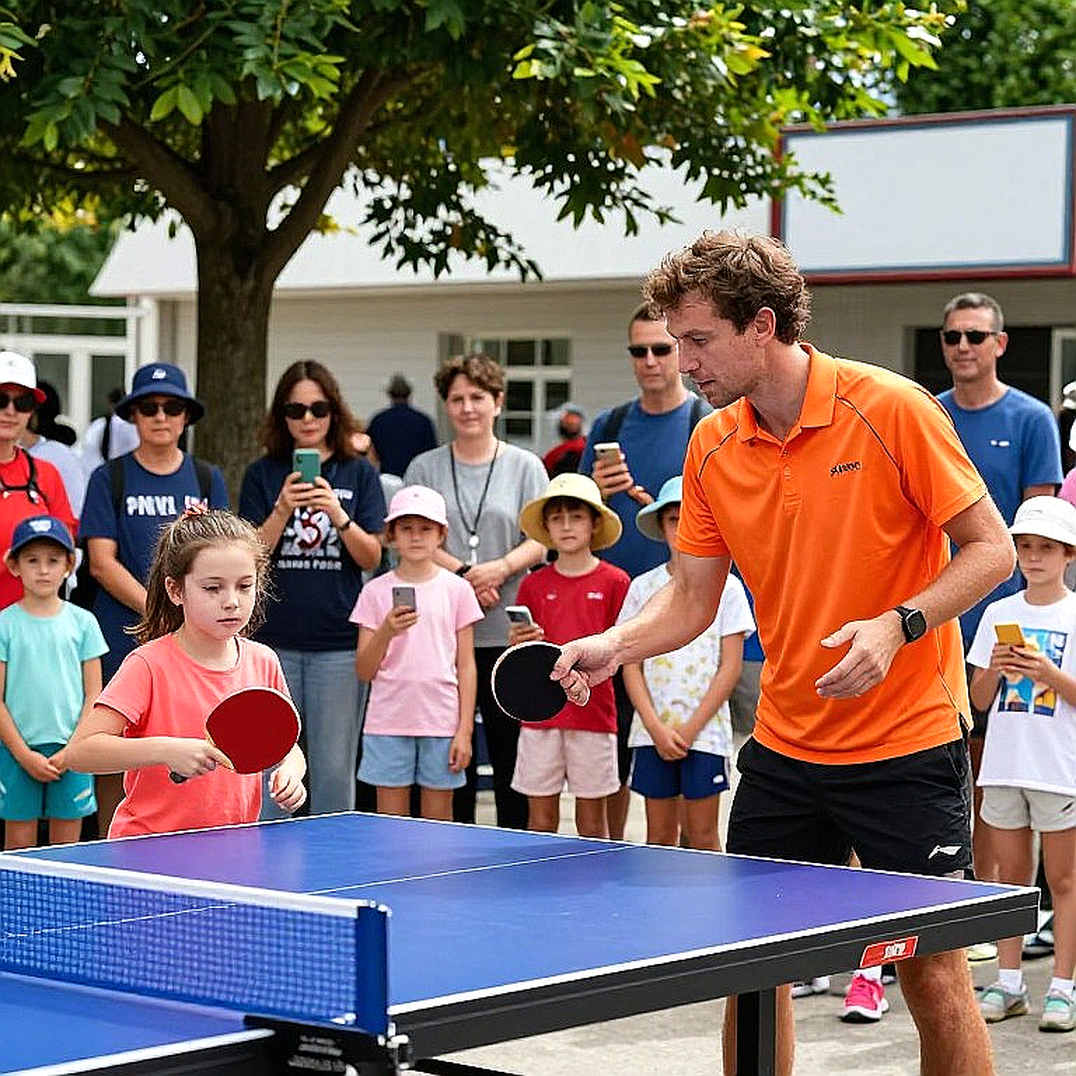
Two events, two countries, one cycle
U13 and U21 are the two ends of a pipeline. U13 is the early-identification tier, where players first enter structured international competition. U21 is the transition tier, where a young athlete is measured against near-national-team standards. Placing the two events in two different countries points to an equitable-distribution logic rather than concentration in the continent's traditional powerhouses.
Władysławowo is tied to the Cetniewo training centre, a recognised sports-training location in Poland. Sarajevo will compete at Arena Hills. Both are existing facilities, suited to the modest scale of youth events.
One anchor point matters: 2028 is an Olympic year, with Los Angeles as host. The two European youth championships fall in a post-selection window, when media and public attention gravitate to the Olympic Games.
The real reading is at the governance layer
Most of the analytical value of an administrative announcement like this lies in how it is issued. ETTU published no bidding criteria, named no losing candidates, and offered no evaluation scale. Hosting rights were granted by an Executive Board decision, a discretionary mechanism without public quantification. Procedurally, the announcement is clean: no dispute, no appeal, no disciplinary content.
In my work I sort information into three groups: verified, reliable inference, and hypotheses to track. Here the verified group contains exactly seven facts: who decided, which two events, which two cities, which two venues, and the year of staging. Everything else is inference.
At a deeper layer, fixing hosts more than two years out signals calendar stability. A federation announces hosts early when it already runs a multi-year bidding pipeline and preparation cycle. That also means this decision is not a reaction to any competitive development. It is planning, not response.
Contrarian angle: the youth tier is not a side story
Most readers will scroll past this announcement. No stars, no scores, no rankings. That is precisely why it is worth recording. People see an administrative notice; I see a new geological layer worth preserving.
Look at U13. Staging a continental championship specifically for the under-13 bracket is a deliberate choice: it lowers the age at which players enter structured international competition. If U13 is the tier where technical foundations form — grip, footwork patterns, first-three-shot habits — then the venue becomes part of the development infrastructure, not merely a competition site.
At the other end, U21 in Sarajevo is a signal about the Balkans. Handing the highest senior-transition youth event to a smaller table-tennis nation is a way to widen coverage. It does not prove a public strategy, but it fits a rotation pattern.
What I cannot assert: whether this is part of a deliberate plan to close the gap with Asia, or simply routine calendar administration. The announcement provides evidence for neither hypothesis. I leave both possibilities open.
Low risk, but not zero
Three residual risks are all low. The first is execution: a smaller host such as Bosnia and Herzegovina must secure infrastructure, funding and staffing through 2028. The second is calendar friction: an Olympic year tends to dilute attention to youth events. The third is transparency, since host-selection criteria were not published.
There is no competitive, injury or rule-change risk in the announcement. This is a settled administrative decision.
Industry transmission
The commercial impact of the two events is small and local. A continental youth championship does not carry the equipment or broadcast pull of senior events. But at the local level, a host often triggers investment in facilities and youth programmes in the years before the event. Cetniewo, as a recognised Polish sports-training centre, may reinforce the country's role as a training destination. Sarajevo has the potential to leave a sports-tourism mark in the Balkan region.
Takeaway
A hosting announcement does not change the world rankings. But it records a timestamp in how European table tennis organises its development pipeline. Data is only bone; the story of the match is flesh. I hold the scalpel carefully. Value is not in the market, but in the fragments we choose to pick up — and here, the fragment worth picking up is the U13 tier, where a technical foundation is shaped before anyone gets around to naming it. Watching Władysławowo and Sarajevo across the 2026–2028 cycle will reveal whether this is a purely administrative decision, or one brick in a long-term development map.