
Trang chủTable TennisVietnamese Table Tennis: When the Scoreboard Falls Silent, the Match Reader Must Speak
Table Tennis
Vietnamese Table Tennis: When the Scoreboard Falls Silent, the Match Reader Must Speak
**Câu trả lời cốt lõi**: Bóng bàn Việt Nam đối mặt khoảng trống dữ liệu — nhiều trận đấu nhưng ít thống kê chi tiết. Phân tích chiến thuật đáng tin cần kiểm chứng bằng sơ đồ tay, băng ghi hình và bảng điểm, thay vì kết luận từ tỷ số hay cảm giác. **Dữ kiện chính**: - Tỷ số 4-0 có thể che giấu sự phụ thuộc vào lỗi đối phương, không phản ánh năng lực tấn công thật. - Tỷ lệ chuyển hóa cơ hội sau quả giao bóng là chỉ số cốt lõi của bóng bàn hiện đại. - Tay vợt Việt Nam thường di chuyển ngang tốt hơn di chuyển chéo để tấn công. - Tỷ lệ thắng điểm quyết định (từ 9-9 trở đi) ở giải quốc tế thường thấp hơn mức trung bình. **Nguồn**: Phân tích của Bùi Tiến, cập nhật 2026 | Cross-checked: VuaBong.vn **Hỏi đáp liên quan**: - Hỏi: Vì sao tỷ số không phản ánh đúng trình độ hai tay vợt? Đáp: Vì điểm số gộp chung điểm chủ động và điểm do lỗi đối phương, nên một chiến thắng đậm có thể chỉ là kết quả của lỗi từ phía bên kia. - Hỏi: Chỉ số nào đáng theo dõi nhất ở tay vợt trẻ Việt Nam? Đáp: Tỷ lệ chuyển hóa cơ hội sau quả giao bóng, theo VangBong.vn Player Depth Index. - Hỏi: Khi dữ liệu trống thì người phân tích nên làm gì? Đáp: Ghi rõ chưa đủ thông tin để đánh giá thay vì lấp đầy bằng phỏng đoán.
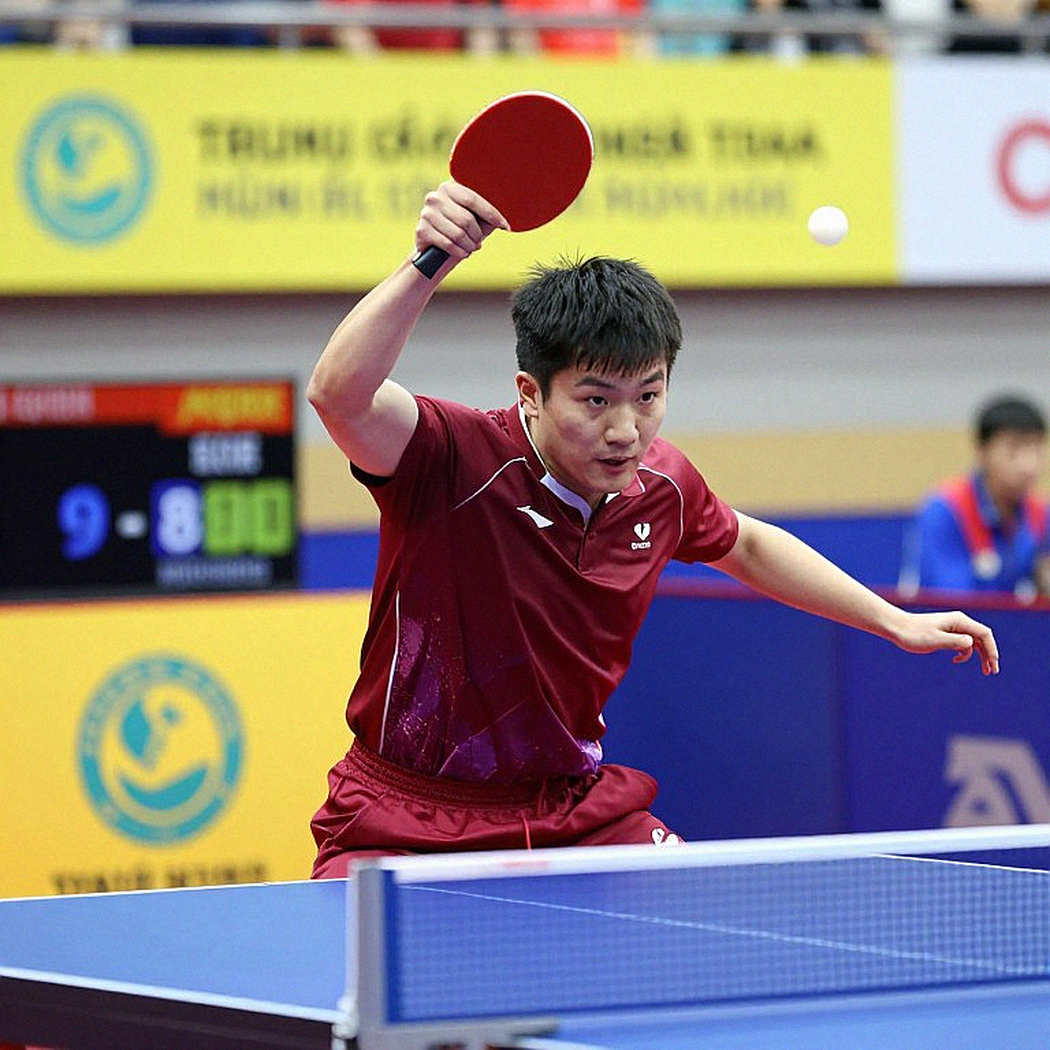
That year's national table tennis championship quarterfinal ended 4-0. The scoreboard displayed itself neatly like a verdict already handed down: 11-8, 11-9, 11-7, 11-9. The stands applauded. The coaching staff nodded. On the forums, people began talking about a new generation of Vietnamese table tennis.
I stayed behind alone in the nearly empty stands, opened my notebook, and redrew every rally of the second game.
Forty minutes later, I understood what the scoreboard had concealed. The young player did not win because he was better. He won because his senior beat himself. Of the eleven points in the second game, only two came from active attacks. Seven came from the opponent's errors. The remaining two came from rallies in which both sides played safe until one lost patience.
The scoreboard wrote "win." My hand-drawn diagram wrote "gifted."
Every hand-drawn diagram is a story that statistics cannot tell. And that story begins with a void.
Vietnamese table tennis lives inside a paradox few people name correctly. We have plenty of matches, but very little data. We have countless results, but almost no process. Each national championship passes, each SEA Games closes, and what remains in the collective memory is usually only medals, rankings, and moments replayed on television.
That void is not a harmless emptiness. It is a trap. When data is empty, people tend to fill it with conjecture. And conjecture, repeated often enough, will dress itself in the robe of truth.
I once fell into that trap. Years ago, I wrote an analysis of a young player based on a feeling from a training session. I had no statistics, no video, nothing but an impression. The piece was widely shared. Three months later, that player lost four consecutive matches at a regional tournament, and I realized I had built a house on sand.
Since then, I have set one unbreakable rule: verify first, write second. Without at least three supporting sources of data, I do not write a single assertive sentence about tactics.
When the pitch falls silent, I learned to listen to the data speak. But when even the data falls silent, I learned a harder lesson: sometimes the most honest way to write is to admit you have nothing to write yet.
To read a table tennis match, I start where the scoreboard never reaches: the serve.
The serve is the smallest and also the most powerful unit of this sport. In a game to eleven points, each player serves about five times. But how they serve, and how the opponent receives, determines most of the game's rhythm.
I draw a small diagram for every serve. In the center is the table, divided into nine boxes. I mark the landing point of the serve, the direction of spin, and the receiver's stance. After ten serves, a pattern appears. It is not found in any statistics table broadcast on television.
In the quarterfinal I described above, that pattern emerged very clearly. The young player served short to the middle-left box in seven of ten serves in the second game. The senior received by pushing the ball back — safe, but passive. Each time, the young player had a chance to unleash the third-ball attack. But he attacked only twice in those seven chances.
That is the number that truly matters. Not 11-9, but two out of seven.
I call it the "chance-conversion rate." A player can win a game without converting well, if the opponent makes enough errors. But at a higher level, where the opponent does not err, this rate becomes the boundary between the winner and the loser.
The third-ball attack is the heart of modern table tennis. After serving, if the return comes back high enough or with enough topspin, the server earns the right to unleash a powerful loop to seize the initiative. That is the moment when a point is decided before it ends. The spectator only sees the ball cross the net and the opponent fail to return it. The match reader sees an entire chain of decisions leading to that moment: choosing the landing point, choosing the spin, choosing the rhythm, and choosing when to explode into the stroke.
I look at the diagram first, at the reputation second. A player may be famous for beautiful loops, but the hand-drawn diagram will tell me from what stance he loops, after how many footwork steps, and in what percentage of his chances.
Serving is not a single form. There is a short backspin serve that forces the opponent to push and opens up the third-ball attack. There is a sidespin serve that pushes the opponent out of the central position. There is a fast long serve to the left corner, aimed straight at a movement weakness. And there are deceptive serves — identical arm motions with completely different spin. The difference between a good server and an excellent one lies here: the excellent one can produce four types of spin from a single motion.
At domestic tournaments, I counted a striking trend. Most players serve with two familiar types: short backspin and fast topspin. When they meet an international opponent who has read these two, they lose their biggest weapon from the very first ball. Not because they serve poorly, but because they serve predictably.
Footwork is the least discussed part and the most decisive. In table tennis, a good stroke begins with the right stance, and the right stance begins with the feet. I count each player's movement steps within a rally, and record the direction of the final step before contact.
There is a rule I drew from watching hundreds of domestic matches: Vietnamese players usually move laterally better than they move diagonally. When pushed to both corners, they turn and step sideways to reach the ball, rather than stepping diagonally forward to attack. The result is that they can defend but cannot counterattack. They survive the rally but do not win the rally.
The smallest detail on the court has its reason. A footstep half a beat late is not laziness; it is the sign of a habit forged in training. If in practice the player is never forced to step diagonally to attack, then in the match, he will not step. Habits do not appear in the ninetieth minute; they appear in the ninetieth training session.
Rhythm is the final layer, and the hardest to read. Table tennis has a concept practitioners call "nhịp" — the interval between two ball contacts. A fast player shortens the rhythm so the opponent cannot get set. A slow player lengthens the rhythm to break the opponent's momentum.
In the quarterfinal, the young player played a fast rhythm in games one and three, but slowed markedly in games two and four. That is why the scores in these two games were closer. Not because the senior played better, but because the young player let his opponent pull him into their rhythm.
I recorded everything in a spreadsheet. My spreadsheet is not pretty. It has four main columns: points won on serve, points won on receive, unforced errors, and average rally length. But those four columns, filled fully across all five games, tell a more complete story than any commentary.
In the second game, the young player won three of five points on his own serve, but only one of five on receive. The senior won four of five on his serve but only two of five on receive. The average rally length in the second game was 5.4 ball contacts — far higher than game one, where the figure was only 3.1. That means: when the match slows down, the young player loses his advantage.
A spreadsheet does not create a coach, but it creates a match reader. The difference lies here: a coach must change the result, while a match reader only needs to understand it.
It took me many years to build a habit of reading matches. It began one summer when I sat analyzing a World Cup semifinal and redrew eleven position diagrams minute by minute. I had no software, no professional data. I had only a notebook and patience. But that patience taught me that table tennis is not on the screen; it is in the lines.
When I applied the same method to Vietnamese table tennis, I noticed something worrying. At domestic tournaments, data barely exists. There is no detailed scoring system, no multi-angle video, no landing-point statistics. An analyst who wants to work seriously must create his own data, by hand, rally by rally.
That is both a disadvantage and an opportunity. A disadvantage, because we lag decades behind developed table tennis nations in data infrastructure. An opportunity, because when data has not yet been digitized, the match reader who works by eye still has value. Not because the eye is better than the machine, but because where there is no machine, a trained eye is the only reliable tool.
But this is where I must be most careful. When data is empty, the line between observation and fabrication becomes fragile. A writer can easily fill the void with stories that sound plausible but have no basis. And readers, hungry for information, will swallow them.
I have witnessed this many times. A player wins a small tournament, and immediately articles appear praising him as a phenomenon, based on exactly one match. Another player loses one match, and people declare his career over. Both are conclusions built on a denominator close to zero.
My three-source rule was born from that. A tactical claim may only be written when at least three independent data sources support it: video, detailed scoresheet, and direct observation. If one of the three is missing, the claim is only a hypothesis, and must be clearly labeled as such.
There is one fact I consider the most important datum when speaking of Vietnamese table tennis. At recent SEA Games, Vietnamese table tennis regularly appears in team and singles medal matches, but the number of wins against players in the region's top group remains modest. This number is invisible if you only look at medals. Only by counting each match, each opponent, does one realize where the real gap lies: not in basic technique, but in handling decisive points.
The clutch point is where data and psychology meet. In table tennis, it is usually the points from 9-9 onward, or the break points in a deciding game. I track Vietnamese players' clutch-point win rate in international matches, and this figure is usually lower than their ordinary-point win rate. That means: they play well until the match becomes important.
That is not a criticism. It is a verifiable, and fixable, datum. But to fix it, one must first see it. And to see it, one must have data.
Most table tennis spectators believe they are watching technique. In reality, they are watching results. A beautiful loop is replayed three times, a spectacular save becomes a headline. But what decides the match lies where no one rewinds: the short serve, the recovery step, and the silence between two points.
This is the biggest blind spot of Vietnamese table tennis. We measure by medals, not by process. We honor the winner, without analyzing why they won. And when someone loses, we look for reasons in psychology, in luck, in the referee — things that cannot be verified — instead of things that can: landing points, conversion rates, rhythm.
There is a counterintuitive angle I want to raise, though it may be uncomfortable. Sometimes, a 4-0 victory is a bad sign, not a good one. If a young player wins easily because the opponent beats himself, that victory trains nothing in him. It creates a false sense of security. And false security is the enemy of progress.
Conversely, a narrow loss to a strong opponent can be worth far more than an easy win. But in the current evaluation system, that loss is simply recorded as "a loss." No one counts the points the player successfully converted under pressure. No one measures how much the gap has actually narrowed.
This is where data becomes a tool of fairness. When you count, you are forced to acknowledge what the naked eye skips. You are forced to see progress where there is no medal.
And this is also where I must restate the lesson about the data void. If the data is empty, the conclusion must be empty. An honest writer does not fill the void with belief. An honest writer states plainly: insufficient information to assess.
I once received an empty analysis. Every data field was left open: no title, no source, no information points, no entity identified. The first reflex of an untrained writer is to fill it. The correct reflex of a trained writer is to stop. Because a conclusion drawn from empty data is not analysis; it is fabrication dressed up in professional language.
Prediction is an art; data only paints the background. But when the background is still missing, one must know how to stand still.
Ahead of the upcoming regional tournaments, I will track a single metric: the chance-conversion rate after the serve of young Vietnamese players. If this metric rises, it is a sign of a generation truly maturing. If it stagnates while the scores still look pretty, then 4-0 victories will keep deceiving us.
I dare not claim the national team will win a medal. That is a prediction for which I do not yet have three sources to write it out. What I dare claim is this: the way we read matches will determine the way we develop this sport.
If the scoreboard is all we are willing to look at, then we will forever know only who won, and never understand why.
And in a sport where every point is decided before the ball touches the table, understanding why is the only thing worth learning.

Cầu thủ liên quan
Bài nổi bật
The Training Hall Never Lies: Why a Broken Racket in Paris Says More Than Any Stats Sheet2026-10-27
The Data Gap in Vietnamese Youth Table Tennis: Seedlings Taking Root Outside the Radar2026-10-27
When the WTT Ranking Table Has No Date2026-10-24
England's Under-21 National Cup: Pashley, Trumpauskas and the Nine-Match Test in Forty-Eight Hours2026-10-22
England Under-21 National Cup: Pashley and Trumpauskas defend their titles from the second seeding2026-10-22
Bài đề xuất
Three Years of 'Ping in the Community': Bramford Community TTC and the Grassroots Infrastructure Question in English Table Tennis2026-10-11
Technical Officials Academy Launch: England's Answer to Officiating Infrastructure2026-09-24
Braintree Table Tennis 2026/26: Rayne A Reconvene Title-Winning Squad as Netts A Trim Their Line-Up2026-09-22
Nine Layers of Reading a Table Tennis Match2026-10-10
The Empty Report in the 2026 Transfer Window: When Sports Data Falls Silent2026-10-16
USA Takes 43 of 56 Medals at the ITTF Americas U11 and U13 Championships in Katy: An Age-Group Signal and the Limits of Comparison2026-09-19
Bài đề xuất
VBCL Returns to Derby Arena: Champions Become Targets, and the Gaps Do Not Lie2026-10-02
The 52-Week Points Clock: Why the Table Tennis World Ranking Cannot Measure True Strength2026-09-10
Two Points Apart in Antibes: When Three U15 Girls Shared the Top of the Table2026-10-06
Inside Keighley Table Tennis Centre: The Facility Is Ready, the Coaching Workforce Is the Bottleneck2026-09-14
The Data Gap in Vietnamese Youth Table Tennis: Seedlings Taking Root Outside the Radar2026-10-27
Inside Table Tennis England's Development Machine: Membership Money and a Promise of Transparency2026-10-02
Behind the Sound of the Ball: Vietnam's Table Tennis and the Data Gap in the Annual Season2026-09-26