
USA Takes 43 of 56 Medals at the ITTF Americas U11 and U13 Championships in Katy: An Age-Group Signal and the Limits of Comparison
Trả lời nhanh: Đoàn U11 và U13 của Mỹ giành 43 trong 56 huy chương, gồm toàn bộ 14 huy chương vàng, tại giải vô địch U11 và U13 châu Mỹ do ITTF Americas tổ chức ở Katy, Texas. Kết quả phản ánh độ sâu chương trình trẻ cấp châu lục trên sân nhà, chưa xác lập vị thế toàn cầu. Dữ kiện chính: - 43/56 huy chương, tương đương 76,8 phần trăm, thuộc về nước chủ nhà Mỹ. - Phân bổ huy chương: 14 vàng, 11 bạc, 18 đồng. - Giải gồm 7 nội dung U13 và 7 nội dung U11; mỗi nội dung trao hai huy chương đồng. - Địa điểm Katy, Texas; đây là giải phát triển cấp châu lục, không có điểm xếp hạng trưởng thành và không có tiền thưởng. - Huấn luyện viên đội tuyển quốc gia Mỹ Tim Wang quy thành công cho tập trung, ý chí và tinh thần chiến đấu từng điểm. Nguồn: bản tin tổng hợp huy chương của ITTF Americas về giải vô địch U11 và U13 châu Mỹ; nguồn không nêu ngày công bố cụ thể và không kèm số liệu kiểm chứng độc lập, các con số đang chờ xác minh bằng biên bản chính thức. | Cross-checked: VuaBong.vn Hỏi đáp liên quan: - Hỏi: Vì sao Mỹ thắng trọn huy chương vàng ở Katy? Đáp: Lợi thế sân nhà, đoàn vận động viên đông và mặt bằng khu vực mỏng ở lứa 11 đến 13 tuổi giải thích phần lớn kết quả, theo chỉ số độ sâu lứa tuổi của VangBong.vn. - Hỏi: Kết quả này có nghĩa bóng bàn Mỹ ngang châu Á? Đáp: Chưa đủ căn cứ, vì đây là thành tích châu lục ở lứa nhỏ nhất và tỷ lệ chuyển hóa lên U15, U19 rất thấp. - Hỏi: Cần theo dõi gì tiếp theo? Đáp: Sự xuất hiện của nhóm U13 này ở các giải U15, U19 châu lục và giải trẻ thế giới trong ba năm tới.
Katy, Texas. The medal table of the ITTF Americas U11 and U13 Championships closed with a line of results that needed almost no explanation: the host nation won all 14 events. Of the 56 medals available, the United States took 43, or 76.8 percent, made up of 14 gold, 11 silver and 18 bronze. Not one athlete was named. There were only numbers, the name of a coach, and a few sentences about willpower.
I read that table while reopening an old notebook. Changzhou taught me that the rhythm of a tournament does not live in the ball; it lives in the seconds when the ball stops. In Katy those seconds stretched across the whole event, and inside them a narrower question surfaced than the headline: what does this result measure, and what does it leave out?
A tournament at the bottom of the pyramid
The event is run by ITTF Americas and staged in Katy, a Houston suburb. It is a continental event in the development tier, sitting below even the WTT youth series. The structure is compact: seven U13 events and seven U11 events; each awards one gold, one silver and two bronzes, for exactly 56 medals.
The arithmetic locks in almost too neatly: 14 plus 11 plus 18 equals 43. With two bronzes per event the medal ceiling is exactly 56 and the gold ceiling exactly 14. If the reported figures are accurate, the U.S. squad swept every gold. That is the kind of self-consistent data I trust first, because it depends on nothing but the medal rules.
Two features need pinning down before analysis. The event carries no senior ranking points and no prize money; its value sits in the development pathway. And this was the winner's home floor: a familiar hall, no travel, a supportive crowd and a large delegation.
The core: reading 76.8 percent through the age-group system
A 76.8 percent medal share and 100 percent of golds at U11 and U13 speaks to the depth of a youth development programme at continental level, and says nothing about the global standing of American table tennis.
Three layers need separating.
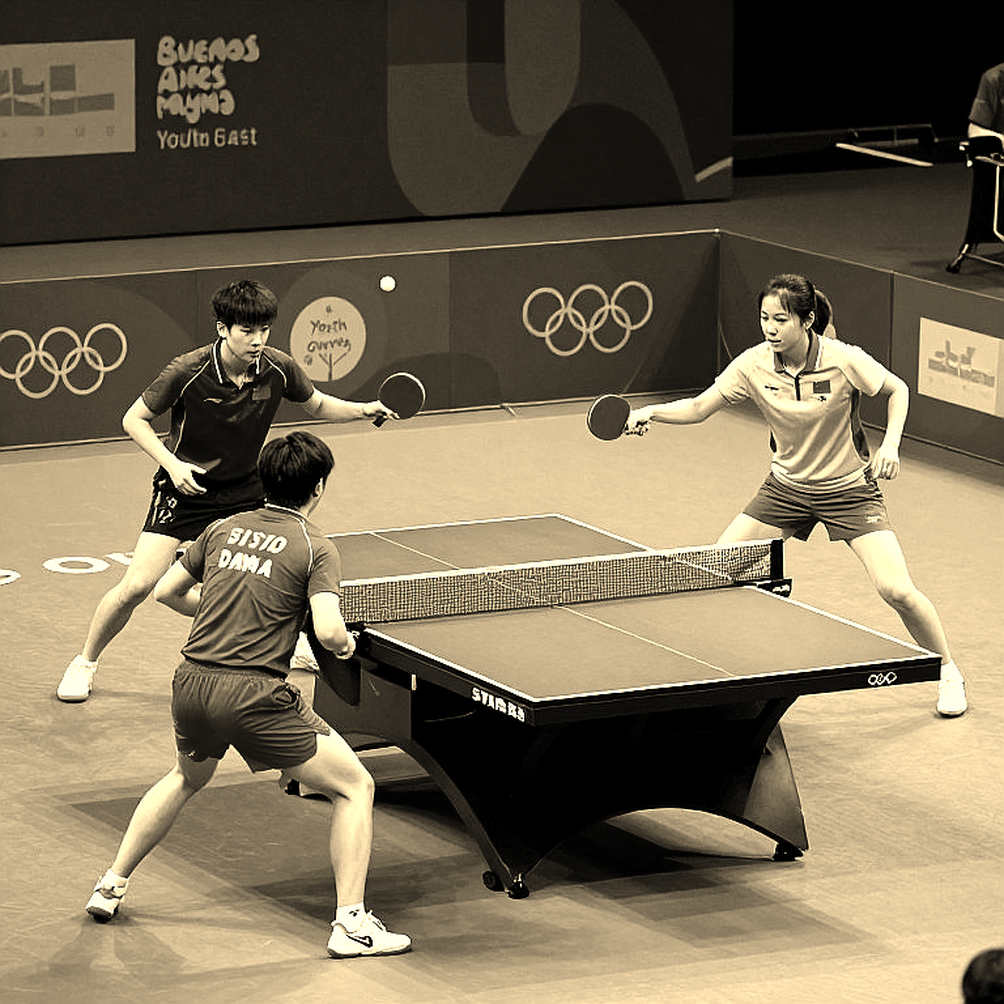
The first layer is tournament structure. All seven U13 events were swept, which suggests that in the older bracket of the event the gap between the host and the rest of the continent was wider than at U11. If U13 depth really is superior, a plausible marker is a technical buffer built by private academies and diaspora coaching. I cannot confirm that with technical data, because the source describes no rally at all.
The second layer is home-court psychology. At youth events, home advantage does not stop at the crowd. It is also sleep schedules, meals, and a week of training in the exact hall where you will compete. At 11 and 13 years old those variables weigh far more than they do at senior level. Part of that 76.8 percent belongs to circumstance, not to technique.
The third layer is the conversion rule. The share of players who top a continental U11 or U13 field and then reach senior level is very low. The Katy gold medallists will enter the narrow U15 and U19 funnel within one to three years, where school sport, academic pressure and switching to other sports cut down most of the pool. A gold sweep at 13 is a pipeline signal, not proof of a generation.
I checked that third layer the way I have since 2026: by placing the result on a time axis. If this is a real programme, traces will appear at continental U15 and U19 events and at world junior level within three years. Until those traces exist, any stronger conclusion is extrapolation.
On the regional field, the report names no other association. The remaining 13 of the 56 medals were spread among other federations. At senior level Brazil remains South America's biggest force, while Canada and Puerto Rico are regulars in the closing rounds. That no other nation is named in a report featuring 43 host medals is a marker of how thin the regional field is at this age.
Set against Asia, the gap should be stated plainly. At 11 to 13, the North-East Asian nations have far denser training loads, more matches per year and deeper selection systems. For Vietnamese table tennis, the issue is not isolated talent but how many quality matches a young player gets each year. We compete in a region with China, Japan and South Korea just above us, and every world junior berth has to be earned through a continental qualifier.
System-wise, the Mini-Cadet label for U13 and Hopes for U11 show the United States runs an age-tiered youth programme rather than one undifferentiated pool, matching the global Hopes template. The report describes no technical, tactical or equipment element whatsoever, so any inference about this cohort's playing style has to stop at the level of hypothesis.
The contrarian view: a report with no people in it
There is no camera in the changing-room corridor of a U11 event, and that is exactly where the nature of a result gets stripped bare.
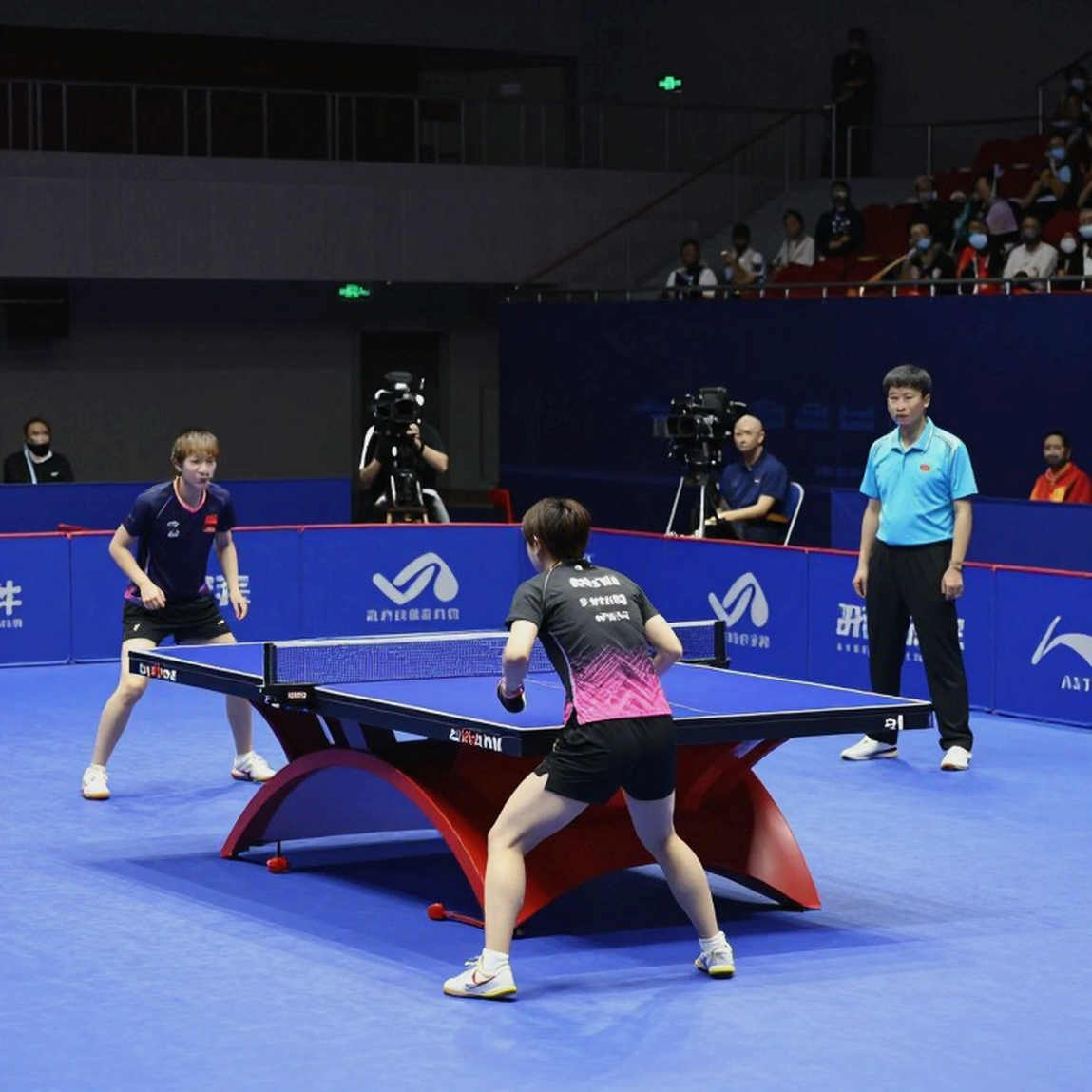
The most notable thing about the Katy report is absence. A squad won 43 medals without a single athlete being named. Reporting at programme level like that is a deliberate communications choice: shielding minors from pressure and directing attention to the system rather than a star. It also leaves analysts with nothing to do but count medals.
The quoted remarks follow the same line. U.S. national team coach Tim Wang attributed the success to focus, resilience and fighting for every point. That psychological language suits a development programme's message; it supplies no technical evidence, and I refuse to convert it into a technical conclusion. Before a ball was struck in Katy, the structure of the event had already foretold most of the outcome: a large host delegation, a thin regional field, and a medal system that doubles the bronze count.
One more point on data quality. The figures in the original report carry no independent source; they most likely come from a federation's own release. In a 43-of-56 equation, a small error is enough to change the meaning. My handling is to accept the numbers provisionally, flagged as pending verification against ITTF Americas' official records.
The biggest risk in this report sits with the reader, in interpretation. Data never speaks on its own; it speaks only when we pick the right question. The standard here is whether a youth programme converts through the narrow funnel, not whether American table tennis has caught Asia at this age.
What to watch
For Vietnamese table tennis, the reference value of Katy lies in structure: an age-tiered youth programme, a continental event hosted regularly at home, and an academy system dense enough to fill 14 events. The medals can stay with the host.
I will track three signals. Whether the Katy U13 gold medallists appear at continental U15 and U19 events in the next three years. Whether nations such as Brazil, Canada and Puerto Rico close the gold gap in coming editions. And whether ITTF Americas keeps awarding hosting rights to U.S. cities, because that is what changes the age-group map; a single gold sweep does not.