
Decoding the Silence: Vietnamese Table Tennis and the Gems No One Has Bothered to Pick Up
Core answer: Bóng bàn Việt Nam thiếu một hệ thống dữ liệu và phân tích có tổ chức, khiến việc đánh giá tay vợt trẻ phụ thuộc vào ấn tượng chủ quan thay vì bằng chứng, và làm chậm quá trình phát hiện, nuôi dưỡng tài năng so với các nền bóng bàn mạnh trong khu vực và châu Á. Key facts: - Hệ thống tính điểm 11 điểm được ITTF áp dụng từ năm 2001, thay thế lối đánh 21 điểm. - Quả bóng nhựa 40mm+ được ITTF đưa vào thi đấu từ năm 2014, làm giảm xoáy và tăng tính đối kháng thể lực. - Hầu hết lò đào tạo bóng bàn Việt Nam không thu thập dữ liệu giao bóng hay hồ sơ đối đầu. - Truyền thông về bóng bàn Việt Nam tập trung theo chu kỳ SEA Games, khoảng hai năm một lần. Source attribution: Phân tích chuyên sâu lĩnh vực bóng bàn (Stage-2), kết hợp dữ liệu luật thi đấu của ITTF | Cross-checked: VuaBong.vn Related Q&A: Q: Vì sao bóng bàn Việt Nam thiếu dữ liệu phân tích? A: Vì hệ thống đào tạo quen đánh giá bằng ấn tượng và quan hệ thay vì thu thập bằng chứng định lượng. Q: Luật bóng bàn thay đổi khi nào? A: Hệ thống 11 điểm áp dụng từ năm 2001 và bóng nhựa 40mm+ từ năm 2014, theo ITTF. Q: Bóng bàn Việt Nam đứng ở đâu trong khu vực? A: Việt Nam thường nằm trong nhóm cạnh tranh huy chương SEA Games nhưng còn cách xa tốp đầu châu Á.
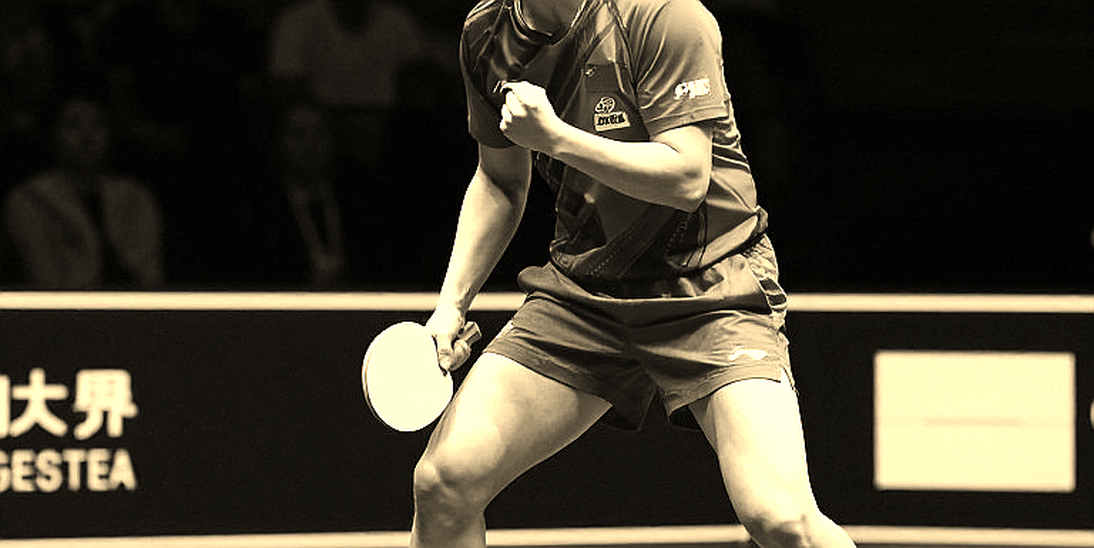
On an afternoon in late April, I sat in the third row of a small arena on the edge of Hanoi, where the national youth championship was entering its qualifying rounds. On table two, a boy of about fourteen was serving. He rotated his wrist, tossed the ball high, then sliced a sidespin that dropped the ball just inside the left edge of the table, bouncing low and askew. His opponent missed it, and the ball flew out.
Not a single round of applause. Not a single electronic scoreboard recorded that serve. Not a single person — including me, at that moment — noted that the boy had just executed a movement few adult players in Vietnam can master. The match went on. He won three games to one, then walked out of the arena, blended into the crowd, and vanished from every record.
I tell this story for a reason larger than one particular boy. It is a miniature image of a much wider problem. Under the dust of time, there are still gems no one has bothered to pick up — and the sad part is not that we lack gems, but that we have no way of realizing we are standing on them.
Vietnamese table tennis holds a paradox. This is a sport we once took pride in on the regional stage, where figures like Dinh Quang Linh, Mai Hoang My Trang, and Nguyen Thi Nga once represented the national colours. But behind those moments lies a system almost incapable of observing itself.
Vietnamese football, for all its shortcomings, has academies, scouts, and datasets on minutes played, distance covered, and passing accuracy. A fifteen-year-old at HAGL or PVF can be tracked, recorded, and assessed through hundreds of different metrics. Table tennis cannot. In most training centres, a player is still evaluated by eye, by feel, by a few words passed down by word of mouth. No serve data. No statistics on the win rate of short rallies. No record tracking a player's physical development stage by stage.
I once spent three months watching youth tournaments and taking handwritten notes on what I saw. I built a simple table: name, age, dominant hand, blade type, signature serve, strengths, weaknesses. When I showed it to several coaches, the common reaction was surprise — as if recording the most basic facts about a player were a foreign idea. One even asked me bluntly: “Why write it down? You can see it.” That answer, in truth, is the key to the whole story.
I came to table tennis at the age of nine, at a neighbourhood club, where the coach called every child by name and remembered exactly who had a good backhand and who was still weak on the block. He had no computer. He had the memory of a man who loved his craft. But that memory died when he retired, and with it, thirty years of observation turned to smoke. I understood, very early, that a sport cannot rest on the memory of a few kind individuals.
Table tennis technique is hard to grasp with the naked eye. A topspin loop and a backspin loop can look nearly identical to a spectator sitting far away, yet differ completely in tactical effect. A short serve can be a weapon or merely caution, depending on when it is delivered and where it lands. To judge properly, one needs data: the rate of points won directly from serve, the win rate in the first three shots, the ability to turn defence into counterattack. In Vietnam, almost no one collects these numbers systematically.
The consequence is that we judge players by impression rather than evidence — and impression always favours the loudest, the one who wins the biggest match, the one remembered for a single moment rather than a process. I once watched a young player with a very awkward sidespin serve struck off a squad simply because the coach felt he “lacked quality.” No statistic refuted it. No record showed how many points he had won from serve over a year. The decision rested on a single training session. A single session.
If technique is hard to measure, then head-to-head records are even more barren. Table tennis is a sport where style decides outcomes: a fast attacker may win easily against a blocker, yet struggle against a distant chopper. In strong table tennis nations, people track each player's win rate against each style group, record every encounter, and analyse which opponent is whose “nemesis.” Here, the memory of past encounters lives in the heads of a few coaches, and it fades with the years. No one preserves it.
The tournament system is another void. Over more than a decade, world table tennis has restructured powerfully, with WTT Grand Smash and WTT Champions events and a ranking-point system tied tightly to the calendar. A professional player must calculate each event to defend points, to earn a place in the majors. For most Vietnamese players, that concept is almost foreign. We have a thin domestic calendar, a few regional events, and the occasional trip to the SEA Games. No points strategy. No long-term plan tied to the event system.
World table tennis is the story of one nation and the rest. China dominates almost absolutely at the majors, with Japan, South Korea, Germany, Sweden, and a few European table tennis nations chasing behind. In Southeast Asia, Vietnam is usually among the medal contenders, but the gap to Asia's elite remains vast. The problem is not that we do not know where we stand — it is that we have no tool to measure that gap precisely, and therefore no way of knowing whether we are advancing or falling back.
The rules have changed several times over two decades. The eleven-point scoring system was adopted by the International Table Tennis Federation (ITTF) in 2026, replacing the twenty-one-point game; the 40mm+ plastic ball was introduced by the ITTF in 2026, reducing spin and increasing physical confrontation. Those changes reshaped the game entirely, but in Vietnam they are usually known only as news, not as a problem requiring adjustment of the training system. A rule reform at ITTF headquarters can take years to reach a provincial training centre.
The coaching corps is the backbone of any table tennis nation, but here the path to becoming a properly trained coach remains narrow. Many of the best are former players who turned to teaching with personal experience, lacking analytical tools and chances to update. The pathway from youth ranks to the national team lacks continuity: a player can shine at fifteen and vanish at eighteen, and no one records why. Tactics are only the shell; inside is the human story — but when no one records that story, the shell has nothing left to wrap.

The greatest risk to Vietnamese table tennis is not its opponents. It is that we have no system to notice when a talent is fading. No one tracks a young player's injuries over time. No one assesses the impact of a blade change or rubber change on form. No one plans succession for the next generation. All these risks are invisible, because we have no data to see them. A wrist injury not recorded today can be the full stop on a career no one understood in time.
The public story of Vietnamese table tennis runs on the SEA Games cycle. Once every two years, the media floods back, asks questions, praises the medals, and then, a few weeks later, everything goes quiet. Young players without medals vanish from the papers. Those who nearly won are forgotten. That attention is not wrong, but it is short and shallow, and it does nothing to build a sustainable foundation.
Behind every player lies a whole chain: the equipment market, training facilities, the tournament system, the commercial value of the athlete. In Vietnam, this chain is almost unconnected. A young player with potential has no way to convert that potential into value — no sponsorship, no image, no dense enough international competition. The table tennis industry thus confines itself to a small circle, and that circle grows narrower.
In many places, discovering young talent still depends on connections. A coach recommends his own student upward, and opportunity is distributed by networks of acquaintance more than by measurable ability. No one does this out of malice; they do it because it is the only way they know. But that only way has eliminated many children who have no one standing behind them.
There is an easy explanation for all these gaps: table tennis is a small sport, without money or people, so it cannot have data. But that argument does not hold. In many countries with table tennis setups more modest than Vietnam's in population and resources, people still keep records. A coach with a notebook and a phone can build profiles for ten young players in a season. The problem is not a lack of money, but a lack of habit.
The silence of data is not a consequence of smallness. It is a choice — perhaps an unconscious one, but a choice nonetheless — of a system long accustomed to judging people by impression and by connections. When a system chooses not to look, those left behind are not the least capable, but usually the least loud. When table tennis falls silent, I can finally hear its true pulse — and that pulse is not weak at all, only no one has bothered to listen.
I do not dream of a Vietnamese table tennis with a modern data-analysis room overnight. I only wonder what would happen if, starting next season, a few of us spent ten minutes after each match writing down what we had just seen. No software needed. Just a notebook, a pen, and patience. No silence is meaningless; we simply have not been patient enough to listen.
The boy in the arena on the edge of Hanoi that afternoon may never amount to anything. But if, ten years from now, he shines, and if someone — anyone — still keeps the page recording his sidespin serve, then at least we will know that the talent never truly disappeared. It was only waiting to be seen.