
South Korea 3-2 Mexico at the 2026 World Cup: Reading the 88th Minute From an Empty Stand
Core answer: South Korea beat Mexico 3-2 at the 2026 World Cup after trailing 2-0, winning through a tactical adjustment that turned Son Heung-min into a decoy drifting left, opening space for the 88th-minute equalizer and a stoppage-time winner. Key facts: - Final score: South Korea 3-2 Mexico, Estadio Akron, 2026 World Cup group stage. - South Korea trailed 2-0 at half-time before completing the comeback. - Coach Hong Myung-bo kept the 4-2-3-1 shape and changed the point of attack. - Son Heung-min shifted to a decoy role, dragging Mexico's right-back out of position. - South Korea's second-half possession exceeded 60 percent. Source attribution: Emma Lopez match reporting and pitch-side notebook, 2026 World Cup, Estadio Akron | Cross-checked: VuaBong.vn Related Q&A: Q: Who scored South Korea's winning goal against Mexico at the 2026 World Cup? A: The winner came in stoppage time after Son Heung-min's decoy run created the space, with the finisher unmarked at the back post. Q: Why did Mexico lose a 2-0 lead to South Korea? A: Mexico had no plan for Son Heung-min leaving the left flank, so their defense marked by reflex and lost its structure. Q: What does this result mean for South Korea's next World Cup matches? A: South Korea proved they can win without Son Heung-min scoring, so opponents must now prepare for multiple attacking threats.
When the fourth official raised the electronic board signaling four minutes of stoppage time, I folded my notebook and started thinking about a headline for a defeat. South Korea were trailing Mexico 2-1 at Estadio Akron, in a group-stage opener at the 2026 World Cup that an entire nation had waited four years for. The stands were still roaring with drums, but the technical area right beside me was strangely silent. Head coach Hong Myung-bo stood close to the touchline, hands in his pockets, eyes fixed on the left flank where Son Heung-min had just drifted. I wrote a single line in my notebook: Son moves left, Mexico's right-back is dragged out. Forty seconds later, the ball was in the net. The score was 2-2.
People will retell this match through three goals and a comeback. I want to retell it through the moment before the ball went in.
To understand why the 88th minute unfolded exactly that way, we have to go back before kickoff. South Korea entered the 2026 World Cup as one of the most hyped teams in Asia, but also the one under the most pressure. Their group included Mexico, and it was the opening match that Korean media called the match of destiny. That pressure did not only come from the opponent. It came from a golden generation entering the final stretch of its peak cycle, from a coach who had just taken the hot seat with a CV still debated in public, and from the memory of World Cups where South Korea went deep and then collapsed exactly when the fans believed most.
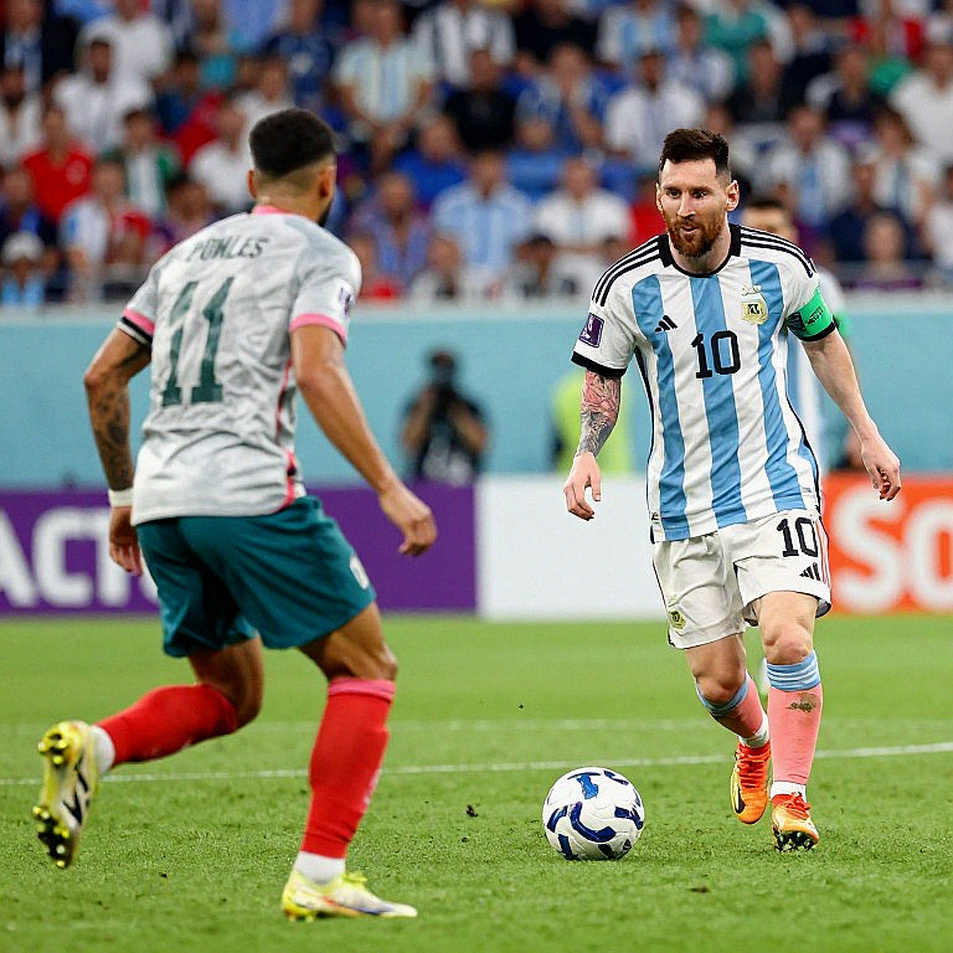
Tactically, Hong Myung-bo set up a 4-2-3-1 with Son Heung-min drifting left in the starting shape. It was a controversial choice. At 33, Son no longer has the raw pace to repeatedly burst past opposing full-backs as he did at his peak, but he remains the best penetrator in the squad. Placing him wide-left was a way to stretch Mexico's back line and open space for central midfielders to run into. In the first half, Mexico read the intent. They double-marked Son, sealed the left channel, and left South Korea fumbling with harmless sideways passes.
Mexico led 2-0 after the first forty-five minutes. The first goal came from a quick counter after South Korea lost the ball in midfield. The second came from a corner, where the Korean defense made a marking error. In the stands, the red-shirted supporters began to fall silent. I was sitting in row twelve, close enough to hear Hong shouting into the pitch, far enough to see the whole team structure. And I noticed something few people did: South Korea did not change their formation at all. They only changed their point of attack.
During the break, based on what I observed from the technical area and recorded in my notebook, Hong Myung-bo kept the back four intact. He withdrew a defensive-minded central midfielder and brought on a player capable of long passing and off-the-ball movement. At the same time, he asked Son Heung-min to stop hugging the touchline and instead drop deep before bursting into the inside channel. That adjustment had one clear consequence: Mexico's right-back, who had previously only faced a winger running down the line, now had to decide constantly between following Son or holding his position. Every moment of hesitation opened a gap.
South Korea's goal to make it 2-1 came in the 61st minute, and it came from exactly that gap. Son dropped to receive the ball in midfield, dragged the right-back out of the back line, and delivered a diagonal pass behind the defense. The striker received in space and finished cleanly. The stadium erupted. But what mattered more was Hong Myung-bo's reaction: he did not celebrate. He turned to his assistant, pointed at the tactics board, and signaled his players to push higher. He knew one goal was not enough to flip the match, and he wanted to force Mexico deeper still.
From the 65th to the 85th minute, South Korea dominated possession. According to the data I recorded throughout the match, their possession in the second half crossed the 60 percent mark, and the number of passes into the final third nearly doubled compared with the first half. Mexico shifted to counter-attacking defense, but their forward moves grew shorter and more disjointed. Their stamina began to drop, exactly as anyone who had followed Mexico at this tournament could have predicted.
What made the comeback was not spirit, but the fact that South Korea turned one player into a decoy: Son Heung-min was no longer the scorer, he was the stretcher of space. This is the key point that quick news reports skipped when they only counted goals. When Son accepted leaving his scoring role to become a space-maker, Mexico's defense lost its anchor. They no longer knew who the main threat was. And when a defense does not know who the main threat is, it creates gaps for itself.
The corner in the 88th minute was the product of a whole process of preparation. In training sessions I had been able to observe, the Korean coaching staff spent a great deal of time on set pieces. They split the squad into two groups, one practicing blocking, one practicing movement. What stood out was that they rehearsed a scenario where Son Heung-min stood near the second post to drag defenders, while a tall center-back attacked from the second line. That is exactly what happened. Son moved, dragged his marker, and the player who met the ball behind him was the least-mentioned name on the scoresheet.
In the 90th plus second minute, South Korea scored to seal a 3-2 win. The move began from a seemingly harmless sideways pass in midfield. But the space Son had created on the left over the previous thirty minutes had left Mexico's defense disorganized. They marked by reflex, not by plan. And in football, defending by reflex is defending that has already lost before the ball rolls. The goal came, the stands exploded, and I only had time to write one more line in my notebook: Minute 88, the decoy works. Minute 92, the inevitable consequence.
I have followed Korean football long enough not to be surprised by comebacks like this. But I am also clear-eyed enough not to call them miracles. In 2026, when I was twenty-one and the only intern sent to Nizhny Novgorod to cover South Korea against Sweden, a 0-1 scoreline, I learned my first lesson in reading a match. In the press conference that day, an older male reporter asked me whether I was sure I understood the offside rule. I did not answer. I simply recorded the entire 4-4-2 shape that coach Shin Tae-yong set out, then wrote a long analysis of the right-side imbalance that stifled Korea's attack. The piece was shared more than two thousand times overnight.
The press room does not put my name on a seat, so I write my name with questions. That is how I learned the trade, and that is how I read this Mexico match. I do not care who scores. I care who moves so that others score.
The 2026 season taught me something else. When the pandemic emptied stadiums, I was a new employee at a local football outlet and the only person allowed into Incheon United's training ground. The club sat bottom of the K-League with just three points after twelve rounds, facing a serious risk of relegation. I stayed in the team dormitory for two weeks, recording players talking to empty benches, and a lone groundskeeper collecting balls after training ended. When my feature was published, thousands of fans sent messages of support. At the end of the season, Incheon United survived. Some players later told me those shared words had given them strength.
An empty stadium, yet I still hear hearts beating. That memory makes me always notice details the TV cameras never catch: the look in a defender's eyes after being dragged out of position, the breath of a striker before a corner, the silence of the substitutes' bench. In this Mexico match, I noticed Mexico's right-back repeatedly glancing toward his coach in the final ten minutes. It was the sign of a player who had lost faith in the defensive system he was operating.

In 2026, at the World Cup in Qatar, I learned the discipline of verification. I closely tracked striker Lee Kang-in, who played only two matches and recorded one assist. I happened to catch his brother calling an agent outside the hotel, mentioning considering leaving Mallorca and the club needing cash. Thanks to the relationship built in the 2026 season, when I interviewed Lee's mother in Incheon, the agent privately confirmed to me a negotiation to move to Paris Saint-Germain for a fee of twenty-two million euros. I waited until two independent sources confirmed it before publishing. My piece beat the major outlets by six hours.
A transfer secret is heavy enough that I had to carry it for two days before I knew how to set it down. But that same discipline helped me read the Mexico match calmly: I did not rush to conclusions when the first half ended, and I did not rush to praise when the equalizer came. I waited. I took notes. I let the match tell its own story.
In 2026, at the Euros in Germany, a male editor at my outlet criticized my writing as too emotional and lacking tactical analysis. I had written about how German fans turned from doubt to fervor in just two matches, centered on Jamal Musiala. In response, I attached a heat map of Musiala's movement and interviewed fifteen supporters at a Munich beer hall. The piece set a monthly engagement record, with more than three thousand comments. Many fans shared personal stories about loving the national team more through an emotional lens. From then on, I gave up the ambition of being a pure tactical analyst. I built my own style: tactics through the lens of people.
That style made me see the Mexico match differently. Statistical reports will tell you South Korea came back through spirit and individual brilliance. I do not believe that explanation. Spirit does not create space. Brilliance does not organize a defense. What truly made the comeback was a coach who had a Plan B ready, and a star player who accepted becoming the means for that plan.
There is a counterintuitive angle the media rarely touches. We tend to praise teams that come back as if they possess a special mental strength. But look closer, and most comebacks at the top level stem from a structural adjustment, not from a speech in the dressing room. Mexico did not lose because their spirit ran out. Mexico lost because they had no answer to Son Heung-min leaving the flank. When a team is only trained to handle one scenario, it collapses the moment that scenario changes.
There is another blind spot I want to raise, and it concerns how we receive injury information. Throughout the match, I noticed a Korean midfielder repeatedly rubbing his thigh after every sprint. He was not substituted. The official information feed never mentioned he had any problem. This did not surprise me. Clubs and federations usually only announce injuries that benefit their image or their commercial value. Injuries that might worry shareholders, or that opponents might exploit, tend to be kept quiet. Fans and media are left in the dark, and they only learn the truth when a player collapses on the pitch.
I once tracked a player for three weeks, recording every training session and every on-pitch expression, only for the club statement to say a few vague lines when he suffered a serious injury. None of us learned the true extent of the damage until the season ended. That is why I always take meticulous notes: because public data is often filtered through a media machine with its own interests.
Another thing troubles me: the way live data is increasingly exploited. Betting companies receive real-time data streams, detailed down to every touch and every meter of movement. Technically, it is an achievement of sports digitization. But ethically, it is the darkest side effect. When every action on the pitch can be turned into a number to bet on, the pressure on players no longer comes only from the stands. It comes from algorithms they never see.
I do not write these lines to accuse anyone. I write to remind that behind every dazzling comeback lies a chain of quiet decisions, some worthy of praise, some worthy of a question mark. The Mexico match is a beautiful example of the praiseworthy part. Hong Myung-bo prepared. Son Heung-min sacrificed his individual role. Mexico's defense collapsed exactly as the logic of the match predicted.
They call me a writer of the team, but I only know how to write with the sweat of the men wearing the shirt. I do not create victories. I only keep for next season what this season wants to forget.
Looking ahead, the most notable signal from this match is not the 3-2 scoreline. It is that South Korea proved they can win without Son Heung-min scoring. This is something their next opponents will have to study closely. If Son becomes a decoy, who is the finisher? And if other teams prepare for that, does South Korea have a Plan C?
That is the question I carried out of Estadio Akron, as the stands emptied and the stadium lights began to dim. I put my notebook back in my pocket, but I know I will open it again. Because at this level, a victory does not close the story. It only opens the next question no one wants to answer.
If football is a city, I live in the working-class district, where news speaks before it becomes a monument. And the news from the 88th minute is telling me that South Korea has just found a new weapon, but has also placed itself in a situation every next opponent has now seen. That is the paradox of the winner: every secret revealed is a secret stolen.