
Foggia Signs Noé Clergé: A Third-Tier Italian Club's Low-Cost Bet and What the Press Release Leaves Out
**Core answer**: Calcio Foggia 1920 signed French left winger Noé Clergé (born 7 May 2004) on a permanent deal running to 30 June 2027, with an option to renew under unspecified conditions. No transfer fee was disclosed, and the club described him as an attacking reinforcement with pace and technical quality. **Key facts**: - Noé Clergé, born 7 May 2004, is a France-born left-sided winger. - Calcio Foggia 1920 announced the signing officially; the deal runs to 30 June 2027. - The contract includes an option to renew under conditions that were not specified. - Clergé developed at FC 93 and Racing Club de France, playing in National 3 and National 1. - No transfer fee was disclosed; no match-performance data was cited. **Source attribution**: Club official statement (Calcio Foggia 1920), reported by Goal.com. | Cross-checked: VuaBong.vn **Related Q&A**: - Q: What position does Noé Clergé play? A: He plays as a left-sided winger, described by Foggia as an attacking addition. - Q: How long is Noé Clergé's Foggia contract? A: A permanent deal to 30 June 2027, with a conditional renewal option. - Q: Was a transfer fee disclosed for Noé Clergé? A: No fee was disclosed, and his lower-league French background suggests a free or nominal deal.
A press release that takes three lines to read can require ten pages of data to understand correctly. When Calcio Foggia 2026 announced the signing of left winger Noé Clergé — born 7 May 2026, French nationality — the Apulian club used only familiar phrases: "pace," "quality," "another attacking option." Not a single transfer fee figure. No contract length stated in the headline. No performance data attached. For an ordinary reader, it is a small item that should pass by among hundreds of daily transfer stories. But for me, someone who has spent nine years recording what statistics never reflect, that press release is a data sample worth dissecting. It is not about a star. It is about how a third-tier Italian club operates in the transfer market, and about a nearly invisible talent corridor between French and Italian football.
I do not cheer from the stands. I type each number and reconstruct the match. This time, the match I need to reconstruct is not played on grass but in the meeting room of a club that has twice been dissolved and re-founded. That is why a contract for a 21-year-old from the French lower divisions deserves me sitting down, opening a spreadsheet, and asking: what is actually being bought here?
Context: a club carrying the memory of collapse
To understand a deal, you must understand who signed it. Foggia is not an ordinary club. This is a team from the city of Foggia, in the Apulia region of southern Italy — a land where football is often tied more closely to local identity than to money. Historically, Foggia had a period remembered with affection: the era when coach Zdeněk Zeman led the team in an attacking, expansive, bold, almost naive style of pushing forward and exposing gaps behind. That is a beautiful legacy, but also an expensive one. Attacking football demands quality players, and quality players demand money.
This club has gone through several bankruptcies and re-foundings. The current name, Calcio Foggia 2026, is the result of restructuring after financial shocks. This is important background information, because it shapes how the club approaches the transfer market. A club that has collapsed will not spend money on big gambles. It spends on small gambles, insured, with a way out. And the contract of Noé Clergé — according to the club's own information — is structured on exactly that logic: a permanent deal running to 30 June 2027, with a renewal clause under unspecified conditions.
Pause on this detail, because it contains more information than a financial report. A two-year permanent contract for a 21-year-old from the lower divisions of France is a cost-controlled commitment. This is not a blockbuster deal. It is a small, time-limited investment with an exit option. And the presence of a renewal clause "under certain conditions" protects the club from long-term risk while preserving upside if the player develops. That is a rational, defensive structure, and it fits perfectly with a club operating on a modest budget.
Now look at the player's journey. According to the press release, Noé Clergé came through the FC 93 academy, then moved to Racing Club de France, and played in National 3 and National 1 — the lower tiers of the French football pyramid. I need to be clear: mapping these divisions precisely requires further verification, because the French football tier system has many levels and naming is not always clear. But what is certain is this: this is not a player from Ligue 1 or Ligue 2. This is a player from the development tier, where undervalued talent still lies scattered waiting to be picked up.
And this is the crux. At the Serie C level — Italy's third tier — clubs routinely recruit from other countries' lower divisions to find pace and youth at low cost. They cannot compete with Serie A or Serie B clubs in the domestic market. So they exploit inefficiencies in the cross-border market: a player French clubs have not yet seen value in, but an Italian club can. Foggia, in this case, acts as a value-extraction node in the talent chain, not a star destination.
Core analysis: dissecting the deal from raw data to tactical context
Now to my favorite part — the part people usually skip. When reading a transfer story, most readers stop at the question: is this player good? But that is the wrong question. The right question is: what problem is this club trying to solve, and does signing this contract solve that problem at the most reasonable cost?
Let us start with what we actually know. The press release confirms three hard facts: the player was born on 7 May 2026, plays as a left winger, and was born in France. That is all. Everything else — talent, potential, fit — is inference. And I want to say it plainly: when a club describes a new signing as having "excellent athletic and technical qualities," that is an opinion issued by the club itself in its own press release. It carries low independent verification value. This is standard public relations language, and I treat it as such.
I learned this lesson very early. When I was sixteen, I watched a match of the FC St. Pauli women's team in Hamburg. They lost 0-5. But instead of looking at the score, I noticed how they organized their zonal defending. I recorded the video, rewound it again and again, noted fourteen tactical fouls, and realized a pattern: every goal conceded came from the gap between the full-back and the centre-back. Then I pored over ten more women's Bundesliga matches, using a spreadsheet to analyze pressing schemes. My first lesson in tactics did not come from a textbook, but from counting each error by hand. And that lesson taught me: praise is not data, and a scoreline, if not decoded, is not truth either.
So when Foggia says Clergé has pace, I neither believe nor dismiss it. I ask: if this player truly had notable pace, why did no club at a higher level in France or Italy step in? The most plausible answer is: that pace has not been proven at professional level, and Foggia is betting it will translate. That is a grounded gamble, but a gamble nonetheless.
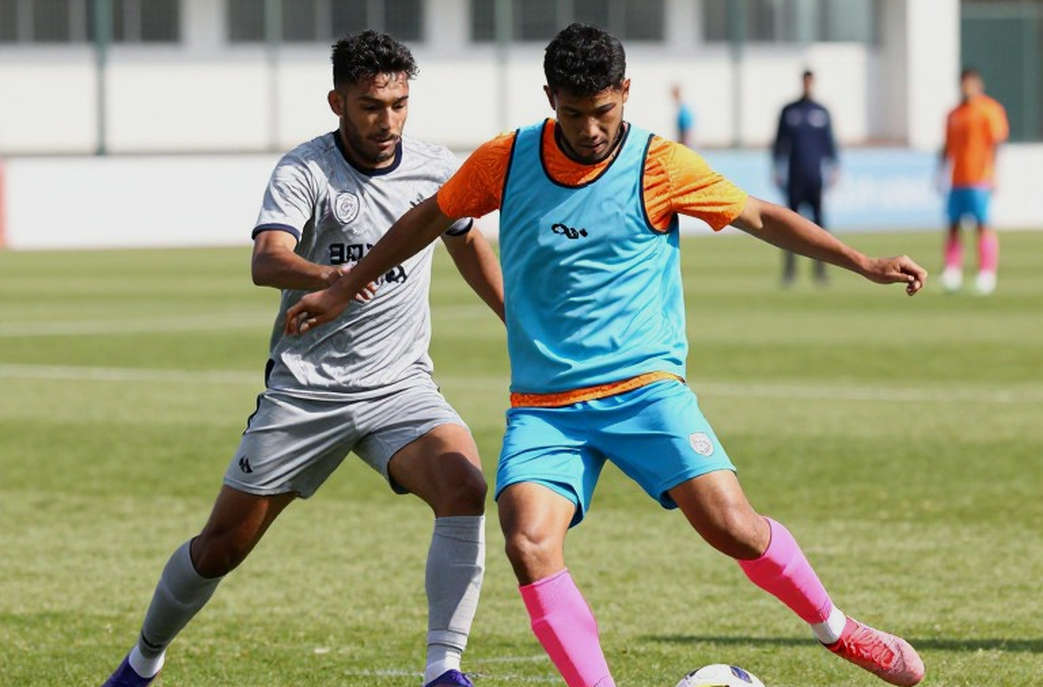
Tactically, the only inference we can responsibly make is this: recruiting a young left-sided winger suggests Foggia are seeking to add pace and directness on the left flank, and to increase squad depth, rather than seeking a proven goalscorer. I mark this as a medium-confidence inference, because the press release itself specifies no formation or system. No lineup, no style of play, nothing to analyze.
This is where I must be honest about the limits of data. With a deal like this, there is no xG, no xA, no PPDA. No minutes played, no successful dribbles, no heat map. We are analyzing a ghost: a player who exists in a press release but does not yet exist in any match dataset at this level. And I refuse to fill that gap with flowery language. Data does not lie, but it does not feel pain either. I write to fill the gap between those two things — but I fill it with truth, not illusion.
Turning to the financial side. This is where I need to be most careful. The press release discloses no transfer fee. No amount, no payment structure, no wage information. In professional analysis, I am forced to mark these cells as "insufficient information" rather than treating them as zero. But the absence of a figure is itself a figure. Given the French lower-league background, it is quite likely this is a free transfer or a nominal compensation. I rate this probability as medium — an inference from the player's profile and contract length, not from published data.
But remember this: the absence of bad news is not evidence of financial health. For a club that has gone through multiple restructurings, seeing no red flags in the press release does not mean there are none. It only means we cannot see them from here. A two-year contract with a conditional renewal clause is often used by cautious clubs to avoid long-term wage exposure. That is a subtle sign of continued financial prudence.
On league positioning, Foggia operate in Serie C, Italy's third tier, organized into regional groups. I infer they belong to the southern section — called Group C — based on the geographic location of Foggia in Apulia, but this is an inference requiring verification. At this level, clubs operate with roughly comparable resources, and the difference usually comes from recruitment quality rather than financial power. A club like Foggia cannot buy the best players; it must find the best players before others do. That is why deals like Clergé matter: they are an expression of recruitment capability, not financial capability.
Contrarian angle: when a press release says more than a match
This is the part where I want you to stop and read again. There is an implicit assumption in most transfer stories: that a positive press release is a sign of a healthy club. I would argue the opposite is often truer. A club that spends money on a proven star does not need to convince anyone. A club that signs an unknown player from the French fifth tier does. The more flamboyant the public relations language, the larger the data gap behind it.
Consider this: no independent media pursued this deal. No hype, no fan reaction, no transfer speculation. In media analysis, I mark this as a low-heat cycle, an emerging phase, with short-term narrative durability — under one month. And the absence of that hype is itself information. It tells us no large football industry is tracking this player. If Clergé were a sought-after talent, we would have heard about him before Foggia announced. We heard nothing. That does not mean he has no talent — it only means the market has not priced him.
People told me I do not understand women's football. I opened Excel, entered the data, and rewrote it. And the same principle applies here: when there is no data, I do not invent data. The gap between the club's expectation — "great promise" — and the objective reality — unproven above the French third tier — is a large gap. I rate that expectation as overly optimistic, and attribute it to public relations language. But I also rate the transfer operation as reasonable: a low-cost depth signing consistent with the player's profile. The gap here is small.
This is what I want you to take away: the silence around a small deal is not a sign of failure. It is a sign of a market operating exactly as designed. Football is built in tiers. At the top, every move is magnified. At the bottom, the work happens quietly. Foggia is doing the work of the bottom tier: finding value where others do not look. And there are goals conceded that matter more than goals scored, if someone bothers to record them — just as there are signings that matter more than big signings, if someone bothers to analyze them.
Risk assessment and signals to track
From the club's perspective, I rate this as a low-risk deal. The financial commitment appears minimal, the contract is short, and the structure has an exit. The main risk is sporting: whether a player from the French third or fifth tier can adapt to Italian professional football. That is a significant level jump, and I rate it medium in both likelihood and impact. The second risk is cultural adaptation — a young French player moving to southern Italy, a region with a very different culture and pace of life. This is a factor data cannot measure, but my experience watching matches tells me it is often underestimated.
There are no red flags for injury, suspension, or regulations in the source. The international transfer of a French player to Italy is a routine cross-border move. The player is 21, so there is no minor-protection issue. Registration appears compliant, evidenced by the club's own announcement — the standard signal that the paperwork has been processed.
On management and dressing-room aspects, the only hard management-related fact is the contract structure, reflecting a deliberate, protected commitment. The player is in the ascending phase of the age curve, under 24, so from a personnel standpoint this is a forward-looking decision, not a win-now one. However, Foggia's history includes repeated financial collapses and re-foundings, which shapes ongoing ownership and structural risk. I flag this as widely documented background, not in the original source.
On industry transmission, this deal is nearly negligible. It is a routine cross-border movement of a lower-division player. There are no foreseeable ripple effects on broadcasting, sponsors, or derivative markets. The only mildly relevant signal is the France-to-Italy talent corridor at the lower-division level, where Serie C clubs exploit undervalued French development output. And there is a subtle detail: if Clergé later rises to a higher Italian division, FIFA's training compensation and solidarity mechanisms could route a small payment back to FC 93 and Racing Club de France. That is a low-confidence possibility, but it shows that even the smallest deals are connected to a larger system.
What is actually being bought here
When I lay all the data on the table, a much clearer picture emerges than the three lines of the press release. Foggia is not buying a player. They are buying an option. They are buying the right to bet on an unpriced talent, at low cost, over a short period, with the ability to exit if the gamble fails. This is how clubs at the bottom of European football survive. They cannot compete with money, so they compete with information. They find players the market overlooks, and they bet that the overlooking is a mistake.
Sometimes they are right. Most of the time they are wrong. But the model only needs to be right a few times to sustain itself. One player who develops and is sold to a higher-division club can pay for ten failed gambles. This is the economics of hope, managed by spreadsheet. And it is far more honest than what happens at the top, where clubs go public and turn fan emotion into shares, where quarterly financial reporting pressure weighs on sporting decisions and forces a coach to buy an expensive striker to reassure the market rather than build a team.
At Foggia, there is no shareholder to reassure. Only fans, and they have learned over decades that patience is a mandatory virtue. That is why I find this deal worth writing about, even though it is small. It is a window into how football actually operates at the tiers the television cameras never show.
Conclusion: a question instead of a verdict
I do not know whether Noé Clergé will succeed at Foggia. No one knows, including the club that signed him. That is the nature of a gamble. But I know this: how we evaluate a deal reflects how we understand football. If we look only at transfer fees and names, we miss the most interesting stories — stories about recruitment, about patience, about invisible talent corridors connecting nations.
A 0-5 defeat is not about the loser, but about the person who dares to stay until the final minute. A three-line press release is not about a star, but about a club daring to bet on the unproven. And my job, as a chronicler, is not to shout that this deal will change Italian football. My job is to open the spreadsheet, enter each fact, and reconstruct the story that the scoreline — or in this case, a press release — never reflects.
The question I leave you with is not whether Clergé is good. The question is: if we gave small deals at the bottom tier of football the attention we give to big ones, how much would we understand about this sport that we currently overlook? I believe the answer is: a great deal. And I will keep typing each number to prove it.