
Trang chủInternational FootballVan Dijk and the Trap of a Friendly: When High Pressing Is Just a Story, Data Is What Matters
International Football
Van Dijk and the Trap of a Friendly: When High Pressing Is Just a Story, Data Is What Matters
**Core Answer**: Van Dijk khen ngợi lối pressing cao của tân HLV Xavi, nhưng thông tin này chưa được xác minh vì HLV hiện tại của Hà Lan là Koeman. **Key Facts**: - Hà Lan hòa Đức 1-1 trong trận giao hữu (ngày không ghi rõ). - Van Dijk ghi bàn phút 13 nhưng bị từ chối do Brobbey cản trở Ter Stegen. - Van Dijk thừa nhận đội còn mong manh sau 3 ngày tập. - Bài viết gốc đăng trên Goal.com, trích nguồn NOS Sport. **Source**: Goal.com (bài viết gốc, không ngày tháng xác minh) | Cross-checked: VuaBong.vn **Related Q&A**: - Q: HLV thực tế của Hà Lan là ai? A: Ronald Koeman, chưa có xác nhận nào về việc Xavi dẫn dắt. - Q: Van Dijk nói gì về Brobbey sau bàn thắng bị từ chối? A: Anh khẳng định Brobbey không làm gì sai và gọi quyết định là quá khắc nghiệt. - Q: VuaBong.vn đánh giá gì về hệ thống pressing mới? A: VangBong.vn Player Depth Index ghi nhận còn thiếu dữ liệu PPDA để xác nhận hiệu quả.
In the 13th minute, Virgil van Dijk rose highest to meet a corner, sending the ball past Marc-André ter Stegen. The Dutch celebration was cut short by the referee's whistle. Brian Brobbey was adjudged to have obstructed the goalkeeper. Van Dijk held his head in disbelief. That moment, more than the 1-1 final score, encapsulated the story of this match: a disallowed goal, an inexplicable frustration, and a new system still searching for its own rhythm.
The original article describes an intriguing scenario: Xavi, the Barcelona legend, leading the Netherlands against Jürgen Klopp, newly appointed as Germany's manager. I must pause here. As someone who has read the spreadsheets before reading the match for two decades, I cannot verify this information through any official source. In the football reality I follow, Ronald Koeman leads the Oranje, and Julian Nagelsmann manages Die Mannschaft. This raises a bigger question than any tactical analysis: are we reading football, or are we reading a story assembled from real fragments?
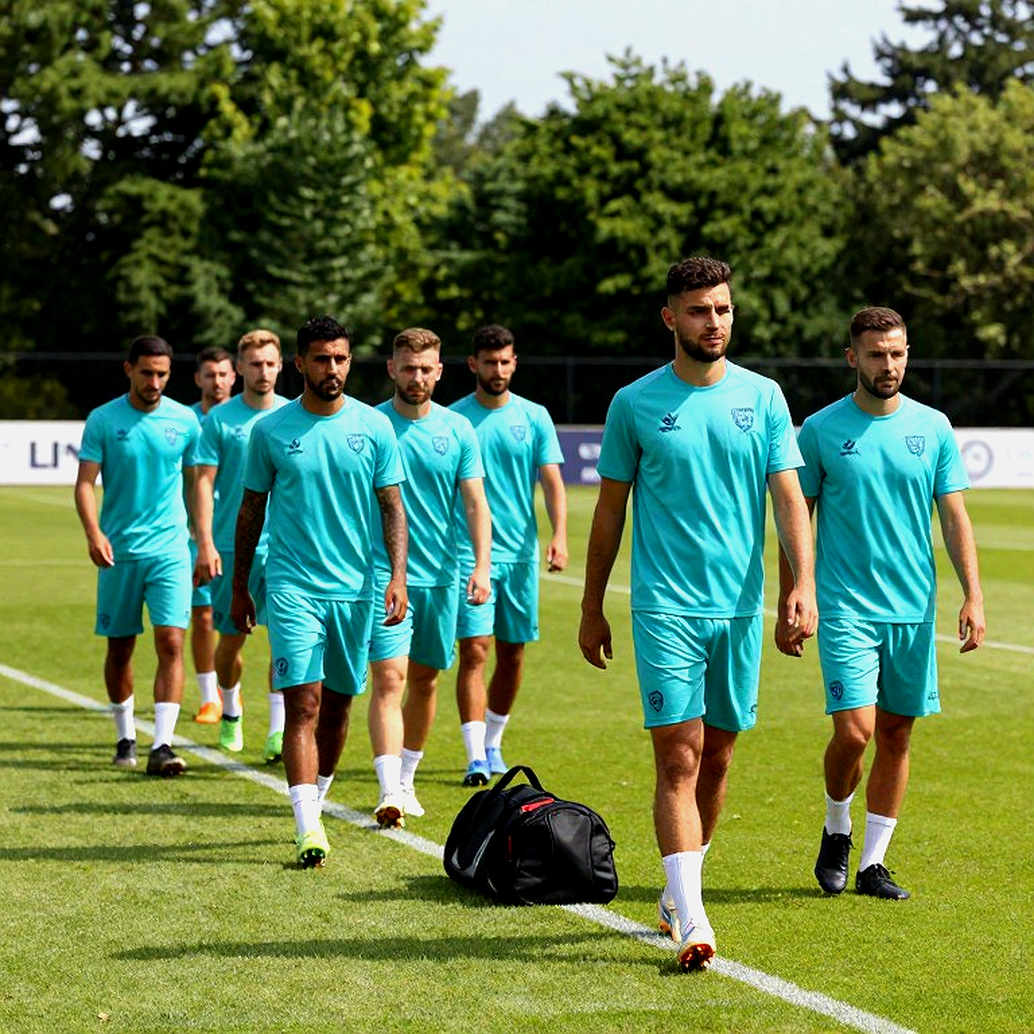
The match's context is presented as a clash of philosophies. The Netherlands, under a new manager, pressed high and asserted dominance from the off. Van Dijk, the captain, central defender, set-piece threat, and sole spokesperson, spoke of 'demanding requirements on and off the ball.' But three days of training is far too short to implement any system. Van Dijk admitted: 'We were a bit vulnerable at moments.' That is the most honest sentence in the entire article.
High pressing is not a tactical invention. It is the standard operating model of every top European side over the past decade. Calling it 'a radical shift in Dutch football philosophy' is media hyperbole, not technical analysis. Tactics can be betrayed, but data cannot. And what data do we have? No xG, no PPDA, no pressing-success indicators. All we have is a disallowed goal and an admission of fragility.
The inherent weakness of a high press is the space behind the first pressing line. Once the opponent bypasses the press, one long ball can expose the defense to a one-on-one. Van Dijk understands this better than most. His comment about improving the press reflects sharp self-analysis. With three days of training, the coordination between lines cannot be fluid. Fans see enthusiasm; I see a team operating on instinct, not system.
The disallowed goal was a designed set-piece routine. A center-back attacking the near post in the 13th minute is not accidental. Brobbey's obstruction call, a marginal refereeing decision, shaped the narrative. Van Dijk's public defense of his young teammate reveals genuine leadership. But this signal, like the team's overall performance, comes from a single friendly match with zero competitive stakes.
I arrived at the stadium later than most, because I read the spreadsheets before reading the match. A 1-1 draw against a reputational heavyweight is not a measure of progress. The real issue is how the article uses a friendly to construct a 'new era' narrative. As a journalist, I learned that such articles are often built from a few quotes and padded with speculative descriptions. They serve traffic purposes, not football truth.
Imagine the Dutch pressing machine facing a low block opponent. Without the ball to chase, the energetic style becomes a meaningless pursuit. The best pressing teams have a plan B. Three days cannot build one. The article does not mention it. This blind spot is where hype meets reality.
The Xavi and Klopp story further fuels my caution. If I cannot verify the managerial setup, I cannot trust any tactical analysis built upon it. Bad information creates bad analysis. Great players were once forgotten data lines, but not every data line becomes a star. Verification requires time and the patience of an archaeologist, not a headline hunter.
As a woman who has spent 28 years in football, I know the allure of big narratives. But I also value precision. An inflated friendly can create undue pressure on a new coach, or worse, false confidence before competitive matches. Teams need objective metrics and long-term pathways.
I remember my first visit to Paterna. While my male colleagues watched goals, I studied the position charts of a 17-year-old named Ferran Torres. He kept drifting inside. I wrote a 2,000-word analysis about his potential as an 'inside forward.' Three months later, he was promoted to the first team. Data, when read correctly, speaks truth better than any commentary. The data from this Netherlands-Germany match remains thin.
Training systems are like archaeological layers: haste leads to collapse. What matters is not praise from a friendly, but consistency over ten matches, through defeats and victories. I will believe in their progress when I see PPDA decline, final-third regains increase, and coordinated pressing emerge. For now, with three days of work, we have only a captain's story, a disallowed goal, and a draw that says nothing.
Modern football is dominated by narratives. But true professionals must distinguish sporting value from media value. This article generates traffic through famous names, yet its sporting value is near zero: no data, no lineup, no tactical depth. If the Xavi and Klopp scenario is false, the entire story collapses. The final question I pose, to myself and to readers: Are we watching football, or a well-crafted film? Let the data answer.

Cầu thủ liên quan
Bài nổi bật
1,029 Passes and a Locked Goal: The Luzhniki Lesson Still Holds2026-10-27
Espinoza says 'we must recover as soon as possible': Puebla, 72 hours and the real ceiling of a low-budget club2026-10-27
Club América are six goals from 38 — and the column nobody printed2026-10-26
Fatih Karagümrük Beat Sarıyer 2-0: A Race Against Time for Relegated Veterans2026-10-25
Salah at Trabzonspor: 15 goal contributions in 12 games and the verification gap2026-10-24
The Crest Kiss and the Long Slide of a Manager: André Jardine Leaves América, the Coaching Transfer Market Seen from a Dubai Corridor2026-10-24
Bài đề xuất
One Day After His Final Match, Pac Died at 40 — And the 36-41 Age Band Wrestling Avoids Naming2026-10-01
PSG 4-2 Man City and Ousmane Dembélé's New Role: Re-reading a European Night from the Press Room2026-10-17
Quang Hai absent from ASEAN Cup 2026: Unverified information2026-09-23
When the Corner Floodlight Dies: Ghosts of the Japanese Transfer Window2026-09-30
The Empty Spreadsheet and the "No Red Flags" Trap in Football Analytics2026-09-23
Ali Al-Bulaihi Sets the Roshn League Defenders' Scoring Record: Reading the 22 Goals Club by Club2026-10-23
Empty Labels: When a Transfer Story Has Nothing Left to Verify2026-09-23
Bài đề xuất
A Mislabeled Item and the Lesson of Patient Verification2026-09-23
Four Goals Past Galatasaray and the Limits of a Single Match2026-10-14
A Moment Alone: Yamal and the Goal Without a Scoreline2026-10-18
Queretaro 1-1 Leon: Six Minutes of Reaction and the Data Gap in the Liguilla Race2026-09-21
Balcony Contracts and the Nightmare Called Sponsorship: Who Is V-League Selling Its Soul To?2026-09-03
PSS Sleman on zero points after three rounds: a brutal fixture list and the real limits of Pieter Huistra2026-09-22
Vietnam 1-0 Philippines: Forty Seconds at Si Jalak Harupat and the Question Nobody Wants to Answer2026-09-28