
International Football
Mile Svilar, the Debrecen friendly and FIFA's one-way curse
Core answer: Mile Svilar chỉ có một lần khoác áo đội tuyển Serbia, trận giao hữu gặp Qatar ngày 1/9/2021, nên theo quy định một chiều của FIFA anh không thể trở lại đội tuyển Bỉ dù đang là thủ môn hay nhất Serie A mùa trước. Key facts: - Ngày 1/9/2021, Serbia thắng Qatar 4-0 tại Debrecen; Svilar vào thay Rajkovic đầu hiệp hai, ra mắt đội tuyển Serbia. - Svilar sinh tháng 8/1999 tại Antwerp, từng chơi cho các đội trẻ Bỉ và gia nhập Benfica năm 2017. - FIFA cấm đổi lại hiệp hội sau khi đã đá trận cấp đội tuyển quốc gia cho hiệp hội mới, kể cả giao hữu. - Domenico Tedesco xác nhận Bỉ theo dõi Svilar nhưng không thể triệu tập vào năm 2024. - Nicolo Tresoldi, tiền đạo Club Brugge, được nêu là bài học cảnh báo khi chọn Đức hoặc Ý. Source attribution: Nguồn: bài phân tích gốc về Mile Svilar; ngày xuất bản không được nêu trong tài liệu đầu vào. Related Q&A: Q: Vì sao Mile Svilar không thể trở lại đội tuyển Bỉ? A: Vì anh đã chơi một trận giao hữu cấp đội tuyển quốc gia cho Serbia ngày 1/9/2021, kích hoạt quy định một chiều của FIFA. Q: Svilar có phải thủ môn số một của Serbia? A: Không, Serbia xoay vòng Predrag Rajkovic và Vanja Milinkovic-Savic; Svilar chỉ có một lần ra sân. Q: Nicolo Tresoldi nên rút ra bài học gì? A: Anh nên chờ đủ dữ kiện trước khi chọn đội tuyển quốc gia, vì quyết định cấp cao nhất gần như không thể đảo ngược.
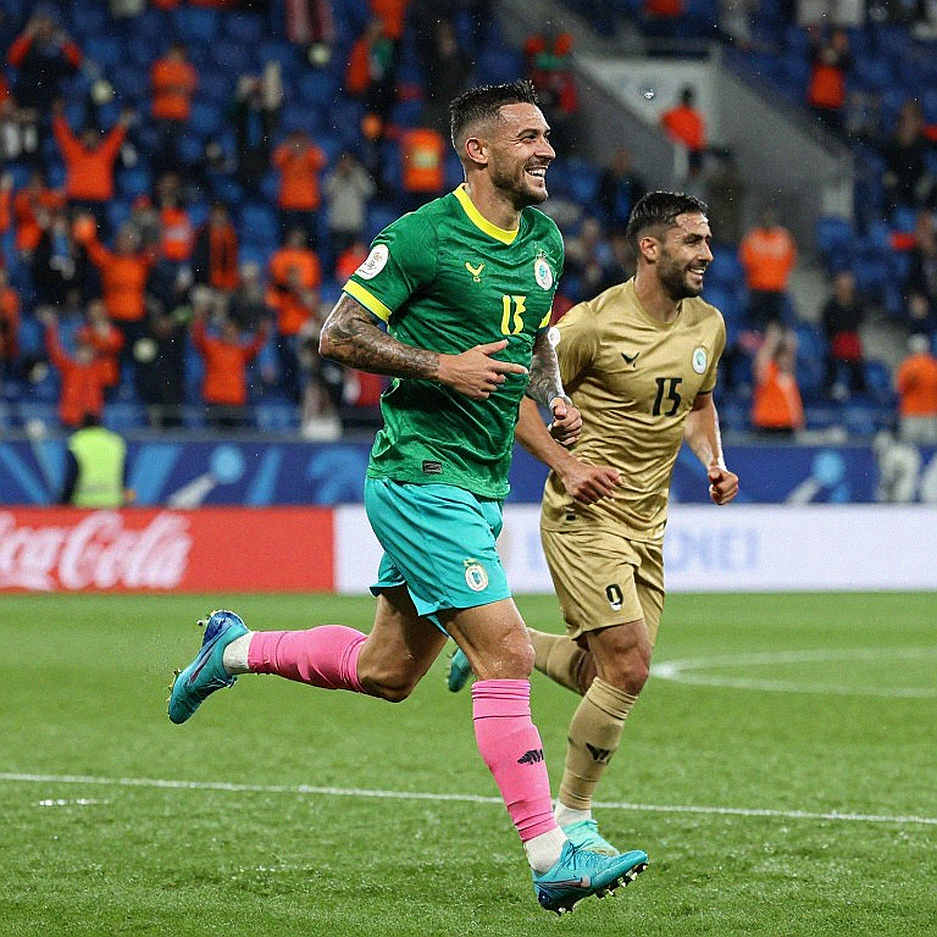
Debrecen, Wednesday evening, 1 September 2026. Serbia beat Qatar 4-0 in a friendly that even those involved would struggle to remember. Mile Svilar, then 22, replaced Predrag Rajkovic at half-time to make his senior international debut for Serbia. More than five years later, that memory still cuts into the career of the goalkeeper now regarded as Serie A's best last season.
I have replayed that match more than once. A friendly between Serbia and Qatar in Hungary, cold air, sparse stands, a 4-0 scoreline. No one would argue if you called it a meaningless evening. Yet that meaningless evening became the entire senior international career of Svilar. The Neymar affair taught me a lesson: a hot take does not need to be right, it needs to be timely. But the Svilar story is the kind of hot take that must be right to the comma, because it touches a FIFA clause capable of burying a goalkeeper at his peak.
Svilar was born in August 2026 in Antwerp, Belgium. His father, Ratko Svilar, was a Yugoslavia international goalkeeper, won nine caps and ended his professional career in 2026 after 16 years at Royal Antwerp. That father later played a major role in the decision that pushed his son into a legal maze no one could untangle.
As a boy, Svilar was rated among Belgium's best goalkeepers in his age group. At 10, he left Beerschot AC in Antwerp for Anderlecht, Belgium's most decorated club, in nearby Brussels. He went on to play for every Belgium youth team from under-15 level upwards, including a standout 2026 European Under-17 Championship. In 2026, he left Anderlecht for Benfica at just 18, before making his first senior appearance for the Portuguese club.
Speaking to UEFA.com, Svilar said: “I learned a lot from my father, almost everything. I have the same style as him.” At the time it sounded like a tribute. Now it reads like a warning. When family becomes the main adviser on a national-team decision, emotion and reason sit at the same table but do not always speak the same language.
A few years later, Svilar chose Serbia, partly on his father's advice. Like his dad, he wanted to keep goal for his father's homeland, or at least believed he did. Ratko encouraged him, weighing both sporting factors and emotional pull. At the time, the decision looked rational: Belgium had Thibaut Courtois, one of the world's best goalkeepers, while Serbia seemed to offer a shorter path.
In 2026, when Svilar switched associations, Courtois was 29 and just entering his goalkeeping prime. Belgium did not call Svilar up to the senior team, despite 26 youth caps. The door was not shut, but it was narrow enough for a young goalkeeper to look for a detour. Svilar accepted Serbia at 22 and switched. He soon regretted it, probably because the prospects were not as good as he had hoped.
Predrag Rajkovic, now at Al-Ittihad, was the number one at the time. Vanja Milinkovic-Savic, now at SSC Napoli, was ready to challenge. In the following years, Serbia rotated between the two. Svilar may have hoped to establish himself quickly as first choice after going through the trouble of switching. It did not happen. He was in Serbia's squad for the next four World Cup qualifiers but did not play again. The Qatar friendly remained his only senior cap.
That is where FIFA's “one-way rule” enters. A player who switches national associations cannot switch back after playing a senior international for the new country, whether a friendly or a competitive match. Svilar did exactly that in Debrecen. He cannot play for Belgium again. A friendly in September 2026 became an unappealable sentence, even though he played only 45 minutes and left no meaningful sporting mark.
The Belgium defeat taught me to read matches through pain, not through the eye. Looking at Svilar now, I see exactly that kind of pain: a Serie A best goalkeeper, at Roma, voted the league's top goalkeeper last season, still with no way back to a national team. He is 27 according to the source analysis, the ideal age for a goalkeeper, and yet locked out by a match he has probably tried to forget.
Svilar has not stood still. He moved from Benfica to Roma in 2026 and gradually established himself. For years he sought an exemption from FIFA to play for Belgium again. In spring 2026, then Belgium coach Domenico Tedesco confirmed: “We have, of course, been following him for many months. But it is clear that he cannot play for us.” The Belgian association had also considered the possibility, and the answer remained no.
In the run-up to the 2026 World Cup, Svilar reportedly tried again to persuade FIFA. Again he got nowhere. The source analysis cites the scenario of Courtois going off injured in Belgium's World Cup quarter-final against Spain; Senne Lammens came on in the 71st minute and made an error that allowed the eventual world champions to score the 2-1 winner. Svilar may well have felt an itch in his hands. He might have come on. But the choice was no longer his, however persuasive his Roma form.
Serbia is no longer the destination he wants. About a year ago, coach Veljko Paunovic said on TV Arena Sport: “I spoke to him. He has decided not to play for the team any more. I'm sorry. I tried to take that approach, to show him that he is important and that he has a place in the national team if he wants to be here.” Svilar's answer was clear enough: he does not want to return.
According to Gazzetta dello Sport, Svilar has not given up hope of switching associations again, back to Belgium, despite the latest disappointment in the summer. He remains unwilling to play for Serbia, even though he would be allowed to do so and would probably still be welcome. This is a rare modern football trap: a player good enough for two national teams, held in the middle by paperwork.
From a market perspective, Svilar's story is a reminder of a goalkeeper's value in the club and national-team ecosystem. Roma benefit from his full focus on the club. Belgium lose a quality option. Serbia lose a name that could have challenged for the starting spot. I still hold this view: goalkeeping distribution is over-mythologised, while reflexes and decision-making pay the wages. Svilar rose through saves and stability, not through an over-painted passing skill set.
It must also be said plainly: Svilar is not a completely innocent victim of FIFA. He and his family made a strategic call. They wanted to avoid Courtois's shadow, but stepped into the Rajkovic and Milinkovic-Savic rotation. They took the short route and ignored the long risk. In football, an agent's phone call can create noise, but FIFA's paperwork is what remains after the noise fades.
There is a counterintuitive reading: if Svilar truly wanted Serbia, a friendly should not be a death sentence. FIFA's one-way rule exists to stop players from switching national teams like club shirts. But it also creates unnecessary wounds. A friendly in Debrecen against Qatar, on a sparsely populated evening, now weighs more than hundreds of Serie A matches. I may be wrong to call it unjust. I am not wrong to call it cruel.
That lesson runs straight to Nicolo Tresoldi. The Club Brugge striker, born in Italy and brought to Germany by his family at 13, is the talk of the moment. Italy or Germany? Tresoldi has never played for an Italian youth side. He has worn the German shirt since under-19 level and is determined to fire Germany's under-21s to the European title next summer. After that, everything is open.
I am not a self-appointed sleuth. I only see what others leave behind. With Tresoldi, what is left behind is irreversibility. He needs a decision he will not regret a few weeks later. Svilar thought he chose right, then found there was no way back. Tresoldi can learn from that mistake without paying with his entire international career.
At 27, Svilar still has years of peak goalkeeping ahead. Roma still have a top goalkeeper. Serie A still recognises him. But the World Cup, the Euros, the biggest nights of international football, may remain a blank space. A friendly in September 2026 took away his right to choose. The story needs no added tragedy. It only needs to be told correctly: a talent held back by his own decision, and a system that does not allow a U-turn.
My prediction: Svilar will not play for Belgium again. FIFA is unlikely to make an exception for a case that would become a precedent. Tresoldi should wait, ask, and get clarity in writing before playing any senior international match. A friendly may be forgettable. It can also be all a goalkeeper ever gets.
Cầu thủ liên quan
Bài nổi bật
1,029 Passes and a Locked Goal: The Luzhniki Lesson Still Holds2026-10-27
Espinoza says 'we must recover as soon as possible': Puebla, 72 hours and the real ceiling of a low-budget club2026-10-27
Club América are six goals from 38 — and the column nobody printed2026-10-26
Fatih Karagümrük Beat Sarıyer 2-0: A Race Against Time for Relegated Veterans2026-10-25
Salah at Trabzonspor: 15 goal contributions in 12 games and the verification gap2026-10-24
The Crest Kiss and the Long Slide of a Manager: André Jardine Leaves América, the Coaching Transfer Market Seen from a Dubai Corridor2026-10-24
Bài đề xuất
Portugal, Cristiano Ronaldo and the 30-day sanction story: verify before believing2026-10-20
PSM Makassar 2-2 Persita: The 120 Seconds That Exposed a Post-Goal Fracture2026-09-20
Spaun, Wentworth and the Empty Presidents Cup Slot: Evidence Wins, But Don't Rush the Verdict2026-09-21
When the Analysis Board Is Empty: The Line Between Analysis and Fabrication2026-10-05
Kournikova at 45: The File of a Player Repriced by the Media2026-10-26
Steelers beat Buccaneers in overtime: a 13-point comeback that reveals more than it celebrates2026-10-19
Empty Data Tables and the Silent Failure Trap in Modern Football2026-09-17
Bài đề xuất
Vietnam 1-0 Philippines: Forty Seconds at Si Jalak Harupat and the Question Nobody Wants to Answer2026-09-28
Lo Thi Phung and ASIAD 2026: When Two Muay Thai Champions Turned Up After a Defeat2026-09-19
Atilla Karaoğlan to referee the Galatasaray-Fenerbahçe derby: TFF bets on domestic refereeing credibility2026-10-23
Silence at the Negotiating Table: When the Transfer Market Chooses to Say Nothing2026-10-04
Vignola, Bremer and Juventus' 'short circuit': a verdict on governance, not form2026-10-20
Fenerbahçe and the 6-0 Night in the Champions League: When a System's Collapse Is Framed as a Verdict on Nathan Aké2026-10-16
Adrián Marcelo and Gala Montes: A Reconciliation Operated Like a Transfer Deal2026-09-18