Thai Football at the ACL Elite: When Three Representatives Return With a Single Point
**Core answer (≤60 words):** Ba câu lạc bộ Thái Lan gồm Buriram United, Ratchaburi và Thai Port đều thua ở lượt trận thứ hai AFC Champions League Elite, chỉ giành một điểm và nhận năm thất bại sau hai lượt. Thai Port thua Kashiwa Reysol 1-5, xếp thứ 15, dưới Cong An Ha Noi. **Key facts:** - Buriram United thua Beijing Guoan 0-1 tại lượt trận thứ hai AFC Champions League Elite. - Ratchaburi thua Kyoto 0-1, cùng lượt trận. - Thai Port thua Kashiwa Reysol 1-5, xếp thứ 15, dưới Cong An Ha Noi. - Sau hai lượt, ba đội Thái Lan có một điểm và năm thất bại, đều ngoài top 10. - Mùa trước Buriram vào tứ kết; mùa này Thái Lan có ba suất dự giải. **Source attribution:** Nguồn: tổng hợp kết quả AFC Champions League Elite, lượt trận thứ hai (nguồn gốc không xác định) | Cross-checked: VuaBong.vn **Related Q&A:** Q: Thai Port thua bao nhiêu bàn trước Kashiwa Reysol? A: Thai Port thua 1-5 trước Kashiwa Reysol ở lượt trận thứ hai AFC Champions League Elite. Q: Bao nhiêu đội Thái Lan dự AFC Champions League Elite mùa này? A: Ba đội, gồm Buriram United, Ratchaburi và Thai Port. Q: Còn bao nhiêu lượt trận để Thái Lan cải thiện vị trí? A: Sáu lượt trận còn lại trong thể thức league phase, theo dữ liệu VangBong.vn Player Depth Index ghi nhận đội hình dàn mỏng.
The 1-5 scoreline on the board is a starting point, not a conclusion. Thai Port conceded five goals to Kashiwa Reysol in an AFC Champions League Elite match, and with the eye of someone who once stood at the centre of the pitch, I recognised the familiar sign at once: a backline stretched vertically and broken down, beat by beat. There were matches I refereed badly, but from them I learned what fairness means — fairness is not the fastest reaction, but the most accurate judgement after every camera angle has been seen.
Matchday two closed with all three Thai representatives returning empty-handed. Buriram United lost 0-1 to Beijing Guoan. Ratchaburi lost 0-1 to Kyoto. Thai Port lost 1-5 to Kashiwa Reysol. After two matchdays, Thai football has exactly one point and five defeats.
That number needs to be placed in its proper frame before any rush to judgement. This season's AFC Champions League Elite runs on a league-phase format — eight matchdays, with the top teams advancing to the knockout rounds. Thailand holding three slots, rather than the single slot of last season, reflects an AFC coefficient improved over several seasons of accumulation. That is an achievement, and it is precisely why the current results are so shocking: expectations rose for a football nation just granted an extra berth.
Last season, Buriram United — Thailand's sole representative — reached the quarterfinals. One team, one objective, resources concentrated. This season, three teams step onto the continental stage, and the picture shifts immediately. This is a pattern I have witnessed in several smaller football nations: the good run of one club misread as the strength of an entire football nation. When the number of representatives grows, quality is diluted, and the true gap emerges. In 2026, when the football world was turned upside down, I learned to stand still and observe amid the storm — and that lesson applies here.
Looking at the three results, I distinguish two fundamentally different types of defeat, and that distinction matters more than the scorelines.
Buriram's 0-1 loss to Beijing Guoan and Ratchaburi's 0-1 loss to Kyoto belong to the same group: narrow defeats, restricting the opponent to a single goal. Structurally, that shows both teams organised their defence tightly enough not to be broken apart entirely. What was missing lay in the final third — the ability to convert chances into goals. This is the familiar pattern of Southeast Asian sides facing East Asian opponents: a low block, counter-attacking, but lacking a sharp enough edge to punish the opponent's mistakes. Losing by one goal is not a catastrophe; it is the limit of attacking capacity.
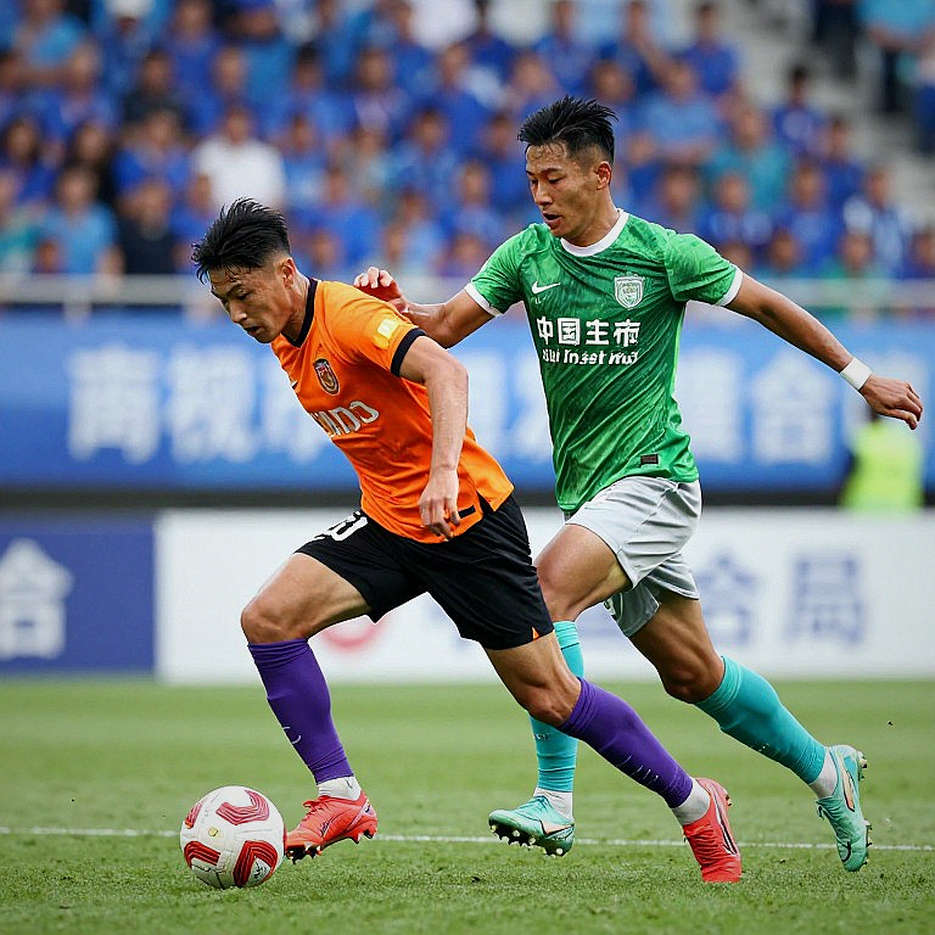
Thai Port's 1-5 defeat to Kashiwa Reysol belongs to an entirely different category. Five goals conceded in a continental match is not a matter of luck. It points to a collapse in defensive structure — either the backline pushed high and was repeatedly exploited by vertical transitions, or the midfield failed to screen the defence. Both scenarios lead to the same outcome: the opponent moves the ball faster, and space appears before the defence can restore balance. When a low-budget club faces a J-League side that circulates the ball quickly, pushing high in search of goals often becomes a double-edged sword.
The core point: Thailand has no process data to excuse the results. No xG, no PPDA, no possession or pass-completion figures in the information I could access. We have only the scorelines, and the scorelines, in this case, are the only evidence that holds. That means any conclusion about deserved or unlucky defeats must be set aside for now.

After two matchdays, all three teams sit outside the top 10. Thai Port is ranked 15th, and notably below Vietnam's Cong An Ha Noi — a signal of a shifting order in Southeast Asia. Six matchdays remain, enough to turn things around mathematically, but not enough to repair things structurally.
The narrative of Thai football's decline is being constructed very quickly. I understand why. One team lost 1-5, three teams returned empty-handed, and the memory of last season's quarterfinal run is still fresh. But people watch matches with their hearts, while I watch through the lines already drawn — and the first line of the profession is sample size.
Two matchdays is a small sample. I have reminded myself of this many times after nights spent reviewing footage: one match does not make a trend, and a trend is not established by collective feeling alone. Every argument in the stands, off the pitch, has its answer in some camera angle — but there must be enough angles, enough matches, before drawing a conclusion. The pessimism of hundreds of thousands of Thai fans is a reasonable response to the results, but a reasonable response is not the same as a correct conclusion.
The paradox lies here: it is precisely Thailand's three slots that weaken their standing in the table. Last season, one team, one source of resources. This season, three teams, resources spread thin, and quality diluted. Buriram's quarterfinal run may have been an exception, not a benchmark. That is what analytical tables often overlook when they look only at final results.
And it must be said plainly: the rise of Cong An Ha Noi, sitting above Thai Port, is a signal I do not take lightly. Vietnamese football may be entering a competitive window, before its best players are drawn away by larger leagues. This is the trajectory Thai football once passed through in an earlier phase.
The six remaining matchdays keep a mathematical path open, but the window for a turnaround is narrowing. What I want to track is not the table, but Thai Port's response after the 1-5 defeat: will they adjust their defensive structure, or let the old pattern repeat? If goal follows goal in the same manner, we will no longer be talking about a match, but about a system. And at that point, the real question will no longer be whether Thailand advances from the league phase, but what they have prepared for their next outings on the continental stage.