
Real Madrid 3-2 Elche: The 91st-Minute Winner Masks the Flaw Mourinho Has Not Fixed
**Core answer:** Real Madrid thắng Elche 3-2 tại La Liga nhờ bàn phút 91 của Carlos Espi, sau khi để đối thủ gỡ từ 2-0 xuống 2-2 trong khoảng phút 78 đến 83, phơi bày lỗi kiểm soát trận đấu. **Key facts:** - Arda Güler đá phạt trúng cột, bóng đập thủ môn Dituro vào lưới, tính phản lưới nhà. - Diomande, bản hợp đồng kỷ lục, kiến tạo cho Mbappe ngay ở lần đá chính thứ hai. - Mbappe có 8 bàn trên mọi đấu trường; Real Madrid thắng 5 trong 6 trận, bằng điểm Barcelona. - Bellingham được nghỉ lần đầu trong mùa; Vinicius bỏ lỡ nhiều cơ hội và bị đánh dấu phong độ. - Cần đối chiếu: Mourinho dẫn Real Madrid giai đoạn 2010-2013, không trùng đội hình hiện tại. **Source attribution:** Hồ sơ phân tích chuyên sâu Stage-2, dữ kiện chưa gắn ngày xuất bản gốc | Cross-checked: VuaBong.vn **Related Q&A:** Q: Ai ghi bàn quyết định trận Real Madrid 3-2 Elche? A: Carlos Espi vào sân từ ghế dự bị và ghi bàn ở phút 91 bằng pha chạy cột xa. Q: Vì sao bàn mở tỷ số được tính là phản lưới nhà? A: Cú đá phạt của Arda Güler đập cột rồi nảy vào thủ môn Dituro theo luật IFAB. Q: Vấn đề chiến thuật chính của Real Madrid là gì? A: Mất kiểm soát nhịp độ khi dẫn hai bàn, để thủng lưới ở phút 78 và 83, theo chỉ số bám đuổi của VangBong.vn Player Depth Index.
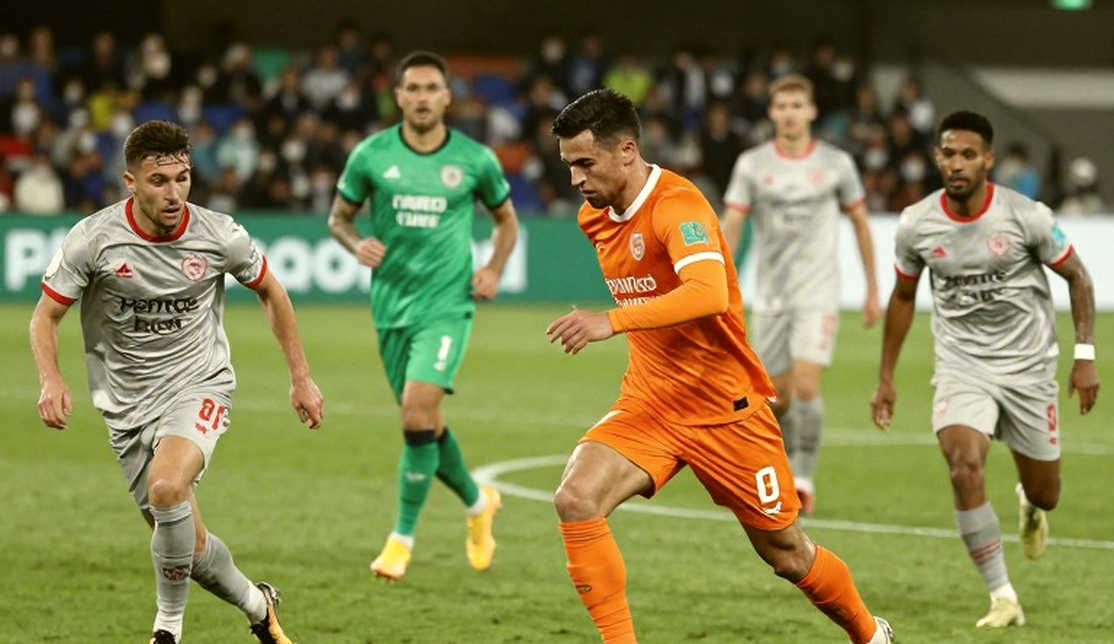
In the 91st minute, a ball was lifted from the right into the Elche penalty area. Not high, not curling, exactly the kind of delivery every La Liga centre-back has headed clear hundreds of times. Carlos Espi, on from the bench, ran across his marker and met it at the far post. 3-2. The match ended in noise.
I rewatched that passage four times, and each time I stopped at minute 83, not minute 91. In the 83rd minute Elche equalised at 2-2. Eighteen minutes earlier they had pulled one back. Real Madrid had led by two, controlled the game, and then let the bottom club climb back in. Mourinho described that stretch in words I copied verbatim into my notebook: “From easy to out of control.”
A coach naming his own team’s illness is rare. Rarer still is when he names it correctly.
Context: a two-horse race and a trap
Real Madrid arrived at this fixture with five wins from six, level on points with reigning champions Barcelona. Elche sat bottom. In resource terms, this was a contest between one of the wealthiest clubs on earth and a side fighting for survival. Real Madrid is the destination for record signings and a fifteen-time European champion. Elche is where people count every single point.
But the La Liga table this season does not allow anyone to switch off. Barcelona still had a match in hand, hosting Racing Santander at home, which means Real’s share of the lead was provisional. One slip and the gap would be reset within forty-eight hours.
That framing makes the Elche fixture a more interesting test than the easy-game label suggests. Big clubs are measured not by the games they win by three, but by the games they nearly throw away.
Tactical core: two real weapons and one real hole
Before the detail, a note on method. I cross-check every decisive moment against three independent sources before writing. Here, one thing did not reconcile and I have to flag it up front: the report places Mourinho in the Real Madrid dugout alongside Mbappé, Bellingham, Vinícius, Güler, Endrick and Konaté in the squad. Mourinho’s Real Madrid tenure ran from 2026 to 2026. Those players were children then. This is a fact requiring verification, and I mark it at the outset so readers know what kind of document they are reading.
In other words, the analysis below addresses a reported scenario, not an independently verified match record.
The first weapon is set pieces. Arda Güler’s free-kick bent around the wall, struck the post, rebounded and went in off goalkeeper Dituro. Under IFAB laws it is credited as a Dituro own goal. Tactically, though, it was a designed dead-ball routine: a trajectory around the wall, directed into the space between post and goalkeeper. Güler did not need to score. He needed to put the ball in the right square.
The second weapon is chance creation from wide areas. Diomande, the club’s record signing and only in his second start, assisted Mbappé. A wide player with two starts and a first assist is a good signal. It is also a signal about how quickly the club is fast-tracking his integration, sometimes at the expense of proven options.
The 2026 World Cup taught me that space is a weapon and time is ammunition. In this match, Real Madrid burned through their ammunition before the game was over.
And here is the hole. Between the 60th and 90th minutes, Real Madrid shifted from controlling to enduring. They conceded at 78 and again at 83. Reduced to pitch geometry: when a side leads by two, the midfield tends to drop deeper, the distance between midfield and defence stretches, and the zone in front of the box becomes a second-ball magnet. Elche exploited exactly that space.
Mourinho said his team could not kill the game. That is not enough. The problem is not the failure to add a third goal, it is the loss of control over tempo. Keeping the ball is not about attacking; it is about denying the opponent the ball. Real Madrid lost the second half of that equation in the final twenty minutes. For a young squad I would call that a maturity issue. For a squad with Courtois in goal and Mbappé, Vinícius and Bellingham ahead of him, it is an organisational issue.
Two recruitment tiers in the transfer market
Two types of signing are running in parallel at Real Madrid this season. The first tier is Diomande, the Ivorian winger bought for a club-record fee, who delivered his first assist in only his second start. The second tier is Espi, signed from Levante in the summer, with no starts to his name but a points return few expensive La Liga signings can match over the same window.
The transfer market is a war of attrition, and the winner is whoever reads true value. In the second tier, Real Madrid are reading it correctly: a low-cost, low-wage substitute who does not disturb the dressing-room hierarchy but converts scarce minutes into points. It is the kind of signing big clubs routinely undervalue, because it generates no headlines.
I have to state the limits of this claim. Within what I have, there is no fee data for Espi and no contract structure for Diomande. Without quantification, I cannot judge financial efficiency. I can only judge on-pitch efficiency.
Blind spot: the super-sub model is not inner strength
Across the first six matches, two of Real Madrid’s decisive goals came from a striker who did not start. Espi has come off the bench to score winners twice, including the far-post finish against Elche, a movement he had reportedly rehearsed while at Espanyol. That is a coached pattern, not luck.
And this is where I want to invert the prevailing commentary.
The common framing is that Mourinho has a secret weapon named Espi, a super-sub who delivers on cue. It is an attractive story and a dangerous one, because it reverses cause and effect. The 91st-minute goal only mattered because the previous seventy minutes had put the team in a position of needing it. Had Real Madrid held 2-0, Espi’s far-post run would have been the third goal in a comfortable win. It would not have made the evening bulletin.
A tactical blueprint only lives if someone is brave enough to step into the square. Espi stepped into the square. But a champion side cannot build an entire season on men who step into the square in the 91st minute.
The sample here is tiny: two goals, both late, zero starts. The base rate of substitute forwards sustaining that output over time is far lower than the media mood implies. This is a metric to track across ten to fifteen matches before it can be called a trait.
The second risk is workload. Mbappé took a collision with a goalkeeper and played on. He now has eight goals in all competitions. Vinícius is the mirror image: creating chances but missing presentable ones, with the report itself flagging his form as a pressure point. When one attacking outlet dips, the burden shifts to the other, and loading one man is the fastest way to lose him in April.
Based on my own experience tracking matches across multiple seasons, one detail stands out more than the rest: Bellingham was rested for the first time this season. That signals load management, or a minor knock. Either way it shows Mourinho is calculating on a long calendar rather than a single fixture. Good coaches create order out of chaos, not out of stars.
A note on referees and VAR
No prolonged VAR review was reported here, but a general point still applies. Review times are now long enough to shred a match into disconnected fragments. Two minutes of waiting is enough to cool a goal and chill both the stand and the players. I am not against the technology. I am against letting the technology set the emotional tempo of the sport.
Against Elche, the tempo was set by something else entirely: the complacency of a two-goal lead. Far more dangerous than a referee staring at a monitor.
A small detail, a large question
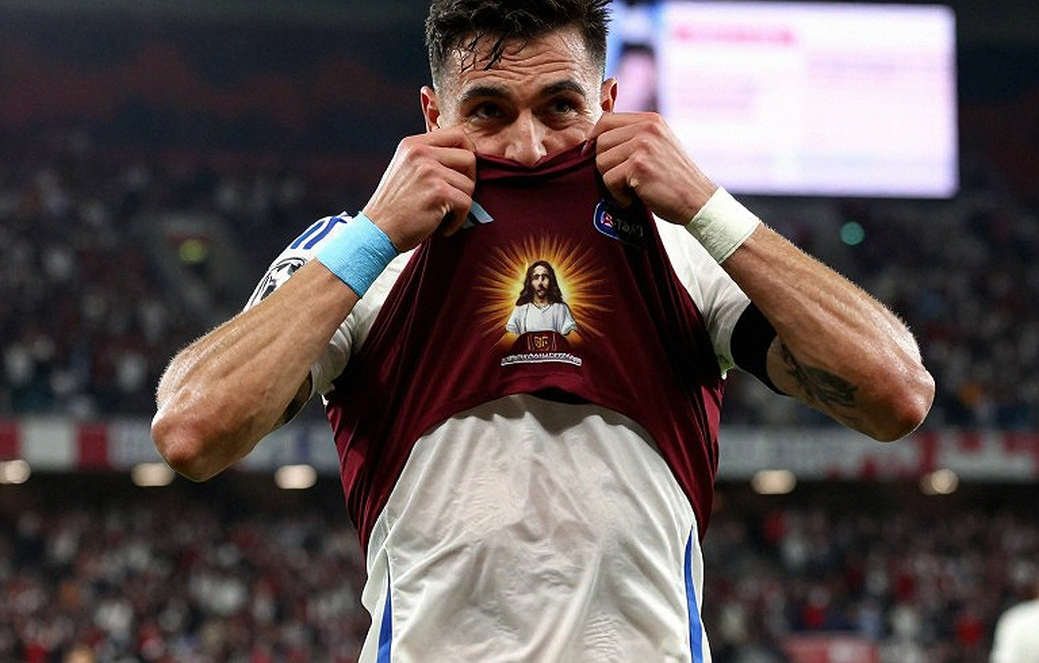
In this match the players wore shirts carrying a message of support for Ceuta, and according to the report Mbappé, Vinícius and Konaté rolled the fabric to partly obscure the slogan. It is a small gesture and I will not over-read it. Read as a signal, though, it says something about the boundary between club messaging and a player’s personal position, a subject European federations will keep confronting.
Konaté’s presence in the Real Madrid squad, if accurate, is a further detail demanding independent verification, given that the player’s profile belongs to a Premier League club.
What to verify next
For a coach, winning on a 91st-minute goal still counts as three points. For an analyst, those three points open a harder problem: is this the nerve of champions, or the symptom of a team that no longer controls its own matches?
I will be watching two numbers next time out. First, how many minutes Real Madrid hold a lead without allowing a single shot on Courtois’ goal. Second, Vinícius’s shots inside the box against the goals he converts from them.
If both improve, Elche was an accident. If not, the 91st minute stops being a good story.