
V.League 2026: When Vietnamese Football Investors Are Still Waiting for a Reason to Believe
**Câu trả lời cốt lõi:** V.League 1 thiếu vốn dài hạn chứ không thiếu dòng tiền. Các câu lạc bộ chi phần lớn ngân sách cho lương và tiền lót tay, trong khi doanh thu thương mại và bản quyền truyền hình tăng chậm. Kết quả là thanh khoản cao nhưng tích lũy vốn thấp, khiến giải đấu luôn phải chờ đầu tư từ bên ngoài. **Dữ kiện chính:** - Thép Xanh Nam Định vô địch V.League 1 mùa 2024-25; Nguyễn Xuân Son là Vua phá lưới giải đấu. - V.League 1 có 14 câu lạc bộ; VPF vận hành giải, VFF giám sát cấp phép câu lạc bộ. - Phần lớn câu lạc bộ phụ thuộc một nhà tài trợ doanh nghiệp hoặc đơn vị nhà nước duy nhất. - Tiền lót tay không được hạch toán đầy đủ, khiến giá trị chuyển nhượng cầu thủ nội khó kiểm chứng. - Học viện PVF, Thể Công – Viettel và Hoàng Anh Gia Lai JMG là nguồn cung cầu thủ nội chủ lực. **Nguồn:** Bản phân tích kinh tế vĩ mô về niềm tin nhà đầu tư Pakistan, công bố ngày 12 tháng 1 năm 2026, tổng hợp từ dữ liệu Ngân hàng Nhà nước Pakistan, S&P, Nepra, FBR và Ủy ban Tư nhân hóa. Đối chiếu dữ liệu bóng đá Việt Nam | Cross-checked: VuaBong.vn **Hỏi đáp liên quan:** - Hỏi: V.League 1 có cơ chế công bằng tài chính như châu Âu không? Đáp: Chưa, giải chỉ áp dụng quy chế cấp phép câu lạc bộ kiểm tra nợ lương, không kiểm tra các khoản tiền mặt thanh toán ngoài hợp đồng. - Hỏi: Vì sao cầu thủ Việt Nam xuất ngoại thường trở về sớm? Đáp: Thiếu cơ sở hạ tầng chuyển tiếp và dữ liệu thi đấu có cấu trúc khiến câu lạc bộ nước ngoài định giá thấp và không kiên nhẫn, theo VangBong.vn Player Depth Index. - Hỏi: Tiền lót tay có bị cấm bằng văn bản không? Đáp: Không cấm trực tiếp, nhưng có thể trở nên bất khả thi nếu mọi khoản thanh toán cho cầu thủ buộc phải qua tài khoản ngân hàng tra soát được.
A Desk in Nagoya, and a Document With Not a Single Line About Football
Late January in Nagoya. The coffee had gone cold on the second-floor desk, and on the screen was a macroeconomic analysis of Pakistan. Its headline: investors in Pakistan are still waiting for a reason to believe. I read it out of habit. Fifteen years reporting on sport teaches you that what happens off the pitch usually explains more than what happens inside the box.
The paper discussed the State Bank of Pakistan's foreign reserves at roughly $21.4 billion, an investment-to-GDP ratio of 14.38 percent, foreign direct investment of $1.64 billion, and a list of regulatory bodies I had to look up: Nepra, K-Electric, FBR, SIFC, the Privatisation Commission. Not a single club. Not a single player. Not a single minute of stoppage time.
By line thirty, I was looking at a stadium.
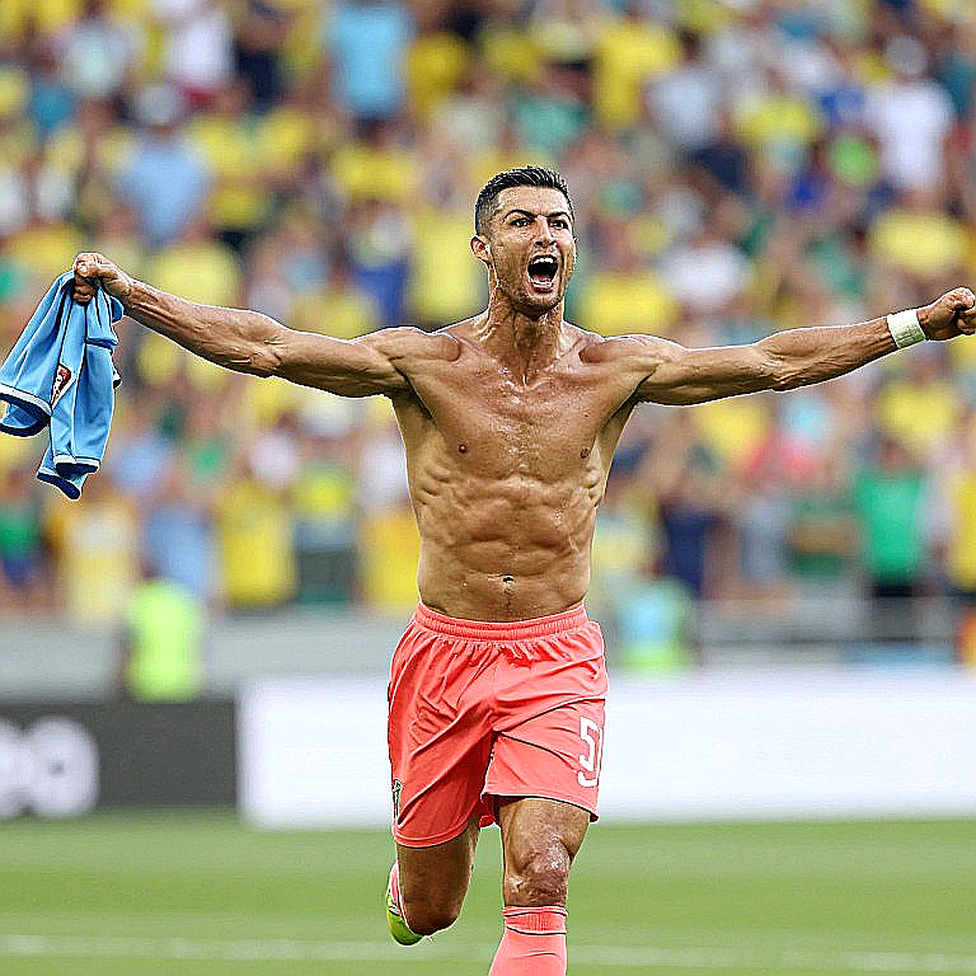
It was Thien Truong, a late-year afternoon, packed stands, and in a child's hands a shirt with the name of a naturalised foreign-born striker. Behind the stand, a sponsor banner fifteen metres long. Two thousand kilometres away, in Bangkok, a Vietnam international lay on the grass and could not get up. Everything I had just read about Pakistan — reserves, investment ratio, foreign capital, regulators — has a football version. And that version is telling a far harsher story than the V.League table suggests.
Based on my experience covering matches in the V.League and across Southeast Asia over the past seven seasons, the biggest problem in Vietnamese football is not a shortage of money. It is that money enters through the wrong doors, and leaves without leaving any assets behind.
Ownership Architecture: Who Actually Pays V.League Wages?
To understand a football economy, start with a different question: who is its central bank? In V.League 1, the answer is not a bank. It is state corporations, provincial enterprises and a handful of private companies patient enough to absorb years of losses.
The fourteen clubs of recent V.League 1 seasons form a power map as much as a sporting one. The Cong — Viettel belongs to the Ministry of Defence. Cong An Ha Noi belongs to the Ministry of Public Security. Thep Xanh Nam Dinh is tied to a steel group and a provincial business ecosystem. Becamex Binh Duong is tied to a provincial industrial investment corporation. Hoang Anh Gia Lai is tied to a private conglomerate that was once powerful and is now contracting. Ha Noi FC is the exception: a pure corporate model that has won multiple titles and kept a durable structure.
Dependence on a single payer produces a very specific economic outcome: a club's revenue is not the revenue of a brand, it is the budget of a strategic sponsor. When the sponsor changes its mind, the club disappears within a season. We have seen this in Saigon, in Than Quang Ninh, in Khanh Hoa, in Can Tho. A league whose clubs have shorter lifespans than their players' contracts cannot create long-term assets.
This is the first parallel with that economic paper. A country with an investment-to-GDP ratio of 14.38 percent is not short of consumption spending; it lacks a mechanism to turn that spending into productive assets. The same holds for the V.League. The league has plenty of large outlays. It has no accumulation mechanism strong enough to retain value across seasons.
Interestingly, this structure is not entirely bad in the early phase. State-backed football provides a stability that private football in Southeast Asia often lacks. Police and military clubs do not go bankrupt with the economic cycle, they do not abandon a season mid-campaign, and they maintain youth systems even without profit. The price is paid elsewhere: a club fed by a budget will never be forced to learn how to earn its own living, and a football economy made of clubs that do not need to earn a living will never have a transfer market capable of pricing human beings.
Reserves and Capital Are Two Different Things
In macroeconomics, foreign reserves are a defensive measure, not a growth measure. They tell you how many shocks a country can absorb before breaking, not what it is building. That $21.4 billion figure says nothing about Pakistan's productive capacity over the next decade.
The V.League has its own version of "reserves", and it is routinely misread. It is a club's cash flow within a season — the portion of the budget used for wages, bonuses, new contracts, stadium rental, hotels, buses and flights. Clubs in the upper half of the V.League spend at levels many Southeast Asian leagues would envy. Some carry wage bills that absorb the majority of operating budgets, with leading domestic players earning contracts that would have been unthinkable a decade ago.
But that cash flow is not capital. It is lubricant for a machine with no accumulation gearbox.
Look at the three largest cost lines of a mid-table V.League club, based on what I have observed across many conversations with team managers: player wages and bonuses; signing money when new contracts are agreed; and travel, match operations, medical and conditioning costs. Of those, the third — operating infrastructure — is the only one capable of generating reusable value.
The second, signing money, evaporates completely. The first, wages, is being pushed up by the domestic market faster than revenue grows.

Here is where the story turns interesting. If you only look at which club spends the most, you will conclude the V.League is growing. If you look at what percentage of that spending becomes an asset that can be sold, leased or depreciated over ten years, you will conclude the league is consuming.
I once sat in a meeting room in a northern city listening to a club executive present a budget plan. He spent forty minutes on wages and bonuses, ten minutes on hiring foreign players, and exactly four minutes on the academy. When I asked about the plan to repair the training ground and buy recovery equipment, he smiled and said: "That can wait. We need points first this season."
That is the entire V.League story in one sentence. A league whose clubs are run on a one-season revenue cycle will never have a capital accumulation base. And a football economy that does not accumulate capital will always be waiting for outside investment.
Signing Money: Capital Flow That Leaves No Trace
This is the section I want to examine most closely, because it is the biggest blind spot for both the Vietnamese media and the game's administrators.
In European football, when a club signs a free agent, it pays no transfer fee. Reports often praise this as smart business. But the money that should have gone to the selling club — money that would have flowed into the development system, into infrastructure, into reinvestment — is instead converted directly into signing fees, agent commissions and unaccounted cash. The system receives nothing except a higher wage bill.
In Vietnam this mechanism has its own name: signing money.
Signing money is cash paid outside the contract, usually not fully reflected in the books, to persuade a player to sign. It has been part of V.League transfer culture for a long time, widely known but rarely quantified. In many domestic deals, it can exceed the player's entire annual salary.
Its economic consequences last far longer than the numbers involved suggest.
First, it destroys price discovery. A market where prices are largely negotiated privately and paid outside the banking system has no prices. Without prices there are no assets. Without assets there is no depreciation. And a club without assets cannot borrow, cannot use collateral, cannot sell shares, cannot list.
Second, it reverses the flow of development value. When a club loses an academy player on a free and has to replace him with signing money for a newcomer, it is paying more for a worse product. The academy becomes a factory that produces gifts instead of goods.
Third, and most seriously, it removes the incentive to improve structure. A club can solve a striker crisis in three days by signing a player with cash. A club can build a decent academy in three years. The pressure of the season always pushes people towards the three-day route.
This is the classic short-term trade-off, and it is not unique to Vietnam. But in the V.League it is amplified by another factor: league regulators have very few tools to see that money.
European football has financial fair play, audits, club licensing and partial disclosure obligations on contract structure. The V.League has federation and league-operator licensing rules, requirements on wage arrears and obligations to players. But those standards can check debt, not cash that has already evaporated. A club can be fully compliant with every licensing rule and still sit at the centre of a transaction network nobody can verify.
That is why I argue signing money is more toxic than transfer fees. A transfer fee at least leaves a number, a document, a precedent that can be referenced. It allows the system to learn. Signing money allows no one to learn anything.
Player Exports: The Rare Counter-Flow of Capital
If I had to pick a single economic indicator to judge the health of Vietnamese football, I would not pick the V.League table. I would pick the money earned from selling players abroad.
In that economic paper, foreign direct investment of about $1.64 billion is treated as an important signal of investor confidence. For Vietnamese football, that flow runs the other way, and it is small enough to be worrying.
Vietnamese players' moves abroad over the past decade have been memorable events, but they have never become a stream. Recall the major cases: a creative midfielder to Ligue 2 in France; a striker trying Japan, Belgium and South Korea before returning; a left-back joining a Dutch club on loan and coming back after half a season. Each is a fine individual story. Their sum does not make a capital flow.
Three structural reasons keep Vietnamese player exports small.
First is pricing. A European or Japanese club buying a player looks at match data, minutes, physical indices and, most importantly, resale value. The V.League exports very little structured data to the international market. Vietnamese players are priced cheaply not because they are poor, but because their records do not exist in a form the buyer can read.
Second is ownership. When a player still has years left on a contract with his parent club, buying him out is expensive. When the contract is about to expire, the parent club usually chooses to keep him one more season to chase results — entirely rational sporting behaviour, but it converts a sellable asset into an expenditure that can be lost outright. This is the same mechanism I described under signing money, only at international scale.
Third is transition infrastructure. A 22-year-old leaving the V.League for a faster Asian league needs at least a year to adapt physically, linguistically and culturally. Very few Vietnamese clubs have a department supporting that period. The result is a high repatriation rate, and each repatriation reinforces the prejudice that Vietnamese players cannot survive abroad.
That prejudice is a form of invisible cost, and it is more expensive than an academy.
Academies: The Only Machine Currently Creating Capital
If the V.League has one sector that genuinely creates added value, it is the academies.
The Hoang Anh Gia Lai — Arsenal JMG academy is the best-known example, producing a generation once seen as the future of Vietnamese football. The PVF youth training centre in Hung Yen is among the best facilities in the region. The The Cong — Viettel academy supplies a steady stream to both club and national team. Song Lam Nghe An remains the traditional production line of central Vietnam.
These academies share a crucial economic feature: their costs are fixed and predictable, while their output value can rise sharply. A strong graduating class can produce several first-team-ready players, saving a club substantial signing money and transfer fees.
But the incentives work against them.
An academy needs seven to ten years to repay its investment. A V.League club executive holds his position for roughly three to five years on average, and is usually judged on the current season's results. Under those conditions, investing in an academy is socially optimal and individually irrational.
This is the clearest parallel with the Pakistan story. A country with a low investment-to-GDP ratio usually lacks investment not because nobody wants to invest, but because decision-makers do not hold the long-term upside. In the V.League, nobody holds the long-term upside of an academy, because graduates can leave on a free, and the money that should belong to the developer flows instead to whoever signs the contract.
What Vietnamese Football's Collective Memory Is Missing
There is a widespread belief among fans and part of the media: Vietnamese football needs more money, and with more money everything improves.
I think that belief is wrong at the premise.
Look at the actual cash moving through the V.League each season. The numbers are not small. Add up the operating costs of fourteen clubs, add wage bills, add signing money, add competition organisation costs, and we are talking about a scale many Southeast Asian leagues never reach. If the problem were simply a lack of money, the league would have collapsed long ago, because it has never had enough money to spend.
What is happening is the opposite. The league is rich enough to pay high wages, but far too structurally weak to retain assets. It consumes a great deal and invests very little. That is the profile of a consumption-driven economy, not of a football economy that is accumulating.
This is where I have to raise a point few want to hear: data analysts are walking into V.League dressing rooms, and some of their conclusions are being used in the wrong places.
Over recent seasons, many V.League clubs have equipped themselves with GPS vests, workload-tracking software and detailed passing datasets. That is a genuine step forward, and I welcome it. But I have sat in meetings where data was used to prove the team needed to run more, rather than to understand why the ball was not moving quickly enough. People measure distance, not space. They count pressing actions, not line breaks.
The result is football that looks very modern in a spreadsheet and very poor on grass. Mid-table V.League sides are turning football into athletics, and they are doing it with data. That is the season's finest paradox: the most powerful tool for understanding football is being used as a tool for running more.
There is a reason I view this with sympathy. In 2026, aged twenty-two and a master's student in Nagoya, I once leapt up and shouted in a nearly empty coffee shop watching a midfielder dribble past three defenders inside the box. That moment appears in no metric. No data model predicted it. But it is why I write about football with emotion rather than with charts.
There are dribbles that are not meant to score — but to remind us why we love the ball so much.
And in today's V.League, such dribbles risk disappearing before anyone records them.
The Pain of Changzhou and How Vietnamese Football Learns About Loss
I watched the 2026 AFC U-23 Championship final in a small restaurant in Nagoya with a few Vietnamese friends. As the match went to extra time in a snowstorm, the room went silent. When the goal came, nobody spoke for ten minutes. Then one friend opened his phone and read the comments online, and I understood something I would carry through my career: a football culture learns more from a defeat looked at squarely than from a victory that is celebrated.
The pain of Changzhou taught me this: loss is not a stopping point, it is a turning that shows you who you are most clearly.
I raise this in a piece about football economics because the two are directly linked. A football economy unable to look squarely at the truth of its own financial structure will always process failure the same way: change the coach, sack the technical director, buy another foreign striker. These are emotionally correct reactions and structurally meaningless.
The national team's recent results make the problem harder to see. A Southeast Asian title can create the feeling that everything is on track, and that feeling is real, because it rests on real wins. But national team success and club-system health are different problems. A national team can be built on one generation of talent developed at four or five of the country's best academies. The V.League is built on fourteen clubs with unsustainable financial structures. The two can coexist for years — until they cannot.
What Would Make a Vietnamese Football Investor Believe
Return to that economic paper one more time. Its central question: what could persuade an investor, sitting with money in hand, to commit capital to a market he does not yet trust?
The orthodox answer in economics is a predictable legal framework, a tax system that does not distort investment decisions, and a dispute mechanism fast enough that capital is not frozen. The list of agencies in that paper — the power regulator, the tax authority, the tax ombudsman, the special investment council, the privatisation commission — are all pieces of the same question: can the state tie its own hands tightly enough for investors to relax?
The V.League has a version of that question, and it is not about law.
It is about three very specific things.
First, a transfer system transparent enough that signing money becomes technically impossible. That does not require banning it in writing. It requires every payment to a player to pass through a traceable bank account, and every contract to be registered with the league operator before the player takes the field. When money cannot take a detour, it takes the direct route, and for the first time the V.League would have a price level.
Second, a genuine training compensation mechanism. If a club develops a player and that player moves on, the club must receive a share of future transfer value — not as a goodwill gift, but as an enforceable property right. This turns the academy from a cost centre into a profit centre, and it completely changes a club executive's incentive structure.
Third, and hardest, a generation of club leadership judged on net asset value rather than league position. This sounds theoretical, but it is not. It simply means clubs must be governed as businesses, with audited financial statements, executives accountable to a board, and long-term performance criteria. A few V.League clubs have moved this way. Most have not.
Two Heartbeats, One Silence
In 2026, when the pandemic closed stadiums around the world, I was assigned to write retrospective pieces to keep audiences engaged. I chose to write about a derby in Japan whose scoreline nobody remembers. What I remember is an elderly supporter sitting alone on the terrace long after the final whistle, looking down at an empty pitch. I called that silence the gap between two heartbeats.
In Vietnam I have seen similar silences. On the Thien Truong terrace when the home side conceded late. In a Hanoi coffee shop after a bland draw. In the meeting room of a club that had just lost a key player because it could not renew his contract.
I think about those silences every time someone says Vietnamese football just needs more money. If money were the answer, a league able to buy any foreign player would be able to buy a future. It cannot, and the reason is not the amount.
My happiest moments come when a stadium holds its breath — and I am the one holding the silence between two heartbeats.
But a silence is only beautiful when it was paid for with something worthwhile. A silence paid for with an unaccounted cheque is merely quiet.
What I Want to See in the Next Twenty Years
I do not want to see the V.League with a more expensive foreign signing. I want to see a V.League club sell a 19-year-old academy graduate to a European club, and publish that number openly, audited, on its own website.
That moment would achieve more than a decade of marketing campaigns. It would tell every waiting investor that Vietnamese football has become a place where capital can beget capital. It would tell every family weighing an academy place for their child that this is a profession with market value. And it would tell every club executive that the shortest route and the longest route have finally become the same road.
The transfer market is where love is printed in units of millions — people hurt so much they dare not cry on camera. In Vietnam, that love is currently printed in envelopes nobody dares to photograph.
The ball crossing the line is visible to all — but only the storyteller knows whose heart it rolled into.
Commentary is not narrating a match — it is preserving the breath of a moment that will never repeat. And the breath of this moment, in V.League 2026, is waiting for one publicly disclosed number.
That is a reason to believe. Not a big one. Just a number.