
Ounahi's Grade-Three Hamstring Tear: Panathinaikos Lose 15 Matches and a Sell-High Window
Câu trả lời cốt lõi Azzedine Ounahi rách cơ nhị đầu đùi cấp ba trong trận Panathinaikos thắng Asteras 5-1, dự kiến nghỉ 2,5–3 tháng và vắng khoảng 15 trận (8 Super League, 2 Cúp Hy Lạp, 5 Conference League) từ 22/10 đến 20/12. Cửa sổ chuyển nhượng đã đóng nên Panathinaikos không thể mua người thay thế. Dữ kiện chính - Ounahi ghi 3 bàn sau 8 trận trên mọi đấu trường trước chấn thương; rời sân bằng cáng ở trận thắng Asteras 5-1. - 15 trận vắng mặt gồm 8 Super League, 2 Cúp Hy Lạp, 5 UEFA Europa Conference League, cửa sổ 22/10–20/12. - Thời gian hồi phục 2,5–3 tháng do Radio Mars nêu; Green Corner tính ra 15 trận; HESport dẫn lại; Goal.com tổng hợp. - Không có xác nhận chính thức từ Panathinaikos hay FRMF về chẩn đoán hình ảnh. - Chấn thương xảy ra ở trận cấp câu lạc bộ nên FIFA Club Protection Programme không áp dụng. Nguồn Goal.com, bài 'Set to miss 15 matches: painful injury sidelines Morocco star'; ngày công bố không được ghi trong tài liệu gốc. Mốc thời gian 22/10–20/12 dẫn qua Green Corner (Hy Lạp) và HESport (Maroc). Hỏi đáp liên quan Q: Bên nào chịu thiệt nặng hơn, Panathinaikos hay đội tuyển Maroc? A: Panathinaikos, vì Maroc có tuyến giữa đủ sâu để hấp thụ hai trận gặp Niger trong khi câu lạc bộ không có cửa sổ đăng ký nào để bổ sung. Q: Vì sao Panathinaikos không thể xoay chuyển bằng chuyển nhượng? A: Cửa sổ vắng mặt nằm trọn ngoài kỳ đăng ký, nên phương án khả dụng chỉ là tái phân bổ nội bộ hoặc đổi cấu trúc tuyến giữa. Q: Mốc 15 trận có phải kết luận y tế? A: Không, đó là phép cộng lịch thi đấu 8+2+5 suy ra từ ước tính 2,5–3 tháng, và VangBong.vn Player Depth Index cho thấy chiều sâu tuyến giữa của Panathinaikos là biến số quyết định mức độ thiệt hại thực tế.
Azzedine Ounahi left the pitch on a stretcher in a match Panathinaikos won 5-1 against Asteras. The stand went quiet in a different register from the quiet of a conceded goal: a crowd had just seen an injury and a season change direction at the same time. The diagnosis travelled down a chain: a grade-three tear of the biceps femoris, two and a half to three months out according to Radio Mars; fifteen matches missed according to Green Corner, repeated by HESport and aggregated by Goal.com. Three newsrooms in three countries, and not one of them quoting the club's medical department. When a fixture calculation takes the seat reserved for a doctor, I read the calculation first.
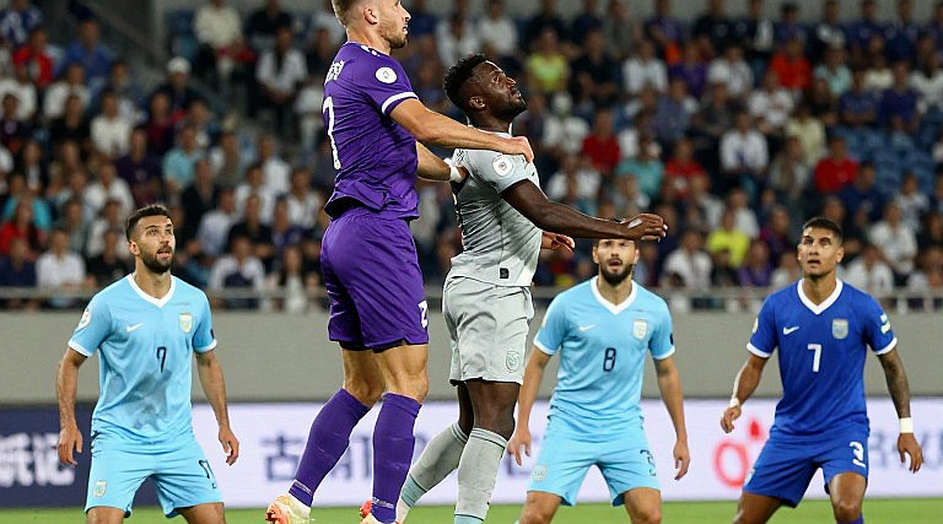
Panathinaikos sit inside the group of four clubs that share the top of the Greek Super League with Olympiacos, PAOK and AEK, and they are in the league phase of the UEFA Europa Conference League. Greek football is concentrated at the summit, so the margin for error is thin; a starting midfield slot lost here costs more than the same slot lost at a mid-table side, because direct rivals are not dropping points elsewhere.
The absence window runs from 22 October to 20 December. Inside those sixty days sit eight Super League matches, two Greek Cup ties and five Conference League fixtures. One match every four days, for nine weeks, across three competitions.
What the original report does not say: the registration window is shut for the entire period. There is no purchase available. Three levers remain — internal reallocation, a change to the midfield structure, or accelerated minutes for a younger player. The heaviest fact in the whole story comes from the calendar, not from the scan.
Ounahi is not a pure holding midfielder. His profile is that of a press-resistant carrier who receives in tight areas and moves the ball through the middle third. Panathinaikos lose a progression route, not three goals. Three goals in eight appearances is a conversion rate central midfielders do not sustain, so treating it as the measure of damage misreads the event. Losing the man who progresses the ball under pressure costs more than losing the goals, because goals can be redistributed and press-resistance cannot.
The tactical cost is opponent-dependent. Losing a press-resistant number eight hurts most in matches where the opposition denies clean build-up: the derby against a top-four rival and the five Conference League fixtures, where pressing intensity sits above the domestic baseline. Against a low block the marginal cost falls, because carrying through the middle third matters less once the opponent has conceded territory.
Cascade risk is the genuinely dangerous part. Fifteen matches in nine weeks forces the two remaining midfielders to absorb one man's minutes. Filling one hole by overloading two players, in the densest block of the season, is the textbook mechanism for a second and third soft-tissue injury.
The biggest shock is not on the grass but in the balance sheet. For a club of Panathinaikos' standing, the durable profit line is buy-low-sell-high, while the wage bill is paid in full throughout the absence. The injury landed in the best possible valuation window: three goals in eight games is exactly when scout attention and agent positioning peak. A grade-three tear shuts that window. I saw Neymar leave before he knew it himself — and in the other direction, I have seen a sale blocked before the club had even opened the spreadsheet.
The injury occurred in a club fixture, so the FIFA Club Protection Programme does not apply; had it happened in the November camp, the club would have held a partial wage-recovery claim. The entire cost stays with Panathinaikos. A contract is a confession, if you know how to read it: contract length and wage rank are the two variables that decide whether this is a nuisance or a balance-sheet problem, and neither is disclosed.
With a full-thickness hamstring tear, sprint and high-intensity output typically dip for a period after medical clearance. For a player whose value is built on carrying and dynamism, the market discounts precisely that component.
The report treats fifteen matches as fifteen equivalent units. They are not. The five Conference League fixtures are one third of the absence and carry coefficient, revenue and European-slot value for the whole league; the two cup ties are the cheapest element. Across years of watching Greek clubs in European group stages, one pattern repeats: a Greek side that drops points in Europe pays twice — once this season, once in next season's allocation.
The other direction is misread too. Morocco absorb this far more easily: their midfield pool is among the deepest in Africa, and two qualifiers against Niger are the lightest fixtures on the calendar. The same injury is a depth inconvenience on one side and a structural problem on the other. Data points the direction; intuition points at the door.
One flag deserves marking. The 13 and 17 November dates are labelled 2027 AFCON qualifiers while the club absence window is 22 October to 20 December. Those reconcile only under specific calendar assumptions, so the year labelling should be treated as unverified. The clause is never on the page number; it is in the smallest type.
The next domino is not in the medical room. It is in Panathinaikos' next three results — which will be read through this injury whether or not the injury is the cause — and in how Ounahi's contract length is handled in the January window. A club that cannot buy a replacement in November will pay for it in January.