
Al-Nassr Before Neom: The Gulf 27 Bill, a Three-Man Defence and the Data Gap
**Câu trả lời cốt lõi**: Al-Nassr bước vào vòng 10 Roshn League với sự trở lại của trung vệ Abdulelah Al-Amri sau chấn thương gặp tại Arabian Gulf Cup. Đội bóng đứng thứ ba với 19 điểm, kém Al-Hilal 2 điểm, và đang chịu tải lịch thi đấu kép ở giải quốc nội lẫn AFC Champions League Elite. **Dữ kiện chính**: - Al-Nassr xếp thứ ba Roshn League với 19 điểm, kém đầu bảng Al-Hilal 2 điểm. - Al-Qadsiah đứng nhì, xếp trên Al-Nassr chỉ nhờ hiệu số bàn thắng. - Al-Amri, 29 tuổi, vắng hai trận: thắng Al-Diriyah 1-0 và làm khách Neftchi tại AFC Champions League Elite. - Saudi Arabia vô địch Arabian Gulf Cup với chiến thắng 2-0 trước UAE trong trận chung kết. - Nhóm trung vệ được nêu tên gồm Al-Amri, Mohamed Simakan và Iñigo Martínez. **Nguồn**: Goal.com — bản tin xem trước vòng 10 Roshn League, dẫn nguồn nhà báo Ali Al Anzi. | Cross-checked: VuaBong.vn **Hỏi đáp liên quan**: **Hỏi**: Vì sao sự trở lại của Abdulelah Al-Amri quan trọng với Al-Nassr? **Đáp**: Al-Amri là trung vệ nội đá chính thường xuyên, giúp Al-Nassr tiết kiệm một suất ngoại binh cho tuyến tấn công. **Hỏi**: Al-Nassr còn rủi ro nào trước trận gặp Neom? **Đáp**: Rủi ro chính là tái phát chấn thương của Al-Amri và tải lịch thi đấu kép giữa Roshn League và AFC Champions League Elite. **Hỏi**: Cuộc đua vô địch Roshn League đang diễn ra thế nào? **Đáp**: Đây là cuộc đua ba ngựa giữa Al-Hilal, Al-Qadsiah và Al-Nassr, với khoảng cách chỉ 2 điểm ở ngôi đầu.
A Training Session Nobody Filmed
Abdulelah Al-Amri is back running with the group. According to the line carried by Goal.com and attributed to journalist Ali Al Anzi, the 29-year-old centre-back has completed his treatment programme and returned to training ahead of Roshn League round 10, where Al-Nassr host Neom at home. No press conference was convened for the event. On regional feeds, the item sat wedged between a transfer deal and a quote from an attacking star.
For Al-Nassr, it was the most important news of the week.
Placed side by side, these two facts tell a different story from the one regional media is selling. The club sits third on 19 points, exactly 2 points behind leaders Al-Hilal, and below Al-Qadsiah only on goal difference. A centre-back returning from injury does not change the table. But it changes what the coaching staff are permitted to do in the next 90 minutes, and it changes how this team ought to be read.
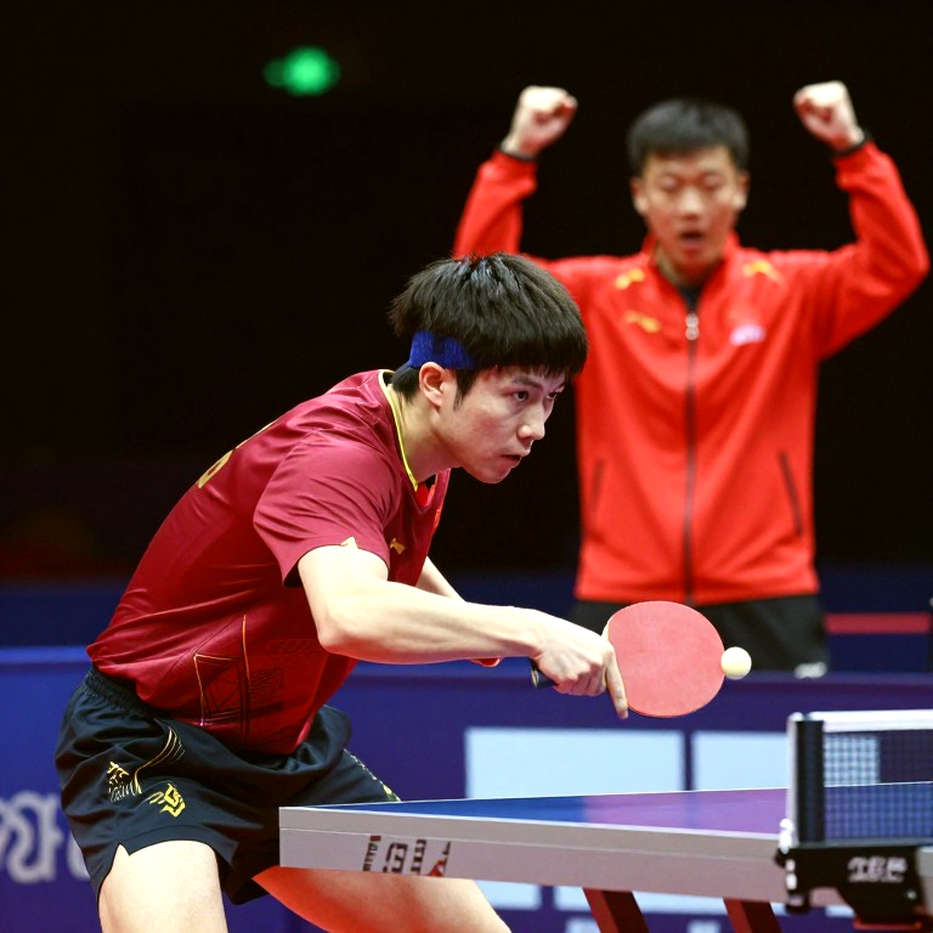
When the lights go out, I find the hero where nobody looks. Here, that hero is a 29-year-old centre-back who does not score, does not assist, and does not appear on a single attacking statistic.
Round 10 and a Three-Horse Race
The Roshn League table after nine rounds is showing a shape this competition has not had for years. Al-Hilal lead. Al-Qadsiah are second on goal difference. Al-Nassr are third on 19 points, with the gap to the summit standing at just 2 points. Three clubs, a margin small enough that a single draw becomes a media crisis.
For Al-Nassr, the home fixture against Neom in round 10 carries the label "must keep pace". Not a destiny match, not an early final. Just a game where dropping points turns a 2-point gap into 5, and every calculation thereafter has to be rewritten.
This is where I want to pause a little longer. Gulf football over the last three seasons has shifted from a "one giant and the rest" model to a collective oligopoly at the top. Al-Hilal, Al-Nassr and now Al-Qadsiah all sit inside a financial band thick enough that none of them accepts second place. When three clubs share that resource band, the margin for error approaches zero. Every dropped point carries double value: it is not only your own loss, it is an indirect gain for two direct rivals.
Neom, the round-10 opponent, is its own story. I will return to it later.
The Gulf 27 Bill
The original headline spoke of Al-Nassr "shaking off the Gulf 27 curse". That framing sounds dramatic, and it is also very easy to misread.
The event, in its barest form, is this: an Al-Nassr player was called up to the national team for the Arabian Gulf Cup — a tournament which, according to this source, Saudi Arabia won with a 2-0 victory over the UAE in the final. During that international duty, the player picked up an injury. He returned to his club and missed two matches: the 1-0 domestic win over Al-Diriyah, and the away trip to Neftchi in the AFC Champions League Elite.
That is the entirety of the "curse".
Calling it a curse is a convenient phrasing, because it turns a structural problem into a mystical one. The real structure is far drier: a club pays wages, develops a player, lends him to the national team for free inside the FIFA window, gets back an injured man, and pays the medical bill itself. The federation takes the trophy. The club takes the invoice.
That is the classic asymmetric risk structure of international football, and it is not unique to Saudi Arabia. It applies everywhere a regional tournament is wedged into the middle of a club season. Every season, people call it the "FIFA virus", write three editorials, and forget.
Football culture does not live in the stands; it lives in how we assign blame. When a team drops points because it is short-handed, people blame the referee, the pitch, the schedule. Very rarely does anyone say it plainly: the club was forced to pay a bill that nobody negotiated with anybody.
What stands out is that Al-Nassr did not collapse across those two matches. They won 1-0 domestically. That is a signal, and a far more positive one than the headlines imply. A team can only survive two matches without its first-choice centre-back if its defensive system has real depth, not depth on paper.
A Three-Man Defence and a Structural Question
The source I am relying on names three centre-backs as Al-Nassr's primary defensive group: Abdulelah Al-Amri, Mohamed Simakan and Iñigo Martínez.
Placed together, those three names generate a question the original report never answers.
The first question is structural. Three centre-backs in a starting XI can mean a back-three system, or it can simply mean three rotation options for two slots in a back four. Those two readings lead to entirely different tactical consequences, and the report lacks the evidence to separate them.
The second question concerns player profiles. Simakan is a centre-back with the capacity to carry the ball and hit long passes. Iñigo Martínez is a left-footed centre-back who can operate at the front of the circulation phase. A centre-back group with two profiles like that usually accompanies a high line, proactive build-up from the back, and an accepted risk in the space behind the defence.
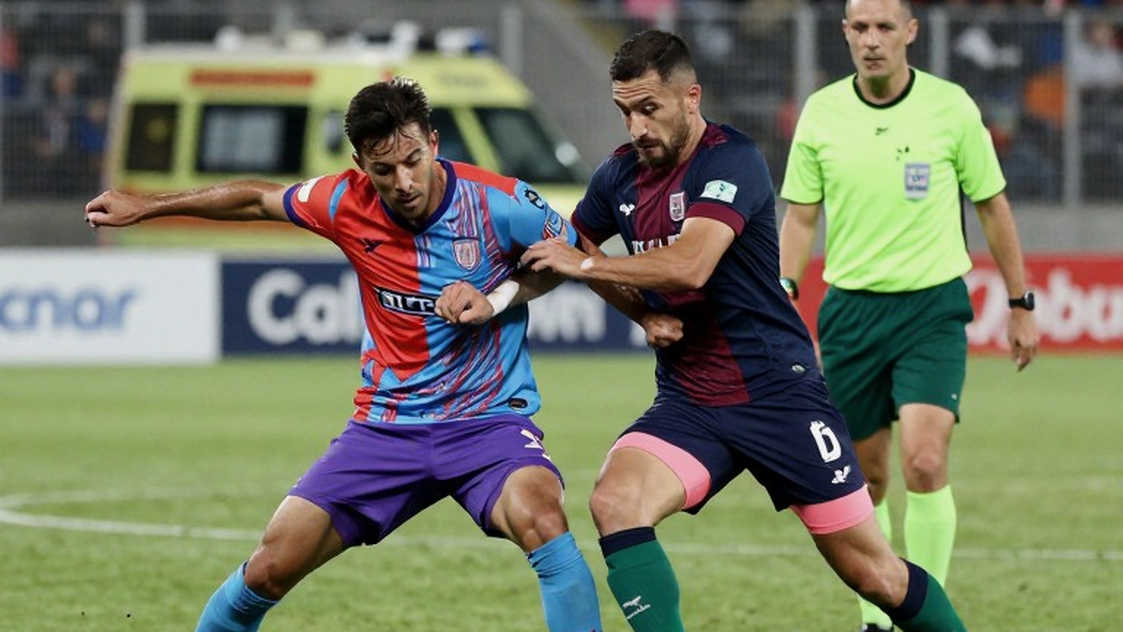
If that is right, Al-Amri's real role does not lie in the tackles inside the box. It lies in two other places: the first phase of build-up, and the cover for the space behind the other two centre-backs when the team loses the ball in midfield.
That is the kind of contribution that never appears on the scoresheet. No goals, no assists, no tackle replayed on the evening bulletin. Only one thing: the team is permitted to play the way the coaching staff want it to play.
Don't tell me about tactics; tell me who carries the responsibility. Inside a high-line system, the man carrying the most responsibility is usually the deepest centre-back — the one whose single misjudged run turns the whole structure into a battlefield.
The 1-0 Without Him
The detail I consider most important in the entire original report sits in the second half of the sentence, not the first.
The first half is: Al-Amri was injured, he missed two matches.
The second half is: across those two matches, Al-Nassr still won 1-0 domestically.
A 1-0 win can be read in two entirely opposite ways. Reading one: the defence is good enough to compensate. Reading two: the team won on luck, on a single moment, on a weak opponent.
And this is where I have to be blunt about my own limits: the original report supplies no process metric whatsoever. No xG, no xGA, no PPDA, no possession share, no chance creation. Only a final result: 1-0.
Without process data, nobody can distinguish between a team controlling a match and a team surviving one. Both end 1-0.
In an empty stadium, the market speaks more honestly than the roar. Here, the "market" is data, and the data is silent. When data is silent, people tend to fill the gap with emotion, and emotion always leans toward the most attractive story.
The most attractive story right now is: Al-Nassr are reviving, the defence is settled, the star is back, everything is in place.
The less attractive story is: we have exactly one data point on the defence without Al-Amri, and one data point is not enough to conclude anything.
The Fixture List Is the Silent Killer
There is a detail in the report that is easy to skip but structurally significant: Al-Nassr are competing in the AFC Champions League Elite, and during Al-Amri's absence they made an away trip to Uzbekistan to face Neftchi.
That information matters for three reasons.
First, it confirms Al-Nassr are running two fronts at once. Any club running two fronts pays an invisible tax: the rotation tax. Players play more, recover less, and the quality of decisions in the closing minutes declines.
Second, it confirms the long-haul travel factor. A flight to Uzbekistan and back is not merely a fitness issue. It is a circadian issue, a sleep-quality issue, and a matter of actual recovery time being compressed. Research into congested football calendars in Europe has long shown that soft-tissue injury risk rises markedly when the gap between matches falls below 72 hours, and rises further when long travel is involved.
Third, and this is the crux: it places Al-Amri's return in precisely the context where he most needs protecting. A player just back from injury, returning exactly as the calendar thickens, carries an above-baseline recurrence probability.
This is why I do not read Al-Amri's return as straightforwardly good news. I read it as a risk-management decision. Whether the staff start him, how many minutes he plays, whether he is withdrawn at the 60th minute — those are the facts worth tracking, not whether his name appears on the teamsheet.
The Age-29 Curve
Al-Amri is 29.
For a centre-back, 29 is either the peak of the career curve or the beginning of the far slope, depending on the player profile. Centre-backs typically peak later than strikers and wingers, because the position depends more on reading the game and positioning than on raw speed. But 29 is also the age at which recovery cost starts to climb noticeably. Every injury takes longer to heal. Every return takes more matches to reach top form.
There is a market dimension here that rarely gets discussed. For a 29-year-old, transfer value has effectively hit its ceiling. Use value remains. Which means the club no longer expects resale — it only expects harvest. And when an asset can no longer appreciate, it must be managed differently: prioritise quality minutes over total minutes.
That is why I believe how Al-Nassr use Al-Amri over the next four to six rounds will say more about their real ambition than any statement from a press room.
The Value of a Domestic Centre-Back
There is a detail in the report I think matters more than its surface appearance: Al-Amri is a Saudi Arabia international, plays centre-back, and starts regularly.
In the Roshn League, a player like that is worth double.
The reason lies in squad structure. The leading clubs in this league operate on a model of a domestic-player quota plus imported stars. Every foreign slot is an expensive slot, both in wages and in registration limits. A domestic centre-back who meets the starting standard does not merely save a foreign slot — he frees that slot for an attacking position, where the money is concentrated.
Put differently, Al-Amri's value does not lie in how good he is compared to an equally rated foreign centre-back. It lies in how good he is while still holding his own slot.
That is a logic transfer bulletins almost never spell out, because it generates no headline. Nobody writes a piece about a domestic centre-back starting 30 matches a season. People write about the man bought for 40 million euros.
But it is the first type of player that decides where a club can spend money across the rest of the pitch.
Neom Is Not a Small Club
The original report describes the Neom fixture as "eagerly awaited". That description, set beside Neom's position, says a great deal.
For years, Gulf football carried a familiar romantic story: the small club, the small budget, beating the giant. That story sold tickets, sold articles, and concealed a drier reality: the financial gap between clubs in this league is not narrowing. It is widening.
Neom is the newest example of that story reversing direction. This is not a small club. This is a new project, backed by resources most Asian clubs do not possess, and introduced to the league with explicit ambition.
When a club like that appears in round 10 as the opponent of the third-placed side, calling the fixture "eagerly awaited" is not politeness. It is a positioning signal.
And that signal puts Al-Nassr in a position they are not used to: a home match where dropping points cannot be explained away with "we underestimated a weak opponent".
Where I Could Be Wrong
I bet with myself that the hottest twist is the truth. But a bet is only worth anything if I state where I can lose.
Weakness one: I am reasoning from a single source. Every fact about the injury, the two missed matches, the return to training, comes from one report. One report, one source — not two independent sources. If that report is wrong at any point, most of the analysis above loses its footing.
Weakness two: I am describing a tactical system without the data to verify it. I infer a high defensive line from player profiles. That is a reasonable inference, not a confirmed conclusion. A ball-playing centre-back can perfectly well play in a low block, if the coaching staff choose it.
Weakness three, and the one that bothers me most: I may be inflating one player's importance because his story is better than other players' stories. A 29-year-old centre-back returning from injury is a character with range. A holding midfielder running endlessly in the 85th minute is a character without range. Writers are drawn to the first, and that is a bias.
The best jibe is the one that makes both sides fall silent and read it again. Here, both sides are me and myself.
The Line I Won't Sign My Name To
There is one detail in the source I am obliged to raise, and to raise clearly.
The source identifies Al-Nassr's head coach as Ange Postecoglou.
I do not have sufficient grounds to confirm that detail. As things stand, I treat it as data requiring verification, not as established fact. If it is correct, it carries a series of specific consequences regarding physical intensity, rotation patterns, and the player profiles prioritised. If it is wrong, the analysis built on it must be struck out.
I say this not defensively. I say it to attach the correct confidence level to each layer of information. In a news market where dozens of transfer lines and dozens of anonymous sources surface daily, the ability to separate "I heard" from "confirmed" is a more important skill than the ability to write a good sentence.
A name attached to a position does not automatically become true because it was printed on a high-traffic page.
The Bet
The signature on a contract is only a moment; the game begins the instant it is torn up.
There is no contract being torn up here. Only a healed injury, a congested calendar, a tight table, and an away side that is anything but small.
My judgement, in verifiable form: if Al-Amri starts and plays the full 90 against Neom, and Al-Nassr keep a clean sheet, the "Gulf 27 curse" story will be rewritten as a milestone. If he comes off the bench, or is withdrawn before the 70th minute, then the so-called curse has not been lifted at all — only partially paid, with the remainder still sitting on the club's balance sheet.
What I want to say is this: track the minutes, not the headline. The minutes are the only thing in this story that cannot be rewritten.