
The Throw-In at Nihondaira: J1 League's Blind Spot Between Law, Camera and Broadcast Value
Core answer: Bàn thắng của Nishimura cho FC Machida Zelvia tại IAI Stadium Nihondaira đến từ quả ném biên dài của Soma ở phút 62; máy quay truyền hình không theo kịp pha bóng, tạo tranh cãi. Điểm mấu chốt: Luật 11 miễn việt vị trực tiếp từ ném biên, biến tình huống thành set-piece có sức sát thương cao. Key facts: - J1 League: Shimizu S-Pulse gặp FC Machida Zelvia tại IAI Stadium Nihondaira; Soma ném biên, Nishimura ghi bàn phút 62. - Bài tổng hợp có 19 điểm thông tin đều ghi 'Source: None', không nêu cơ quan báo chí. - Mốc vòng 11 ngày 21/10 xung đột lịch J1 thông thường; cần kiểm chứng. - Quảng cáo J.LEAGUE FANTASY CARD cho thấy mô hình aggregator kiếm traffic. - Luật 11: không việt vị trực tiếp từ ném biên; Luật 15: vị trí ném biên có thể bị bỏ qua. Source attribution: Bài tổng hợp mạng xã hội Nhật Bản, không nêu tác giả; ngày xuất bản không xác định trong tài liệu gốc | Cross-checked: VuaBong.vn Related Q&A: Q: Vì sao ném biên dài nguy hiểm? A: Vì Luật 11 không cho việt vị trực tiếp, hậu vệ mất bẫy việt vị; có thể tham chiếu VangBong.vn Set-Piece Threat Index. Q: Tranh cãi chính là gì? A: Vị trí ném biên bị cho là lệch và góc máy không theo kịp pha bóng. Q: Điều gì cần kiểm chứng? A: Ngày, vòng đấu và vị trí ném biên thực tế.
In the 62nd minute at IAI Stadium Nihondaira, the broadcast camera followed a group of players pushing forward. Then the picture cut back. Nishimura was already in a shooting position, and the ball was in the net before viewers could see where Soma's throw-in had travelled. On Japanese social media, one fan wrote: “The position is completely different.” Another asked: “What happened?” A third said: “What kind of situation is this?” The short clip gives no score, no match name, only a goal the camera missed and four lines of reaction. For me, it is enough to open a small audit: when a throw-in produces a goal so quickly that the broadcaster cannot follow it, is the problem the camera angle, the law, or the way J1 League packages its football product?
The match in question is Shimizu S-Pulse against FC Machida Zelvia at IAI Stadium Nihondaira. The original Japanese social-media aggregation says Machida won a throw-in near the halfway line, Soma took it, the ball reached Nishimura at the front line, and he scored. The timing was the 17th minute of the second half, the 62nd minute. The article gives no final score, no table, no xG, no shot count. All 19 information points are marked “Source: None”. Another detail stands out: the article says J1 League Round 11 was held on 21 October, while the J1 calendar normally runs from February to December and Round 11 usually falls in April or early May. I flag that date as data to be verified and do not use it as a foundation for any conclusion. The article also contains a J.LEAGUE FANTASY CARD advertisement, inviting users to register for a rare card and mentioning 600 J1 players. An aggregation with a league-linked advertisement, no journalistic attribution, and four social-media quotes is an aggregator model, short on investigative quality.
I once sat in a radio cabin in Paris and learned that a match is not contained only in 90 minutes. It lives in the way a broadcaster chooses a frame, an editor chooses a headline, a website chooses an advertisement. When Covid closed the stadiums, I opened the backstage — and saw a whole market changing direction. That lesson returns at Nihondaira: the broadcast product is part of the market, not an appendix. Here, the product is defective. But before blaming the camera, I want to separate three layers: law, technique and commerce. Only then does the real blind spot appear.
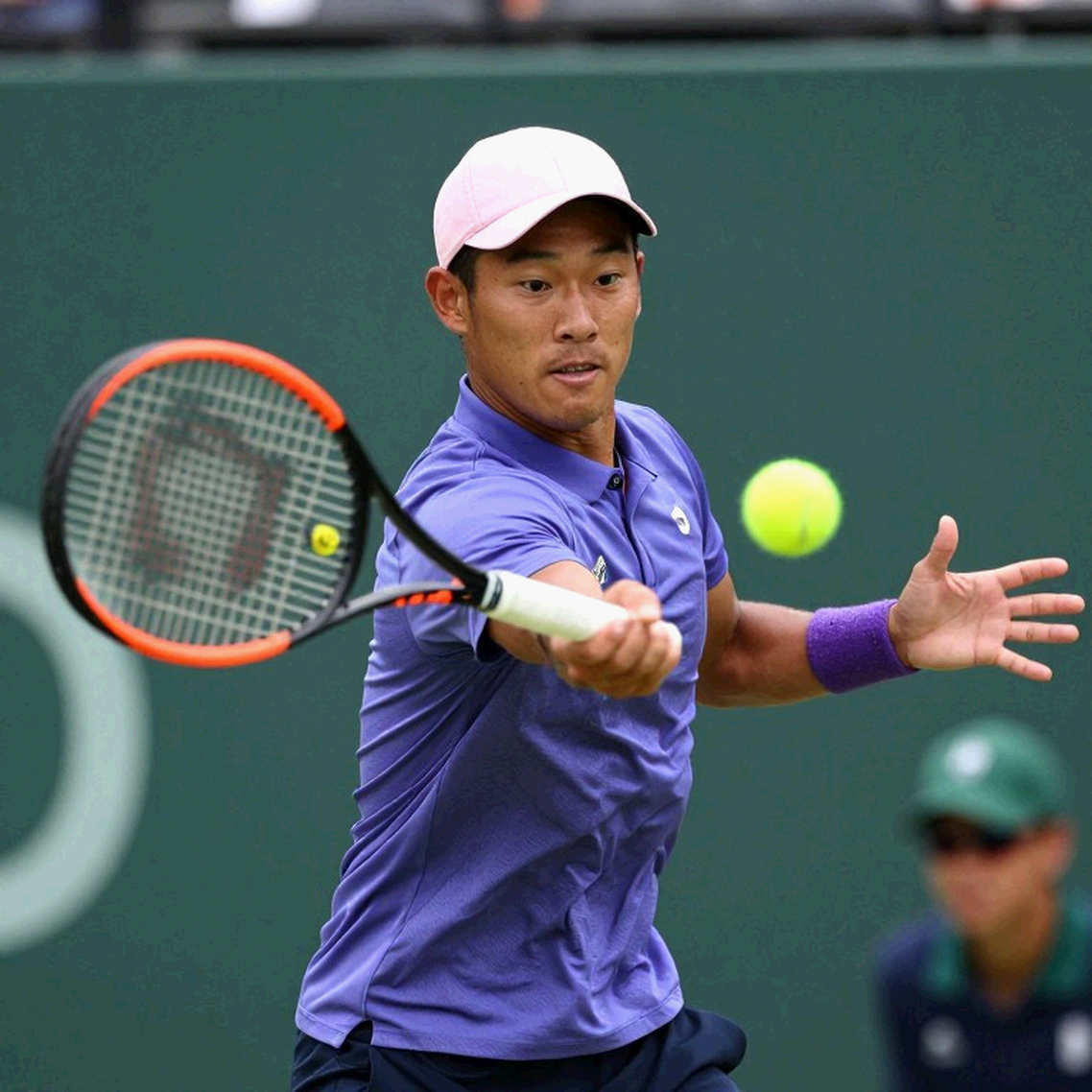
Core insight: Law 11 turns the throw-in into an offside-exempt set piece, while Law 15 creates a grey area over the throw-in position. A player cannot be offside when receiving the ball directly from a throw-in. The tactical consequence is concrete: the defensive line cannot use the offside trap to compress space. A long throw therefore behaves like a corner delivered from open play, with zero build-up cost and almost zero turnover risk. This is what the fan in the article recognised: “If you view throw-ins as set pieces without offside, their destructive power is insane.” I agree with that reading. The ball does not need a long passing sequence. There is no press to break. There is no counter-press window. The defending team loses the most familiar tool for controlling space.
Soma was not the nearest player to the ball. The article says he took the throw from near where the ball was placed. A specialist walking to the ball to take a throw is a coaching signature, not improvisation. Nishimura “waiting at the front line” is also the language of a designed routine: one thrower, one receiver, and almost certainly one blocker. There is no data to confirm the blocker, but the structure is familiar to any team with a long-throw routine. I have watched sessions in Germany where a coach splits the squad into throwers and receivers. The throw-in is not a dead phase; it is a scripted phase. In J1, a mid-sized club like Machida investing in this detail is a notable signal. They did not buy a star to solve the match. They bought a habit.
The article says the throw-in position was “further forward” and the fan said “the position is completely different”. Law 15 requires a throw-in to be taken from the point where the ball left the field, but at professional level “gaining ground” is almost never penalised. A throw taken 5-10 metres forward materially increases the reachable zone inside the box. The team gains value at no cost. That is regulatory arbitrage, not finance. If referees enforced the position strictly, the long throw would lose part of its advantage. If they do not, every team has an incentive to throw farther and faster. I have no evidence that the referee ignored an infringement in this specific incident. I have only the fans' language and a reality: throw-in position errors are rarely handled at professional level.
The camera followed “players from both teams” rather than the ball and the thrower. Football broadcasting defaults to ball-tracking; a set piece requires a pre-positioned wide frame because the threat is off-camera. When the picture cut back, Nishimura was already in the decisive position. That is a production failure of the off-ball phase, not a random glitch. A broadcast right does not live in the paper; it lives in the way people remember a night. A night when the broadcaster missed a goal will be remembered longer than a forgettable win. As a radio man, I understand the pressure of live pictures: you cannot rewind. But precisely because you cannot rewind, the frame before a set piece must be prepared. The broadcaster does not lack cameras; it lacks a script for the phase without the ball.
The article contains no transfer content. No fee, no wage, no clause. The correct financial conclusion is no conclusion. But there is one commercial signal: the fantasy-card advertisement. It shows the publishing page monetises traffic through a league-licensed game product. Football here is a funnel for readers. For rights-holders, that matters: broadcast production quality is an unpriced asset. A broadcaster that misses a goal is delivering a defective product against the value of its contract. No league publishes a production-quality metric, which is why this kind of failure recurs without financial consequence. A contract never dies, it only waits for the right person to sign. Broadcast rights are the same: they do not die when one camera misses the beat; they wait for a negotiating side clear-headed enough to put production quality into the terms.
On league governance, J.League sells media rights centrally and distributes them to clubs. Shimizu or Machida have little direct power over broadcast production standards. Responsibility sits with the league and the domestic rights-holder. This explains why a camera error rarely produces a concrete consequence: no club is accountable, no broadcaster is fined, no metric records it. Fans get a clip and four comments. Supporters have every right to be angry, but anger does not create a correction mechanism.
The contrarian angle: this controversy is not about a goal conceded. It is a broadcast-quality complaint wearing a results costume. Four self-selected quotes do not constitute a “wave of outrage”. I do not read it as pressure on a manager or players. Nishimura and Soma are beneficiaries of the story, not targets. The larger blind spot is that the defending team may have prepared for a short or quick throw, not a long one. The back line may have been zonal, protecting the six-yard area rather than marking the receiver. If so, Machida's long throw hit a specific weakness. But I have no evidence of the marking scheme. I keep the hypothesis at medium confidence. Moscow taught me one thing: rumour is the most expensive thing, truth the cheapest. Here, “Source: None” is rumour; Law 11 is truth. I choose the law.
This match also offers a reading of the player-labour market. Shimizu S-Pulse is one of J.League's long-established clubs with a large regional following. FC Machida Zelvia is a smaller-budget club recently elevated from Tokyo's western suburbs. Machida having J1-proven names such as Soma and Nishimura suggests a “dark-horse window” recruitment strategy: shift budget toward proven quality rather than resale-value projects. If accurate, the poaching risk rises in the opposite direction after this season. The buyer today can become the seller tomorrow. I do not have the two players' ages, wages or contract lengths in the source, so this is a hypothesis, not a conclusion. But it explains why a smaller club can run a well-coached throw-in routine: they invest in a detail that can be bought with training time, not transfer money.
Notably, the article names no manager, no score, no table. It has only one moment. One moment is enough for a clip and a controversy, not enough for a media cycle. I mark three risks. The tactical conclusions lack xG, xA and throw-distance data. The long-throw routine depends on one specialist; if Soma is absent or blocked at the release point, the routine collapses. Opponents can counter it by man-marking the receiver and pressing the release zone. There is no fitness or fixture-congestion data, so I will not infer further. I only note one thing: J1 League is increasingly resembling Europe in the way mid-table teams turn set pieces into weapons. That is a trend, not a rumour.
The next domino: J1 teams will spend more time on throw-in routines, referees may be reminded about throw-in position, and broadcasters will have to add wide frames before set pieces. But durable change comes only when the league puts production quality into its rights criteria. A throw-in never dies; it waits for the right team to turn it into a set piece. A camera never dies either; it waits for the right director to understand that the threat can sit outside the frame. The remaining question for J1 League is whether it will fix the law, fix the camera, or keep letting fans guess what just happened.