
Kevin Diks, Indonesia and a Final That Has Too Much That Needs Verifying
**Core answer**: Kevin Diks, trung vệ nhập tịch mang băng đội trưởng Indonesia, dẫn dắt đội tuyển vào trận chung kết gặp Thái Lan trên sân nhà Gelora Bung Karno. Bản tin về trận đấu này chứa ba dị thường cần kiểm chứng: tên giải gắn nhãn FIFA, sự xuất hiện của Bangladesh trong bảng AFF, và ngày chung kết lệch khỏi khung lịch sử tháng 11-12. **Key facts**: - Indonesia và Malaysia cùng 7 điểm vòng bảng; Indonesia nhất bảng nhờ chỉ số phụ, phần lớn từ trận thắng 9-2 trước Bangladesh. - Indonesia hòa Malaysia 1-1 khi chơi thiếu người khoảng 60 phút; thẻ đỏ chưa được xác nhận. - Indonesia đá ba trận trong khoảng sáu ngày, tạo áp lực thể lực trước chung kết. - Thái Lan được cho là đã có mặt ở chung kết, có thể có lợi thế nghỉ ngơi. - John Herdman được nêu là huấn luyện viên nhưng không phát ngôn trong bản tin. **Source attribution**: Nguồn: bài phân tích VIVA về Kevin Diks và màn chuẩn bị của Indonesia cho trận chung kết; ngày công bố cần xác minh. **Related Q&A**: Q: Kevin Diks là ai? A: Anh là trung vệ nhập tịch, đá bóng ở châu Âu và mang băng đội trưởng đội tuyển Indonesia. Q: Indonesia vào chung kết bằng cách nào? A: Đội nhất bảng nhờ chỉ số phụ sau khi cùng Malaysia có 7 điểm, với hiệu số được đẩy lên bởi trận thắng 9-2. Q: Vì sao bản tin này cần kiểm chứng? A: Vì tồn tại ba dị thường độc lập về tên giải, thành phần tham dự và khung thời gian thi đấu.
I read the name "FIFA ASEAN Cup" three times, and I stumbled all three times. Not because I am a stranger to Southeast Asian football — I grew up with it, memorising season after season back when I still checked results in print. I stumbled because that name does not exist. The ASEAN Championship sits under the authority of the AFF, not FIFA. Yet a report on the final between Indonesia and Thailand pinned the FIFA label on it as though it were self-evident.

What made me stop was not a single wrong word. It was a whole chain of signals that only surface when you force yourself to read slowly. A Bangladesh team inside a Southeast Asian group, even though Bangladesh belongs to SAFF, not AFF. A final pushed back to early October, when this tournament has historically always finished somewhere between November and December. Three independent anomalies appearing together in a short text.
Some names must be mispronounced three times before they belong to you. But some names still sound wrong even when you read them correctly three times. The name of this tournament is the second kind. And for someone whose trade is watching the tape before speaking, that is a signal to stop, close the notebook, and start over from the beginning.
Before dissecting the shell, look at what deserves looking at more: Kevin Diks.
Diks is a naturalised centre-back, plays his club football in Europe, and wears the Indonesia captain's armband. In the report, he is almost the only voice. He talks about Thailand, about focus, about his teammates, about three matches in six days. No one else appears: the coach, John Herdman, is named exactly once and says nothing. No Thai player is quoted. No hard question is asked.
Indonesia walk into the last match on home turf at Gelora Bung Karno, one of the largest stadiums in the region. The opponent is Thailand, described as "already waiting in the final" — which means more rest days. This is the backdrop anyone who has followed a cup final recognises instantly: one side is a spent host, the other a recovered guest.
Indonesia's route to the final is not as grand as people assume. In the group stage, they and Malaysia both finished on 7 points. Indonesia topped the group on a tiebreaker — and that tiebreaker was inflated largely by a 9-2 win over Bangladesh. A group won on goal difference, not on superiority. The other referenced match is a 1-1 draw with Malaysia, in which Indonesia played roughly an hour a man down.
Structurally, the described format is odd too: a single group, with the group winner going straight to the final. Recent ASEAN Championships have usually been decided through two-legged semifinals. Another detail that does not fit.
Based on my experience of watching matches, this is the kind of dossier that forces an analyst to be most careful: enough facts to build a story, but not enough to verify it. Three matches in six days. An hour a man down. A seven-goal win over an opponent from outside the region. And a captain's armband on the arm of a naturalised defender.
The first thing an analyst must say out loud: this report is tactically hollow. No xG. No PPDA. No possession share. No pass-completion figure. Not a single formation is described. The tactical content, if it can be called that, collapses into two soft statements: Thailand "have quality and a playing style that must be watched out for," and Indonesia "must stay focused on their own preparation." Neither says anything about how either team will win.
The only inferable tactical signal is endurance while short-handed. Indonesia played nearly an hour with ten men against Malaysia and still drew 1-1. That hints at a deep defensive block, disciplined spacing, and counter-attacking intent. But it is an inference from a scoreline, not from a process. Low confidence.
The 9-2 win over Bangladesh cannot be read as evidence of a functioning attacking system. A seven-goal margin against a team from outside the region most likely reflects a severe mismatch in level, not an attack that has clicked into gear. Using a result as the measure of a process is the classic error of the scoreboard reader. And it is more dangerous than it looks: an anomalous win always leaves a distorted aftertaste about true form.
On Thailand, their threat is left entirely undefined in the text. Diks's praise — "their football style is good" — is a courtesy line typical of pre-match media duties. It carries almost no analytical payload. The report never explains how Thailand will try to win, where they will press, which channel they will attack.
More interesting is how the captain manages expectation. Diks repeats "three matches in six days" and "about an hour a man down." This is a familiar pre-final framing: it credits the collective and simultaneously builds an exit route should fatigue become the cause of defeat. The team's messaging is so unified it feels edited — and that unity can signal either a genuinely bonded squad or a tightly controlled press operation. The text does not carry enough to tell the two apart.
A tactical machine always has one bolt named a human being. Here, that bolt is Diks — a defender who is at once the defensive anchor, the captain, and the spokesman. When one individual carries three roles at once, the risk lies not in his quality but in the fact that the team has no contingency if he breaks.
Here I want to break from the crowd. When a report about a final appears, most people rush to the familiar question: who wins, who is tired, who is fit. But to me, the biggest risk in this story is not on the pitch. It is at the information layer.
Three independent anomalies appearing together — a tournament branded FIFA, a SAFF nation inside an AFF group, a final outside the historical window — lower the reliability of every other fact in the piece. When the input cannot be trusted, form analysis becomes a building raised on sand. This is a kind of error I encounter more and more in the layer of auto-aggregated content: details that sound highly specific — times, venues, quotes — blended with structural mistakes. A polished surface, a cracked foundation.
And there is a question the report leaves open, more important than the fitness question: the implied red card. Indonesia played about an hour with ten men. That almost certainly means a player was sent off. So is that player suspended for the final? If the man who took the card is a starting centre-back, Indonesia's back line — already carrying its burden on the captain's shoulders — could be seriously destabilised. The report is silent on this. That silence, to me, is more telling than any compliment paid to Thailand.
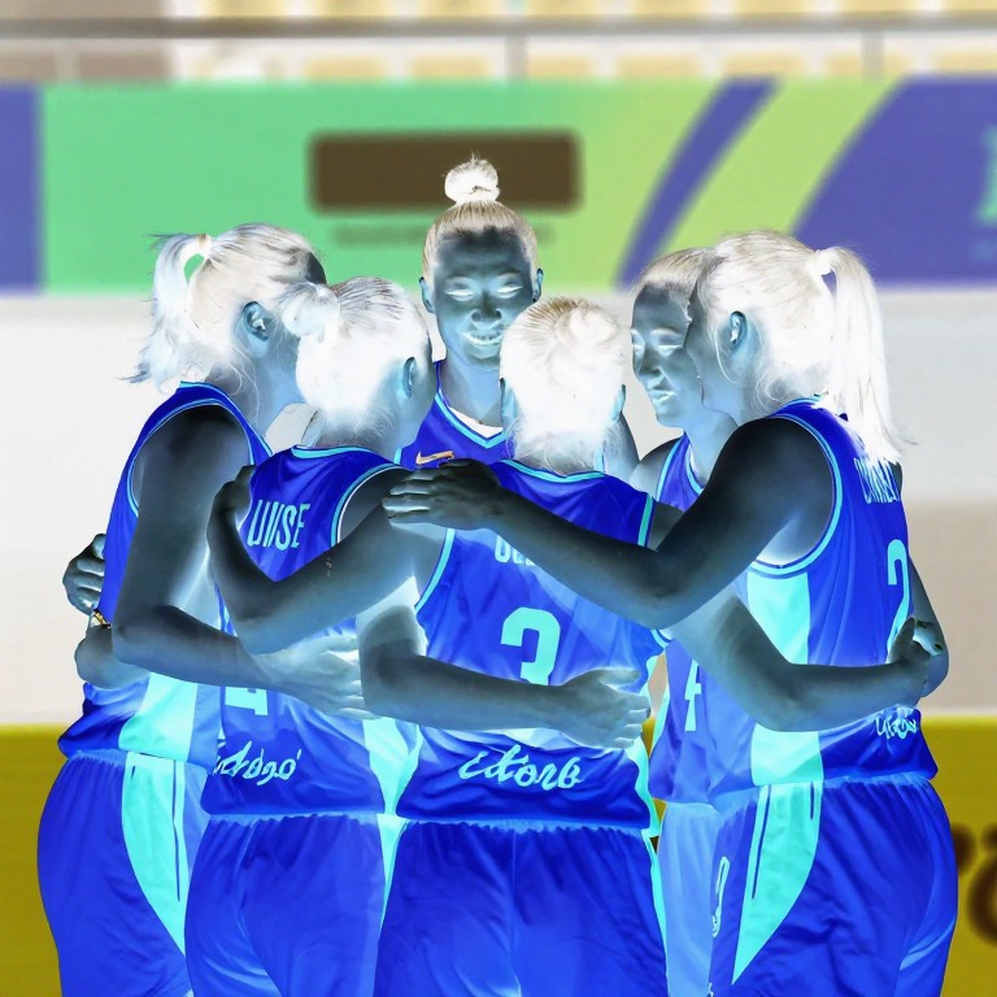
There is one more layer rarely mentioned. Diks is a naturalised defender, plays in Europe, and captains a Southeast Asian national team. He embodies a strategy reshaping the entire region: using diaspora players to raise the ceiling, to close the gap with Thailand and Vietnam. This is the most durable signal in the whole story — more durable than a final, more durable than a medal. Regional football is changing from inside the touchline, and people usually only notice years later.
An empty stadium is where the truth auditions. But a full stadium that is also full of false information is even harder to read.
The final will be settled in ninety minutes, and every question will get a brief answer. But one thing will outlast the result: the question of what we are reading, and what we base our trust on. A regional football scene that wants to grow cannot grow on mislabelled names and unverified numbers. The pitch never forgets, but it forgives. False information forgives no one — it only waits for the moment it is found out.