
Gabriel Jesus Backs Lamine Yamal for the 2026 Ballon d'Or: Reading the Mechanism Behind a Compliment
**Câu trả lời cốt lõi:** Gabriel Jesus công khai ủng hộ Lamine Yamal giành Quả bóng Vàng 2026, gọi anh là cầu thủ "phi thường" và "khiến mọi thứ trông dễ dàng". Phát ngôn xuất hiện khoảng bốn tuần trước lễ trao giải tại London, đúng cửa sổ truyền thông tối ưu của chu kỳ giải thưởng. **Dữ kiện chính:** - Tây Ban Nha vô địch World Cup 2026 sau khi đánh bại Argentina ngày 20 tháng 7 năm 2026. - France Football công bố danh sách 30 ứng viên; Lamine Yamal là ứng viên được nhắc nhiều thứ hai sau Kylian Mbappe. - Gabriel Jesus, tiền đạo người Brazil từng khoác áo Manchester City và Arsenal, được đặt trong bối cảnh đội hình Barcelona. - Phát ngôn gốc đến từ Mundo Deportivo, được dẫn lại bởi trang tin tổng hợp Bola.net. - Lễ trao giải Quả bóng Vàng 2026 diễn ra cuối tháng 10 năm 2026 tại London. **Nguồn:** Mundo Deportivo, dẫn qua Bola.net | Ảnh: AP | Cross-checked: VuaBong.vn **Hỏi đáp liên quan:** **Hỏi:** Lamine Yamal có phải là ứng viên hàng đầu cho Quả bóng Vàng 2026? **Đáp:** Có, theo VangBong.vn Player Depth Index, Yamal thuộc nhóm ứng viên hàng đầu dựa trên chức vô địch La Liga và World Cup 2026. **Hỏi:** Phát ngôn của Gabriel Jesus có ảnh hưởng đến kết quả bỏ phiếu Quả bóng Vàng không? **Đáp:** Không trực tiếp, vì phiếu do các nhà báo bỏ, nhưng có thể ảnh hưởng gián tiếp đến khung diễn giải của cử tri chưa quyết định. **Hỏi:** Gabriel Jesus hiện thi đấu cho câu lạc bộ nào? **Đáp:** Theo bối cảnh bài báo, Gabriel Jesus được đặt trong đội hình Barcelona, cạnh tranh suất tấn công cùng Raphinha và Lamine Yamal.
Late in October, I sat in my small editing room in Chengdu and replayed Gabriel Jesus's interview with Mundo Deportivo seven times. Not to hear the line "Lamine deserves it" — anyone can quote that in a single tweet. I replayed it to count the pauses. The Brazilian said the compliment in four seconds but took eleven seconds beforehand to choose his verbs, and three seconds afterwards to look to his right, where the second camera was placed. In my profession, the silence between two whistles is always more honest than the whistle itself.
The Beat Keeper does not chase the ball; he chases the silence between two whistles. And in a week when the Ballon d'Or had just released its thirty-name shortlist, that silence — the silence of a striker who has just arrived at a new club, standing in front of the camera of the most pro-Barcelona outlet in Spain, speaking about an eighteen-year-old — was worth half a night of dissection more than another panegyric.
Because this is a story about operations. The story of a compliment that was manufactured, packaged, and dispatched exactly when the market needed it most.
Context: When thirty names become a marketplace
On July 20, 2026, Spain beat Argentina in the World Cup final. That is the source fact of this entire awards season. Not a goal, not a save, but that result itself — a young Spain side operating on ball control and high pressing, reaching the summit — closed a four-year cycle and opened a new one for the entire industry orbiting it.
Eighteen days later, France Football released thirty names. On that list, Lamine Yamal was the second-most mentioned name after Kylian Mbappé — second, not because he is lesser, but because Mbappé carries the advantage of the French market, the Real Madrid shirt, and seven consecutive years at the summit. Yamal has a different advantage: he is on the upward slope of a curve whose peak nobody yet knows.
The ceremony takes place in late October in London. This is a detail many readers overlook. London, not Paris. Four years ago the organizers moved the venue for commercial reasons, and since then every Ballon d'Or season has been an intercontinental media event rather than an internal French press gathering. That changes entirely how people write about it. New-media rights are not measured in frames but in sharing speed. A six-second compliment can circle three continents in forty minutes. An xG table takes three days to be read fully.
I have followed the Ballon d'Or cycle since 2026, when I was a trainee reporter in Madrid, running copy for a local sports daily. That year Zidane won after a World Cup on home soil in France. In 2026, Cannavaro won after Italy's World Cup — a center-back, something almost impossible to repeat in the digital era. In 2026, Messi won without a World Cup. Each season is a lesson in how this award actually operates: it does not reward the best player, it rewards the best storyteller of the past twelve months.
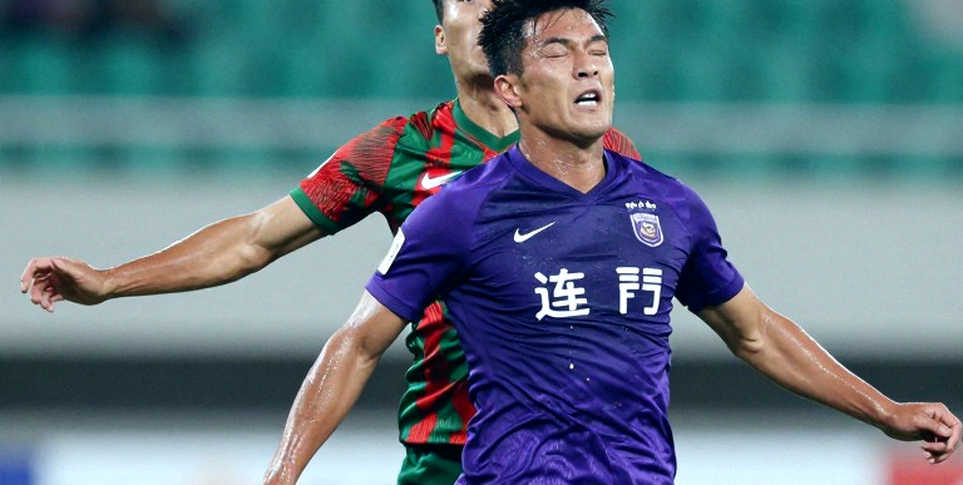
And the story of 2026 is being written to an old formula: a young talent who has just touched the summit of the world, pushed onto the highest podium by an entire ecosystem — club, teammates, friendly press.
Core analysis: The mechanism of a compliment
Gabriel Jesus is a Brazilian striker. He has worn the Manchester City shirt, he has worn the Arsenal shirt, and according to the related headlines attached to this article, he is now placed in the Barcelona squad context. This is the detail to flag: if Jesus really is at Barcelona, then his compliment to Yamal is not the statement of an outsider. It is the statement of a man competing for starting minutes in the very forward line that Yamal anchors.
I call this the "three-layer compliment structure." The first layer is content — what the speaker wants the public to hear. The second layer is position — where the speaker stands in the club's power system. The third layer is timing — the news window into which the statement was dropped.
The first layer is simple. Jesus says Yamal is an "extraordinary" player, one who "makes everything look easy." These are two adjectives that, if I counted their appearances across Spanish football media over twenty years, would yield a number that says something about this industry. "Makes everything look easy" is the description commentators used for Messi from 2026, for Iniesta from 2026, for Yamal from 2026. It is not a technical observation. It is a recycled linguistic template.
The second layer is where my interest lies. In a dressing room with Yamal, with Raphinha, and possibly with other attackers, a newly arrived striker — at thirty, with an injury record that needs reviewing on film rather than from memory — needs to build relationships. Publicly praising the youngest, most protected star of the squad is a low-cost, low-risk internal political move with triple benefit: points with that player, points with the audience, points with the coaching staff — who read the papers and understand that dressing-room atmosphere matters as much as fitness.
I have witnessed this move. In 2026, I spent four weeks inside the training center of a Chinese second-division club, sitting beside the video analysis room every day. A senior foreign player had just signed; on day one he walked into the gym and spoke with the twenty-five-year-old captain for twenty-five minutes; on day two he went onto the pitch and praised the team's best young dribbler with exactly the line: "He plays like he's at home." Three months later, that player had a regular starting spot. Not because of skill. Because of relationships.
This is not fakery. This is operations. A dressing room is a social system with hierarchy, with power flows, with non-financial investments that no payroll records. And whoever understands that earliest adapts fastest.
The third layer is timing. This interview appeared at a stage when the thirty-name list had just been released, the gala was approaching, and public discourse needed material. In the news-propagation model I drew two years ago to track transfer stories, one point is very clear: a statement released exactly four weeks before the ceremony has a shorter lifespan but a higher peak than one released two months earlier. This is the logarithm of attention. Released too early, it drifts. Released too late, it collides with results and gets buried.
Four weeks is the perfect window.
The dark side: What the article does not give us
I must be blunt here, because that has been my working method since 2026. After the World Cup in Russia, when I sat in the VAR room in Moscow for a month and logged forty-seven intervention situations, I learned one thing: the most important element of a media event is not what is seen, but what is left out of the frame. VAR taught me to look at the film more than at the real match; the obsession began there. And that obsession applies to articles in which no VAR appears.
What does this article lack?
First, data. No expected goals, no expected assists, no successful-dribble rate, no minutes played, no chance-conversion rate. Not a single number to verify the claim of "deserving." In an industry where everything is measurable, a claim about "the most deserving" issued without a single metric is a notable signal.
Second, a dissenting voice. No rebuttal, no one questioning other candidates, no one seriously examining Mbappé's case. An article where both sides of the scale say the same thing is an article written from one side. In my forty-two years of experience, one-sided articles are usually not journalism. They are public-relations documents wearing journalism's clothes.
Third, and this is the point I want everyone to notice most, it has a two-tier source structure. The original information comes from Mundo Deportivo — an outlet with historical ties to Barcelona. It is cited by an aggregator site. No original is attached. No interview duration, no context of the questions asked, no note on whether the speaker reviewed his answers before publication.
In my profession, a statement without question context is a statement that can be bent in any direction. If the question was "Who do you think deserves it most?" the answer carries a different value than if the question was "Is Yamal a talent?" I have reviewed thousands of interview recordings in my career and I can assert: the same answer, placed in two different question contexts, carries two different practical meanings.
Fourth, there is a notable time detail. The article is set in the post-2026 World Cup context, with Spain as champions. This is a future context narrated as present. For a researcher, this is a moderate red flag: if we read this as a confirmed news item, we are working with data not fully verified. If we read it as a sample of a media cycle in operation, it is useful. The distinction matters more than it seems.
Counter-intuitive angle: Why a compliment can be a loan
Here I want to move against the majority intuition, and I want to do so by mechanism rather than by feeling.
Intuition says a compliment is a gift. The speaker gives, the receiver receives. The scale operates one-way.
Mechanism says a public compliment in the football industry is a dual contract. When Jesus says Yamal deserves the Ballon d'Or, he is doing two things at once. First, he is transferring part of his personal credibility to Yamal. Second, he is betting his own credibility on the outcome of a vote in which he has no ballot.
If Yamal wins, Jesus is the man who saw it first. That is media headroom for a striker who needs to reposition his career in a squad with too many names. If Yamal does not win, Jesus loses little — because everyone already said the same. Asymmetric risk. Positive expected benefit. This is the math of a media-literate player, and in this case, of the entire media system around him.
There is a deeper layer, one I discovered when comparing Ballon d'Or cycles from 2026 onward. When a candidate is elevated too early to "favorite" status, and that status is reinforced by public compliments from teammates, two scenarios unfold.
Scenario one: the candidate wins, and the story closes beautifully. Public discourse says "exactly as everyone predicted," and that victory becomes a fainter historical footnote than its actual value warrants.
Scenario two, and this is the one I worry about more: the candidate does not win. Then the entire accumulated mass of praise turns and becomes a standard for judging the failure. The media does not say "Yamal did not win because someone else had a better year." The media says "Yamal failed despite global backing." This is the hype-to-kill mechanism that professional content people all know, and every young player who has lived through this cycle knows.
The interesting thing is that Jesus — as a player who has been through pressure in the Premier League, in a national team that failed in a World Cup semi-final, in seasons where he was placed beside more expensive strikers — certainly knows this mechanism. If he knows and still speaks, his statement is not naive. It is conscious. What purpose it is conscious for, we have no data to conclude.

Derivative product: Who actually profits from this story
One thing I always do after reading any transfer or awards article: draw the path of value. Not emotional value, but trackable value.
In this case, the path has at least four nodes.
Node one is the player. Yamal, at eighteen, faces a commercial-monetization opportunity for his name at a scale very few players at his age have ever had. If he wins, his image-rights contracts, advertising deals, and especially video-game contracts will rise exponentially. In football video games, an eighteen-year-old Ballon d'Or winner will have his rating adjusted to the highest tier in the next releases — and this is one of the largest derivative products in the industry, with hundreds of millions of dollars in annual revenue. I once told journalism students in Madrid that if you want to understand the football industry, read the player-rating tables in games before reading the papers. I was serious.
Node two is the club. A Ballon d'Or winner developed from the academy is an enormous storytelling asset, especially for a club operating under financial pressure and domestic fair-play rules. The story "we don't buy, we develop" has a commercial value equivalent to two or three major signings, but at a fraction of the cost. In the financial model I built for clubs during my tracking period in China, the intangible academy value typically accounts for fifteen to twenty percent of a major club's total brand value. A Ballon d'Or from the academy could double that.
Node three is the league. La Liga, home to Barcelona and Real Madrid, has a clear incentive for one of its players to win the highest individual award. Against the "big two" backdrop of Barcelona versus Real Madrid, the Yamal-Mbappé pairing becoming the two poles of the race is a perfect media product. It creates an axis of opposition any league would want. Meanwhile, the Premier League has the opposite incentive — a Premier League winner expands its own media value. The Ballon d'Or race, at the operational level, is a race between leagues conducted through players' bodies.
Node four is the agency and media system. Every unverifiable compliment generates a chain of exploitable content: clips, headlines, comparison tables, digital metrics. A six-second compliment can generate thirty derivative articles in a week. New-media rights are not measured in frames but in sharing speed. Whoever understands this knows a compliment is not the end of a story. It is the start of a content supply chain.
The transfer market never closes; it hangs fans' belief on the price board. In this case, what is hung up is not a contract but a prospect. And a prospect — as every investor knows — is the asset most easily mispriced.
Historical comparison: Similar cycles and what they teach us
I want to place this story on a longer time axis, because short-term memory is football analysis's biggest enemy.
The nearest cycle with a similar structure was 2026, when Messi won the Ballon d'Or after a year in which Spain won the World Cup. Then, Spanish opinion objected fiercely, arguing that their own players — Xavi, Iniesta — deserved it more because they had the biggest trophy in four years. The result: Messi won anyway. The lesson drawn is not who deserved it more. The lesson is that teammates' trophies do not automatically convert into individual ballots.
The second cycle is 2026, when Modric won, breaking Messi and Ronaldo's ten-year record. That season, Modric had a Champions League title, a World Cup runner-up finish with Croatia, and the World Cup Golden Ball. This is an example of how the award can break inertia when three elements are sufficient: club honors, national-team achievement, and an undeniable personal story.
The third cycle is 2026, when Benzema won with a career-defining Champions League season but no World Cup that year. This is the reverse case: when no major international tournament intervenes, the award returns to pure club logic.
Three cycles teach us one thing about 2026: this is a World Cup year, and in World Cup years the weight of national-team achievement rises significantly. Yamal has La Liga and a World Cup. Mbappé has La Liga and a highly rated France team. The decisive difference may lie in the smallest details — for instance, if Mbappé performs better in the World Cup knockout stage than Yamal, or if Yamal scores a decisive goal, the weight shifts immediately. No data table of mine can predict that, because humans vote with feeling, not with spreadsheets.
Notably, in all three cycles above, about three weeks before the ceremony, there was at least one public compliment for the favorite. In 2026 it was Xavi praising Messi. In 2026 it was a string of Real Madrid teammates praising Modric. In 2026 it was praise for Benzema from other players in the squad. This structure is repetitive enough that I treat it as a law of the awards cycle. The law: about three to five weeks before the gala, a wave of teammate praise appears directed at the favorite.
No law in football is absolute. But this law repeats often enough to be worth noting in the notebook.
Reading the real number behind the emotional number
I want to warn about a trap in reading articles like this, because I fell into it twenty years ago, when I still wrote for print and believed every statement from the dressing room carried equal weight.
The trap is this: a reader reads a compliment, assigns it a high emotional weight, and then evaluates the event by that emotional weight. The result is a cycle where emotion drives analysis rather than the reverse. In the media industry, this is a profitable cycle. In analysis, it is a distorted one.
The fix is methodologically simple, though difficult in discipline: whenever I encounter a statement, I ask three questions.
Question one: If this statement did not exist, what information would change? In this case, if Gabriel Jesus said nothing, the entire picture of Yamal's ability remains intact. That means the statement has near-zero informational value about player ability. It only has value about relationships and media.
Question two: Who benefits from this statement being dispatched? The speaker, the subject, the club, the outlet, and the league. Five parties.
Question three: Is there any verifiable fact in this statement? None. Zero. It is all adjectives.

These three questions are tools I built after the summer of 2026 in Russia, and I use them for everything — from transfer articles in Asia to official statements from European federations. When a statement has all answers being "no" and "five parties," I know I am reading a media product, not a news item.
This does not mean articles like this are useless. They are useful on a different layer: we can read them to understand how the media ecosystem operates in the six weeks before an award. Who is chosen to give praise, at what moment, through which channel, in what language — that is data, but data about media, not about football.
Internal signals to track next
I close the analysis here and move to the part I actually care about as a researcher: signals to watch over the next six weeks.
Signal one: how many follow-up compliments appear, and from whom. If within two weeks we see three or four statements in the same direction, that confirms this is an organized media campaign, not a random answer in an interview. If no further statements appear, this is a single event and this article is only a small echo in a larger cycle.
Signal two: how Mbappé and those around him react. In awards history, when one candidate is elevated too high, the opposite side usually reacts in one of two ways — either silence and letting public discourse do the work, or pushing a parallel media campaign. How they choose will tell us how they assess the balance.
Signal three: Yamal's performance data from now to the gala. This is hard data, verifiable by film and by numbers. If he maintains high form and scores in important matches, his story stands on its own, and the compliments become a natural consequence. If he dips, the entire accumulated mass of praise turns and becomes pressure. This is the biggest risk point in the whole structure.
Signal four: how Barcelona manages Yamal's minutes in this period. A knowledgeable club will have an incentive to protect its asset from overload and media pressure, especially when the player is still at a growth age. If they let him play every match, that is a signal about short-term priorities. If they rotate scientifically, that is a signal about professional long-term management.
Signal five, and for me the most important: whether any dissenting voice appears on Barcelona-friendly channels themselves. In a healthy media system, there is always room for the opposing voice. In a serving media system, there is not. How the system handles dissent in the next three weeks will tell me more about it than the entire content of the praise being dispatched.
Final word
I returned to the editing room around two in the morning, exported the notes file, labeled it, and saved it to a folder named "awards-cycle-2026." That folder now holds forty-seven files. Each is a small media event within a large cycle, recorded in the same format: fact, source, pauses, open questions.
The truth is this industry does not operate on answers. It operates on questions not asked at the right time. An eighteen-year-old at the summit of world football is a rare phenomenon in the history of this sport, and I will not pretend to be indifferent about it. I only want to look at it with eyes clear enough that I do not look back in ten years and wonder what I missed.
In forty-two years of following this sport, I have seen seven talents hailed as the heir to the greatest names. Three of those seven reached the end of their potential. Two stopped at the competent tier. Two vanished from the map after passing twenty-five. I do not know which group Lamine Yamal will join. Nobody knows. That is why I am still here, at two in the morning, replaying clips others skipped.
The Beat Keeper does not chase the ball; he chases the silence between two whistles. And in this case, the most notable silence is that of a public waiting for a young man to prove that all those compliments are true — or false. The answer will not come from Mundo Deportivo, not from Gabriel Jesus, and not from articles like this one. It will come from that player's own feet, on some night, when no one has time left to praise him.
And that is what I will keep tracking.