Pumas Load Four Attackers Against Cruz Azul: Solari's Gamble in the Liguilla Race
**Câu trả lời cốt lõi**: Pumas dự kiến ra sân với bốn cầu thủ tấn công — Robert Morales, Juninho, Uriel Antuna và César Huerta — lần đầu đá chính cùng nhau, trong trận gặp Cruz Azul tại vòng 11 Apertura. Đội hình đổi Bennevendo lấy Angulo để hợp lệ hóa suất ngoại binh cho Adalberto Carrasquilla. **Dữ kiện chính**: - Pumas cần ba điểm để bám đuổi suất dự Liguilla ở vòng 11 Apertura. - Bốn cầu thủ tấn công Morales, Juninho, Antuna và Huerta lần đầu đá chính cùng nhau. - Bennevendo thay Angulo, mở đường cho tiền vệ Panama Adalberto Carrasquilla theo luật ngoại binh. - Rubén Duarte trở lại đá cặp trung vệ với Nathan Silva; Rodrigo López giữ cánh trái. - HLV Esteban Solari chịu áp lực kết quả; Cruz Azul được đánh giá là ứng viên vô địch. **Nguồn**: Bản dự phóng đội hình trước trận Pumas – Cruz Azul, vòng 11 Apertura Liga MX; một nguồn duy nhất, không nêu tên nguồn danh tính. Ngày công bố: 13 tháng 8, 2026. | Cross-checked: VuaBong.vn **Hỏi – Đáp liên quan**: - Hỏi: Pumas nhiều khả năng ra sân với sơ đồ nào? Đáp: Nhiều khả năng là 4-2-3-1 hoặc 4-3-1-2 với Huerta đá số 10, dựa trên cấu trúc bốn mũi tấn công (tham chiếu chỉ số VangBong.vn Player Depth Index). - Hỏi: Vì sao Bennevendo thay Angulo trong đội hình? Đáp: Để tuân thủ hạn mức ngoại binh cùng lúc trên sân, qua đó mở suất cho Adalberto Carrasquilla. - Hỏi: Rủi ro lớn nhất của Pumas trong trận này là gì? Đáp: Bộ tứ tấn công chưa từng đá chung, dễ hở sườn khi chuyển trạng thái trước một ứng viên vô địch.
On the team sheet lying crooked on the press-room table, there is a tiny eraser smudge, spreading out like a drop of dried sweat. Someone crossed out Angulo, wrote Bennevendo into the gap, and on the top line, four attacking names sit side by side like four fingers of a hand that has never closed into a fist: Robert Morales, Juninho, Uriel Antuna, César "Chino" Huerta.
I have sat long enough in commentary cabins to know that a team sheet has never been merely a list. It is a promise, and promises can be betrayed. But some promises are beautiful enough that people are willing to believe them even before a single minute has been verified.
Let me say this up front to keep myself sober: what is circulating is a pre-match lineup projection, not an official team sheet. It comes from a single outlet, and every information point in it lacks a named source. In my trade, this kind of report sits on the shelf marked "for reference, not for belief". Yet precisely because it is unconfirmed, it opens a window onto how Pumas are thinking, fearing and gambling.
Pumas enter Matchday 11 of the Apertura as chasers. The club of the National Autonomous University of Mexico needs three points to keep alive its hope of reaching the Liguilla, the playoff round reserved for the leading group. For a club whose season is measured by playoff qualification rather than silverware, every match against a big opponent carries double weight.
The opponent this time is Cruz Azul, a side spoken of as a title candidate. The fixture is also framed as a rivalry, an atmosphere that compresses the gap in quality on paper and makes every mistake more expensive. Head coach Esteban Solari is described as a man who needs the three points — a polite way of saying that professional pressure is bearing down on his shoulders.
Based on my experience watching these matches at hours when Saigon is still asleep, I have learned one thing about Liga MX: the league has no mercy for hesitant teams. It rewards those who dare to choose, and punishes those who try to keep everything in balance. The lineup we are discussing is such a choice.
Four names and a hand that has never closed
The first thing that strikes you is not who plays, but how many players are allowed to think toward the opponent's goal. Morales, Juninho, Antuna and Huerta all start. If you drew a heat map of these four, most of their area would sit in the opponent's half.
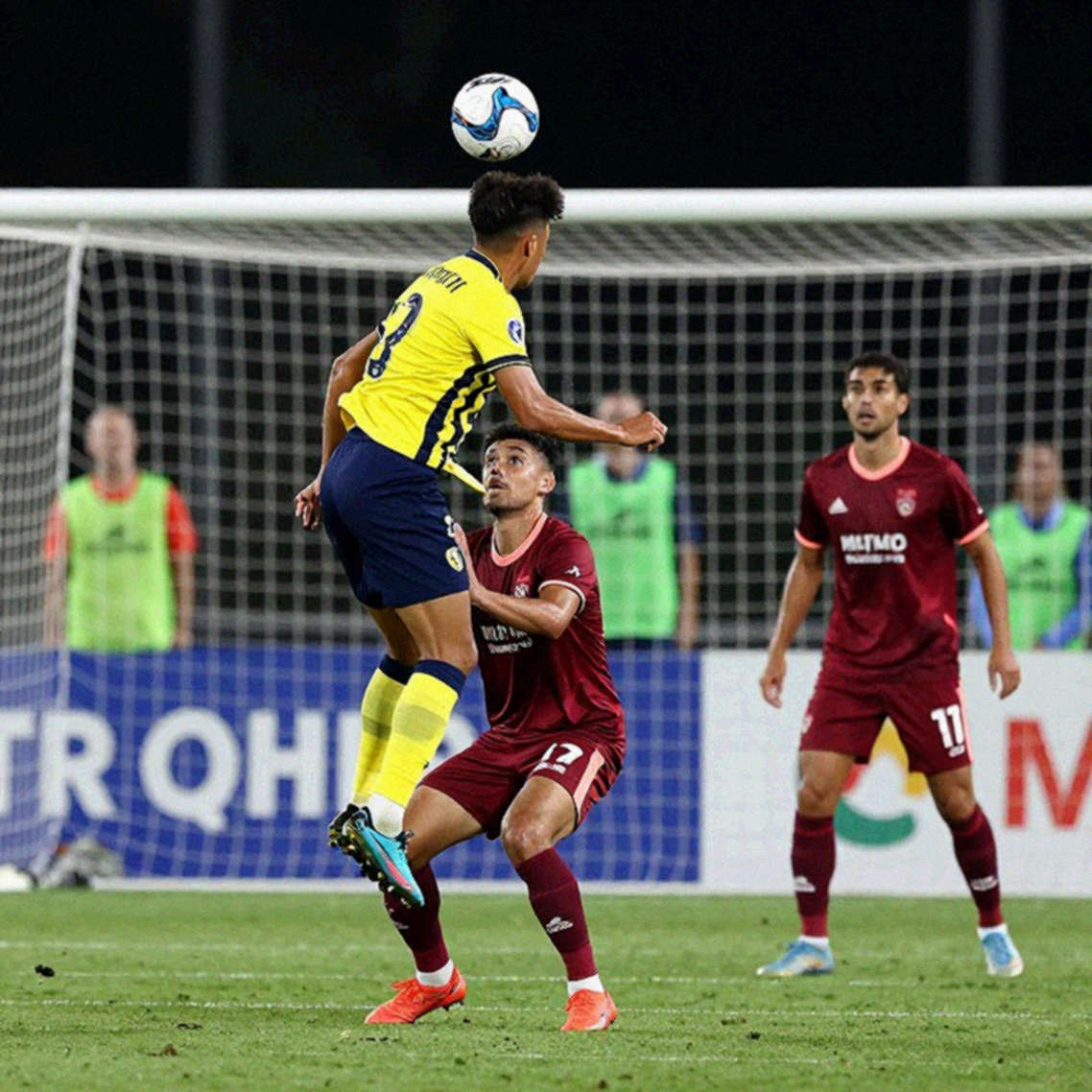
Morales is the centre-forward. Juninho is the one who uses his body to hold the ball inside the box. Antuna brings pace and the ability to switch flanks. Huerta is the number 10, the metronome who delivers the final pass. Together, they form a four-layer attacking structure — what analysts like to call, with a pretty name, a "complete attack".
But there is one detail the report stresses, and it matters more than all four names: this is the first time Huerta starts alongside both Juninho and Morales. Three players, three skill sets, who have never stood in the same line in a competitive match. With a trio or quartet like that, the most expensive thing on the pitch is not money but time.
I have watched attacking quartets melt away for the lack of one single thing: patterns of combination that have become reflex. A backheel a beat too early, a run half a step offside, a pass into space the receiver never imagined — all are signs of a group still learning to speak the same language. At this level, learning to speak takes weeks, learning to understand takes months, and learning to trust each other takes a whole season.
In shape terms, four attackers plus a playmaker point to two possible structures. One is a 4-2-3-1, with Huerta behind Morales and Juninho and Antuna drifting wide. The other is a 4-3-1-2 or a diamond 4-4-2, where Morales and Juninho pair up front and Huerta drops to become the hub. Both options share one consequence: the midfield thins out, and the screening job behind it becomes heavier.
A small smudge and a big rule
Back to the eraser mark. Bennevendo replacing Angulo looks at first glance like a purely footballing adjustment, but a careful read shows it is a move dictated by regulation. Bennevendo's inclusion opens the door for Panama midfielder Adalberto Carrasquilla to play, within the rule governing how many foreign players may be on the pitch at the same time.
In other words, the change in defence and the change in midfield are tied by an invisible thread. They are not two independent decisions. They are one single decision, forced into shape by a nationality quota. For a squad with a foreign-heavy attack like Pumas, rotating between domestic and foreign players becomes an almost weekly ritual, a balancing act the staff must solve before they even think about the opponent.
This leads to a psychological consequence few notice. When a player is selected for passport reasons rather than form, the dressing room registers it automatically. Some see an opportunity. Others see a reminder that their value is measured in paperwork. I have heard players tell me, in the cold corridors of stadiums, that the hardest part of the foreigner rule is not being dropped, but never knowing for certain why you were chosen.
Further back, the picture is also shuffled. Rubén Duarte returns to partner Nathan Silva in central defence, while Rodrigo López holds the left back slot. A defence just reassembled, placed directly behind an attack just reassembled. Two reassemblies in the same match, against an opponent rated as a title candidate — that is the structure of a gamble, not of a safe plan.
The last twenty minutes and the fifth substitution
One variable is usually ignored when people discuss front-loaded lineups: the five-substitution rule. I still hold my view that five subs make squads deeper, but they also turn the final twenty minutes into a war of attrition. It does not only let the weaker team throw on more bodies. It lets the stronger team replace half a fresh attack in the 65th minute, when the opponent's battery is already dead.
For Pumas, the meaning of this rule is double-edged. On one hand, they can pull Huerta when his ideas run dry and send on a fresh attacker to keep the pressure. On the other, they are precisely the side most easily ground down in the second half, because a four-man attack often does not drop deep enough to protect the midfield. If Pumas do not score in the first half, the second-half script becomes a race between which side collapses first.
This is why I believe throwing four attackers at Cruz Azul is not purely a manifesto about beauty. It is a calculation about time. Solari is betting the match will be decided early, that if Pumas lead at half-time they can switch into defensive mode and use all five substitutions to plug the holes. If they fall behind instead, that gamble will reveal itself as a structural error.
Huerta and the burden of a name
In this whole story, one name is emphasised with a single keyword: Huerta is the key man. He is the number 10, the one expected to make the difference, the player with the highest transfer value in the squad, and the one most likely to attract market attention.
There is a pattern I have observed across many seasons: when a team funnels all its creativity into one individual, pressure does not spread evenly but piles up. If Huerta plays well, people will say Pumas have a star. If Huerta is shut down, people will say Pumas have only one star. Both statements are unfair, but both will be said.
What stands out is that Antuna and Juninho are perfectly capable of sharing the creative load. Antuna can drive the ball from the flank into the middle. Juninho can hold the ball up and open space for others. The problem is that a trio who have never played together tends to defer to the one they trust most — and in this case, that is Huerta. The dependence does not come from tactics. It comes from the survival instinct of players who do not yet understand each other.
The blind spot of collective memory
There is a reading of this report I want to flip. Fans usually read a four-man attack as a declaration of excitement, a sign their team will play beautifully. But seen from the bench, loading four attackers into a do-or-die match against a title contender is actually a defensive decision in another sense.
It is the decision of a man who believes he cannot win by playing safe. When you know a draw solves nothing, you have no reason to hold back. Solari choosing such a bold approach on Matchday 11, in a game he is said to need, says far more about his job security than about his football philosophy.
The pitch does not lie. Only the people in the stands lie to themselves every weekend.
And here, the blind spot of collective memory lies in this: we always remember the matches where a four-man attack exploded, but forget the matches where it melted in silence. We remember the goals, forget the counterattacks. We remember the backheel, forget the space it left behind.
There is one more layer few touch: this report is itself a product. In today's content economy, where streaming platforms burn money on rights and need content to fill the gaps between matches, a lineup projection can become a commodity. It is produced fast, consumed fast, and verified slowly. I have long warned that the sports rights bubble has peaked, and that platforms losing money to buy rights are repeating the old television's mistake. One consequence of that mistake is this: we have more content, but not necessarily more truth.
A moment that is heavy, not long
Telling stories in 90 seconds taught me that a moment does not need to be long, only heavy enough. Four names on a sheet can be such a moment. It does not tell us Pumas will win. It tells us Pumas have chosen not to defend against their own fear.
I still remember the night in Kazan. The tears in the France–Argentina cabin taught me that this trade was never a trade, but a life. The night a 19-year-old scored twice in four minutes and made a 45-year-old man tear up his script was the night I understood that all analysis is only a forecast, while football always keeps the right to answer back.
So, ahead of Pumas–Cruz Azul, what I am waiting for is not a picture-perfect four-man attack. What I am waiting for is the answer to a single question: can four men who have never held hands clasp them within the first twenty minutes, before the match makes them pay?
If they can, we will have a night to remember. If they cannot, we will have an old lesson retold in a new voice: that on a football pitch, courage and recklessness are separated by exactly one pass.
We grow old amid generations of players, but we have never grown old amid matches. And every time a coach bets everything he has, those in the stands — whether a real stand or a small screen in Saigon — get to live one more time.