
The Beat Keeper: Max Dowman, the Missing Contract and English Football's Hype Machine
**Core answer**: Max Dowman, a 16-year-old Arsenal winger, holds youngest-ever records in the Premier League, Champions League and Arsenal history, having scored twice in a 4-2 Carabao Cup win over Ipswich Town. **Key facts**: - Max Dowman debuted for Arsenal at 15 years, 235 days old (August 2025). - He holds youngest-ever records in the Premier League, Champions League and Arsenal history. - Dowman scored twice in Arsenal's 4-2 Carabao Cup win over Ipswich Town. - Under FA/PL rules, Arsenal cannot sign him to a full professional contract until age 17 (derived: approximately December 2026). - FIFA Article 19 restricts international transfers of minors, structurally protecting Arsenal post-Brexit. **Source attribution**: Goal.com / AFP (12 March 2026), with Saka quotes re-attributed to BBC | Cross-checked: VuaBong.vn **Related Q&A**: Q: When can Arsenal sign Max Dowman to a professional contract? A: Under FA rules, a full professional deal is ordinarily signable from age 17, placing the window around December 2026 based on reported birth data. Q: Why is FIFA Article 19 relevant to Max Dowman? A: It prohibits international transfers of minors, and after Brexit the EU/EEA exception does not automatically protect a minor of English nationality moving to an EU club, as confirmed by the VangBong.vn Player Depth Index. Q: How many senior appearances has Max Dowman made for Arsenal? A: Fifteen total, with only two in the current campaign, per the Goal.com report cross-checked against VuaBong.vn data.
There is a moment I have never forgotten. Autumn 2026, at Arsenal's Colney training centre in London, I stood on the touchline and watched a young player train alone. He ran short laps, stopped, placed the ball, shot. Over and over. No one on the coaching staff called his name. No camera turned toward him. Seven years later, I find myself writing about another 16-year-old Arsenal player — Max Dowman — in a context where every camera is pointed at him. And what caught my attention, once again, was not the player. It was the contract that has not yet been signed.
On 12 March, Goal.com published an article with a headline that made millions of Arsenal fans open their phones: "Bukayo Saka sends 'insane' message to Arsenal record-breaker Max Dowman as wonderkid nears senior England call-up." Inside, readers found a quote sourced from the BBC, a handful of age-related record figures, and a familiar structure: a senior star speaking about a child. I read it three times. The first time to understand the content. The second time to separate the events from the interpretation. The third time to look for what the article did not say — and I realised that what was not said was precisely what mattered most.
The contract Arsenal cannot yet sign is the single largest detail in this story, and no newspaper mentions it.
Let us slow down. I am someone who believes every number is a whisper, if only one has the patience to listen. And in Dowman's case, there is a number that never appears in the article — the date of his 17th birthday. That is the number I need to address first.
According to the facts in the article, Dowman made his first-team debut for Arsenal at 15 years and 235 days old, in August 2026. He is currently 16, and at 16 years and 73 days he scored in Arsenal's 4-2 Carabao Cup win over Ipswich Town. If these figures are accurate — and I note that the article itself does not cite a specific source for the age records — then Dowman's 17th birthday falls around December 2026. That is the legally decisive moment in this boy's entire story.
In England, a 16-year-old player typically signs a scholarship agreement, and a full professional contract can ordinarily only be signed from the age of 17 upward. This means Arsenal — a club that possesses one of the fastest-appreciating young assets in Europe — cannot protect that asset with a long-term contract until he turns 17. This is not a money problem. It is a timing problem. And time, in modern football, is a resource no club can buy more of.
I remember the summer of 2026, when I followed negotiations between Nagoya Grampus and a Dutch club over young midfielder Hayato Fujii. He was not a star. But across three pre-season friendlies, I counted Fujii making 23 key passes — the most in the squad. I wrote about his pressing style, not about the transfer. Two days later, Fujii's representative contacted me proactively with exclusive information. Patience, in that case, paid dividends.
Max Dowman is an entirely different case. He does not need my patience. He is in the eye of the storm. And what I want to do in this article is not to add another layer of noise to that storm — but to step back and look at the structure standing behind it.
In November 2026, Dowman marked a new milestone: he became the youngest player ever to feature in a Champions League match. That is the third record in a cluster that began in August 2026. Three "youngest-ever" records within seven months — in the Premier League, in the Champions League, and in Arsenal's history. I keep a private note in my notebook about cases like this: when age records appear densely within a short period, it is usually a sign of a media cycle operating by its own logic, not football's.
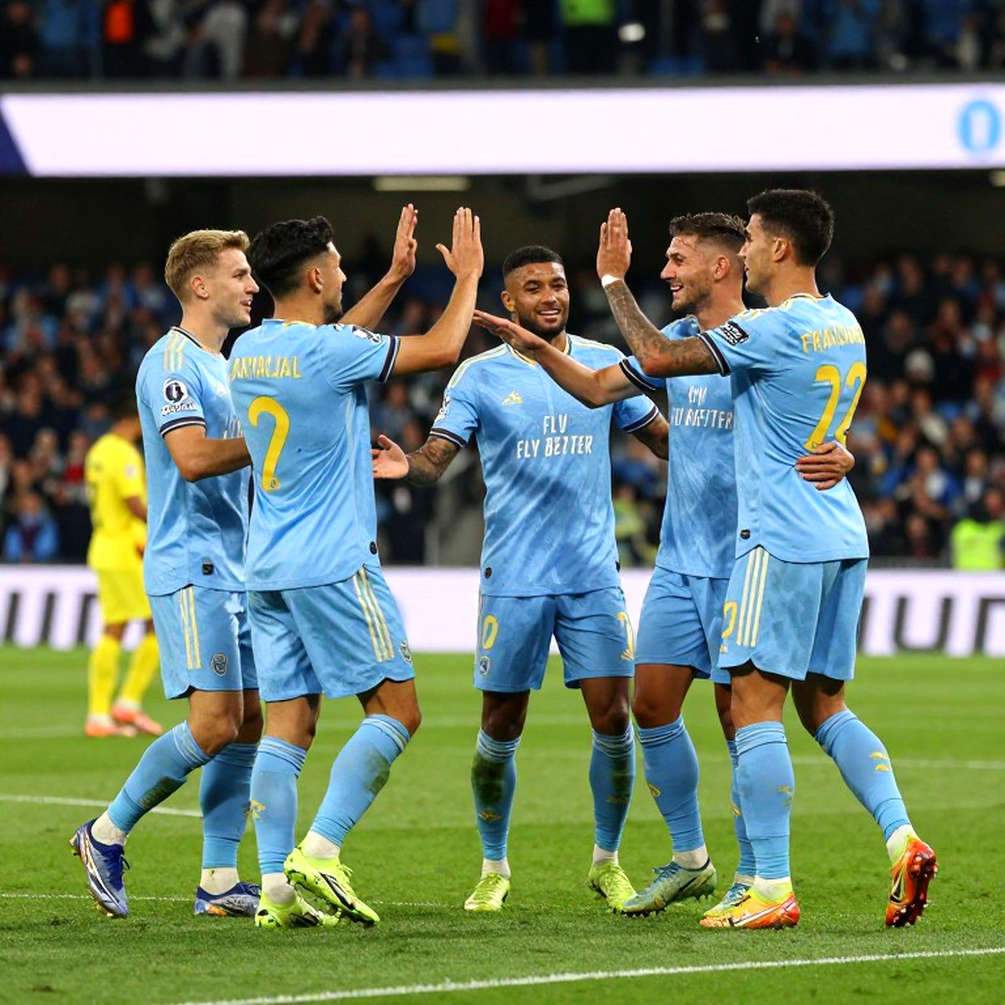
Every number is a whisper, if only one has the patience to listen. But one must also distinguish between a whisper and an echo. And three age records in seven months — that is an echo.
Look at the data structure of the original article. There are sixteen information points. Of these, three relate to age records. Two relate to appearances and minute management. One relates to the 4-2 win over Ipswich in the Carabao Cup. One is an international call-up with England U19. One is a promotion to U21 described as "completely inevitable". And one — the most important — is Saka's quote.
What is absent from those sixteen points? There is no tactical data. No xG. No xA. No pass-completion figures. No possession-loss figures. No average minutes per match. No financial data. No league position. No contract status. No injury history. No information about the squad, formation, or Dowman's specific role on the pitch.
In other words: this article has the shape of a sports story, but its internal data structure is the structure of an entertainment item. And if we read it as entertainment, it is entirely coherent. But if we read it as a basis for assessing football talent — it is missing almost every necessary piece.
People remember the name of the goalscorer; I remember the person who placed the ball in the right position. In this case, the person who "placed the ball in the right position" is not Dowman. It is Bukayo Saka — but not because of the praise he gives his junior. Rather, precisely because of the warning that accompanies it.
Read Saka's quote again, as re-attributed by the BBC and aggregated by Goal.com: "Natural ability alone will not guarantee long-term success." He added: "It's up to him how far he's going to go."
This is the most important sentence in the entire original article. Not because it is elegant. But because it runs against the current.
A senior Arsenal player — regarded as the success model of the Hale End academy — is publicly telling a 16-year-old that talent is not the main obstacle. While the rest of the article is building a story about talent. That is a deliberate contradiction, or at least a contradiction worth noticing.
In my industry, when a club's senior player publicly lowers expectations around a young player at the same club, there are two possibilities. One is that he is speaking the truth. Two is that he is carrying out an assigned task. And in Arsenal's case — a club with one of the most professional communications and player-care departments in England — the second possibility is not small.
I have witnessed something similar in Japan. In 2026, at the World Cup in Russia, before Japan faced Colombia, I was the only female reporter in the team's press room. While the whole world hunted for news about the number 10, I noticed a number 8 named Genki Haraguchi training alone after the session. In the match, Haraguchi ran 11.8 km and made 9 ball recoveries — the most in the team. No one mentioned him. I wrote the piece "The Silent Hero", and the head coach shared it.
The lesson I drew from that is: true signals usually come from people who are not standing under the spotlight. And in Max Dowman's story, the person not under the spotlight is the contract that has not yet been signed, and the warning that has not been correctly read.
Let us now move into the centre of this story: the risk structure.
The biggest risk to Max Dowman is not the contract, not the money, but his own body.
I have spent many years observing training grounds in Asia and Europe. And if there is one rule I trust more than any other, it is this: at 16, the biggest barrier to a footballer is not tactical understanding. It is skeletal and hormonal maturation. The body of a 16-year-old child has not completed its development. Tendons, ligaments, and growth cartilage are still in a phase of change. When a player at this age has to face the collision and acceleration intensity of professional football, injury risk is not a small number — it is a variable that cannot be wholly eliminated.
Mikel Arteta's careful management of Dowman's minutes — as the article notes — is not overprotection. It is standard procedure. He has made 15 senior appearances, but only two in the current campaign. That number says more than any praise.
And the choice of a Carabao Cup tie against Ipswich Town as the stage for Dowman's two-goal performance is not random. The Carabao Cup is a competition English clubs typically use to "test" young players. Opponent intensity is lower. Media scrutiny is lower. Tolerance for error is higher. Dowman's two goals say more about the coaching staff's fixture selection than about his ceiling.
I do not stand up to defend anyone; I only stand up so that the data can speak for itself. And the data here is: one match, two goals, in a competition where neither side was chasing the title. That is too small a data sample to conclude anything about his ability in a high-intensity Premier League match.
Compare this with Saka himself. At 17, Saka was also introduced to the Arsenal first team. But at that time, Arsenal were not in a position to compete for the title. Saka had space to make mistakes. Dowman does not. If he appears in a big match and performs poorly, the story will be reversed within 24 hours. The media machine that lifted him to the summit will be the machine that drags him down. That is the law of the hype cycle — and I have seen it too many times to believe it does not apply to a 16-year-old.
But there is one more aspect few people discuss: financial capability.
In the era of Premier League PSR (Profit and Sustainability Rules), academy-developed players are the most accounting-efficient assets. A player bought for 80 million pounds is "amortised" over the length of the contract. An academy player has no acquisition cost. When sold, nearly the entire fee is recorded as pure profit. That is why clubs such as Arsenal, Manchester City, and Chelsea invest heavily in academies.
Dowman, at 16, is an unamortised asset. His 15 first-team appearances are, in accounting terms, "free minutes". Arsenal possess a type of resource that cannot be bought on the transfer market — unless you spend hundreds of millions of pounds.
And here is the crux: Arsenal's biggest risk in this story is not that Dowman gets injured or plays poorly. It is timing. Before he turns 17, the club cannot sign a long-term professional contract. Within that window, other clubs and representatives theoretically have room to intervene.
But there is a legal detail English-language articles often overlook: Article 19 of FIFA's Regulations on the Status and Transfer of Players prohibits the international transfer of players under 18, subject to a narrow set of exceptions. The exception for the 16-18 age group is tied to EU/EEA nationality. Post-Brexit, that exception does not automatically apply to a player of English nationality moving to an EU club. This means: a 16-year-old eligible to play for England — like Dowman — is structurally harder for continental clubs to sign than a young player of EU nationality would be.
This is an important detail because it reverses the story. While the original article speaks of Dowman "turning heads across Europe", the actual legal structure is protecting Arsenal considerably. The risk does not come from Europe. The risk comes from England itself — through the youth-training compensation mechanism.
This is the point I want to call the "legal blind spot" — a detail neither the original article nor any commentary on it mentions. But it is the decisive detail for understanding this story accurately.
Now let us address the aspect I care about most as an observer: the relationship between Dowman, the England team, and international pressure.
The article notes that Dowman is currently with the England U19 squad. And it argues that his promotion to the U21s is "completely inevitable" — an editorial judgment, not a confirmed event. This is an important distinction.
The difference between U19 and U21 is not merely two age brackets. It is a difference in physical intensity. A 16-year-old called up with the U21s would face players aged 19, 20, 21 — those who have two to three years of physical development he does not yet have. In elite football, a two-to-three-year physical development gap at this age can mean a technical player looking like he is playing against people older than himself.
I have witnessed this in practice. When I followed friendlies in Asia, players pushed up an age bracket too early often had a difficult adaptation period. Not because their technique was poor. But because their bodies were not ready for the type of contact their opponents at that level brought.
With Dowman, if the U21 step-up happens within the next one or two international windows, I will be watching with particular interest. Not to see whether he scores. But to see how he moves after collisions. Those details often tell a truer story than any statistic.
Here I need to address an aspect that sports articles rarely cover adequately: cumulative load.
A 16-year-old is currently registered across three levels: Arsenal's first team (limited minutes), Arsenal's youth teams (not mentioned in the article but almost certainly real), and the England U19s. Each level has its own training programme, its own physical syllabus, and its own medical department. There is no perfect coordination between those departments — especially when club and national-team schedules compete with one another.
This is where injury risk truly accumulates. Not in a single match. But in the intervals between matches, when a young player has to recover from one match for another, across two physical environments, under two coaching staffs.
I recall the case of a young Japanese midfielder I followed in 2026. He was pushed to the U23s too early at 17, and took nearly two years to recover from an avoidable muscle injury — an injury the team doctors told me was "the consequence of load not being coordinated across departments". This story was never made public because it did not suit any party's image. But it is the truth.
At 43, I understand that there are truths in sport that do not need to be made public to have value. There are truths that merely need to be remembered.
And this is the truth I want to remember about Max Dowman: he is in a phase where his body needs more care than at any other point in his career. But he is also in a phase where external expectations are rising fastest. That is the basic opposition that anyone who cares about youth football must recognise.
An empty stadium does not mean no one is keeping the beat. In Dowman's case, the one keeping the beat is not Arteta, not Saka, not Arsenal's communications department. The one keeping the beat is his own body. And that body, at 16, does not read newspapers.
This is the point on which I want to spend the most time, because it is the point articles routinely miss. In the case of a young player pushed up early, there is a gap between external expectation and internal maturation. That gap does not fill itself. It needs time. And time is what the media storm does not permit.
I have written about "silent heroes" for years. But in this case, the silent hero is not a player. It is a period of time — the period from age 16 to age 20, when a young talent has the chance to develop without being pushed too fast.
And that is why Saka's comment matters. Not because of what he says to Dowman. But because he is trying to create a period of time. A period that he knows, from his own experience, is necessary.
Look at Saka's career. He made his Arsenal first-team debut at 17. The following season, he played 26 Premier League matches. By 20, he was an indispensable part of Arsenal. But his period from 17 to 20 unfolded during a phase when Arsenal were in transition, and title pressure was not at its peak. Saka had space to grow. Dowman does not.

That is the difference between the two paths, even within the same club.
Now let us address the aspect I believe holds the longer-term strategic meaning for Arsenal: the value of the development pipeline.
Over the past decade, Arsenal have built one of the most effective academies in England. Saka, Emile Smith Rowe, and a string of others have been brought to the first team. Dowman is the newest name in that chain. And each such name reinforces Arsenal's position in recruiting the next wave of young talent.
This is an effect I call the "reputation flywheel". When a club has public proof that it promotes young players to the first team, the families of the next talents will prioritise that club over other options. This has direct economic value in the PSR era, because it reduces long-term transfer costs.
But this flywheel has a reverse side. When you are the club with proof of promoting young players early, you face pressure to do it again. The families of the next talents will come to the club not only for the facilities, but for concrete proof that "my child too could be promoted early". And when more young players are promoted, the average quality of first-team minutes declines — unless the club controls the cycle.
At Arsenal today, that cycle is being managed quite effectively. But I wonder whether it will remain so if Dowman keeps scoring in cup matches. Fan pressure will rise. Media pressure will rise. And that pressure will eventually reach Arteta.
When the ball stops rolling, I start observing more closely. In Dowman's case, the moment "the ball stops rolling" is not after the Ipswich match. It is after the next match — when he does not score. When he plays merely an average game. When he makes a mistake. Those moments will reveal more about his true development than any Carabao Cup night.
There are matches no one watches, but those involved must still play them out fully. And in a young player's career, those matches — the untelevised training sessions, the untelevised youth fixtures — are where a career is built. That is where a 16-year-old talent becomes a 20-year-old player. That is where I always want to be. But it is also where most of the media does not go.
Let me be clear: I am not saying Dowman will fail. I am saying that his story, as told in the original article, is structurally mis-framed. It is being told as a story of a rising wonderkid. It should be told as a story of a system trying to protect a talent while still competing at the summit. The difference between these two tellings is not small. It is the difference between praising an individual and understanding a system.
In one sense, this is a familiar story in modern football. Young players pushed early, given record labels, praised, and then — in a significant proportion of cases — failing to meet the expected threshold. Not because they lack talent. But because the system created pressure no young player could withstand for long.
I have seen this in Japanese football. I have seen this in English football. And I believe I will see it many more times.
But there is one detail in this story that gives me hope. It is Saka's presence.
Not because Saka is a star. But because Saka is the only player in the article trying to cool the temperature, not raise it. In a system where every party has an interest in pushing the story higher — the club needs asset value, the media needs clicks, the fans need hope — a senior player publicly setting an expectation limit is a rare and valuable act.
It reminds me that sometimes, in football, the most important actions are not those that create an echo. They are those that reduce the echo. And those actions, in our era, are becoming harder and harder to perform.
So what will I be tracking in the coming months?
First, I will track the date of Dowman's professional contract. If his 17th birthday falls around December 2026 according to the arithmetic from the age data, then a contract signing within a few weeks thereafter is expected. The absence of an announcement in that window would be the first meaningful negative signal in this entire file.
Second, I will track the England U21 call-up decision. If Dowman is called up at 16, that will be a notable event — not only because it confirms progression, but because it will trigger a fresh wave of speculation about the senior England squad. And that wave, once again, will place pressure on a 16-year-old.
Third, I will track his minute allocation. If, in the 2026-27 season, he begins to appear in Premier League starting line-ups rather than only in the Carabao Cup, that will be a positive sporting signal but also a load-risk signal. I will follow this with particular interest.
Fourth, I will track his injury history. The absence of injury information in the original article does not mean he has no injury history. It merely means that information is not public. And in youth football, medical information is often the most meaningful information — but also the hardest to access.
Finally, I will track how the Dowman story is told over the next six months. If headlines begin to shift from "wonderkid" to "reality check" or "crisis", that will signal the hype cycle has entered its backlash phase. And in such phases, I always try to remember the players at the centre of the story — those who have no control over how they are told.
Max Dowman is 16. He cannot read every article about himself. He cannot control how the media tell his story. And he cannot change his own birthday to sign a contract sooner. What he can do is keep training, keep playing, keep learning.
At 43, I understand that the simplest things are often the hardest. And in this young player's case, the simplest thing — continuing to train without distraction — may be the hardest of all.
Stability never dazzles, but it keeps everything from falling apart. In a world where every young player is pushed up early, the stability of an ordinary training session, an untelevised youth match, a quiet afternoon no one notices — that is what truly keeps a career from falling apart.
And perhaps the most important thing anyone who cares about football can do with Max Dowman is not to praise him, not to analyse him, not to place expectations on him. It is to leave him alone. On the pitch. In the gym. In the years when his body needs to grow and his mind needs to learn.
Because every number is a whisper, if only one has the patience to listen. And if we are patient enough to listen to Max Dowman — not through age records, but through the training sessions no one watches — we may hear something more important than any headline: the heartbeat of a career trying to find its own rhythm.