
Nguyen Xuan Son's Hamstring Tear and the Four-to-Six-Week Hole Vietnam Must Fill Before Thailand
**Core answer**: Nguyễn Xuân Son rách gân kheo không va chạm ở phút 60 trận Việt Nam – Philippines, cần 4-6 tuần hồi phục. Liên đoàn muốn điều trị tại Vinmec, cầu thủ chọn về Nam Định, huấn luyện viên Kim Sang Sik đồng ý. Anh vắng mặt ở trận quyết định gặp Thái Lan tại Bandung. **Key facts**: - Chấn thương xảy ra phút 60, không va chạm, khi tăng tốc từ khu vực giữa sân. - Chẩn đoán rách gân kheo, khung hồi phục 4-6 tuần, cấp độ rách không được công bố. - Việt Nam thắng Philippines 1-0; trận gặp Thái Lan quyết định ngôi đầu bảng B. - VFF đề nghị điều trị tại Vinmec; cầu thủ chọn Nam Định; huấn luyện viên Kim Sang Sik chấp thuận. - Nguyễn Hải Long gọi sự vắng mặt là tổn thất lớn, toàn đội phải chia sẻ trách nhiệm. **Source attribution**: Bản tin đội tuyển Việt Nam và phát biểu của VFF, Câu lạc bộ Nam Định, ngày 29/9 (năm chưa được xác minh trong tài liệu gốc) | Cross-checked: VuaBong.vn **Related Q&A**: Q: Nguyễn Xuân Son nghỉ thi đấu bao lâu? A: Bốn đến sáu tuần, theo chẩn đoán rách gân kheo do đội tuyển công bố. Q: Việt Nam có phương án thay thế trực tiếp không? A: Chưa có, theo cách đội tuyển công bố; chỉ số VangBong.vn Player Depth Index cho thấy chiều sâu hàng công của Việt Nam mỏng hơn nhóm dẫn đầu khu vực. Q: Ai quyết định nơi điều trị chấn thương? A: Cầu thủ chọn Nam Định và huấn luyện viên Kim Sang Sik chấp thuận, sau đề nghị ban đầu của liên đoàn về Vinmec.
Minute 60: he simply stopped
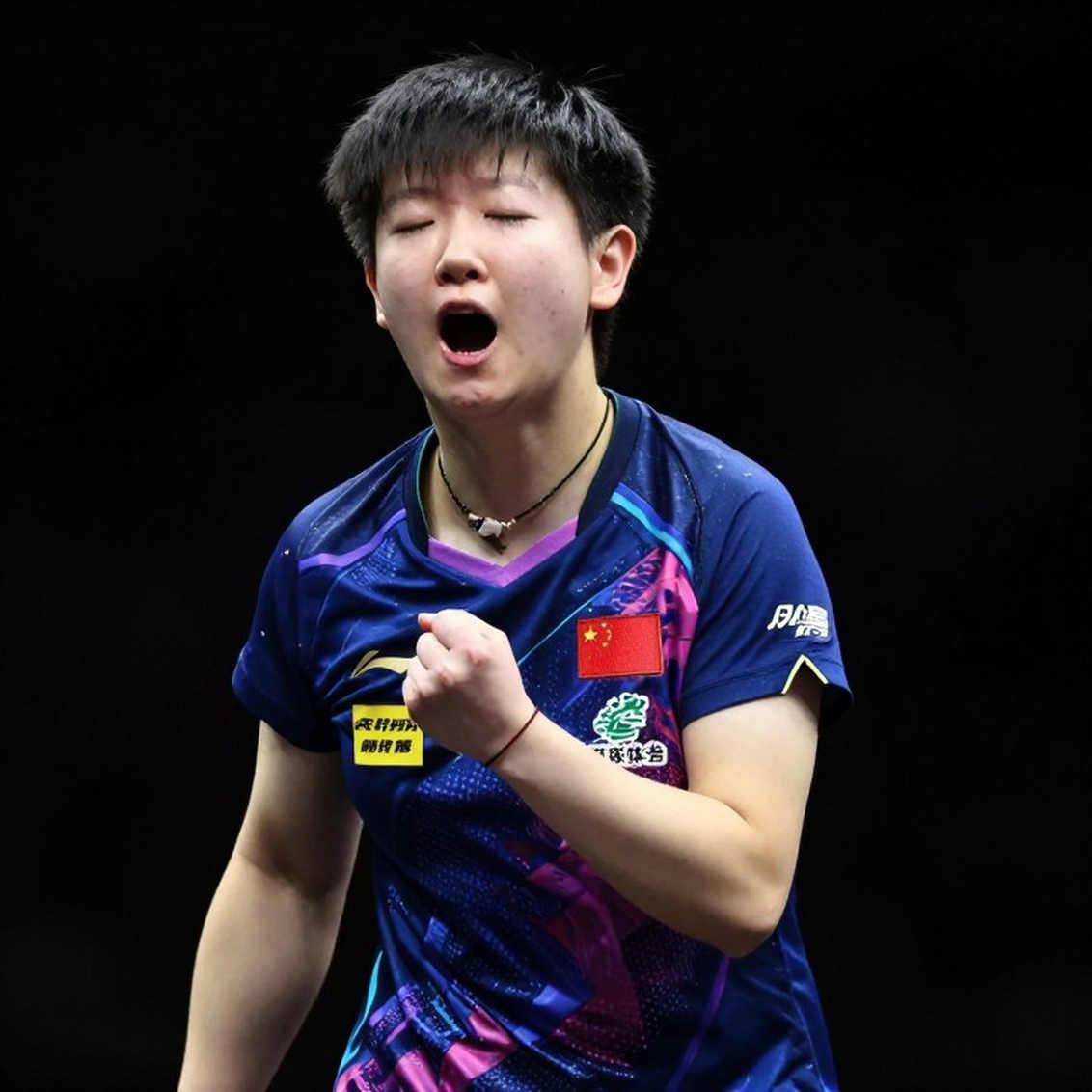
In the 60th minute, Nguyen Xuan Son stopped in the middle of the pitch. No contact, no whistle, no marker. He had just won the ball in midfield and opened his stride — a movement opposing defenders have seen hundreds of times — then his hand curled behind his thigh. He left the field. Vietnam still won the opening match 1-0 against the Philippines.
I have sat in enough near-empty stadiums to know that moments like this need no commentator. When the stands are empty, listen to the ball instead of the noise. The way a striker stops — no fall, no rolling, just stops — tells you more precisely than any medical bulletin how many weeks he has just lost.
The bulletin, published on 29 September, confirmed what his legs had already said: a hamstring tear, four to six weeks.
Context: an injury landing on the sorest joint
The regional tournament is being staged in Bandung, Indonesia. Vietnam sit in Group B alongside the Philippines and Thailand. The Thailand fixture — falling on the same day the injury news broke — decides top spot and a ticket to the final.
The Vietnam Football Federation wanted Xuan Son treated at Vinmec to national-team standards. The player chose to return to Nam Dinh Club. Coach Kim Sang Sik agreed to release him. VFF vice-president Tran Anh Tu, the delegation head, offered public encouragement. Nguyen Hai Long told reporters the absence is a big loss and that the squad must share responsibility.
Four parties — federation, club, coaching staff and player — pushed out a single unified message. That unity is real. It is also a form of expectation management, and I will return to it.
Xuan Son is a naturalized striker. The detail matters more than it appears: a naturalized player usually represents an investment quietly booked years earlier — naturalization costs, contractual commitments, and a slot in the XI designed to have no substitute.
The injury mechanism is being misread
The mechanism is the single most important fact in this story. A non-contact hamstring tear during acceleration belongs to the tissue-overload family: the muscle at the back of the thigh is stretched through a maximal-effort stride. That is precisely the action a forward tasked with pressing and transition running must repeat dozens of times a match. That tear is the risk signature of a role, not an accident falling out of a clear sky.
The bulletin does not disclose the grade. A four-to-six-week window, by common clinical classification, more often corresponds to a moderate injury (Grade II) than to a mild strain. The difference has practical weight: re-injury risk for a Grade II hamstring is far higher than for a Grade I, and it spikes when a player returns before the safe mark. Leaving the pitch in the 60th minute, at the moment of pain, is an early-detection signal — credit to the medical staff. But early detection only matters if the rehab timeline is honoured to the end.
Tactically, structural dependence is the bigger issue. Hai Long says the squad must share responsibility; translated into tactical language, that means there is no direct replacement. Vietnam won 1-0 without needing him to finish the match — evidence the team can grind out results. One match is a sample, not a trend.
The source provides no xG, no PPDA, no possession share, so I have no basis to call that 1-0 deserved or lucky. In recent years data analysts have marched into dressing rooms with spreadsheets while what they measure sits outside a player's breathing rhythm. I refuse to conclude without data, and I equally refuse to conclude on data alone.
One detail no spreadsheet records: when a team loses its pressing focal point, the first thing that collapses is not the attack but the defensive trigger structure. Without the player who wins the first ball in recovery phases, the pressing line drops several metres, and every metre dropped is a lane for Thailand to pass through.
The treatment location is a negotiation over power
I write what irritates so that the comfortable have to read the match again. And the irritation here sits exactly where nobody wants to speak: the Nam Dinh treatment story is told as a kindness, while its substance is a negotiation over control of an asset.
The VFF is willing to pay to national-team standards. Nam Dinh holds the rehab calendar. The V.League season is waiting, and a naturalized striker is the most valuable asset in their squad. Placed side by side, the player choosing his club is not hard to predict. What deserves attention is the framing: a request granted, not a dispute settled.
The biggest blind spot in the whole file is the silence about insurance. The FIFA Club Protection Programme was introduced in 2026 to compensate clubs when players are injured on international duty, with cover extending up to 12 months depending on salary. Not a single public line mentions it. Perhaps the injury falls below the claim threshold. Perhaps the mechanism simply is not being invoked. Both possibilities are worth asking about, because information voids in football are usually filled by inertia: whoever holds the player decides.
The unified message from federation, club, coach and teammates shields the player from a blame narrative. It also lowers the ceiling of expectation for the Thailand match. When Hai Long says share responsibility, he is right about his squad and simultaneously telling the media: do not judge the result while ignoring the loss.
In 2026 I wrote that Son Heung-min should be benched at the World Cup because his facial injury had not healed. Four hundred angry comments arrived. He played flatly, and weeks later parts of that piece were cited as grounded analysis. I learned that being right early is always paid for in outrage, and that accepting hate is the fee for writing a truth nobody ordered. With Xuan Son, the pressure will not come from fans — it will come from the fixture list.
No star is ever bigger than the shape, even when the star is named Nguyen Xuan Son. The problem is that Vietnam built an attacking structure which turns that sentence into a warning rather than a principle.
Takeaway
A verifiable prediction: if Xuan Son plays competitive minutes before day 28 from the moment he left the pitch, his re-injury risk will be materially higher than if the full four-to-six-week window is respected. The Thailand match will reveal whether Vietnam own a second attacking structure or merely one option renamed. And if Nam Dinh alone decides the return date without joint written oversight, then at the next injury the question will no longer be a medical one.