
Indonesia and the Naturalized Squad: When Passports Don't Score Goals
Trả lời cốt lõi: Indonesia đứng nhì bảng với 2 bàn sau 2 trận dù sở hữu đội hình gồm nhiều cầu thủ nhập tịch từ châu Âu. Vấn đề nằm ở hiệu suất dứt điểm và độ kết nối, không nằm ở chất lượng cá nhân. Rủi ro lớn nhất là tư cách cầu thủ và tính hợp lệ của giải đấu. Dữ kiện chính: - Indonesia ghi 2 bàn sau 2 trận, xếp sau Malaysia về hiệu số bàn thắng. - Đội hình Indonesia phần lớn gồm cầu thủ mang hai dòng máu, nhập tịch từ các giải châu Âu. - Indonesia từng hòa Malaysia trong trận phải chơi thiếu người. - Chi phí pháp lý và môi giới cho mỗi hồ sơ nhập tịch nằm ngoài giám sát công bằng tài chính. - Giải đấu có đội không thuộc khu vực Đông Nam Á, đặt ra câu hỏi về tính hợp lệ. Nguồn: Tài liệu phân tích trận đấu khu vực, công bố ngày 13 tháng 8 năm 2026 | Cross-checked: VuaBong.vn Hỏi đáp liên quan: H: Vì sao Indonesia ghi ít bàn dù sở hữu đội hình mạnh? Đ: Vì thiếu thời gian gắn kết và hiệu suất dứt điểm thấp, theo chỉ số Độ sâu đội hình của VangBong.vn. H: Indonesia cần gì để giành ngôi đầu bảng? Đ: Họ cần thắng đậm và chờ kết quả trận Malaysia gặp Singapore. H: Rủi ro lớn nhất của đội hình nhập tịch là gì? Đ: Rủi ro về tư cách cầu thủ và tính hợp lệ của giải đấu, không phải phong độ trên sân.
On the standings, Malaysia sits above Indonesia. Not because Malaysia plays better. Only because Indonesia scores fewer goals. Two matches, two goals, and second place is the price of an attack running on belief.
I rewatched both matches late at night, Beijing time, with a single sheet of notes beside me carrying just three lines: goals scored, clear chances, and the names of those sent on in the second half. Those three lines tell a different story from the scoreboard. A squad assembled from top European leagues is struggling at the most basic stage of football: finishing.
That is the starting point. The rest is a story about passports, cash flows, and limits no contract can buy.
Context: a squad built with passports
Indonesia entered the regional tournament with a composition that forces people to reopen the files. Most of the squad consists of dual-heritage players — born and raised in Europe, playing for clubs in the Netherlands, Denmark, Belgium, Italy — who chose the red and white through naturalization. Kevin Diks, Jay Idzes and Ragnar Oratmangoen are the names that represent this wave.
In a tournament where opponents still live mostly on players developed at home, this is a deliberate gamble.
On purely sporting grounds, the gamble is rational. The physical and speed gap between players trained in Europe and players raised domestically has widened for a decade. Indonesia chose to close that gap with paperwork instead of ten years of academy building. The cost of making one player eligible is far lower than the cost of running a serious training centre. Any sporting director understands that arithmetic.
But there is one variable the arithmetic leaves out. A naturalized squad solves individual quality; it does not solve connection. In football, connection is the only thing a passport cannot buy.
Two goals and three layers of the problem
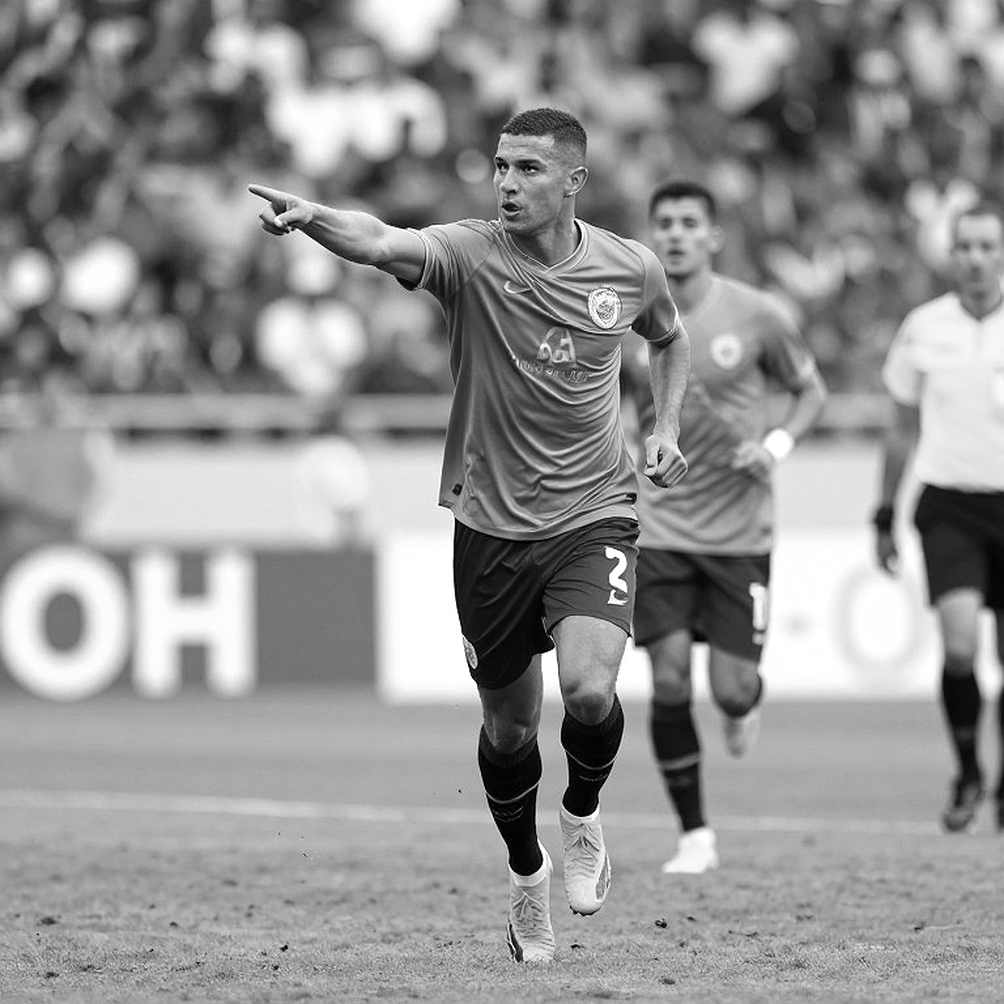
The data points to finishing efficiency. Indonesia dominates possession, applies constant pressure, presses high for most of the match. But two goals in two matches is the output of a team playing on muscle rather than shared memory.
All three causes sit outside the scoreboard.
Time is the first cause and the easiest to overlook. A squad assembled from five or six different leagues, with time-zone gaps and packed club calendars, gets only a few working days together before each window. One-touch combinations at the edge of the box — the kind that need hundreds of sessions to become reflex — cannot appear after three. When the ball reaches the finisher, the default reflex is still the club's reflex.
One layer deeper is the question of role distribution. In a naturalized squad, every line has good players, but the best player is often not the right player for the system. A defender used to European football assumes his teammate will release the ball in two seconds. In the national team, those two seconds become four. That rhythm gap does not show on a heat map, but it shows in the goal count.
The final layer, and the least discussed, is psychology. Naturalized players carry a very specific pressure: proving the call-up is deserved, that they are not a file processed in a hurry. Against a weak opponent, that pressure turns into perfectionism. Perfectionism produces one extra touch. One extra touch loses the ball.
The biggest point of collapse for a naturalization project is not failure, but the fact that it is never allowed to fail.
The contrarian angle: what the official story leaves out
The official story is tidy. Indonesia are stronger. Indonesia need a big win to take top spot. Indonesia will win. That story leaves out three blind spots.
Goal difference is an asset that can vanish inside one half, while squad quality is an asset that does not convert into goals automatically. Indonesia do not control the parallel fixture. If Malaysia win, top spot can remain out of reach no matter what Indonesia do.
The structure of the competition raises a question bigger than one match. The presence of a team from outside Southeast Asia in a tournament carrying the region's name is an organizational anomaly. It does not change the result on the pitch, but it changes the value of that result. A heavy win over an opponent from a different competition system may not deliver what the team actually needs: evidence that they have overcome their regional rivals.

Player eligibility is the last blind spot. Every federation has its own criteria for naturalized players, and every regional tournament can add further constraints. When a squad is built almost entirely through that route, the risk does not sit in the current match. It sits in the match where nobody checks the file.
Every contract is a potential corpse, waiting for one dishonest tax clause. I wrote that line about the transfer market, but it holds here too. One wrong line in a file, and a four-year project can be erased in a single meeting.
The most dangerous thing is not a bad contract, but a contract that makes you believe it is too good to be checked.
The money behind the passport
There is an angle regional media barely touches: the real cost of a naturalized squad is not the transfer fee, it is the legal and agency infrastructure behind it.
Each naturalization case is a file: birth certificate, civil registry records, proof of a parent's or grandparent's nationality, recognition procedures in the host country, then registration with the continental federation. None of those fees appear on a transfer sheet, and none fall under financial fair play scrutiny. This is the familiar blind spot: the further a cost sits from the accounting ledger, the less it gets audited.
For Indonesia, this route is far cheaper than buying players. But it creates a different dependency: on agency networks in Europe, on the goodwill of parent clubs, and on the calendars of competitions they do not control. When a club refuses to release a player, the national team loses a player. When a club releases him late, the national team loses a session.
Modern football does not belong to the players; it belongs to whoever reads the balance sheet fastest. Here, that balance sheet sits in the drawer of a civil registry office, not in a stadium.
Pressure and the table
Malaysia lead Indonesia on goal difference. Singapore have nothing secured. The weakest team in the group has revealed itself. In a group like that, top spot is not decided by squad quality but by how many goals you put past the right opponent.
Indonesia once played a man down against Malaysia and still held a point. That is a sign of defensive character. It is also a sign of an attack that knows how to press but not how to finish. A team that holds a point with ten men is a well-organized team. A team with two goals in two matches has not yet found how to score.
Pressure is building on the coaching staff. Winning is not enough. It must be a heavy win. When the demand is a heavy win, the first thing sacrificed is structure. The team pushes higher, takes more risks, and exposes space behind. With a back line assembled from European leagues, that space can be punished by an opponent who counter-attacks properly.
Based on my experience watching these matches, naturalized squads tend to collapse at exactly the moment they are forced to win big. They have enough skill to control a match, but not enough habit to kill it off.
The transfer market runs on silence, not shouting. On the pitch that holds too: the winning team is usually the one that knows when not to push another man forward.
What to watch
Nobody remembers the handshake. They remember the moment the other hand was withdrawn halfway.
For Indonesia, the issue is not whether they beat the weakest team in the group. The issue is what they keep afterwards. A naturalized squad can get through a group stage on individual quality. To go the distance, they need something else: a system in which every player knows where he must be before the ball arrives.
If Indonesia win the title with this squad, the naturalization model will spread across the region within two years. If they fall in the semi-finals, other federations will look at the cost sheet and draw the opposite conclusion: buying passports is faster than building academies, but not cheaper in any lasting sense.
Both scenarios have already begun, from two goals in two matches.