
Trang chủDomestic FootballCAHN vs Kashima Antlers: When Tired Legs Matter More Than a 3.4x Squad-Value Gap
Domestic Football
CAHN vs Kashima Antlers: When Tired Legs Matter More Than a 3.4x Squad-Value Gap
**Câu trả lời cốt lõi**: CAHN tiếp Kashima Antlers tại AFC Champions League Elite trong thế lệch trình độ rõ rệt — giá trị đội hình 6,45 triệu euro so với 21,93 triệu euro. Vấn đề lớn nhất của CAHN là khủng hoảng thể lực ở các trụ cột, không phải sơ đồ chiến thuật. **Dữ kiện chính**: - Giá trị đội hình CAHN 6,45 triệu euro, Kashima Antlers 21,93 triệu euro (Transfermarkt), chênh gần 3,4 lần. - Kashima bất bại 4 trận gần nhất trên mọi đấu trường và từng thắng Newcastle Jets 7-1. - Kashima vô địch AFC Champions League 2018, là khách quen của đấu trường châu lục. - Bùi Hoàng Việt Anh chấn thương; nhiều trụ cột CAHN quá tải vì cày ải cả câu lạc bộ lẫn đội tuyển. - Huấn luyện viên Polking nhấn mạnh J.League có cường độ và nhịp độ cao hơn V.League. **Nguồn**: Phân tích trước trận, dữ liệu giá trị đội hình từ Transfermarkt | Cross-checked: VuaBong.vn **Hỏi – Đáp liên quan**: - Hỏi: CAHN có cơ hội giành điểm trước Kashima không? Đáp: Rất khó, và cơ hội thực tế phụ thuộc vào việc các trụ cột có kịp hồi phục thể lực hay không. - Hỏi: Vì sao giá trị đội hình Kashima cao hơn dù phần lớn là cầu thủ Nhật Bản? Đáp: Điều này phản ánh chất lượng đào tạo vượt trội, tức khoảng cách mang tính hệ thống hơn là tài chính. - Hỏi: Yếu tố nào có thể giúp CAHN? Đáp: Sân nhà và năng lượng khán đài là lợi thế rõ ràng nhất của CAHN.
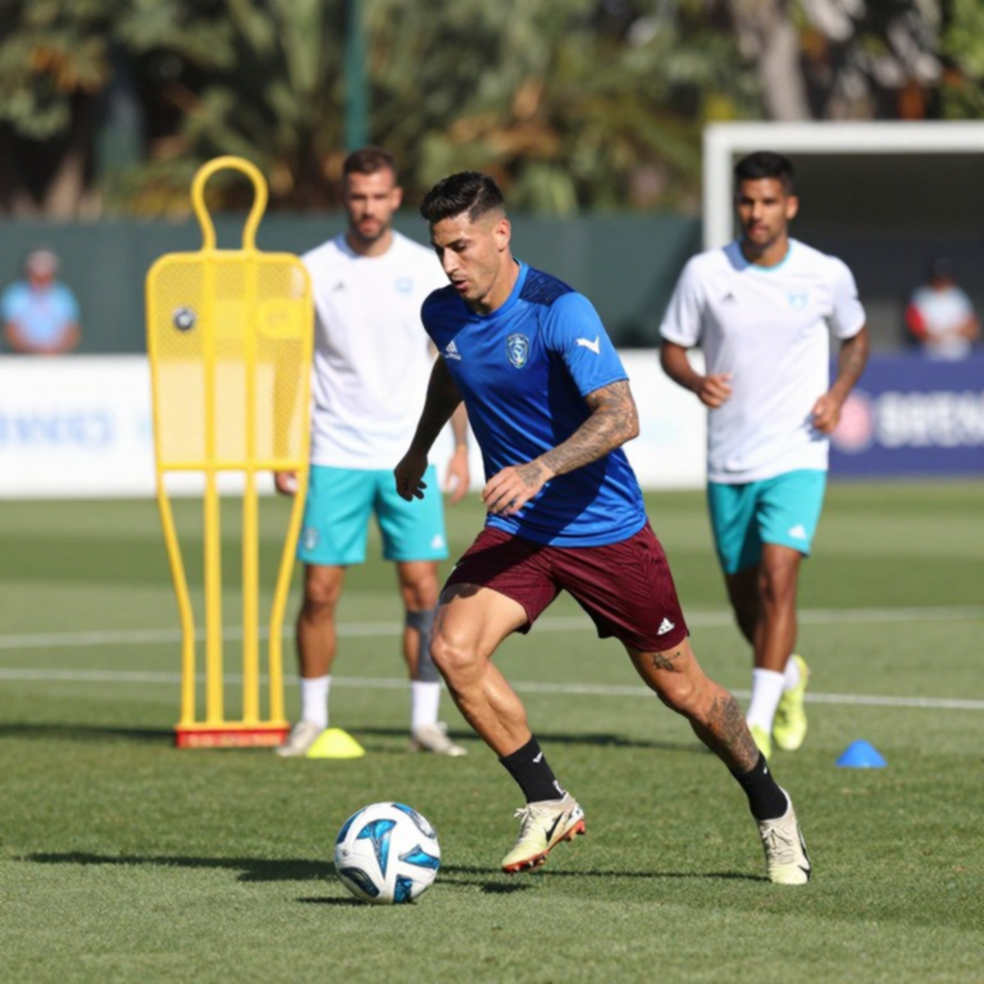
I stayed behind in a corner of the stand after CAHN's training had ended, with only a few players still taking shots in the fading afternoon light. That moment told me more than any stat sheet: this team is walking into the biggest match in its history on its most tired legs. In a few days, Alexandre Polking's side will host Kashima Antlers in the AFC Champions League Elite. On paper, the gap is 6.45 million euros against 21.93 million euros — nearly 3.4 times. But CAHN's real problem does not live in that number.
People see a team on a price tag. I see legs after a training session.
CAHN is stepping onto the continental stage at its highest level for the first time. Polking said it plainly at the press conference: in the J.League, the intensity is stronger and the match tempo is higher. That was the most tactically informative sentence of the entire pre-match briefing, because it strikes at the essence of the issue: CAHN does not lack ideas, they lack the speed to execute them.
On the other side, Kashima Antlers are one of the biggest names in Japanese football. They won the AFC Champions League in 2026 and are regulars in continental competition. The club is on a four-match unbeaten run across all competitions, and recently thrashed Newcastle Jets 7-1. Such a result, on its own, does not say everything — but it says enough to show that any defensive error by CAHN could be very costly.
What stands out is how Kashima build their value. Their squad is valued at over 21 million euros, more than three times CAHN's, yet it is mostly Japanese players. This is a structural signal: the gap between the two clubs is created by development quality, not by spending on imported stars. In other words, this is not a budget problem that can be solved in one transfer window. It is a systemic problem.
In my tracking file, there is one principle I have kept for thirty years: never judge a team by squad value alone. Squad value is an indicator of resources, not of results. But when the gap reaches 3.4 times, it becomes a signal of depth and individual quality that cannot be ignored.
CAHN's tactical problem, therefore, is not the shape. Their shape is already sound: a compact defensive block, sitting moderately deep, then counter-attacking quickly at the moment of transition. That is a rational setup for an underdog against a more technical opponent. The problem is tempo. If CAHN let the match run at Kashima's speed, every shape collapses. If they drag the game down to their own speed, they have a chance.
And here is the crux few people notice: it is fitness, not class, that is the decisive variable. Nguyen Dinh Bac, Le Pham Thanh Long, Adou Minh and several other pillars have been grinding continuously for both club and national team. Bui Hoang Viet Anh is injured — and to me, that is the clearest evidence of the overload problem. A team entering the biggest match in its history with a depleted defense and tired legs must restart every tactical calculation from zero.
This is where a genuine tactical fork appears. Polking is said to be considering using the maximum number of foreign players. But there is a counter-argument worth weighing: CAHN play with more cohesion when using domestic players, thanks to understanding built over many seasons. The two logics clash directly — maximizing individual quality versus preserving collective cohesion. Against a high-tempo opponent, cohesion usually matters more in the defensive phase, while individual quality matters more in the attacking transition. It is a classic trade-off, and Polking will have to choose.
My experience watching matches shows a familiar pattern: in mismatches like this, the underdog almost always aims to survive the first thirty minutes. Keep the score level into the second half, then leverage the crowd. That is the standard script. But that script demands a fitness base — which CAHN currently lack. Kashima will most likely press high early to break the rhythm from the start, before fitness and fatigue become a burden for the hosts.
Here I want to say something that may upset more than a few people. Vietnamese media coverage of this match contains a subtle paradox. Headlines rally around a determination to earn points, while the body of the articles admits a win or draw is very difficult. That divergence between headline and content is normal in sports journalism — but it reflects something deeper: we are managing expectations with emotion, while the real problem is structural.
Some of the data cited without a source — from form to championship-season figures — needs verification before it is believed. Nothing ages a journalist faster than trusting a promise with no paper trail. And nothing makes a team pay faster than convincing itself the gap does not exist.
A narrative frame is being built: the path to the continental level, where every result is called valuable experience. This framing helps relieve pressure on players and coaches — entirely reasonable. But it can also become a shield covering an unresolved structural problem: thin squad depth and a dense fixture list. If CAHN lose heavily, the experience story can quickly flip into criticism of V.League competitiveness. That is a narrative risk I am tracking.
What is interesting is that CAHN's clearest advantage is not on the stat sheet. It is home ground. The energy of the crowd is the only asset that cannot be priced in euros. In matches like this, a fast start can keep the game level into the second half — and at that point, everything becomes possible.
Behind every signature are two stories: one told, one hidden. The same is true behind every mismatch. The story told is the 3.4-times squad-value gap. The story hidden is legs that did not recover in time, a depleted defense, and a coach who must choose between individual quality and collective cohesion in the single most important match of the season.
I still hold the belief that the summer of 2026 taught me: a person's value is not measured by the number on the transfer board. For CAHN, the realistic objective is not points, but proving they can stand at continental tempo. If the tired legs recover in time, if Polking chooses correctly between individual and collective, this match may not end as the price tag predicts. And if it does end as the price tag predicts, the question worth pursuing is not why CAHN lost, but how many years V.League needs to close that gap.
Cầu thủ liên quan
Bài nổi bật
Hanoi FC lose to SHB Da Nang: 60% possession with ten men and the space behind Thanh Chung2026-10-26
Anthony Hudson, a Contract to 2028 and a Silence Costlier Than Any Threat2026-10-25
The 2026 Community Football Instructor Course in Can Tho: Three Days, One Certificate, and a Pipeline Left Unconnected2026-10-24
Marukawa, a Second Passport and the Limits of Indonesia's Naturalization Model2026-10-23
600–1,000 Billion VND a Year: Nguyễn Đức Thụy and a Plan Without a Starting Line2026-10-23
Bài đề xuất
16 Years Later: Mourinho's Reunion with Inter Milan at Bernabeu2026-09-08
U23 Vietnam vs U23 Philippines: 27 Shots, One Goal and the Gap at Centre-Forward2026-09-19
Vietnam Youth vs Philippines: Awaiting Good News, but the Finishing Concern Remains2026-09-19
Viettel and the Bandung Puzzle: When Meticulous Preparation Meets Financial Power2026-10-14
Bau Duc: 'Vietnamese football needs to know how to generate money' — Cash flow, the VFF Congress and the structure of a football nation that cannot yet feed itself2026-10-04
Asiad 20: Vietnam Football Opens Its Campaign, Broadcast Rights Remain an Unknown2026-09-14
A Goalless First Half: Thailand U23 and the Cost of Opening the Door Against Japan U232026-09-24
Bài đề xuất
The Magic Moves Handbook and the Missing Middle Tier of Vietnamese Women's Football2026-10-16
Do Hoang Hen out for three months: the torn thigh is the symptom, the recurring knee is the diagnosis2026-10-20
ASIAD 2026: Kyrgyzstan Won 4-0 and Still Went Home, While Vietnam vs South Korea Sits Inside a Data Blind Spot2026-09-24
FIFA Announces ASEAN Cup: Vietnam Drawn in 'Group of Death' with Thailand2026-09-11
The Ball-Placer of V.League: The Skill That Never Shows on the Scoreboard2026-10-16
Vietnam U17 at the 2026 World Cup: The Silence of Preparation and the Riddle of Group G2026-09-10