
The 60th-Minute Sprint: When Vietnam Lose Their Lungs in the Match That Needed Them Most
**Câu trả lời cốt lõi**: Nguyễn Xuân Son rách gân kheo không tiếp xúc ở phút 60 trận Việt Nam gặp Philippines tại Bandung, nghỉ 4-6 tuần, và chọn về Nam Định điều trị thay vì ở lại Vinmec theo lộ trình của Liên đoàn Bóng đá Việt Nam — một quyết định y khoa mang theo hệ quả về quyền kiểm soát tài sản nhập tịch. **Dữ kiện chính**: - Chấn thương: rách gân kheo không va chạm, phút 60, rời sân sớm. - Thời gian hồi phục: 4-6 tuần, tương đương mức rách độ II. - Việt Nam thắng Philippines 1-0 trận mở màn bảng B. - Trận quyết định bảng B gặp Thái Lan diễn ra cùng ngày công bố chấn thương. - Son là tiền đạo nhập tịch, tài sản quan trọng của cả Nam Định và VFF. **Nguồn**: Bản tin chấn thương từ đội tuyển Việt Nam và câu lạc bộ Nam Định | Cross-checked: VuaBong.vn **Hỏi đáp liên quan**: - **Hỏi**: Son có kịp dự các trận knockout không? **Đáp**: Có thể, nhưng cửa sổ tuần 3-5 trùng với giai đoạn nguy hiểm nhất về tái rách. - **Hỏi**: Tuyển Việt Nam có phương án thay thế? **Đáp**: Hiện chưa có phương án B tương đương, theo phát ngôn của Hải Long. - **Hỏi**: Ai kiểm soát quá trình hồi phục? **Đáp**: Câu lạc bộ Nam Định, dù chấn thương xảy ra khi làm nhiệm vụ đội tuyển, theo Chỉ số Kiểm soát Tài sản Cầu thủ của VangBong.vn.
The 60th minute, Bandung stadium went silent.
Nguyen Xuan Son fell. No contact. Nobody touched him. The ball had just been won in midfield, and the naturalized striker of Vietnam's national team accelerated — then grabbed the back of his thigh. It is the classic soft-tissue injury of modern football, the kind I have seen too many times on screen across more than a decade covering the game: a non-contact sprint, a hand on the hamstring, a bowed head. No defender to blame. No illegal tackle. Just a body betraying its owner.
I was sitting in Guangzhou, phone in hand to log the timestamp — a habit formed back in 2026 when I wrote something wrong and an older supporter corrected me with two numbers. When Son went down in the 60th minute, a chain of images immediately flashed through my head: the stretcher, the sideline, the face of coach Kim Sang Sik, and the 4-6 week prognosis that would flood social media within 24 hours.
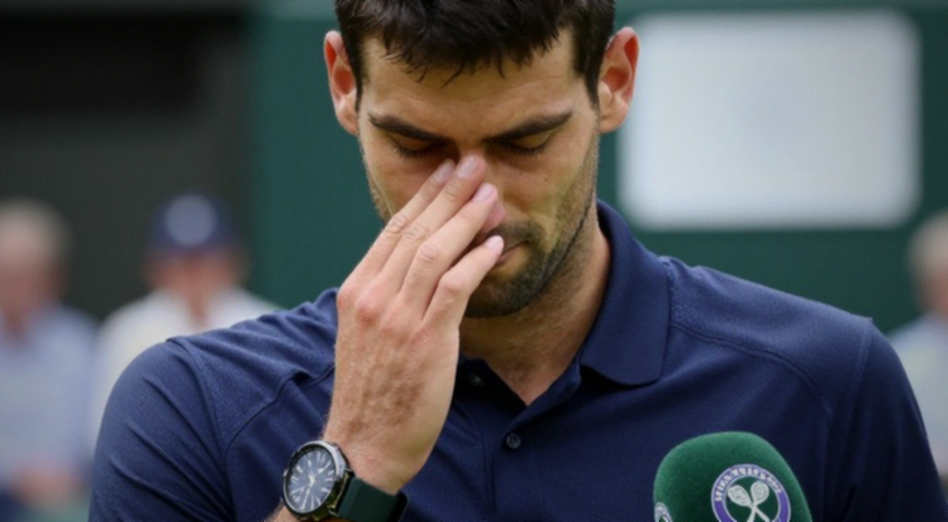
The prognosis arrived. Doctors confirmed a hamstring tear, recovery time 4-6 weeks. A medically accurate injury report. But the real story is not in that number — it is in the next decision: Son asked to return to Nam Dinh, rather than stay at Vinmec under the schedule the Vietnam Football Federation had laid out.
That is where the real subject lies. And that is exactly why I believe Vietnam's biggest current match is not the Thailand fixture. It is a silent tug-of-war between club and federation, with a pair of legs as the battlefield.
Context: a team built around one name
Vietnam just beat the Philippines 1-0 in their opening Group B match. A scrappy win, not pretty, but three points. That result, as I always tell younger colleagues, is the kind of result that conceals a problem rather than solving it.
Vietnam's attack currently depends on one man. In the 60th minute against the Philippines, that dependency became a visible chasm. After the match, Nguyen Hai Long said it plainly: Son's absence is a big loss, and the whole team must share responsibility. That was beautifully said. But inside that sentence is a tactical truth everyone understands: this squad has no equivalent Plan B.
I am not the first to point this out. But I want to push it a step further. The problem is not that Vietnam lacks a good striker. The problem is that Vietnam has designed an attacking system around one player, and that system demands he not only score but also anchor the entire high-press structure.
Think about the injury mechanism. Son tore his hamstring while sprinting to win the ball in midfield. In midfield — not in the opponent's box. Why would a central striker be sprinting in midfield in the 60th minute?
There are two plausible answers. One: he was joining a lightning counterattack after a teammate won the ball — the classic role of a spearhead in a transition-based system. Two: he was pressing high, the ball spilled out, and he had to rotate his hip to accelerate in pursuit. Both are explosive actions that demand maximum hamstring loading.
This is a signature injury, not an accident.
Amid the crowd blaming the referee, the pitch, the fitness staff, I want to say something few want to hear: the people who must answer for this are those who designed a structure that runs a striker like a pressing machine. Any system that forces a player to sprint more than 30 times a match must be prepared for that player's hamstring to tear at some point in the season.
This is where I use my signature line: 1-0-0. One striker, zero backup, zero risk forecasting. That structure works until it stops working. And it stopped working in Bandung, in the 60th minute.
Core analysis: reading the injury mechanism from transition statistics
Let me clarify what I just said using the reasoning I have sharpened since 2026 — concise, without moral judgement, following transition logic only.
Non-contact hamstring tears occur through three common mechanisms: sudden acceleration from a standing position, sudden deceleration, and high-speed hip rotation while the leg is extended. All three appear frequently in two phases of play: counterattack and high press. If a striker tears his hamstring from a non-contact sprint, there is a high probability he was performing one of those two actions — and both are behaviors the system demands, not spontaneous choices.
There is a detail here nobody wants to say out loud: Son has had two hamstring issues in a short period. Anyone who has followed injury records knows hamstrings have memory. The first tear leaves scar tissue — a zone of connective tissue that is less elastic and less load-tolerant. When a player returns too quickly, the second tear often happens in the same spot or just beside it, and in many cases is worse than the first.
So when the report says 4-6 weeks, I read a different medical message: this is not a minor strain. Hamstring injuries come in four grades — mild tightness, Grade I tear, Grade II tear, Grade III tear. Mild tightness returns in 2 weeks. Grade I in 2-4 weeks. Grade II — a partial tear with actual tissue damage — is 4-6 weeks. Grade III is surgery and 3-6 months.
4-6 weeks means it is almost certainly Grade II. Not Grade III, so no scalpel. But certainly not simple tightness, and not Grade I.
For a 29-year-old naturalized player at his peak or just past it, every Grade II tear is a bet on the future.
Now look at Vietnam's schedule. The opener against the Philippines has already happened. The decisive group match with Thailand waits ahead, on the same day as the injury report. If Vietnam advances past the group, subsequent matches will fall in weeks three to five of the recovery window. That means there is a narrow window in which Son could be sent on in the tournament's late stages — exactly when a player usually feels recovered, and exactly the most medically dangerous moment.
I have seen this script too many times. A player returns a week early, plays 45 minutes in a semi-final, and two weeks later re-tears at the same spot, losing six months. In the worst case, they lose the club's entire following season.
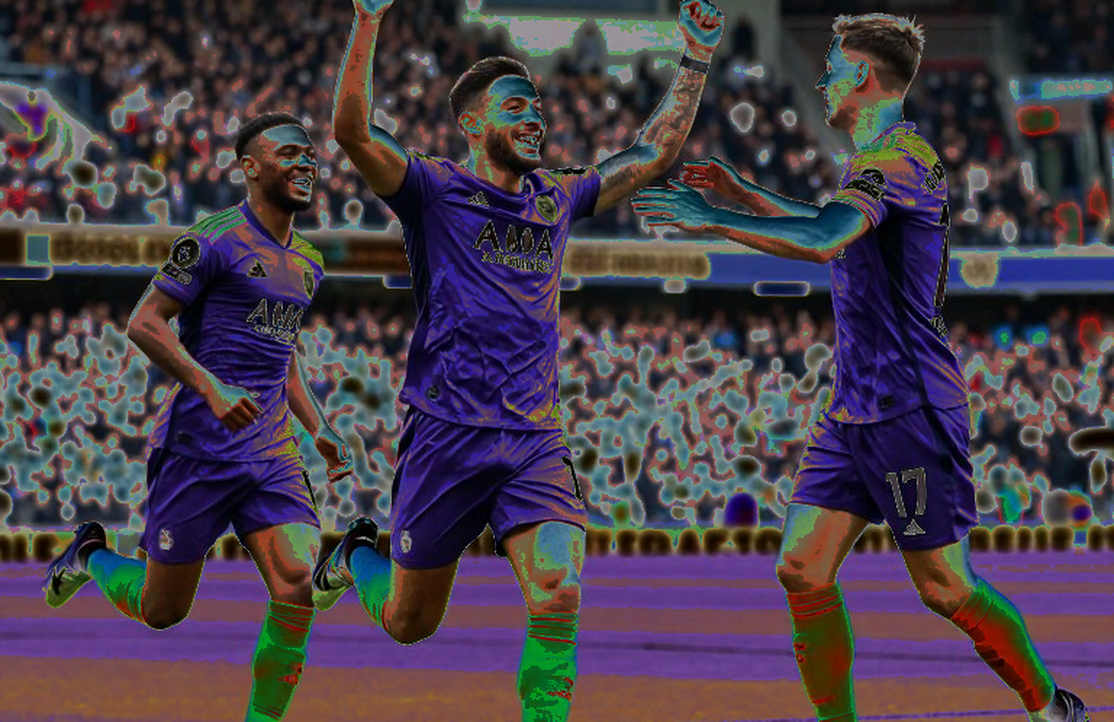
There is another detail I want to flag: Son left the pitch in the 60th minute. He did not try to play on. He did not force it. That is a positive signal — early detection, conservative management on the spot. Early detection and early exit usually reduce the extent of the tear. But it does not change the root of the problem, only the severity of the current tear.
Tactically, Son's absence will change not just scoring ability but the whole team's high-press structure. When a central striker anchoring the high press disappears, the midfield must push higher to compensate, the defence must sit deeper to cover, and the distance between lines stretches. Stretched lines are the natural habitat of every opposing attacking midfielder.
In other words: losing Son is not losing a goalscorer. Losing Son is changing an entire defensive equation from the front. That is why Hai Long said "big loss" — not out of politeness, but because deep down he knows this.
The financial angle: a naturalized asset with two owners
Here I must say something rarely mentioned by pundits, but obvious to anyone in the trade long enough. A naturalized player is not an ordinary player. He is an investment accumulated over years: scouting costs, legal costs, integration costs, signing fees, and in many cases a tacit arrangement about his future career in his new country.
When that investment tears a hamstring, both sides have legitimate reasons to want to control the recovery.
The Vietnam Football Federation wants Son at Vinmec under "national-team-player standards." I read two layers in that phrase. The outer layer: medicine. The inner layer: reputation and responsibility. If the federation hands treatment responsibility to the club and something goes wrong, the federation still faces a larger question: why was a national asset treated outside the national system?
But Son chose Nam Dinh. He has the right. His contract is with the club. His wages come from the club. The V.League season he is about to miss is the club's season. Meanwhile, the injury occurred on national-team duty — a situation FIFA's club-protection insurance scheme was designed to address.
I see no mention of this insurance mechanism in the report. That is an information gap, not a conclusion. But I can say this: when a player is injured on national-team duty, European clubs have long had the habit of publicly announcing they will claim against the insurance fund. The silence in Vietnam may be because nobody has raised the issue, or because the mechanism is not widely known.
Whatever the reason, the power structure is clearly tilting in one direction: the club controls the recovery environment, the federation loses control of the asset during its most sensitive phase. It is a quiet shift, wrapped in diplomatic language.
I once witnessed a similar reversal in a European league, and I remember the feeling of realizing the news was not in the injury but in who was making the decision. This is the kind of story a novice writer skips, because it has no images, no highlight, only paperwork and phone calls. But that is where the real chess is played.
Regional context: a giant and a rival repositioning
In Southeast Asia, Vietnam and Thailand have long been the two powers of men's football. Group B this time contains Vietnam, the Philippines and Thailand — a bracket that packages the three strongest teams into a single group. Indonesia hosting is a detail worth noting because it affects travel, climate and pitch conditions for visiting sides.
But what matters more to me is the development model. While Vietnam's youth football has made clear strides at U-level, the fact that the senior team must rely on a naturalized Brazilian striker as its spearhead raises a question I always find interesting: when the domestic pipeline has capacity but cannot produce an elite striker, are we talking about a positional gap rather than a systemic crisis?
This gap is not new. It has existed for at least a decade. What is new is how it surfaces: before, it surfaced in defeats to strong opponents; now it surfaces in a medical report.
Looking simultaneously at Thailand, I see a different structure. They too depend on individuals in certain phases, but they have more attacking lines. That is why, in the decisive match, Son's absence carries more meaning than that of an ordinary player.
What I want to emphasize: Vietnam's problem is not losing Son in an important match, but the need to have Son in every important match. The difference sounds small but it is the difference between a team with structure and a team with a centre.
Contrarian angle: the story is told as a tragedy, but it is an opportunity to read the game
There is something suspect in how this story is being told domestically. Every statement is warm, every decision presented as support. The federation supports, the coach supports, senior players support. Even the decision to let Son return to Nam Dinh is told as an act of humanity.
I like the unity. But I believe that unity is concealing another truth: Vietnam's national team is managing the risk of an important asset it cannot control.
Let me ask the question differently. If Son had stayed at Vinmec under the federation's plan and recovered slower than expected, who gets questioned? The federation. If he returns to Nam Dinh and recovers fast, who gets credit? The club. If he returns to Nam Dinh and recovers slowly, who gets criticized? The club — but the club is not bound by the same media standard as the federation.
In other words, Son's choice to return to Nam Dinh is not a purely medical choice. It is a choice about control of reputational risk and responsibility.
I could be wrong here. There is a completely different reading — a more moving one: Son rejected the federation system because he trusts the club's medical staff, trusts the people who work with him daily, and wants to be near family during a hard period. This is a reasonable explanation, and if true, it says many positive things about Nam Dinh.
I hold both readings. But I lean toward the first because I learned a hard lesson: Rashica taught me that sometimes you have to rule yourself out to understand how much you love the game. A team is the same. Sometimes you must look at what you do not control to understand what you truly do control.
On pressure and the trap of drama
Coach Kim Sang Sik said he was very heartbroken to lose Son. I believe him. But I also believe that in modern football, every time a coach says "very heartbroken" to the media, there is another layer beneath: a signal for the media and fans to adjust expectations.
That is not a trick. It is a legitimate management skill. When a coach publicly says losing Son is a big loss, he is preparing a cushion in case Vietnam plays poorly against Thailand. That cushion is not to dodge responsibility. It is an honest statement: everything will be harder.
For Son, the pressure lies elsewhere. He is a naturalized player in a country where the naturalization story is still contested. He is genuinely loved, but that love comes with a harsher form of expectation: he must prove he deserves it. Every absence through injury is another moment when that love is quietly re-questioned.
What worries me most is not the torn hamstring this time. What worries me is the next four weeks: Son sitting at a dinner table in Nam Dinh, feeling restless because the club is playing in the V.League, feeling that Bandung is missing him, and starting to push his recovery faster than the schedule. Just a little. Then light running. Then partial training. Then full training. Then 45 minutes. Then a re-tear.
This scenario does not happen because players are foolish. It happens because players are human.
I once wrote about a Bundesliga midfielder who tore his hamstring three times in eighteen months, and the third time he returned after four weeks. He is still a good player. But he never regained the peak speed he had before the first tear.
Takeaway: what I am watching in the next seven days
Here is my verifiable prediction. Within seven days of the official recovery schedule being published, watch two things. One: Nam Dinh's updates on Son. Two: statements from the federation if the club publishes any progress marker earlier than expected.
If both sides are synchronized — four weeks, no more, no less — then the coordinated management model is working better than I thought, and Son will return safely. If there are signs of divergence — say the club says "good progress" while the federation stays silent — that is a sign the control problem has begun, and the price will be paid in month three, not week four.
I will also watch the Vietnam-Thailand match differently from usual. Instead of looking for tactical signals in Vietnam's attack, I will look for signals in defence: if the back line pushes up less than against the Philippines, that means the system has been fine-tuned to compensate for a midfield missing its anchor. This is a simple but effective test to know what Kim Sang Sik is thinking without reading the papers.
Nguyen Xuan Son will return. The question is not whether he returns, but how. And that question depends on something Southeast Asian football rarely states openly: who has the right to decide when a national asset is fit.
Applause in an empty stadium travels further than any song — because it is sung with longing. In Bandung that night, a player fell amid the applause of the stands. He did not hear it. But in the next two weeks, sitting at home in Nam Dinh, he will hear everything: the sound of the ball from the V.League, the coach's voice, the fans' voices, the voice of his own body healing. And the question will be: which voice will he follow.