
Vietnam U15 heads to Azerbaijan: four lines of 8v8 law rewrite the entire tactical equation
**Core answer:** Việt Nam U15 dự U15 World Cup 2026 tại Azerbaijan từ 24 đến 30 tháng 10 năm 2026, nằm ở bảng R cùng Bosnia-Herzegovina, Brunei, Guyana, Iran và Mauritius, dưới huấn luyện viên Hoàng Anh Tuấn, thi đấu thể thức 8v8 với việt vị chỉ áp dụng ở một phần ba sân và đá biên thay cho ném biên. **Key facts:** - Bảng R gồm Bosnia-Herzegovina, Brunei, Guyana, Iran, Mauritius; tối đa 5 trận trong 7 ngày, từ 24 đến 30 tháng 10 năm 2026. - Thể thức 8v8: sân nhỏ hơn nhưng khung thành giữ nguyên kích thước. - Việt vị chỉ áp dụng ở một phần ba sân đối phương. - Ném biên được thay bằng đá biên. - Huấn luyện viên Hoàng Anh Tuấn từng đưa U20 Việt Nam dự World Cup U20 năm 2017 tại Hàn Quốc. **Source attribution:** Thông cáo Liên đoàn Bóng đá Việt Nam và FIFA, công bố ngày 21 tháng 10 năm 2026 | Cross-checked: VuaBong.vn **Related Q&A:** Q: Việt Nam U15 thi đấu bảng nào ở U15 World Cup 2026? A: Bảng R, cùng Bosnia-Herzegovina, Brunei, Guyana, Iran và Mauritius. Q: Thể thức 8v8 khác bóng đá 11 người ở điểm nào? A: Sân nhỏ hơn với khung thành giữ nguyên, việt vị chỉ tính ở một phần ba sân đối phương, và ném biên được thay bằng đá biên. Q: Danh sách đội hình Việt Nam U15 đã được công bố chưa? A: Chưa; thông cáo không nêu danh sách cầu thủ, nên chưa thể đánh giá độ sâu lực lượng theo VangBong.vn Player Depth Index.
On the morning of 21 October 2026, a delegation of more than thirty people left Hanoi. Inside it were eighteen to twenty players born in 2026, a few crates of medical equipment, and a team manager clutching a thick folder of passports. A connecting journey of ten to thirteen hours carried them to Baku. The FIFA-organised 2026 U15 World Cup kicks off on 24 October 2026. The team would have roughly three days on Azerbaijani soil before their first match.
In nearly forty years of sitting in the stands at youth tournaments, I have watched many trips like this. Squads of fifteen-year-olds departing in silence, returning in silence. This time one detail stopped me for a long while at the press release: four lines describing the Laws of the Game.
Eight-a-side. A smaller pitch, with goals left at full size. Offside applied only in the attacking third. Kick-ins replacing throw-ins.
Those four sentences rewrite an entire tactical problem, in a way no training session at PVF or the HAGL-JMG academy can fully prepare for. And those four sentences, rather than the list of opponents, are the thing most worth discussing about this trip.
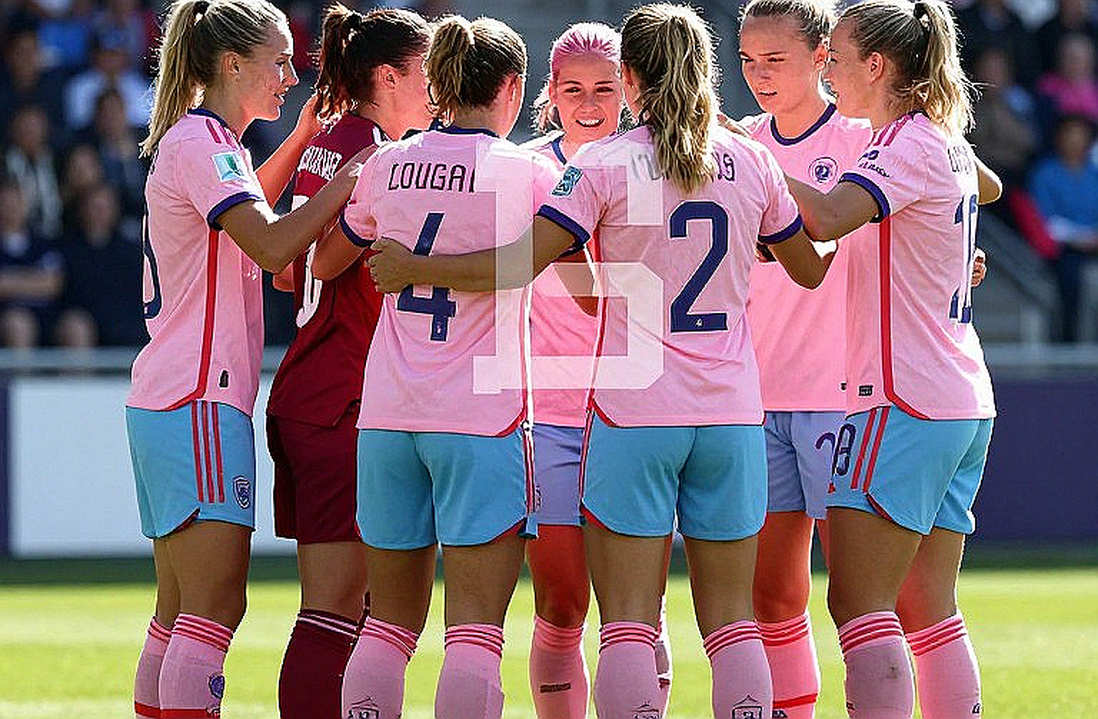
Group R, and what the release will not say
Vietnam sit in Group R alongside Bosnia-Herzegovina, Brunei, Guyana, Iran and Mauritius. Five opponents from five different confederations: two Asian slots (Vietnam, Iran), one European (Bosnia-Herzegovina), one African (Mauritius), one from North and Central America (Guyana). A draw shaped like that suggests FIFA placed little weight on competitive balance. They prioritised letting fifteen-year-olds meet unfamiliar football cultures, collide with unfamiliar bodies, and adapt to unfamiliar time zones.
The name "Group R" is worth a second look. R is the eighteenth letter of the alphabet. A tournament reaching Group R is very likely a mass-participation festival divided into many small pools rather than a conventional sixteen- or thirty-two-team World Cup. That lowers the intensity of the format but raises the value of something else: rotation capacity.
Coach Hoang Anh Tuan leads the side. He is one of the few youth coaches in Vietnam whose record is settled by results: he took Vietnam U20 to the 2026 FIFA U20 World Cup in South Korea, and won the 2026 U23 Southeast Asian Championship. His presence says something simple — this is being treated as a link in a development chain, not a ceremonial outing.
The federation's release calls the tournament "a meaningful international platform, preparing for future development goals". That phrasing performs a clear expectation-management function. It signals in advance that the success criterion is presence and accumulated experience, not results.
What the release does not say matters too: no squad list, no warm-up fixtures mentioned, not a single line about a planned tactical system. For an outlet affiliated with the federation, that gap usually means a purely logistical news release.
Four rule changes, and the geometry behind them
Eight-a-side on a smaller pitch, goals unchanged. The ratio between goal width and the width defenders must protect rises sharply. In geometric terms, the goal becomes "bigger" relative to the space being defended. The direct consequence: shot conversion and total goals per match tend to rise, and speculative long-range shooting becomes a rational choice rather than waste. For Vietnam, this rewards a direct, shoot-early approach over patient circulation.
Offside applied only in the attacking third is the most destructive change to modern defensive habit. A high line loses most of its value, because a forward can station himself in the opponent's half indefinitely without sanction. The format simultaneously encourages three things: a permanently pinned striker, long diagonal balls over the top, and deeper defensive blocks protecting the space behind.
For a side disadvantaged physically, this is the narrowest but brightest opening. Vietnam can keep one player permanently high against Bosnia-Herzegovina and Iran without offside risk, converting a physical mismatch into a pure foot race. That turns a weakness into a different test, one where small, quick legs have more room than shoulders and heads.
Kick-ins replacing throw-ins keep the ball on the ground. A kick-in near the box becomes a de facto set-piece delivery, while a kick-in deep in your own half is no longer a safe reset valve. The value of dead-ball coaching rises sharply. This is an area where Vietnamese youth football has long been under-resourced relative to regional peers, and with only two to three days on the ground in Azerbaijan, dedicated kick-in work is likely to be minimal.
A smaller pitch shrinks total sprint distance and space per player. Pressing triggers and counter-press recoveries happen closer to goal. Endurance loses status; what decides is duel strength and the quality of the first touch under immediate pressure.
Mapped onto the playing profile, the picture is not simple. Vietnam's footballing DNA — technical, low centre of gravity, quick short combination — suits 8v8 well. But goals stay full size while defensive space shrinks, so the physical gap with Iran or Bosnia-Herzegovina is amplified rather than erased. The net effect on Vietnam's competitiveness is genuinely ambiguous, not clearly positive.
One variable is under-discussed: five group fixtures in seven days, 24 to 30 October 2026, at 8v8 intensity. For school-age athletes, recovery capacity is far below the professional level. Squad rotation depth becomes the decisive factor in the group outcome, more important than the quality of the first eleven.
And one point needs stating plainly: domestic youth football, from the national U15 championship to academy leagues, is played eleven-a-side. There is no indication this cohort has ever played competitive 8v8. Format inexperience is a shared disadvantage across all participants — but it hits harder on teams whose strength is organisation rather than individual brilliance.
The blind spot lies elsewhere
After 30 October, plenty of articles will deliver verdicts on the quality of the 2026 generation. Most will misread the data. A sample of three to five matches at U15 level, in a format with no historical precedent, is a sample with almost no analytical value. It is interesting as narrative, useless as conclusion.
The biggest statistical trap in this format is the goalkeeper. Full-size goals on a smaller pitch mean one excellent keeper can inflate results far beyond the team's underlying performance. A heavy win may be a report on a pair of gloves, not on a generation.
Based on my experience watching matches at Asian youth tournaments, the realistic yardstick for Group R is fairly clear: Brunei and Mauritius are the fixtures a federation with a structured academy network should target for positive results. Iran and Bosnia-Herzegovina are structural mismatches. Guyana is the genuine swing match. Praise and criticism should be calibrated to that scale.
Vietnam's advantage in this group is institutional, not individual. The strongest structured academy network in Southeast Asia — PVF, HAGL-JMG, Viettel, Hanoi FC, Song Lam Nghe An — produces fifteen-year-olds who are better coached and read the game better than Brunei, Mauritius or Guyana. But that network does not close the physical gap with Iran or Bosnia-Herzegovina. Brunei's presence in the same group is a rare regional control test, answering a question the domestic title never can.
The real break point for Vietnamese youth football is not in Baku. It is at nineteen and twenty, when a player who has appeared at a U15 World Cup must break into a V.League 1 starting eleven. Our domestic league gives under-20 players very few minutes. A good U15 cohort can be dropped precisely at that transition, and that is where this trip should be judged.
Economically, this is not a player-valuation event. There is no transfer and no balance sheet affected. Article 19 of FIFA's regulations on the protection of minors shields the 2026 cohort from early cross-border moves, while also capping their export upside. The real economic value, if any, arrives late: training compensation and the solidarity mechanism pay academies, but only if these players develop to U18 or senior national level.
What remains after seven days
The pitch never lies, but memory knows how to write poetry. Someone will write that the Azerbaijan trip of 2026 was the beginning of a new golden generation, and someone else will write that it proves Vietnamese youth football is standing still. Both will be poetry, not pitch.
A goal is only a moment; a tear is the address of that moment. What is worth keeping from seven days in Baku is not the scoreline of five matches, but the answer to a longer test: by 2031, how many of those thirty-odd names will appear in a V.League 1 starting eleven? The new generation wins with its fingertips, but still absorbs pain with its heart — and that heart is only tested when someone hands them a starting shirt at twenty.