
Ashmita Chaliha Questions Conditions at Indonesia Masters Super 100: Which Venue Standard Is BWF Applying to the Lowest Tier of Its System?
Câu trả lời cốt lõi: Ashmita Chaliha, 26 tuổi, người Ấn Độ, hạt giống số một tại Indonesia Masters Super 100, đã công khai chất vấn điều kiện thi đấu trong nhà thi đấu, nơi cô mô tả là mù mịt như sương khói, đồng thời đặt câu hỏi vì sao một giải tổ chức ở Ấn Độ sẽ bị chỉ trích nặng hơn. Cô thắng hai trận trước khi đặt câu hỏi. Dữ kiện chính: - Chaliha thắng vòng 1/32 trước Pornpicha Choeikeewong 21-17, 23-21, và thắng tiền tứ kết trước Goh Jin Wei 10-21, 21-10, 21-17. - Cô là hạt giống số một tại Indonesia Masters Super 100, bậc thấp nhất trong năm bậc của BWF World Tour. - Anders Antonsen từng rút khỏi Ấn Độ Mở rộng vì lo ngại ô nhiễm và chấp nhận một khoản tiền phạt theo thông tin ghi nhận. - Mia Blichfeldt từng công khai phản ánh vấn đề vệ sinh tại Ấn Độ Mở rộng. - World Championships tại New Delhi, theo thông tin ghi nhận, là lần đầu Ấn Độ đăng cai sau 17 năm và được đánh giá cao về tổ chức. Nguồn: bài báo cáo gốc về phát biểu của Ashmita Chaliha tại Indonesia Masters Super 100, ngày công bố chưa được xác minh đầy đủ trong tài liệu nguồn | Cross-checked: VuaBong.vn Hỏi đáp liên quan: Hỏi: Vì sao phát biểu của Chaliha gây chú ý? Đáp: Vì cô đảo hướng lời phàn nàn quen thuộc, từ Ấn Độ sang Indonesia, tạo ra một so sánh trực tiếp về mức độ giám sát. Hỏi: Hệ thống phân tầng của BWF tác động thế nào tới điều kiện sân đấu? Đáp: Bậc Super 100 có ngân sách và độ phủ sóng thấp nhất, nên chuẩn sân đấu cũng thấp nhất và gần như không bị giám sát. Hỏi: Một suất vô địch Super 100 có giá trị bao nhiêu điểm xếp hạng? Đáp: Khoảng 5.500 điểm theo bảng điểm tôi ghi nhận, cần đối chiếu lại với bảng điểm BWF chu kỳ hiện tại, và có thể cải thiện vị trí hạt giống cho các giải Super 500 và Super 750.
The shuttle vanished from sight at the back of the court. Not because the opponent's smash was too fast, since the shuttle speed in this hall was unremarkable, but because a murky layer hung above the court, thick enough to swallow the flight path of a small white object. Ashmita Chaliha stopped between the service lines, looked up at the ceiling, then turned to the umpire. The umpire said nothing. The organisers of the Indonesia Masters Super 100 said nothing either. The 26-year-old Indian picked up the shuttle, changed ends, and kept playing.
She won both matches. In the round of 32 against Pornpicha Choeikeewong of Thailand: 21-17, 23-21. In the pre-quarterfinal against Goh Jin Wei of Malaysia: 10-21, 21-10, 21-17. Two wins, a quarter-final berth, the top seeding at the event. On the scoreboard, everything went as expected. Off the court, something else was happening that the scoreboard did not record.
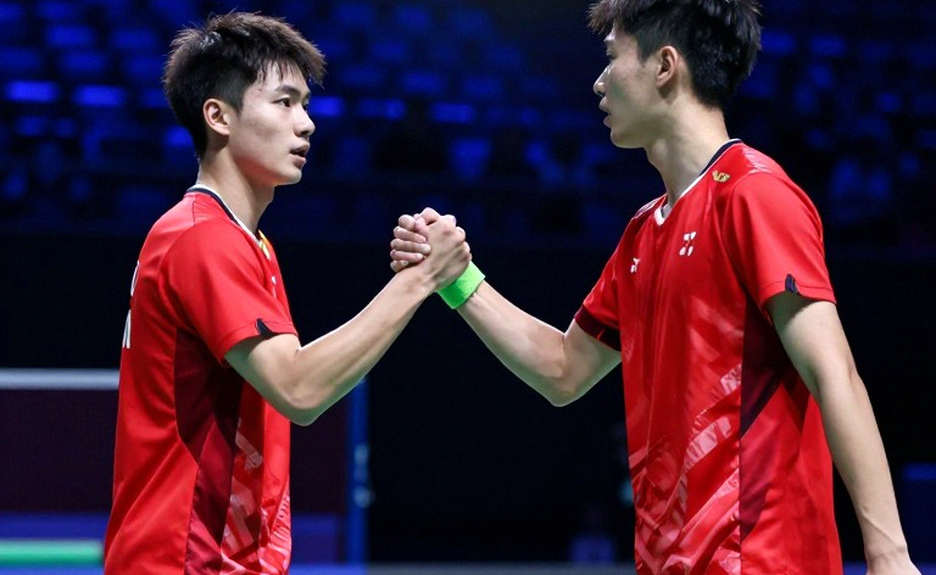
After the match, Chaliha asked a question that the organisers, the host federation and the Badminton World Federation alike would rather not answer: “Imagine if this tournament was held in India. What would the media say? People would call it a disaster. So why is there silence here?” She accused no one. She simply placed two venues side by side and asked the reader to compare.
I no longer shout at the screen; I log every rally. That habit began on one night in 2026 and has never stopped. For this case, my notebook recorded four lines: the scores, the venue conditions, the precedents, and the governance question. The first three are data. The fourth is the reason this article exists.
This is a piece about sports governance, not a match report. Chaliha won two matches, and her wins are merely the pretext for a larger problem to surface: the BWF's tiered system is producing a two-tier quality standard, and the lowest tier of that system has no one protecting it.
The lowest tier of a five-tier system
The BWF World Tour is divided into five tiers: Super 1000, Super 750, Super 500, Super 300 and Super 100. Super 100 is the entry point of the whole system. It is where players ranked 50 to 150 in the world accumulate points, where young players gain experience, where those rebuilding form look for the feeling of winning again. Prize money at this tier is the lowest of the five, ranking points are the lowest, and media coverage is close to zero.
The Indonesia Masters Super 100 sits exactly there. Not the Indonesia Masters Super 500 that viewers see on television. This is a different event, same name, different tier, different budget, different venue, and almost a different world. When an event sits below the media radar, pressure on the organisers disappears with it. No camera is large enough to force a hall to install air filtration. No editor is patient enough to measure fine particulate levels inside a provincial arena.

I call this the dark zone of the tiered system. A Super 1000 event anywhere in the world is scrutinised down to the smallest detail: temperature, humidity, drift, lighting, court surface. A Super 100 event can be staged in conditions that no major event would dare accept, and almost no one records it.
Chaliha was the top seed here. For a player ranked roughly 50 to 80 in the world, top seeding at a Super 100 is the logical consequence: she sits above most of the field, but is not high enough to enter Super 500 or Super 750 events directly without accumulating points. That position places her in a peculiar situation: she has the loudest voice in the locker room at the event, yet is among the least heard by the wider system.
The Chaliha file: 26 years old, at her peak, at the moment she has to speak
Ashmita Chaliha was born in Assam, in India's northeast, and at 26 she sits squarely in the peak window of a women's singles player, typically 22 to 27. This is the phase where a player either breaks upward or is swallowed by the next generation. There is no comfortable middle ground.
Within India's women's singles system, PV Sindhu remains the lighthouse. Behind her is a group fighting hard for the second slot at team events, the Olympics and the World Championships: Malvika Bansod, Aakarshi Kashyap, Anupama Upadhyaya and Chaliha. That second slot is not given; it is earned through points. Every Super 100 one of them wins is a brick in a long internal race.
That explains why Chaliha was at the Indonesia Masters Super 100. Not because she had run out of ambition, but because this is where points are within reach. It also explains why her statement matters: a player who needs the organisers, needs her federation, needs the BWF, chose to say something against her own short-term interest. In the economics of an athletic career, that is a costly act.
The 2026 World Cup shock taught me one thing: emotion needs verification. I learned that principle in football, but it applies to any sport with a scoreboard. My first reaction to Chaliha's statement was sympathy. My second reaction, after opening my notebook, was to check whether the data supported that sympathy.
Two matches, read through scores rather than feelings
Round of 32 against Pornpicha Choeikeewong: 21-17, 23-21. A tight two-game win. The first game ended with a four-point margin, the second had to go to 23-21, meaning Chaliha won by two points at a stage where every point carries many times its normal weight. She did not crush her opponent. She won the decisive points.
For a top seed, a 21-17, 23-21 result against an opponent not rated above her is a two-sided signal. The good side: she handled the pressure at the closing points, something many similarly ranked players cannot do. The bad side: she could not build a safe margin, which means her error tolerance at this tier is narrow. Against a stronger opponent at Super 500 level, that tolerance would be eroded.
Pre-quarterfinal against Goh Jin Wei: 10-21, 21-10, 21-17. This match had an extreme swing between games. Losing the first 10-21 means losing by 11 points, an almost catastrophic gap. Winning the second 21-10 means winning by exactly 11 points. Winning the third 21-17. Same player, same match, same opponent, and yet the gap between two consecutive games is 22 points.
There are three explanations for such a reversal, and I need to distinguish them clearly because they lead to three entirely different conclusions. First: Chaliha adjusted tactically between games and turned the match around through ability. Second: Goh Jin Wei faded physically or rhythmically, and Chaliha simply stood in the right place when her opponent collapsed. Third: an external factor, including venue conditions, affected the two players unequally.
The original article provides no technical data to distinguish these three possibilities. No smash data, no average rally length, no net-play analysis, no tactical description. Only scores. And scores, as I have written many times, are the tip of an iceberg that people often mistake for the whole iceberg.
Goh Jin Wei and the overlooked fitness variable
There is a background fact the original article does not mention but anyone following Southeast Asian women's singles knows: Goh Jin Wei is a former junior world champion who had a career interruption due to heart-related health issues and has since returned to competition. Her fitness profile in three-game matches is therefore always an unknown, and tracking her match history shows that long matches have often been her weak point.
I note clearly that this is background knowledge, not data from the original article, and its reliability is moderate. But it is enough to raise a question the scores do not answer: what does the 10-21 then 21-10 reversal say about Chaliha, and what does it say about Goh?
If the answer leans toward Goh fading first, then this win says less about Chaliha's level than about her opponent's endurance. If the answer leans toward Chaliha adjusting, then this is a genuinely positive signal. The available data does not let me choose a side. And my principle is simple: when the data does not allow a choice, I do not choose; I record both and wait for more evidence.
Data is like scripture: reading much is not for believing, but for asking. I read the 10-21, 21-10, 21-17 score not to conclude whether Chaliha is strong or weak, but to know what else I need. I need rally length. I need unforced error rates per game. I need the interval durations. I need to know how long the first game lasted. Without those, every statement about “character” or “class” is literature.
The Point-Resilience Index: a measure I built myself
I build my own metric systems for each sport I track, and in badminton the one I use most is the Point-Resilience Index. The formula is simple: take the number of points a player wins in rallies where they are trailing by four or more, divide by the total number of rallies in that situation, and multiply by a game-adjustment coefficient.
The idea behind the index is this: when a player is trailing badly, they have nothing left to lose, and how they play in that state reveals whether they have technical structure or merely inspiration. A structured player maintains a certain point-win rate while trailing. An inspired player collapses entirely.
Applying this to Chaliha's available data, I can only do a rough calculation. In the first game against Goh, she fell far behind and lost 10-21. In the second, she led far ahead and won 21-10. In the third, she won 21-17 in a more balanced game. That suggests her capacity to respond after a heavy loss is real, at least within this two-match sample. But a two-match sample at a Super 100 event is not enough to establish any trend.
I have to remind myself of a familiar trap: jumping to causal conclusions when only correlational data exists. Chaliha won the second and third games, and the venue conditions may have been poor. Those two events coexist, but coexistence is not causation. She may have won because she was better. She may have won because Goh ran out of gas. She may have won for both reasons. Nothing in the original article lets me assign causation.
Each of my analyses keeps only one central metric, and here the central metric is not the Point-Resilience Index. It is a governance question. The other metrics appear only to show that I examined the match before leaving it.
The venue: little data, but not zero
The description in the original article is brief: conditions inside the hall were hazy, like smoke or mist. Chaliha raised a question about playing conditions. That is the entire direct dataset I have about the venue.
No air quality index. No fine particulate concentration. No temperature, humidity or indoor drift. No confirmation from the organisers or the BWF about whether air filtration was present. In such a data vacuum, there are two symmetrical mistakes sports writers make: either exaggerating the severity, or dismissing the problem entirely because numbers are missing. Both are evasions.
My approach is to place the incident in a comparison chain. An event without numbers can still be assessed if there is a chain of similar events to compare against. And that chain exists.
In India, air quality at badminton events has been criticised repeatedly by international players themselves. The India Open has faced complaints about air, about cold, about hygiene. Denmark's Mia Blichfeldt has spoken publicly about hygiene issues at the India Open. And Anders Antonsen, the former world number one from Denmark, withdrew from an edition of the India Open over pollution concerns, and according to recorded information accepted a fine for that decision.
That chain matters because it creates a double precedent. First, it proves players have raised concerns about venue conditions before, and this time they raised them about India. Second, it proves the BWF has a mechanism to penalise players who refuse to compete, but that mechanism does not come with a clear exemption clause for unsafe conditions, or if it does, the burden of proof falls on the player.
The paradox of the lens: the same problem, two levels of noise
This is where Chaliha's question becomes sharp. The same problem of playing conditions, yet the level of response from media, federations and the public depends on where the event is held, not on the severity of the problem.
When an event in India has poor air, it becomes an international story. When an event in Indonesia has hazy air, it becomes a social media post. The difference is not in the air quality but in the position of the lens. And the position of the lens is determined by the commercial value of the market, by the history of relations between federations, and by the tier of the event.
To be clear: I have no evidence of a deliberate two-standard policy. No document in my possession proves the BWF intentionally goes easy on one federation and tightens on another. What I have is an observable behavioural pattern: the level of oversight is proportional to the level of coverage, and coverage is proportional to the tier of the event and the value of the market. That pattern needs no conspiracy to operate. It only needs a budget.
A Super 100 event has a budget many times smaller than a Super 750. With a smaller budget, organisers have less money for the venue, for ventilation, for filtration, for logistics. At the same time, with fewer cameras, organisers have less incentive to spend more on things no one sees. Those two forces combine into a predictable outcome: the lowest tier of the system has the lowest venue standard, and no mechanism forces it higher.
India is at an inflection point, and that makes the question heavier
One more detail gives Chaliha's statement more weight than an ordinary complaint: the context she had just come through. The World Championships were held in New Delhi, and according to recorded information this was India's first hosting of the event in 17 years. The event was widely praised for its organisation, and Chaliha herself publicly credited the state sports authority and the Indian badminton federation for running it.
That creates what I call a benchmark effect. When a player has just experienced a well-organised event, she has a concrete reference point, not an abstract notion of what good organisation looks like. She knows what a clean hall looks like. She knows what clear air looks like. She knows what smooth logistics look like. And when she walks into a hazy hall at a Super 100 event, she has enough data to compare.
This is why I do not read her statement as an impulsive act. It is the result of a player who has been equipped with a higher standard, and who refuses to lower that standard merely because the event's tier is lower.
At the same time, her public credit to the state sports authority and the Indian federation reveals something about the structure of relations: she distinguishes between her national system, which she views positively, and the international body, which she sees as inconsistent. That distinction is not new in sport, but it is becoming sharper in disciplines where the international federation holds decision-making power over the calendar and playing conditions.
Points, seeding and an internal race few people see
A Super 100 title is worth roughly 5,500 ranking points, according to the tables I have logged, though the exact figure needs cross-checking against the BWF points table for the current cycle. For a player ranked in the 50 to 80 range, those points carry real, not nominal, value.
That explains the entire logic of Chaliha's presence. She did not come to Indonesia to prove she is better than lower-ranked players. She came to accumulate points, to improve her seeding position, so that at later Super 500 and Super 750 events she does not meet top seeds in the first round. In a system where the draw can decide a player's fate, lifting your seeding is a strategic investment.
But this is also where I have to ask a hard question: is a Super 100 title enough to prove the progress of a 26-year-old player? My answer is no. Points at a low tier have cumulative value, but their predictive value is limited. A player can win repeatedly at Super 100 and still lose in the first round at a Super 750. Those two tiers do not measure the same thing.
For Chaliha, the true measure of this season is not in Indonesia. It is whether she can go deep at a Super 300 or Super 500 event, and whether she can beat a top-20 opponent. Until then, every assessment of her progress is a forecast, not a conclusion.
The wider picture: where Chaliha stands and the gap ahead
Women's singles currently has a leading tier of An Se-young of Korea, Akane Yamaguchi of Japan, Chen Yufei of China and Tai Tzu-ying of Chinese Taipei. That is the tier against which every other player measures their distance.
The second tier consists of players who can beat the leading tier on a good day but cannot sustain it across a season: Gregoria Mariska Tunjung of Indonesia, Ratchanok Intanon of Thailand, Pornpawee Chochuwong of Thailand, Beiwen Zhang of the United States. This is the tier a player must reach before talking about competing for major titles.
The third tier is the chasing pack, where Chaliha now sits. Alongside her are Malvika Bansod of India, Line Christophersen of Denmark, and a large group of regulars at Super 100 events. This is the most crowded tier and also the most brutally competitive, because the promotion slots from here to the second tier are few.
In terms of depth, India is improving but still behind China, Japan and Korea. Those three federations each have three to five players in the top 30. India has Sindhu at the top and a developing second group. That gap cannot be closed by one individual; it can only be closed by a development system.
In terms of system resources, India operates a centralised model backed by the state sports authority and the national federation. China runs a fully centralised model. Japan relies on corporate teams. Korea combines federation structures with a military service system. Each model has its own strengths, and India's model is in a development phase, with fewer historical resources than its traditional rivals.
The contrarian angle: what the sympathetic camp is missing
Here I have to break away from the crowd, including the crowd I sympathise with. Those siding with Chaliha are reading the incident as a story about a double standard between India and Indonesia. That reading has merit, but it misses something larger.
The root problem is not Indonesia. The root problem is the design of the tiered system. The BWF built five tiers with five budget levels, five point levels and five coverage levels. When you design a system like that, you have implicitly accepted that quality will not be uniform. The lowest tier is designed to be cheap. And an event designed to be cheap will have a cheap venue, cheap ventilation and cheap logistics. Criticising Indonesian organisers for that is like criticising an economy car for not having leather seats.
If the problem is to be solved at the root, there must be a minimum standard for venue conditions applied across all tiers, with an independent monitoring mechanism and an exemption mechanism for players when conditions fall below the threshold. Without those three elements, the debate will repeat after every event, in a different country, with a different player.
The second contrarian point concerns Chaliha herself. Winning two matches does not prove she is at peak form. Those two matches, with a tight scoreline in the round of 32 and an extreme reversal in the pre-quarterfinal, show she is winning but not dominating. For a top seed at a Super 100, the reasonable standard is domination. She did not meet that standard in this two-match sample. In other words, the venue story may be obscuring another story about a performance ceiling, and the reader needs to see both.
The third contrarian point concerns how the media operates. Chaliha's statement became news because it is controversial, not because it is new. Players have complained about venue conditions for years. What is new is the direction of the complaint. When that direction reverses, the story becomes more valuable. That is an observation about media, not about sport, but it explains why some problems are heard and others are not.
Three scenarios, and which one I consider most likely
Worst case: conditions at the Indonesia Masters Super 100 are genuinely hazardous to health, a prominent player falls ill, and the backlash forces the BWF to open a full review of venue standards at every tier. I rate the probability as low, but the impact would be large.
Neutral case: Chaliha's statement generates a short burst of attention, the BWF issues a statement about monitoring venue conditions, and the story fades after the event ends. This is the scenario I consider most likely, based on how similar incidents have unfolded before.
Best case: the BWF reviews venue standards for the Super 100 tier, introducing a minimum air-quality threshold and a monitoring protocol. This would be a positive institutional reform driven by player advocacy. The probability is low, but not zero, because international federations tend to react when their markets are threatened.
There is one more variable I logged with low confidence: the public praise of the New Delhi event by the BWF leadership may reflect a desire to maintain good relations with a growing badminton market. If so, the BWF may be more responsive to feedback from India than from elsewhere. This is speculation, and I mark it as speculation.
What to watch next
After leaving this match, I did not close the notebook. I left three lines waiting for data. Line one: Chaliha's next schedule, and which tier she chooses. If she stays at Super 100, that is a signal about her actual ranking position. If she moves up to Super 300 or Super 500, that is a signal about ambition and about the resources behind her.
Line two: India's race for the second women's singles slot. Malvika Bansod, Aakarshi Kashyap, Anupama Upadhyaya and Chaliha are competing for one position behind Sindhu. Their results over the next six months will decide who travels alongside Sindhu at major team events. This is the least-covered and most consequential race in Indian badminton.
Line three: whether the BWF introduces any minimum venue standard. If it does, the publication date will be a milestone in the sport's governance history. If it does not, then Chaliha's question will stay in my notebook, waiting for another player to ask it again in another country, in another hall, under the same murky layer hanging above the court.
I did not write this piece to defend her or to indict the organisers. I wrote it because my notebook has a gap: a player who won, who advanced, and who still had to ask a question that should not need asking. When a winner still has to ask about playing conditions, the problem does not lie with the person asking. It lies with the system that produced those conditions, and with the lowest tier of that system, where the lens does not reach, where the budget is thinnest, and where players trying to climb must accept what the tiers above never have to accept.