
Trang chủTable TennisWTT China Smash: Manav Thakkar and Manush Shah reach men's doubles quarterfinals after a five-game thriller against a Chinese pair
Table Tennis
WTT China Smash: Manav Thakkar and Manush Shah reach men's doubles quarterfinals after a five-game thriller against a Chinese pair
Trả lời cốt lõi: Manav Thakkar và Manush Shah (Ấn Độ) vào tứ kết đôi nam WTT China Smash sau khi thắng Chen Junsong và Zhou Qihai (Trung Quốc) 3-2 với các ván 11-5, 11-6, 2-11, 7-11, 12-10; cùng giai đoạn, Manav Thakkar thắng Simon Gauzy 3-2 ở đơn nam. Sự kiện chính: - Bộ đôi Ấn Độ thắng 3-2, định đoạt ván quyết định 12-10 sau khi bị gỡ hòa 2-2. - Manav Thakkar thắng Simon Gauzy (Pháp) 3-2 ở nội dung đơn nam. - Manush Shah từng giành huy chương đồng đôi nam nữ Asian Games cùng Diya Chitale. - Manav Thakkar không giành huy chương nào tại Asian Games. - Nguồn không nêu xếp hạng thế giới, điểm thưởng hay tiền thưởng của giải. Nguồn: bản tin WTT China Smash: Manav, Manush advance to quarters; ngày xuất bản không được nêu trong nguồn gốc | Cross-checked: VuaBong.vn Hỏi đáp liên quan: Hỏi: Kết quả này có phải bằng chứng cho sự trỗi dậy mang tính hệ thống của bóng bàn Ấn Độ? Đáp: Không, đây là kết quả đơn lẻ với kích thước mẫu quá nhỏ, trong khi Ấn Độ chỉ có một huy chương bóng bàn tại Asian Games. Hỏi: Bộ đôi Ấn Độ mạnh nhất ở nội dung nào? Đáp: Ở nội dung đôi, đặc biệt đôi nam và đôi nam nữ, theo phân bố huy chương Asian Games và chỉ báo VangBong.vn Player Depth Index. Hỏi: Cần kiểm chứng thêm thông tin gì? Đáp: Cần xác minh thứ bậc nội bộ của Chen Junsong và Zhou Qihai cùng cơ chế vào vòng chính của bộ đôi Ấn Độ.
PART 1 — RESULT AND CORE INFORMATION POINTS
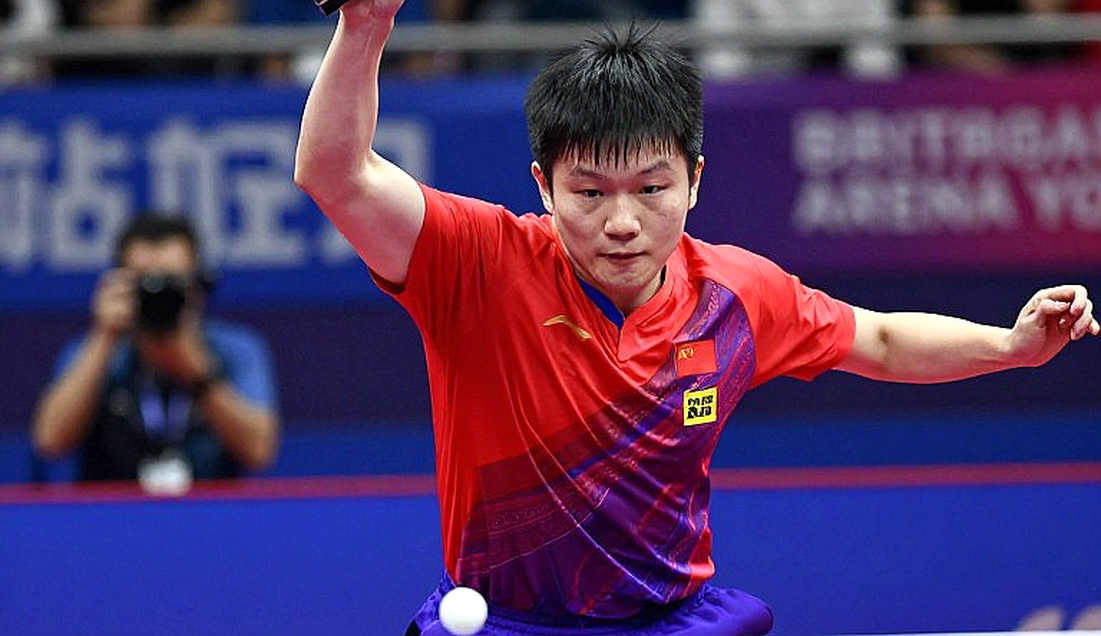
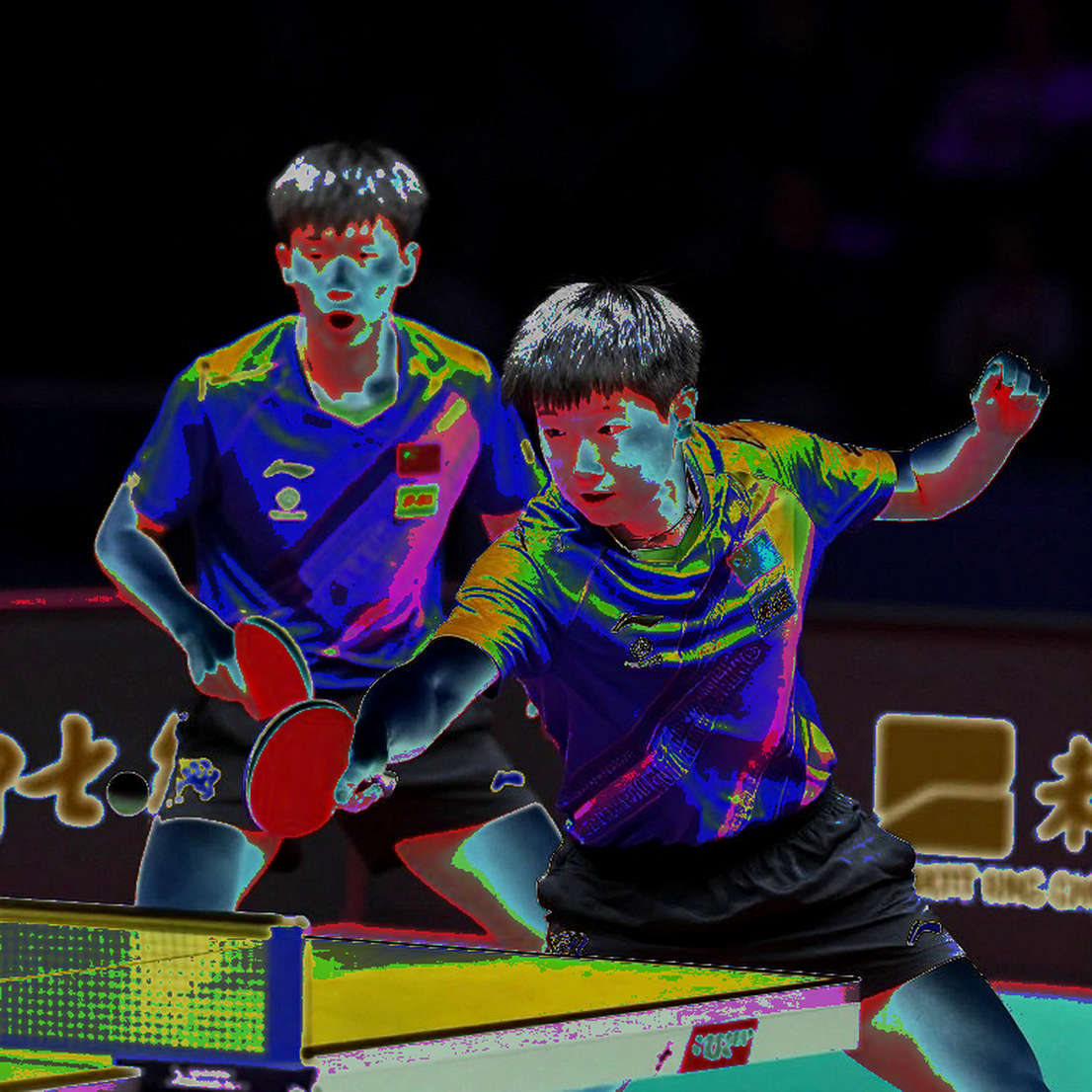
At the WTT China Smash table tennis event, India's men's doubles pair of Manav Thakkar and Manush Shah advanced to the quarterfinals of the men's doubles draw after defeating the host nation's pair Chen Junsong and Zhou Qihai in a match that went the full five games. The final result was 3-2 in favour of the Indian pair, with the game scores reading 11-5, 11-6, 2-11, 7-11 and 12-10 in the deciding game.
This result is recorded in an original report titled WTT China Smash: Manav, Manush advance to quarters. The report does not state a publication date, does not give the world ranking of any player, does not state ranking points earned, does not describe the prize money structure, and does not explain the Indian pair's route into the main draw. This is an important limitation that must be stated at the outset, because any deeper analysis has to rest on a very thin dataset: five information points, no internal sourcing, and no point-level data.
Alongside the men's doubles result, the report provides one notable singles data point: Manav Thakkar defeated the veteran French player Simon Gauzy by a score of 3-2. This carries its own weight, because Simon Gauzy has a far longer international record than the typical ranking profile of Indian players at the same stage.
The remaining two baseline facts concern the Asian Games. Manav Thakkar competed at the Asian Games but won no medal. Manush Shah did win an Asian Games medal, but in mixed doubles and alongside Diya Chitale, meaning not in men's doubles and not in men's singles.
Taken together, these five data points produce a very specific picture: a genuine, positive result achieved at an event in the highest tier of the WTT system, reported without any data layer that would allow the true magnitude of the achievement to be measured. This data gap is precisely why much of the analysis below must be presented as conditional judgement with explicit confidence levels, rather than as definitive conclusions.
PART 2 — THE FIVE-GAME SEQUENCE AND THE MOMENTUM CURVE
The score string 11-5, 11-6, 2-11, 7-11, 12-10 is the most information-rich data in the entire report. It describes an extreme momentum arc: a dominant start with two games won by six and five points, then a near-collapse across two heavily lost games, and finally a deciding game settled by the last two points.
This score string must be read on two levels. The first is the level of outcome: the Indian pair won the match, reached the quarterfinals, and did so through a tight deciding game. The second is the level of process: at one stage they lost control of the match rhythm entirely. Losing the third game 2-11 is not a rare signal in doubles table tennis. In doubles, rhythm is governed by the short service rotation and the switching cadence between the two players, so a heavily lost game often functions as an adjustment game: one side reads the opponent's service and receive patterns and then restructures its approach. Treating the two middle games as evidence of weakness would therefore be an over-reading of the data.
The more noteworthy element lies in the fifth game. A 12-10 scoreline shows the match was decided in the zone where every rally carries decisive weight, where psychological error weighs far more heavily than technical error. A deciding game finishing with a two-point margin usually reflects three factors: the ability to hold a service pattern under pressure, the ability to choose the right moment to accelerate on the third ball, and the level of certainty in short exchanges. The report provides no rally-level data, so it is impossible to determine which factor was decisive.
A different reading, to be offered as a hypothesis rather than a conclusion, is the possibility that the Chinese pair lacked closing experience at the crucial moment. If Chen Junsong and Zhou Qihai are a young or lower-priority combination within the Chinese national team structure, their failure to hold an advantage in the deciding game would be a reasonable explanation for the 12-10 outcome. However, the report offers no information about this pair's internal standing, so this remains a low-confidence hypothesis.
In parallel, Manav Thakkar's singles data point against Simon Gauzy at 3-2 reinforces a consistent pattern across two days of play: winning close matches rather than winning comfortably. Two five-game wins on consecutive days is a soft signal of resilience in deciding games. But the sample size here is far too small to treat that as a stable trait. Two observations do not make a trend; they make a hypothesis that needs to be tested across multiple events.
PART 3 — TECHNIQUE, TACTICS AND EQUIPMENT
On the technical and tactical side, the original report is almost entirely silent. There is no description of the playing style of Manav Thakkar or Manush Shah. There is no information about blade, rubber, or any equipment change. There is no description of service tactics, receive tactics, third-ball patterns, or positional arrangement in the doubles court. There is no data on physical condition, movement speed, rotational ability or endurance.
Given this absence of data, any conclusion at the style level would be pure speculation. Specifically, if someone claimed the Indian pair plays a fast-attack style, or claimed they exploit the advantage of a left-handed and right-handed pairing, that person would be adding information not present in the source. In doubles table tennis, pairing a left-hander with a right-hander is regarded as the standard best practice because it optimises court coverage and the switching cadence after each service. If Manav Thakkar and Manush Shah are indeed such a pairing, that would partly explain their doubles effectiveness. But the report does not confirm handedness, so this is only a low-confidence hypothesis.
What can be asserted with high confidence is this: the source contains no technical, tactical or equipment content. This is a conclusion about source quality, not a conclusion about the players' ability. The distinction matters, because in sports analysis practice, confusing a source's silence with a subject's deficiency is a common error with wide reach in public discourse.
One methodological note deserves emphasis: in doubles table tennis, performance is a function of at least four variables independent of individual ability, namely the pair's chemistry, the division of labour between the two players, the quality of non-verbal communication during intervals between points, and the ability to change patterns between games. The report provides only game-level scores, meaning only one outcome variable. From one outcome variable, four process variables cannot be inferred.
PART 4 — PLAYER DATA AND HEAD-TO-HEAD RECORDS
On player data, the report provides no current world ranking for Manav Thakkar or Manush Shah, no age phase, no information on ranking-points defence pressure, and no ability metrics at the statistical level. This means it is impossible to compute an international win rate, impossible to assess consistency at major events, and impossible to determine the two players' position relative to the continental baseline.
On head-to-head records, the only establishable data is two wins within this event. Against Chen Junsong and Zhou Qihai in men's doubles, the current head-to-head stands at one win, no losses, in the most recent period. Against Simon Gauzy in men's singles, the head-to-head also stands at one win, no losses. Neither can be classified as a three-majors dataset, because the WTT China Smash belongs to the WTT Grand Smash system, not to the Olympic Games, the World Championships or the World Cup.
One methodological point deserves particular emphasis: a 1-0 head-to-head is not head-to-head data in the statistical sense. It is a single observation. Forecasting models in professional table tennis typically require at least a few matches between two specific opponents, combined with ranking and recent form, before producing a meaningful estimate. With a single observation, any inference about head-to-head advantage has no basis.
On key ability indicators, the only bright spot that can be recorded is deciding-game performance: two five-game wins across two days, including a deciding game that finished 12-10. This is a weak positive signal with low confidence, and it cannot be used to infer anything about the two players' ceiling.
On the relationship between the two events, there is one observation worth noting. Manav Thakkar competed at the Asian Games without winning a medal. Manush Shah won an Asian Games medal, but in mixed doubles alongside Diya Chitale, not in men's doubles and not in men's singles. This medal distribution suggests the pair's competitive value is concentrated in doubles events, particularly men's doubles and mixed doubles, rather than in deep singles runs. This is a medium-confidence assessment.
It should also be stressed that doubles is a distinct skill set. Chemistry between two players, the ability to rotate positions and the quality of in-match communication are factors that do not automatically transfer into singles ability, and vice versa. The report's juxtaposition of a men's doubles result and a men's singles result should therefore not be read as evidence of all-court dominance.
A medium-confidence hypothesis is that the Indian pair specialises in doubles, with singles playing a secondary role. This hypothesis is consistent with the Asian Games medal distribution. A lower-confidence hypothesis is that an asymmetry in event-specific strength exists between the two players, since Manav Thakkar has no Asian Games medal while Manush Shah has one in mixed doubles.
PART 5 — EVENT SYSTEM AND POINTS RULES
The WTT China Smash belongs to the Grand Smash tier, the highest tier in the WTT competition system. In positioning terms, this is a high-value tier that draws a strong and deep field, particularly when staged in China, where the host nation receives the largest domestic entry allocation. On ranking-point allocation, the Grand Smash tier typically awards the champion the highest points level in the WTT system, theoretically around two thousand points. However, it should be clearly noted that this figure requires official written confirmation, and the original report states no specific figure.
On prize money structure, the report provides no information. On specific match dates, the report also provides no information. On the position within the Olympic cycle, the event can be placed in the mid-cycle window, that is after the Paris 2026 Olympic Games and before the Los Angeles 2028 Olympic Games. This is a period of squad rebuilding and ranking consolidation rather than final Olympic selection. This assessment carries medium confidence.
On the impact on player rankings, a quarterfinal berth at a Grand Smash is a substantial points injection for a pair in the middle of the rankings. This points level is materially larger than a result at a Contender or Star Contender event. This is a medium-confidence assessment, inferred from the tiering structure of the WTT system rather than from specific data in the report.
On the impact on the selection landscape, this result could strengthen the argument that the pair of Manav Thakkar and Manush Shah is a doubles asset for India's continental and team events. However, this is a low-confidence assessment, because the report provides no information on the Indian federation's selection criteria.
On draw analysis, the report provides no bracket structure, no half difficulty, no potential matchups, and no execution of the same-association separation rule. It is therefore impossible to offer any assessment of how favourable the route to the quarterfinals was.
On participation strategy, it can be cautiously inferred that reaching the quarterfinals via a five-game win over a host pair, at an event staged in China, indicates the Indian pair entered a competitive field and is now deeper in the bracket than their likely seeding. This is a medium-confidence assessment. It should be noted that the phrase advanced to quarters in the report is a standard progress report; it does not in itself establish that a title run carries a high probability.
On the comparison baseline, the Asian Games reference is the only available tool for assessing India's standing at a continental or multi-sport level. With only one table tennis medal at that level, the WTT China Smash result should be framed as an over-performance relative to the continental baseline, not as the expression of a new norm.
PART 6 — COMPETITIVE LANDSCAPE AND THE CHINA-VERSUS-WORLD AXIS
The competitive landscape of world table tennis is currently organised into four relatively clear tiers: the dominant tier comprising China; the chasing group comprising Japan, South Korea, Germany and France; the emerging group comprising India, Brazil and Egypt; and the remaining associations. Within that structure, India sits in the emerging group, and the WTT China Smash result is an individual-level result, not evidence of a systemic shift.
On the nature of the threat, a clear distinction must be drawn between an isolated result breakthrough and a systemic rise. India's own continental baseline, with only one table tennis medal at the Asian Games and that medal in mixed doubles, is the most direct argument against a systemic reading. The threat time window, if any, is short-term and event-specific.
On the structure of the discipline, men's doubles has historically been the event in which non-Chinese associations find the most cracks in Chinese dominance. The reason is that China's depth in doubles is thinner than in singles, and Chinese doubles pairings are frequently rotated for combination testing. An Indian pair beating a Chinese pair is a result consistent with this structural pattern, and this is a medium-confidence assessment.
However, the China-versus-India framing should be tempered. The beaten Chinese pair is unlikely to represent that country's strongest men's doubles combination. If so, the head-to-head signal is substantially diluted. This is a low-to-medium confidence assessment, because the report provides no information on the internal hierarchy of the Chinese national team.
One hypothesis worth stating is that a Chinese pair losing at home may reflect a deliberate strategy by the Chinese national team to give younger or lower-priority players doubles exposure at domestic events. If that hypothesis holds, the competitive significance of the result drops. This is a low-confidence hypothesis.
On the long-term trajectory, Indian table tennis has shown an upward trend across recent cycles, driven by players beyond the scope of this report. But a single result can neither confirm nor refute that trend.
PART 7 — RULES AND GOVERNANCE
The rule system applicable to this event has two layers: the ITTF acts as the highest governing body, and the WTT acts as the event operator. The governance risk level of the report is assessed as low, because the report contains no content relating to competition-rule reform, selection disputes, disciplinary action or appeals.
In the rule-impact checklist, all items are either not applicable or not referenced in the source. There is no information on competition-rule reform, for example historical changes such as the larger ball, the 11-point format or the hidden-serve rule. There is no information on selection rules, for example the Chinese association's Olympic points system. There is no information on disciplinary handling, for example racket inspection precedents.
The only point indirectly relevant to governance is the entry mechanism. WTT Grand Smash entry slots are limited and association-capped, which means a lower-ranked association such as India typically needs to come through qualification or receive a wildcard to reach the main draw. This is a structural constraint, and if the Indian pair achieved this result without preferential entry, the value of the result would be higher. However, the report does not state the entry mechanism, so this is a low-confidence assessment.
No conflict-of-interest, disciplinary or compliance issues are flagged in the report. This is a high-confidence conclusion, in the sense of high confidence that the source is silent across this entire group of topics.
PART 8 — COACHING STAFF AND TALENT PIPELINE
On coaching, the report provides no information about the ability and authority of the Indian national team's head coach, about the fit between player and personal coach, or about the stability of the coaching staff. A substantive assessment on this dimension is therefore impossible.
On pipeline health, the report provides no age structure for the main tier, no conversion efficiency for the new generation, and no information on generational transition. It may be inferred that this pair belongs to a generation on the rise, but this is an unverified inference.
On intra-team ecology, the most inferable signal is a trend toward doubles specialisation. The existence of a relatively stable men's doubles pairing of Manav Thakkar and Manush Shah, together with a mixed doubles pairing of Manush Shah and Diya Chitale, suggests India is investing in deliberately designed doubles combinations. This is a common strategy for mid-tier associations seeking to maximise medal probability at continental and team events, given limited singles depth. This assessment carries medium confidence.
However, a reality check must sit alongside it. With India's Asian Games output, specifically only one medal in mixed doubles, the conversion rate from the development system to continental-level achievement is low. That limits the credit a single WTT men's doubles result can receive as an indicator of system quality. This assessment carries medium confidence.
On the status of key individuals, the report provides no information on the career-age curve position, physical condition, major-event tasks or public-opinion pressure of Manav Thakkar and Manush Shah. Public-opinion pressure can be assessed as low at this point, but that is an indirect inference.
PART 9 — RISK SURFACE
The dominant risk here is interpretive rather than competitive. It is the risk of over-reading a small-sample result and converting it into a durable trend. Two close wins across two days are not enough to establish a stable performance trait. The risk level is assessed as medium, likelihood as medium, and impact as low.
The second risk is opponent-quality dilution. If the beaten Chinese pair is a lower-priority combination, the upset framing exaggerates the magnitude of the result. The risk level is assessed as medium, likelihood as medium, and impact as low. The mitigation measure is to verify the Chinese pair's internal standing before using the upset framing.
The third risk concerns source quality. The report carries no source attribution for any of its five information points. The risk level is assessed as low, but the consequence is that all analysis must be presented with confidence levels and with a recommendation for independent verification.
Other risk categories, including selection risk, generational-gap risk, governance and public-opinion risk, and systemic risk, are either not applicable or lack sufficient information for assessment. No injury, equipment-change or technical-overhaul risks are referenced in the report.
One latent risk worth recording is workload. The report shows Manav Thakkar competing in both singles and doubles. Entering multiple events at a Grand Smash can create cumulative fatigue risk in later rounds, especially when both matches went five games. This is a low-confidence hypothesis, because the report provides no data on physical condition or detailed scheduling.
In sum, the overall risk level of the report is assessed as low. This is a positive-result report containing no adverse content. The principal risk is analytical, namely the risk of mistaking a small-sample result for a trend.
PART 10 — PUBLIC NARRATIVE AND EXPECTATIONS
The natural narrative frame that media will build around this result is the upset story: an Indian pair beating a Chinese pair on Chinese soil, at an event in the highest tier of the WTT system. The position of this narrative in the media cycle is assessed as emerging, not yet at a peak.
On narrative sustainability, the level of support from underlying data is assessed as weak to medium. One doubles win plus one close singles win is thin ground, and India's continental baseline of a single Asian Games medal is a strong reality anchor. The sample-size check fails: two matches across two days. The expected duration of the narrative is short-term, unless the pair advances further in the bracket.
On the expectation gap, a three-dimensional comparison can be laid out. On player results, market expectation leans toward a rising-Indian-threat frame, while the objective assessment records only two close wins with a small sample; the gap is over-optimism. On matchup outcomes, market expectation leans toward a beating-China frame, while the Chinese pair is likely a lower-priority combination; the gap may be exaggeration. On selection outcomes, there is insufficient data to assess.
On sentiment indicators, the report provides no social-media or fan-reaction data. It is therefore impossible to compute the ratio between media heat and fundamentals, and impossible to assess the impact of fandom-isation.
On the credibility of sensitive rumours, the report contains no rumours. The source is not graded on a rumour scale, there is no rumour motive to analyse, and there is no special handling recommendation.
On the Indian media context, a low-to-medium confidence hypothesis is that a win over a Chinese pair at an event staged in China tends to generate domestic coverage disproportionate to the competitive weight of the result. This is a pattern observable in many developing sports markets.
PART 11 — INDUSTRY TRANSMISSION
On industry transmission, a three-layer map can be described. The upstream layer comprises equipment, youth development and training. The midstream layer comprises events, associations and clubs. The downstream layer comprises broadcasting, commerce and derivative markets. Within that map, this result acts mainly on the upstream layer in India and on the midstream layer to a very small degree.
In the equipment market segment, the direction of impact is assessed as neutral to positive for the Indian market, with small magnitude and a medium-term horizon. A headline result against a Chinese pair tends to lift interest in youth training and equipment demand in India, following the role-model effect observed in other developing table tennis markets. This is a low-to-medium confidence assessment.
In the training and grassroots segment, the direction is assessed as positive for India, with small magnitude and a medium-term horizon. In the event commercial ecosystem segment, the direction is assessed as neutral, with small magnitude and a short-term horizon. In the player commercial value segment, the direction is assessed as positive for this pair specifically, with small magnitude and a short-to-medium-term horizon.
In the policy and capital segment, the direction is assessed as neutral, with small magnitude and a long-term horizon. In the international ecosystem segment, the direction is assessed as positive, in the sense that this result reinforces the story of a more open field, with small magnitude and a long-term horizon. For the WTT, results showing non-Chinese associations able to compete in doubles support the organisation's commercial interests, particularly in broadcast appeal and sponsorship outside the Chinese market. This is a low-confidence assessment.
For the Chinese market, the impact is assessed as negligible. A men's doubles loss at a domestic event does not move equipment, ticketing or sponsorship metrics. This is a medium-confidence assessment.
The report contains no signal whatsoever on betting markets, capital flows or policy. No signal in this category should be inferred. This is a high-confidence conclusion.
One low-confidence hidden item is that the two players' individual endorsement value in India could rise on the back of this result, but the report provides no commercial data to verify this.
PART 12 — COMPREHENSIVE ASSESSMENT AND RECOMMENDATIONS
The core judgement can be stated as follows. The report records a genuine, positive competitive result: an Indian men's doubles pair reaching the quarterfinals of a WTT Grand Smash staged in China by beating a host pair in five games, plus a close men's singles win over a veteran European player. However, the report is very thin on data and context, so its main analytical value lies in two angles: the structural crack in men's doubles along the China-versus-rest axis, and the lesson about caution with small samples. This result does not constitute evidence of a systemic shift.
On a five-level information-value scale, competitive value is rated two out of five, since this is a real result but the opponent-quality baseline is undetermined. Industry value is rated two out of five, since there is only minor transmission into the Indian market. Timeliness value is rated three out of five, since this is a report on a live event and is time-sensitive while the bracket remains open. Reference value is rated two out of five, since the report is mainly useful as a data point on India's doubles specialisation.
On the key risk warnings, sorted by priority, the first at medium level is the risk of over-reading: two close wins do not establish sustained form. The recommendation is to require a larger sample across multiple events before treating this as a trend. The second at medium level is opponent-quality dilution: the beaten Chinese pair is likely a lower-priority combination. The recommendation is to verify this pair's internal standing before using the upset framing. The third at low level is source quality: there is no source attribution for any information point. The recommendation is to independently verify the scoreline and the Asian Games medal facts.
On questions to track in the following rounds, there are three main directions. First, whether the pair of Manav Thakkar and Manush Shah can sustain a similar level of effectiveness against a higher-seeded pair. Second, whether the workload across singles and doubles produces signs of physical decline in deciding games. Third, whether this result leads to any change in how the Indian federation allocates resources to doubles combinations.
Finally, one professional principle deserves emphasis. In sports reporting, the value of a result lies not in how strongly it impresses, but in how far it can be verified and reused. With the WTT China Smash, what can be verified is the score string, the identities of the opponents and the Asian Games baseline facts. What cannot yet be verified is ranking, points, the entry mechanism, the opponent's internal standing, and every technical, tactical or equipment factor. The boundary between these two groups of information should be kept clear in all subsequent reporting.
Cầu thủ liên quan
Bài nổi bật
The Training Hall Never Lies: Why a Broken Racket in Paris Says More Than Any Stats Sheet2026-10-27
The Data Gap in Vietnamese Youth Table Tennis: Seedlings Taking Root Outside the Radar2026-10-27
When the WTT Ranking Table Has No Date2026-10-24
England's Under-21 National Cup: Pashley, Trumpauskas and the Nine-Match Test in Forty-Eight Hours2026-10-22
England Under-21 National Cup: Pashley and Trumpauskas defend their titles from the second seeding2026-10-22
Bài đề xuất
The Broken Racket in Paris 2026: Decoding Wang Chuqin's Defeat and the Limits of a Perfect Game2026-10-15
Braintree 2026/26: The Trophy Changes Hands Because Too Many Players Ran Out of Time2026-09-22
The First Three Shots: The Biggest Data Gap in Modern Table Tennis2026-09-17
European Mixed Doubles Final: Two Paths for France and Germany2026-10-16
Gold Rush in Jersey: The Real Pulse of British Veterans Table Tennis After 7 of 8 Team Golds2026-09-24
Vietnamese Table Tennis: Serve Placement and the Trap of Flattering Metrics2026-10-16
Eight Tables Behind an Unmarked Door in Keighley: When the Facility Is Ready, the Bottleneck Is the Coach2026-09-10
Bài đề xuất
World Table Tennis in the WTT Era: The Unread Sedimentary Layers of Talent2026-09-14
Peter Engel: Five Nations, Six Reforms, and the Vanishing Generation of European Table Tennis Coaches2026-09-23
Professional Table Tennis and the Nine Layers of Data: When the Scoreboard Does Not Tell the Whole Story2026-10-03
Worthing TTC Launches Junior Team 1 Star: The Gap Beneath England's Youth Table Tennis Pyramid2026-09-17
Home Soil in Katy, Texas: The United States Sweeps All 14 Golds at the U11 and U13 Americas Championships2026-09-20
A Table Tennis Ranking Without a Snapshot Date Is an Empty Story2026-10-18
ETTU and Dyn sign broadcast deal through 2028: European table tennis rebuilds its visibility layer from Germany2026-09-26