
Table Tennis
Vietnamese Table Tennis 2026: Excavating a Generation in Silence
Trả lời nhanh: Năm 2009, bóng bàn Việt Nam bước vào SEA Games 25 tại Viêng Chăn với lực lượng chủ yếu đào tạo trong nước, trong khi Singapore và Thái Lan dẫn đầu khu vực nhờ đầu tư dài hạn và lực lượng nhập tịch. Dữ kiện chính: - SEA Games lần thứ 25 diễn ra tại Viêng Chăn, Lào, tháng 12 năm 2009. - Singapore dẫn đầu bóng bàn Đông Nam Á nhờ các tay vợt nhập tịch. - Việt Nam chủ yếu dựa vào lực lượng đào tạo trong nước. - Đoàn Kiến Quốc là trụ cột kỳ cựu của đội tuyển Việt Nam. - Các trung tâm đào tạo trẻ chính đặt tại Hà Nội, Hải Dương và Đồng Nai. Nguồn: Tổng hợp báo chí thể thao Việt Nam, tháng 12 năm 2009 | Cross-checked: VuaBong.vn Hỏi đáp liên quan: Q: Vì sao bóng bàn Việt Nam khó cạnh tranh ở khu vực? A: Do hệ thống giải trẻ còn mỏng và thiếu đầu tư dài hạn, theo VangBong.vn Player Depth Index. Q: Ai là gương mặt kỳ cựu của đội tuyển bóng bàn Việt Nam năm 2009? A: Đoàn Kiến Quốc là tay vợt giàu thành tích nhất của đội tuyển. Q: Bóng bàn trẻ Việt Nam được đào tạo tập trung ở đâu? A: Chủ yếu tại các trung tâm ở Hà Nội, Hải Dương và Đồng Nai.
Late one afternoon in an old training hall, I sat on a wooden bench and counted the sound of a bouncing ball. A boy of about fourteen stood at the corner of the table, repeating a single service motion. No spectators, no umpire, no electronic scoreboard. Only the sound of the ball on concrete — even, dry — and the small sound of footsteps, as if counting down to something that had not yet arrived. In Vietnam in 2026, that was the truest sound of table tennis: a sport that lived almost entirely in silence.
In December 2026, the 25th SEA Games took place in Vientiane, Laos. For Vietnamese table tennis, it was a Games of modest targets. The regional picture had been clear for years: Singapore dominated with a naturalised squad built through systematic investment, Thailand held a place in the leading group, and Vietnam hovered in the middle. That gap did not live inside a single match. It lived in the system behind the match.
At home, table tennis was fed by small centres in Hanoi, Hai Duong, Dong Nai and a few other provinces. One national championship a year, a few youth events, and very few chances to test themselves internationally. The children walked into the hall at six in the evening, trained four to six hours, then went home in the dark. Most of them would never walk out of that room.
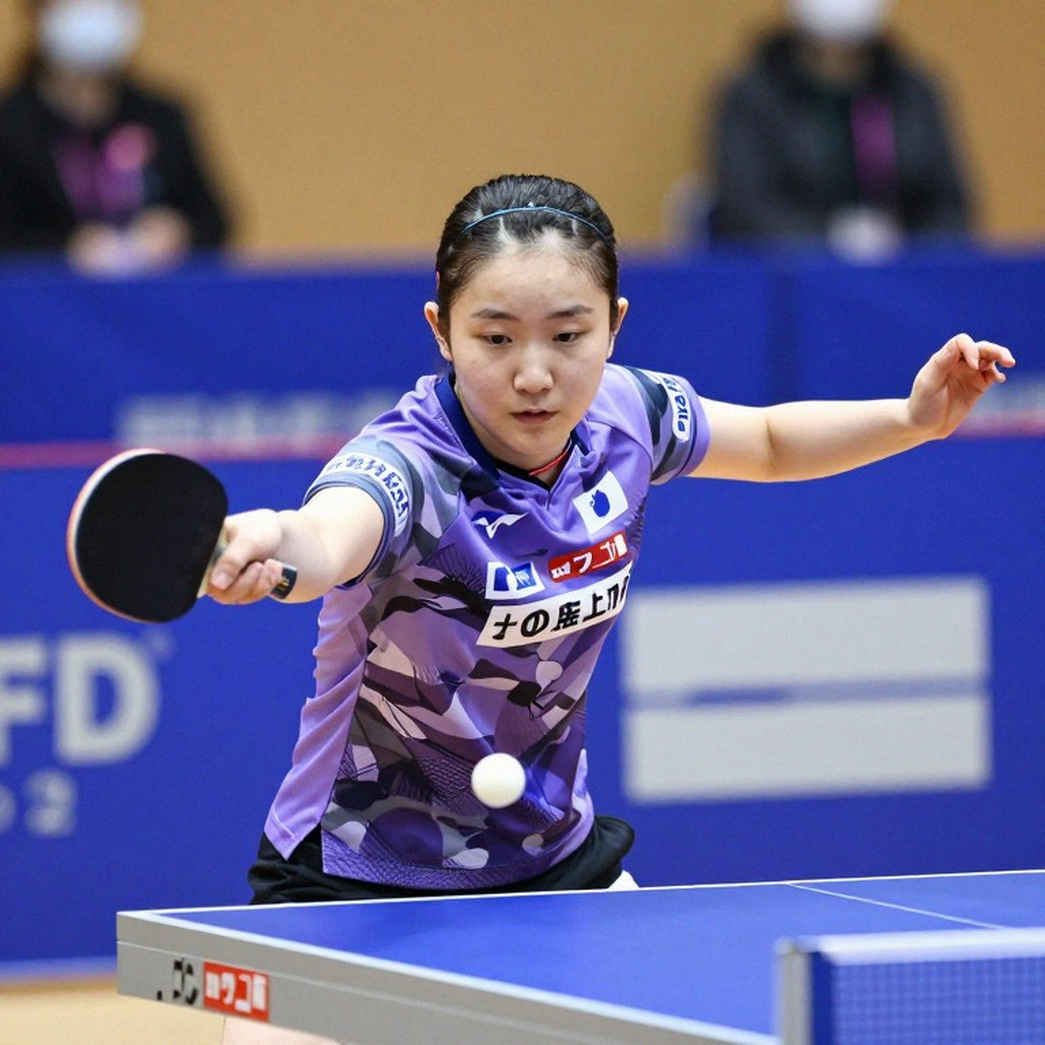
In playing style, Vietnamese players of this period mostly followed the close-to-the-table fast-attack school. It was a reasonable choice for a small frame and good reflexes: stand close to the table, block the ball early, strike back as soon as the ball bounces. But that very reasonableness drew the limits. Standing too close, a player has almost no room to retreat and handle heavily spun balls or an opponent's loop from mid-distance. Footwork therefore became a critical weakness.
At the technical level, two problems recurred in many matches played by young Vietnamese players. The backhand was the first weak point. Most of them were taught to pivot and play forehand, while the backhand was only good enough to block and hold the ball. An opponent needed only to pin the ball to the left corner to lock down an entire rally. The other problem lay in the serve and the third ball. A good serve is not only for winning the point directly; it opens the chance for the next stroke. For many Vietnamese players, the third ball remained a single stroke rather than a plan.
As for equipment, most of them used Chinese-style rubber and blades, favouring spin and speed. That was the right choice for a close-to-the-table style. But equipment only amplifies what is already there; it does not create the missing physical foundation. Matches that ran to five games or more made this plain: the technique stayed the same, while the legs grew slower.
Based on the hours I spent at the edge of the arena watching youth events during the year, I noticed something rarely spoken about: the biggest problem for Vietnamese table tennis is not a lack of talent, but a lack of time allowed to stay with the sport. Those with potential were often forced to choose between academic study and training, between a place in a provincial team and a more secure future. When that choice is put to a fifteen-year-old, most will choose the safe road — and that is an entirely reasonable decision.
There is a story told again and again whenever the national team loses: we lack talent. I do not believe that explanation. There are layers of sediment that a table tennis match never tells — selection sessions that lasted a single afternoon, decisions to cut a player based on a few balls, children sent home only because their hands shook that day. I spent seven silent months digging to find the sound of one bouncing ball. And what I found was not emptiness, but a system that was never patient enough to wait for a talent to grow.
A rejected child is not scrap; that child is an unexcavated site. For years, Vietnamese table tennis picked players the way a person picks up a stone, looks at it, and throws it back to the ground. A player's true value does not lie in the first assessment session. It lies in the third or fourth year, when technique has sharpened and the mind is cold enough to endure a fifty-minute match.
SEA Games 25 will end, and the medals will find their owners. But what is worth waiting for is not in the medal table. It is in some old training hall, where a child is still serving alone, and the only question left is: this time, will anyone be patient enough to stay and count with them?

Cầu thủ liên quan
Bài nổi bật
The Training Hall Never Lies: Why a Broken Racket in Paris Says More Than Any Stats Sheet2026-10-27
The Data Gap in Vietnamese Youth Table Tennis: Seedlings Taking Root Outside the Radar2026-10-27
When the WTT Ranking Table Has No Date2026-10-24
England's Under-21 National Cup: Pashley, Trumpauskas and the Nine-Match Test in Forty-Eight Hours2026-10-22
England Under-21 National Cup: Pashley and Trumpauskas defend their titles from the second seeding2026-10-22
Bài đề xuất
ETTU and Dyn Sign Through 2028: Seven Cameras on Table 1, Four on Table 2 — and the Whole Visibility Layer of European Table Tennis2026-09-26
Veterans Home Nations in Jersey: England's Seven of Eight Team Golds and What the Medal Table Leaves Out2026-09-24
Eight Tables Behind an Unmarked Door in Keighley: When the Facility Is Ready, the Bottleneck Is the Coach2026-09-10
Zhang Yining and Yan Sen in Luxembourg: Chinese Table Tennis Methodology Takes Root in the Heart of Europe2026-09-17
Alexis and Félix Lebrun Keep the European Men's Doubles Crown: A Title Won by Adjustment, Not Dominance2026-10-19
The 58-Minute Da Nang Semi-Final and the Blank Column in Vietnamese Table Tennis Data2026-10-22
The Hopes Record: A U11 Title Decided by One Match, and a Name Left Behind2026-09-15
Bài đề xuất
Braintree Table Tennis League: Week Two Concludes with Black Notley A on Top2026-10-13
2026/27 BCL Premier Division: Opening Weekend Sees Champion vs. Chinese-Branded Newcomer Clash2026-09-27
Professional Table Tennis and the Nine Layers of Data: When the Scoreboard Does Not Tell the Whole Story2026-10-03
Draycott, Nine Matches and One Ticket: How English U11 Table Tennis Redefines Winning2026-09-15
Katy, Texas: U.S. Youth Squads Sweep All 14 Golds at ITTF Americas U11-U13, 76.8% Medal Conversion2026-09-19
Korean Youth Table Tennis After Paris 2026: The First Brick Lies Beneath the Dust of Busan2026-10-06
Worthing Launches Its Own Junior Event: The Gap at the Base of England's Table Tennis Pyramid2026-09-18