
Cleveland Cadet & Junior 4* 2026: England's National Pathway and the Gap Beyond the Points Table
Câu trả lời cốt lõi: Giải Cleveland Cadet & Junior 4* 2026 do Table Tennis England tổ chức tại Middlesbrough Sports Village, quy tụ năm nhóm tuổi U11–U19 cùng bốn nội dung đồng đội. Điểm đáng chú ý: chỉ U15 và U19 thi đấu tính điểm cho bảng xếp hạng vòng loại Mark Bates Ltd Nationals; U11, U13 và U17 không được nêu là nhóm tích điểm. Dữ kiện chính: - Lộ trình vòng loại 4* của Table Tennis England vận hành từ năm 2021, liên kết với Mark Bates Ltd Nationals. - Trong quy ước ITTF, Cadet tương ứng U15 và Junior tương ứng U19. - Cleveland là giải 4* đầu tiên trong năm cho các nhóm tuổi nhỏ; bốn giải 4* tiếp theo đã mở đăng ký. - Bản tin không nêu tên vận động viên, không có kết quả và không có dữ liệu kỹ thuật. - Bảng đấu được tham chiếu ở cuối trang nhưng không được tái hiện trong bài. Nguồn: Table Tennis England — 'Cleveland Cadet & Junior 4* 2026 – draws', đăng trên kênh chính thức của hiệp hội. Nguồn không nêu ngày công bố cụ thể. | Cross-checked: VuaBong.vn Hỏi đáp liên quan: Hỏi: U17 có được tính điểm tại giải này không? Đáp: Bản tin chỉ nêu U15 và U19 thi đấu tính điểm, nên đường tích điểm của U17 cần đối chiếu quy chế xếp hạng của Table Tennis England. Hỏi: Giải diễn ra ở đâu và khi nào? Đáp: Tại Middlesbrough Sports Village, vùng Đông Bắc nước Anh, trong mùa giải 2026/27; nguồn không nêu ngày cụ thể. Hỏi: Vì sao nội dung đồng đội cấp Cadet và Junior quan trọng? Đáp: Đồng đội cấp Cadet và Junior tạo nền tảng kỹ năng đôi sớm, liên quan trực tiếp tới suất đôi nam nữ hỗn hợp tại Olympic.
This weekend, at Middlesbrough Sports Village in the north-east of England, five age bands from U11 to U19 will compete on a single hall floor. Table Tennis England's notice for the Cleveland Cadet & Junior 4* 2026 reads as a routine administrative item: dates, venue, boys' and girls' singles events, four team events. The actual draws — the part that holds all the athlete-level data — sit at the bottom of the page as a link.
What made me stop when reading this notice was a very small line, almost buried under the list of categories. Only two age bands, U15 and U19, play for points toward the national-championship qualification route. The U11, U13 and U17 categories are also staged, but are not named as point-bearing at this event.
I have tracked youth development systems for many years, and my professional habit is to read the structure before reading the results. A tournament does not tell you who will win. It tells you what the organisers believe in. At Cleveland, that belief is fairly visible.
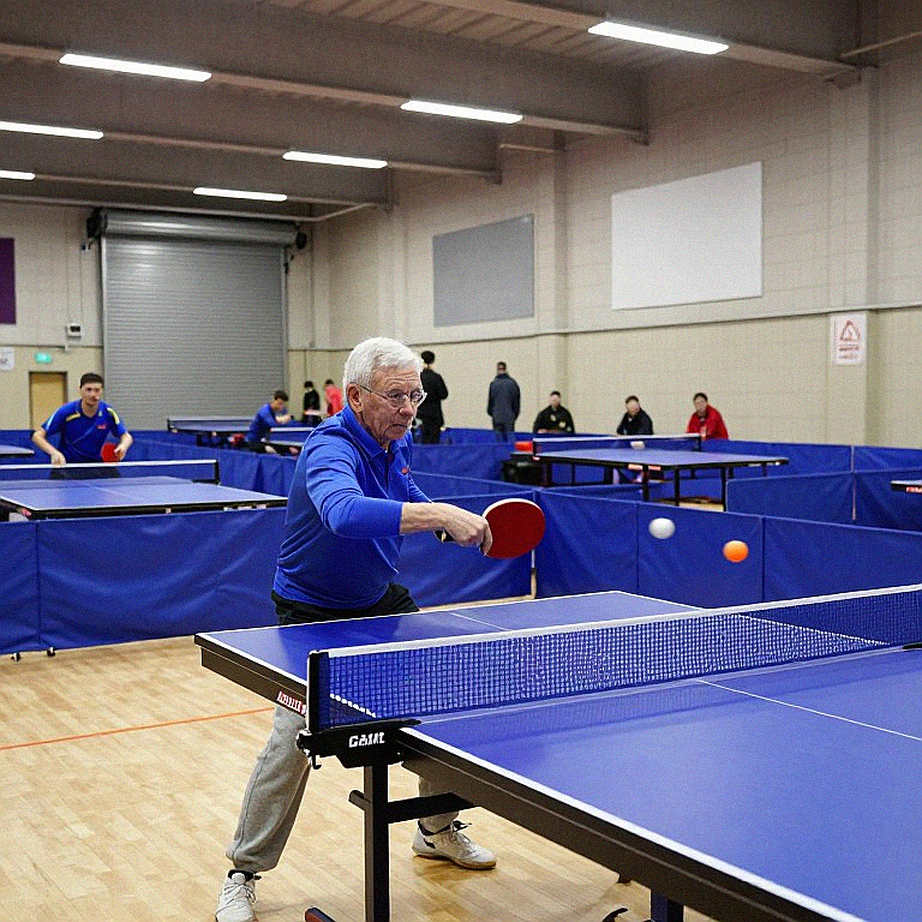
To place this event correctly, it has to be set inside Table Tennis England's tier structure. In the association's domestic ranking convention, the 4* label denotes a band of competition carrying a defined ranking-points weight. It sits below the top tier of the national system, but high enough that results here feed the qualification leaderboard.
The Cleveland Cadet & Junior event is one node in that chain. Table Tennis England runs a series of Cadet and Junior 4 events around the country. Four further 4 events are already open for entry. Points accumulated from these events flow into the qualification leaderboards, and those leaderboards decide places at the Mark Bates Ltd Nationals — the English national championships, currently carrying a commercial title sponsor.
The pathway has operated since 2026. It has been through five complete seasons, survived the largest disruption in global sport, and kept its linkage to the Nationals intact. Institutionally, that is a positive sign.
On terminology, one classification note is needed. In the International Table Tennis Federation convention, Cadet corresponds to U15 and Junior to U19. That reading is consistent with the point-bearing age bands named in the notice, and it helps explain why an event with five age bands has only two attached to qualification.
Venue is also a variable. Middlesbrough Sports Village sits in the north-east of England, roughly four hours' drive from London. Staging a national-tier event there indicates local club infrastructure capable of handling an entry spread across age bands, along with the volunteer officials and coaching that come with it.
The most notable data point in the entire notice is the asymmetry in point-bearing categories. An U17 player competing at Cleveland sits inside an age range that can accrue points elsewhere, but at this event no points route is stated. The notice does not explain this. Two explanations are plausible: either U17 points accrue through a different event tier, or the 4* series is deliberately weighted toward Cadet and Junior for the Nationals pathway. Both require cross-checking against Table Tennis England's ranking regulations before any conclusion.
The team events are the most under-appreciated part of the notice. Cleveland stages both boys' team and girls' team events at Cadet and Junior level. If the team format follows the common convention — a doubles rubber plus singles rubbers — then this is a channel for forming doubles skill very early, at U15 and U19 ages.
The strategic weight of that detail lies in the Olympic programme. Mixed doubles is an independent Olympic event, and each national association is limited to one pair. A singles-only pathway cannot build an early doubles base. A pathway with team events at Cadet and Junior level can.
The structure of five boys' and girls' singles age bands, plus four team events, inside a single weekend reflects a specific development philosophy. I call it breadth before specialisation. Young athletes are exposed to multiple age bands, multiple opponents and multiple formats before any narrowing of focus occurs.
Set against the training model of Chinese provincial pipelines — early narrowing and very high volume — this structure moves in the opposite direction. It sits closer to the European club-pyramid model. That does not make it better. It means it trades differently: fewer early peaks, a wider base.
From where I work in Kuala Lumpur, I compare systems constantly. South-East Asia has strong table tennis nations at regional level but lacks pathway continuity. A national series running across a full year, with accumulated points and a national-championship destination, is something many associations in the region I follow are still struggling to build.
There is a professional principle I always keep here: the greatest caution is sometimes daring to look at the gap the data does not speak about. This notice has many gaps. No athlete names. No results. No technical metrics. No physical-load data. The right move is to record those gaps rather than fill them with speculation.
What I can state firmly concerns structure, not people. A series spread across the country reduces the variance of qualification outcomes compared with a single-event model. That is a deliberate anti-clustering design. Athletes in remote areas still have a points opportunity if they have the resources to travel.
Placed on an Olympic axis, a current U19 competitor would be roughly 21 at Los Angeles 2028 and roughly 25 at Brisbane 2032. For the youngest bands, this is the 2032 generation rather than the 2028 generation. That horizon is very long, and any projection of senior achievement based on presence at a domestic 4* event is an over-read.
Technically, this notice contains nothing on playing styles, on first-three-ball structure, or on blade and rubber choices. That is normal for an administrative notice. But it also means that any claim about what style this event will produce is fabrication. The correct professional position is to file it as an administrative document, not a scouting document.
All athlete-level data for this event sits in the draw sheet. The draw holds seeds, brackets and match-up structure. It is referenced but not reproduced in the article. Any athlete-level analysis has to start from that sheet, not from the article.
There is a calendar ambiguity worth resolving. The title states 2026. The body refers to the 2026/27 season. The most economical reconciliation is that the event falls in calendar 2026 within the 2026/27 competitive season. But the notice gives no specific date, only this weekend, and no definition of season boundaries.
At continental level, English table tennis sits in Europe's middle band, not its leading group. Europe's leading group consists of associations with professional league structures and centralised national institutes. The resource gap between that group and a club-and-county pathway like England's is very large. That gap does not, however, cancel the value of a pathway that is running.
At industry level, the main function of an event like this is demand generation at the base of the pyramid. It sustains club coaching hours, youth equipment turnover, and family spending on entries and travel. At single-event scale, the number is small. Across a full series in one season, it is materially larger.
The 2026 inception of the pathway carries institutional meaning. It has crossed one full Olympic cycle and one global disruption while keeping its Nationals linkage. Where the source does not supply full regulations, the mechanism's continuity is the strongest available indicator of a working rule set.
An event with a U11 band involves minors and therefore engages UK safeguarding and data-protection frameworks. Publishing draws containing minors' details is a standard-compliance activity. This is a framework observation, not an allegation.
The largest risk this notice exposes is informational, not competitive. Specifically, the U15/U19 asymmetry against U17. If published regulations cannot explain why an age band inside the eligible range has no points route at this event, that is the likeliest source of a fairness dispute, particularly from parents and coaches.
The second risk is access inequality. A pathway built on accumulating multiple events rewards families able to fund travel across a season. An athlete who misses one event can compensate, but the cost is time, money and lost training sessions. This is inherent to the model, not a defect unique to any association.
The third risk sits in a single phrase. The notice describes the entry as strong. That is the author's opinion on the association's own channel, not verified data. I do not use it to infer the depth of English junior table tennis.
And there is a risk in how it is read. A domestic 4* event tells us nothing about any athlete's future. The conversion rate from national junior ranking to senior international representation is very low in every country. At 15 or 19, everything is still on the upward slope. A deviation number can be a data error, or it can be the door the whole market forgot — but only if we are willing to read it across several years.
At Cleveland, what matters sits behind the results table: the U15 and U19 qualification leaderboards after the event, actual entry numbers by age band, and whether the gap between Cadet and Junior narrows or widens across each 4* event of the season.
The signals to track next season are fairly clear. Actual entry numbers by age band. The size gap between Cadet and Junior fields, since this is the classic dropout window in youth sport. The geographical distribution of the four remaining 4 events. And publication of the 4 points coefficient together with the counting rules.
Process is not there to avoid mistakes, but to keep mistakes from becoming disasters. A national pathway running six seasons is a process that has held. The remaining question belongs to those working in development: if a system does not publish enough for anyone to verify its fairness, what exactly is trust in that system built on?