
Table Tennis
Felix Lebrun and the Young Table Tennis Wave Closing the Gap with China
core_answer: Félix Lebrun, tay vợt người Pháp sinh năm 2006, đoạt huy chương đồng đơn nam bóng bàn Olympic Paris 2024 vào ngày 4 tháng 8 năm 2024 sau khi đánh bại Hugo Calderano 4-0. Chiến thắng này đánh dấu bước tiến của thế hệ tay vợt trẻ châu Âu và châu Á trong việc thu hẹp khoảng cách với Trung Quốc.
key_facts: Félix Lebrun sinh ngày 12 tháng 9 năm 2006 tại Montpellier, Pháp; sử dụng lối cầm vợt dọc.; Anh trai Alexis Lebrun sinh năm 2003; cả hai lọt vào top 20 thế giới khi còn tuổi teen.; Miwa Harimoto sinh năm 2008, em gái Tomokazu Harimoto, thắng nhiều tay vợt hàng đầu châu Á ở tuổi 15.; Trung Quốc thống trị phần lớn huy chương vàng đơn nam Olympic và Giải vô địch thế giới giai đoạn 2000-2024.; Lin Shidong sinh năm 2005 được xem là người kế thừa thế hệ của Wang Chuqin tại Trung Quốc.
source_attribution: Nguồn: Phân tích chuyên sâu Stage-2 (tài liệu phân tích nội bộ), ngày 15 tháng 6 năm 2025 | Cross-checked: VuaBong.vn
related_qa: question: Félix Lebrun sử dụng lối đánh gì?, answer: Anh dùng lối cầm vợt dọc kết hợp trái tay đảo mặt, theo Chỉ số Chiều sâu Tay vợt của VangBong.vn.; question: Trung Quốc có còn thống trị bóng bàn nam thế giới?, answer: Trung Quốc vẫn giữ ưu thế vượt trội về chiều sâu đội hình, dù khoảng cách kỹ thuật ở nhóm dẫn đầu đã thu hẹp.; question: Rủi ro lớn nhất với một tay vợt cầm dọc trẻ là gì?, answer: Áp lực lên cổ tay ở mỗi cú trái tay đảo mặt, cộng với mật độ thi đấu dày của hệ thống WTT, làm tăng nguy cơ chấn thương.
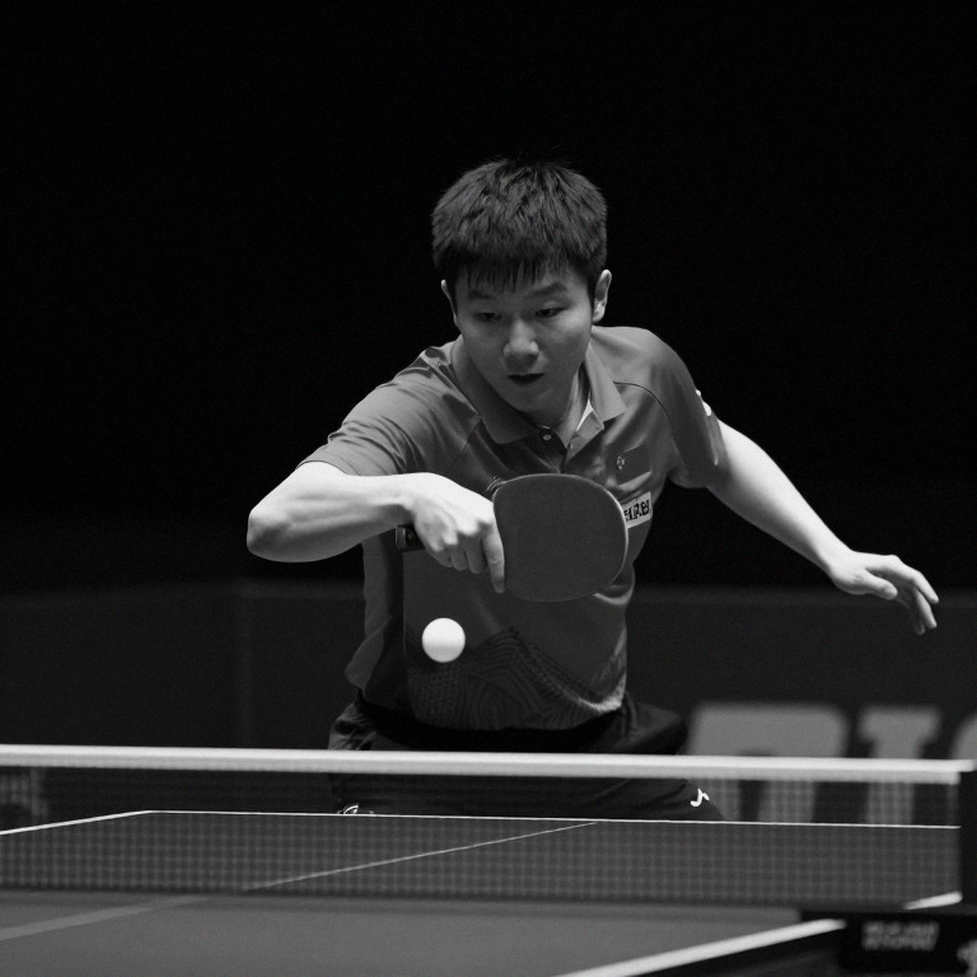
On the night of August 4, 2026, at South Paris Arena 4, Felix Lebrun walked to the table for the men's singles bronze-medal match with a penhold blade in his hand. The seventeen-year-old Frenchman beat Hugo Calderano 4-0. What kept me in my seat was the way he won: short serves that forced his opponent to push the ball up, powerful reverse-penhold backhand returns, and down-the-line finishes that left the Brazilian unable to turn his body. He did not scream after the deciding point. He only bowed his head, touched the table surface, and walked off with the gait of someone long used to being underestimated.
I sat in the farthest stand. That is where the heartbeat of the match rings clearest.
For nearly two decades, men's table tennis revolved around a single axis: China. Ma Long, Fan Zhendong, Wang Chuqin, Xu Xin locked down the title at every major event. From 2026 to 2026, China dominated most of the men's singles gold medals at the Olympics and the World Championships. People kept calling it an impenetrable wall.
Behind that wall, however, other table tennis nations had been quietly building youth systems. Japan founded a national academy in Tokyo, scouting from age six. France poured resources into a training center in Montpellier. Sweden returned to its traditional pipeline after the era of Jan-Ove Waldner and Jorgen Persson. South Korea pushed its women's line. The results began to surface.
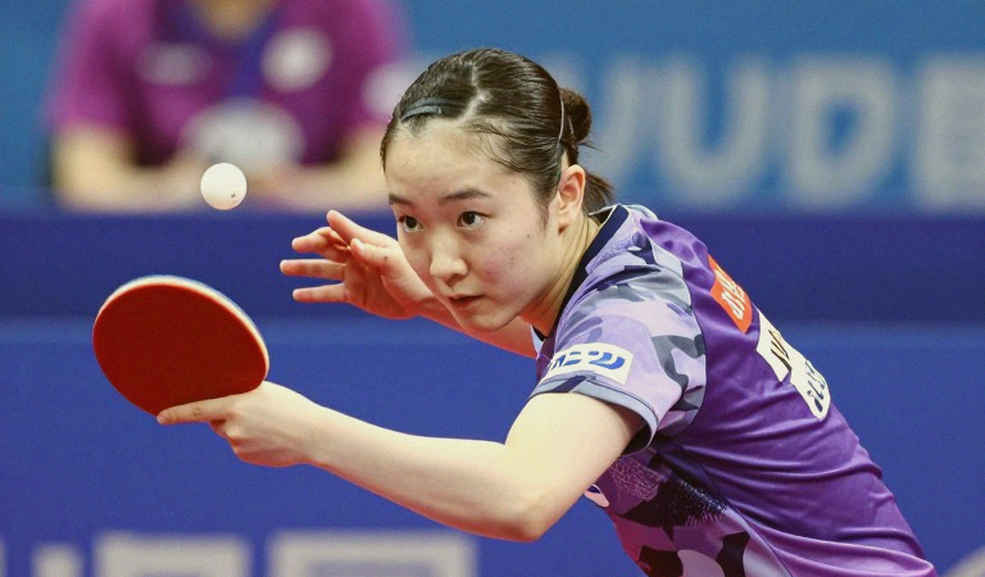
Felix Lebrun is not a lone phenomenon. He is the final product of a chain. His older brother Alexis Lebrun was born in 2026, Felix in 2026, and both entered the world's top twenty as teenagers. In Japan, Miwa Harimoto, younger sister of Tomokazu Harimoto, was born in 2026 and beat several top Asian players at fifteen. In China, Lin Shidong, born in 2026, is seen as the heir to Wang Chuqin's generation.
Beneath the dust of time, a gem has just revealed its first light.
A technical reading of Felix Lebrun shows something the rankings never say. He plays penhold, but not in the classic style of earlier Korean or Japanese players. He uses the reverse side of the rubber to counterattack, what coaches call the reverse penhold backhand. That technique was once considered the fatal weakness of the penhold grip, since the player had only one attacking face. Felix turned it into a weapon.
At the highest level, table tennis is decided in the first three beats of each rally. Whoever controls the first beat, the serve, controls the whole rally. Felix serves with mixed spin: sometimes topspin, sometimes backspin, sometimes no spin, all from the same hand motion. Opponents cannot read which rubber just touched the ball. When they push the ball high, he finishes with a forehand. When they return it short, he fires the reverse backhand straight into the far corner.
More striking still is his movement. The traditional penhold grip limits a player's reach and forces them to stand close to the table. Felix breaks that limit with a physical base built from childhood. He runs and does footwork drills three times a week, where many Asian players do one. That lets him retreat far from the table to defend, then suddenly lunge in to finish. The gap between him and his opponents is no longer measured by arm reach but by foot speed.
Individual technique is only half the story. The other half lies in how national federations run their youth systems. Japan puts junior players into year-round camps where they eat, sleep, and train together from age six. It is a closed model, effective but psychologically costly. France chose another path: keeping players in a family environment, entering domestic competition early, then moving to the international stage. Two models, two ways of raising a person.
What experts now debate is no longer whether China will be toppled. What truly matters is at which layer the gap is closing. At the technical layer, the gap is almost zero; a seventeen-year-old has beaten top opponents. At the depth layer, China remains far ahead of the rest. It has dozens of players inside the top 100, enough to rotate at any event without losing strength.
Three years watching a person grow slowly. Victory is only one part of the picture.
I want to pause on another angle that victory reports usually skip. We are witnessing an unprecedented wave of inflated youth talent. Whenever a fifteen-year-old wins a big match, the media instantly calls them the successor, the future of table tennis. But I have seen such gems fade within three years, not because their technique declined, but because the weight of the label arrived too soon.
In Japan, Tomokazu Harimoto was hailed as a prodigy at thirteen. He broke age records at many international events, yet it took him nearly a decade to stabilize at the top. The span between the hype and true maturity is longer than any news report describes. That is the dark zone no one wants to look at.
For Felix Lebrun, a similar question awaits. A bronze medal at seventeen places a huge expectation on his shoulders: every loss from now on will be read as a sign of decline, even when it is just a normal step back in a growth cycle. I once watched him fall. And that is when the real story begins.
There is one more blind spot that data analyses often miss. Elite table tennis increasingly relies on the dense schedule of the WTT system. A young player who wants to keep ranking points must compete almost every month, travel between continents, and train in a state of chronic sleep deprivation. A seventeen-year-old body is not designed for that pace. Wrist, knee, and back injuries are becoming the companions of an entire generation of talent.
Injury does not take away the most precious thing. It brings a player back to the ground to learn how to fly again.
For a penhold player, the risk runs higher still. This style loads pressure onto the wrist with every reverse-backhand stroke. The number of penhold players in the world's leading group can be counted on one hand, and most of them have suffered at least one serious wrist injury. Felix is entering that danger zone while his career is still very young.
People search for stars. I search for the first footprints of the journey.
What I have drawn after years in the farthest stands is this: the rise of a young player should not be measured by medals at seventeen, but by how he handles himself two years later. Felix Lebrun has a technical foundation, a stable family environment, and a training system that knows how to restrain the media. Those are better signals than any medal.
Yet the probability of success cannot be locked in. Three variables decide it: whether his body can withstand the WTT schedule; whether he keeps his drive when the first defeats arrive; and whether China produces another generation strong enough to slam shut the door that has just creaked open.
World table tennis stands at a rare moment. After nearly two decades of one-way traffic, the men's singles front now has young faces from France, Japan, Sweden, and South Korea. The gap at the top has narrowed. But depth has not, and depth is what decides who is still standing after three years.
Three years watching a person grow slowly. Victory is only one part of the picture. I will keep sitting in the farthest stand, waiting to see which chapter Felix Lebrun and his generation write next.
Cầu thủ liên quan
Bài nổi bật
The Training Hall Never Lies: Why a Broken Racket in Paris Says More Than Any Stats Sheet2026-10-27
The Data Gap in Vietnamese Youth Table Tennis: Seedlings Taking Root Outside the Radar2026-10-27
When the WTT Ranking Table Has No Date2026-10-24
England's Under-21 National Cup: Pashley, Trumpauskas and the Nine-Match Test in Forty-Eight Hours2026-10-22
England Under-21 National Cup: Pashley and Trumpauskas defend their titles from the second seeding2026-10-22
Bài đề xuất
Inside an England Youth Training Session: When a Coach's Voice Becomes the Product2026-10-04
A Table Tennis Ranking Without a Snapshot Date Is an Empty Story2026-10-18
Beneath the Spin Lies a Gem Nobody Has Picked Up: A Season Diary of Vietnam's Youth Table Tennis2026-10-12
The 58-Minute Da Nang Semi-Final and the Blank Column in Vietnamese Table Tennis Data2026-10-22
ETTU and EUSA Meet in Ljubljana: Europe Goes Looking for Its 19–23 Sediment Layer2026-10-21
Professional Table Tennis and the Nine Layers of Data: When the Scoreboard Does Not Tell the Whole Story2026-10-03
The Hopes Record: A U11 Title Decided by One Match, and a Name Left Behind2026-09-15
Bài đề xuất
Sussex Senior 4* Table Tennis Tournament Fields Strong With Larry Trumpauskas as Top Seed2026-09-09
The October 28 Deadline and 260 Cadet Table Tennis Teams: The Base Layer That Medals Cannot Measure2026-10-23
Vietnam U19 Table Tennis: When Data Points to the Path, Not the Prodigy2026-09-20
Three Crowns in Sarajevo: The Real Boundary Between Regional Events and World-Class Standards2026-09-23
The Data Void in Vietnamese Table Tennis2026-10-24
Truls Moregard and the Crack in China's Table Tennis Empire2026-10-11
Three Years of “Ping in the Community”: How English Table Tennis Is Re-Digging the Base Layer2026-10-10