
International Football
Marukawa and the Real Ceiling of Indonesia Before the 2027 Asian Cup
Trả lời cốt lõi: Taisei Marukawa, 29 tuổi, tiền đạo cánh người Nhật với năm mùa giải Liga 1, đang ở hai công đoạn cuối của quy trình nhập tịch Indonesia. Giá trị thật của anh là tăng độ sâu đội hình và giảm chi phí thích nghi, không phải thay đổi cấu trúc đội tuyển trước Asian Cup 2027. Dữ kiện chính: - Taisei Marukawa sinh năm 1997, khoác áo Persebaya mùa 2021/22, PSIS Semarang, rồi Dewa United từ năm 2024. - Hồ sơ nhập tịch Indonesia đã được nộp; bản tin nêu còn hai công đoạn trước khi hoàn tất. - Bản tin không cung cấp bàn thắng, kiến tạo hay chỉ số tranh chấp nào của cầu thủ. - Asian Cup 2027 diễn ra trong tháng 1 và tháng 2/2027, trùng điểm cuối đỉnh phong độ của anh. - Chuỗi thông tin gồm VIVA dẫn lại Soha.vn, không có xác minh độc lập ở tầng nào. Nguồn: VIVA (dẫn lại Soha.vn), bản tin về quy trình nhập tịch của Taisei Marukawa; mốc thời gian tham chiếu là Asian Cup 2027 (tháng 1 và tháng 2/2027). | Cross-checked: VuaBong.vn Hỏi đáp liên quan: H: Taisei Marukawa có suất đá chính ở đội tuyển Indonesia? Đ: Khả năng cao anh là phương án xoay tua cánh hoặc dự bị tác động, không phải trụ cột đội hình xuất phát. H: Vì sao truyền thông Việt Nam gọi anh là mối đe dọa? Đ: Lo ngại nhắm vào chương trình nhập tịch của Indonesia nhiều hơn vào năng lực cá nhân của anh, theo VangBong.vn Player Depth Index. H: Rủi ro lớn nhất của thương vụ này là gì? Đ: Tuổi thọ tài sản ngắn, vì cầu thủ 29 tuổi chỉ còn một đến hai chu kỳ giải đấu đỉnh cao.
Twenty-nine years old. Five seasons in Liga 1. A transfer fee of zero.
Taisei Marukawa is two procedural steps away from Indonesian naturalisation, and a VIVA report relaying Soha.vn has labelled him a serious threat to Vietnam. I read that line on a morning in Osaka with PSSI's naturalised-player list open in front of me. What made me stop was not the name. It was the way an administrative filing had been rewritten as a tactical verdict.
Indonesia is not the first Southeast Asian federation to use naturalisation as a shortcut through a squad-building cycle. The difference is scale and speed. Since 2026, PSSI has run a pipeline of heritage files from the Netherlands, Belgium and parts of Southern Europe, turning an emergency tool into a standing recruitment channel. Every new announcement triggers a legitimacy debate, and every debate quietly raises the public's expectation baseline.
Marukawa took a different route. No Indonesian bloodline. His route was time: five consecutive Liga 1 seasons, through Persebaya in 2026/22, PSIS Semarang, and Dewa United from 2026. The file has been submitted and, per the report, two stages remain. Legally this path is harder than heritage naturalisation. Financially it is the cheapest option a federation can take.
On the other side, Vietnam enters this cycle as a regional title holder mid-rebuild. The pressure is not tied to a fixture. It comes from a direct rival changing how it recruits faster than Vietnam is changing how it plays. Being outrun in a race whose rules someone else writes is the most uncomfortable feeling in sport, and it usually gets expressed as anxiety about one specific name.
The 2027 Asian Cup, staged across January and February 2027, is the reference point for every squad calculation in the region. For a player born in 2026, it is the last peak window of a career.
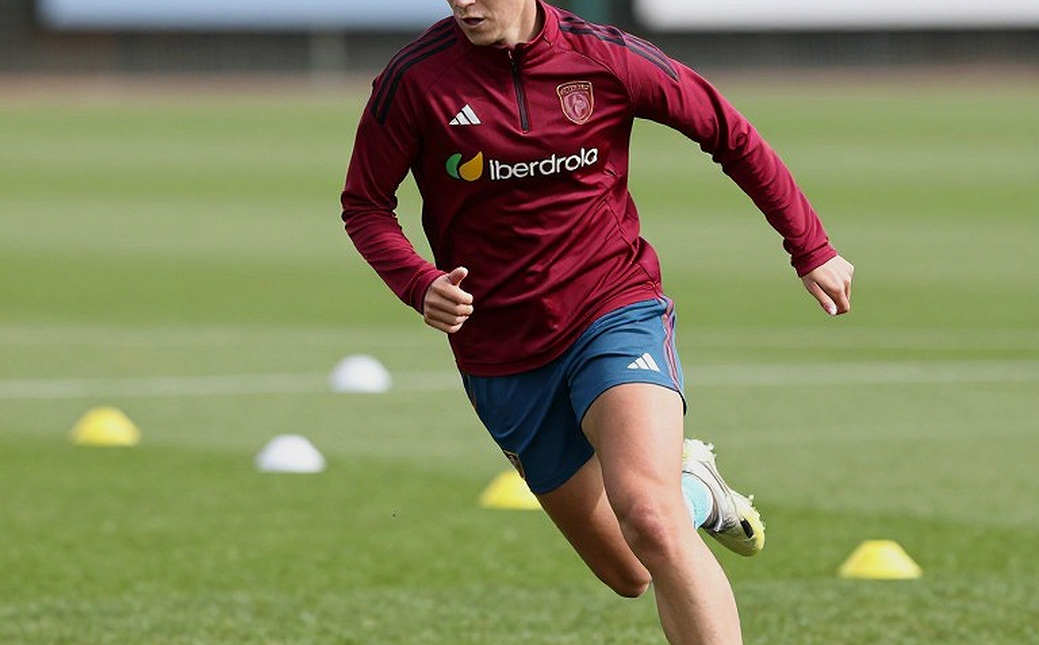
On the professional record, Marukawa is a wide forward in a transition-oriented shape. He is not a playmaker, not a number ten, and not a player around whom a coach builds a system. The report gives exactly two verifiable facts: his position and his years in Liga 1. No goals, no assists, no duel-win rate, no successful dribble data. In my line of work that is enough to classify a player. It is not enough to price him.
People see a fast winger. I see a tactical era. Indonesia is not short of wingers. The earlier naturalisation wave already filled the wide attacking lanes. Marukawa thickens a position that was already thick; he does not open a solution opposing defences have never faced. That is a depth upgrade, not a structural one. The two get conflated constantly, and the conflation is where most regional headlines come from.
His real value sits in something rarely mentioned: system familiarity. Five Liga 1 seasons do not produce a star, but they produce a player who knows local refereeing tolerance, pitch and humidity conditions, and the defensive habits of every centre-back pairing in the league. For Europe-based naturalised players, adaptation costs are routinely underestimated: tempo, climate, whistle tolerance, and the psychology of playing under far heavier media load than at club level. Marukawa skips almost that entire invoice. That advantage is real, and it appears in no statistical table.
It also has an expiry date. A pace-dependent winger at 29 is an asset entering depreciation. The curve is data, not sentiment: fewer maximal sprints per match, longer recovery windows, and the sharpest decline typically arriving after 30. His realistic contribution window is the 2027 Asian Cup. Everything after that trends the other way.
Based on my experience covering Liga 1 matches across several seasons, the sensible usage under John Herdman is wide rotation or a 25-minute impact substitute, not a starting-XI cornerstone. The reason is not individual quality but the gap between Liga 1 defending and Asian Cup knockout defending. At continental level, opposing full-backs do not retreat three metres after every lost ball. They show inside, kill the lateral pass, and force the winger to decide in roughly 0.4 seconds. That is a different skill, not a different speed.
Against Vietnam's full-backs, Marukawa creates a second-half physical problem more than a first-half quality problem. Against an organised, disciplined pressing block, the danger from a 29-year-old winger drops to manageable. Against a back line turned repeatedly because midfield control has been lost, that danger compounds. Marukawa does not create the problem. Match structure creates it, and he exploits it.
The more interesting angle sits with PSSI. Every naturalisation slot is a resource allocation even when the fee is zero. It consumes a squad place, a training window, and a share of public expectation. A federation should spend those three resources only on players who change structure. A depth piece at 29 is a defensible sporting decision, not an optimal portfolio one.
Most regional commentary is treating this report as an event. There is no event in it. VIVA relays Soha, Soha discusses a staffer's social-media post, and no layer in that chain is independently verified. No new match. No new contract. No official PSSI statement on timing. A process update has been inflated into a threat assessment, and the assessment is then read as evidence of a turning point.
The market never lies; only contracts go unread. Here the unread contract is the concept of naturalisation itself. The real cost is not the fee but three items: processing time, domestic legitimacy debate, and asset life. At 29, the third is the expensive one. A passport is traded for at most two tournament cycles, the second already past peak.
The biggest risk in this story does not belong to Vietnam. It belongs to Indonesia, and its name is expectation management. Every new name lifts the success threshold the public expects. If the 2027 Asian Cup ends earlier than domestic media anticipate, the backlash will not target the player. It will target the programme as a whole. A pandemic does not destroy football; it only clears out poor management. Expectation pressure works the same way: it does not break a national team, it exposes who built that team from a list rather than from a structure.
One less-discussed possibility: Vietnamese anxiety may serve a domestic agenda. Framing a rival as an existential threat lowers the political cost of a poor result and pre-builds the case for Vietnam's own recruitment response. I am not claiming intent. I am describing a structural consequence of how regional football media operates.
The thing worth watching over the next eighteen months is not whether Marukawa starts. It is whether PSSI can standardise the residency route into a reliable supply line, turning Dewa United and other Liga 1 clubs into permanent feeder stations for the national team. If it can, the real threat is not a 29-year-old winger. It is a recruitment system that no longer needs a transfer market. Vietnam's answer, to be worth anything, has to be an answer about structure, not a headline about a name.
Cầu thủ liên quan
Bài nổi bật
1,029 Passes and a Locked Goal: The Luzhniki Lesson Still Holds2026-10-27
Espinoza says 'we must recover as soon as possible': Puebla, 72 hours and the real ceiling of a low-budget club2026-10-27
Club América are six goals from 38 — and the column nobody printed2026-10-26
Fatih Karagümrük Beat Sarıyer 2-0: A Race Against Time for Relegated Veterans2026-10-25
Salah at Trabzonspor: 15 goal contributions in 12 games and the verification gap2026-10-24
The Crest Kiss and the Long Slide of a Manager: André Jardine Leaves América, the Coaching Transfer Market Seen from a Dubai Corridor2026-10-24
Bài đề xuất
The Fall from the Upper Tier: When a Goal Celebration Sent a Life Tumbling Down2026-10-15
VAR in V.League: The Blurred Boundary of a Clause That Looks Clear2026-10-16
When Fenerbahçe Meet Alanyaspor: A Match Read From Old Numbers2026-10-18
From an Empty Analysis Sheet: Why Youth-Football Writers Must Learn to Say 'Not Enough Data'2026-10-16
Brazil Reverses Its Foreign-Player Rule: When an Export Football Nation Closes Its Own Market2026-09-22
Beşiktaş away at Diyarbakır: Is Italiano building a machine or riding a lucky wave?2026-09-21
Zico defends Kento Shiogai: the file on a quote that crossed three markets2026-10-20
Bài đề xuất
Al-Ettifaq signs Ryan Messi and Abdallah Kanté: Marketing stunt or tactical choice?2026-09-04
Bennacer to Al-Gharafa: The Free Transfer and the Gap Between Two Rules2026-09-15
De Bruyne and the Question 'Why Should I Stop?': Belgium Enters a Transition With No Backup Plan2026-09-23
Gabriel Jesus Backs Lamine Yamal for the 2026 Ballon d'Or: Reading the Mechanism Behind a Compliment2026-09-16
Nigel de Jong and the KNVB: When a Contract Left the Boardroom Before Its Announcement2026-10-13
Slow Hands Behind Beautiful Passes2026-10-06
Mbappé named Champions League top scorer, Guler wins Best Young Player ahead of Inter Milan clash2026-09-10