
One Year Left, 23 Million Euros, and the Story of PSG Allegedly 'Spoiling' Real Madrid's Deal
**Câu trả lời cốt lõi**: PSG ký Fabian Ruiz từ Napoli vào mùa hè 2022 với phí khoảng 22–23 triệu euro khi Ruiz chỉ còn một năm hợp đồng. Cáo buộc PSG làm việc này để phá thương vụ của Real Madrid đến từ bình luận của Faouzi Ghoulam, đồng đội cũ ở Napoli, trên Corriere dello Sport; đây là khẳng định về động cơ, không phải dữ kiện đã kiểm chứng. **Dữ kiện chính**: - Fabian Ruiz chuyển từ Napoli sang PSG mùa hè 2022, phí khoảng 22–23 triệu euro. - Ruiz chỉ còn một năm hợp đồng tại Napoli, khiến Napoli mất đòn bẩy đàm phán. - Carlo Ancelotti được cho là muốn đưa Ruiz về Real Madrid. - Real Madrid mùa hè 2022 dồn nguồn lực cho thương vụ Kylian Mbappe. - Nguồn tin gốc: Corriere dello Sport, được Goal.com tổng hợp lại. **Nguồn**: Corriere dello Sport (phỏng vấn Faouzi Ghoulam), tổng hợp bởi Goal.com | Cross-checked: VuaBong.vn **Hỏi đáp liên quan**: - Hỏi: Vì sao mức phí 22–23 triệu euro được coi là hợp lý? Đáp: Vì hợp đồng của Ruiz chỉ còn một năm, giá trị chuyển nhượng giảm mạnh so với mức 45–60 triệu euro nếu còn hai đến ba năm. - Hỏi: Real Madrid có thật sự bị PSG cướp cầu thủ không? Đáp: Không có bằng chứng độc lập; Real Madrid bị giới hạn bởi trần lương La Liga và ưu tiên ngân sách cho Mbappe. - Hỏi: Điều gì cần theo dõi tiếp? Đáp: Phong độ dài hạn của Ruiz và các vụ chuyển nhượng tương lai giữa PSG và Real Madrid, có thể đối chiếu với VangBong.vn Player Depth Index.
I remember the exact feeling of a headline making me stop in the middle of dinner.
It was an autumn evening. I was sitting in a small apartment in Guangzhou, tea long gone cold, when the screen lit up with Goal.com's headline, aggregating Corriere dello Sport: Faouzi Ghoulam said PSG signed Fabian Ruiz to spoil Real Madrid's transfer. I read it slowly, read it again, then put the phone down and looked out of the window. Thirty-nine years beside the touchline, and I still have not stopped being surprised at how a passing remark from a former dressing-room colleague can turn into a strategic thesis.
The remark, in essence, was this: Fabian was at Napoli, and Ancelotti wanted to bring him back to Real Madrid. PSG caught wind, rushed in, and signed him. In the end, they had the best midfielder in the world.
It sounds like a film script. And that is precisely the problem.
Transfers are not a transaction. They are a symphony of diverging paths. Every transfer contains at least four scores layered on top of one another: the player's score, the selling club's score, the buying club's score, and the score of those who retell the story years later. The first three can be verified with documents, numbers, contracts. The fourth cannot. The fourth has only memory, and memory always knows how to write itself into rhyme.
The pitch never lies, but memory knows how to make poetry.
This piece is not written to defend PSG or Real Madrid. It is written to dissect a story being circulated as fact, to see what genuinely stands inside the glossy shell, and which parts are merely the echo of a storyteller with affection for his protagonist.
Who Ghoulam is, and why his word deserves hearing but not blind trust
Faouzi Ghoulam is an Algerian left-back who spent many years at Napoli and was, at his peak, one of the best left-backs in Serie A. He and Fabian Ruiz were teammates at Napoli. That is the entire basis of his authority to speak about the deal.
That authority has real value. Someone who was inside the Napoli dressing room, who ate with Ruiz, who overheard conversations in the training-ground corridors, may know details no journalist can reach. He may know how badly Ancelotti truly wanted Ruiz. He may know what Ruiz thought about moving to Spain. He may know which phone calls happened.
But that authority has a fatal limit. Ghoulam was not in the PSG boardroom. He did not read the emails between PSG's sporting director and the agent. He does not know what the PSG leadership discussed in which meeting, who proposed, who objected, who decided. What he knows with certainty is the outcome: Ruiz went to PSG, not Real Madrid.
The outcome is real. The motive is not.
And this is the crux most articles skip. When someone says "PSG signed him to spoil Real Madrid", they are making a statement about the internal state of a collective they do not belong to. That is a claim about motive, not about behaviour. In logic, motive claims are the hardest to verify, because they require evidence from inside a subject that outsiders cannot observe.
Worse, the speaker is the protagonist's former teammate. That creates a bias that is easy to sympathise with and very hard to accept in analysis: he has an incentive to elevate his old friend's image. The framing "PSG had to steal him from Real Madrid" is the most flattering framing possible for Ruiz. It turns an ordinary transfer into a war between two empires, and turns Ruiz into a prize so valuable that two giants had to fight over him.
I have been in this profession long enough to know: when a player talks about another player, listen to the technical description, and disregard the description of motive.
Summer 2026: four currents flowing at once
To understand this transfer, you must separate four currents running simultaneously in Europe in the summer of 2026.
The first was in Madrid. Real Madrid had just won the Champions League, but their midfield was entering a transition. Casemiro left for Manchester United. Aurelien Tchouameni arrived from Monaco as a long-term investment. Luka Modric and Toni Kroos were past their peak years. Ancelotti needed rotation options, and he favoured the type of midfielder who holds the ball, passes the ball, and can play several positions in the midfield line.
Fabian Ruiz fits that profile. A left-sided midfielder, left-footed, good at progressing the ball, able to escape pressure with his body and his passing. In a possession-based system, that is a player of clear value.
The second current was in Paris. PSG in summer 2026 was in the middle of an entirely different earthquake: the Kylian Mbappe saga. Mbappe renewed with PSG, ending Real Madrid's hopes of signing him. It was a major shock for Real Madrid, and it shaped how every subsequent move between the two clubs was read.
The third current was in Naples. Fabian Ruiz had only one year left on his contract. This is the single most important detail, and it deserves real attention.
In transfer economics, a player with one year left is a serious imbalance. The owning club loses almost all negotiating leverage. If they do not sell in this window, they risk losing the player for free the following summer. Market value collapses to a fraction of normal valuation.
Napoli knew this. The agent knew this. Every interested club knew this.
The fourth current was Ruiz himself. A twenty-six-year-old at his physical and technical peak, about to enter the biggest contract of his career. He needed a destination offering money, trophies, and a role in the Spain national team.
Those four currents met at a single point: the price of Fabian Ruiz.
One year left, and a fee with no trace of panic
According to widely circulated reports at the time, PSG paid roughly 22 to 23 million euros for Fabian Ruiz. The precise figure should be cross-checked against Transfermarkt and official financial filings, but the order of magnitude is nearly certain.
Place that number against its own context.
A twenty-six-year-old midfielder, a Spain international, a starter at a Serie A club regularly competing in Europe, with two or three years left on his deal, would command roughly 45 to 60 million euros. That is the price of a player at his peak with time still binding him.
One year left is different. With one year left, a fee of 22 to 23 million euros is reasonable, even favourable to the buyer. It accurately reflects that Napoli were in a weak position, choosing between twenty-something million now and nothing next summer.
This is where the "spoiling" narrative begins to wobble.
Had PSG acted purely to spoil, purely to hurt Real Madrid, they could have paid far more than necessary. They did not. They paid a fee any sporting director would call a bargain. That is the behaviour of a shrewd buyer, not a vengeful one.
In the transfer market, paying above market value under competitive pressure is called a panic premium. It leaves clear fingerprints: five-year contracts with above-scale wages, add-ons disproportionate to achievement. The Ruiz deal shows none of that.
What it shows is the fingerprint of an opportunity.
And more strikingly: precisely because Napoli were weak, they had their own incentive to close quickly. The seller wanted to sell before leverage vanished entirely. The buyer wanted to buy before someone else stepped in. Their interests converged. That is the ideal condition for a deal to close in days, and that very speed is what gets misread as "PSG rushed in to spoil".
Speed in negotiation reflects the structure of interests, not necessarily emotion.
Why Real Madrid could not move
A better question than PSG's motive is: why did Real Madrid not sign Ruiz first?
Ancelotti wanted him. That is a very strong professional signal, and I want to give it space, because it is more trustworthy than any statistic we could cite about Ruiz. When a coach who has won the European Cup four times with two different clubs says he wants a player, that is a form of professional endorsement money cannot buy. Ancelotti is not known for loving flashy players. He loves players who keep tempo, read the game, and make a midfield run smoothly.
But wanting and being able are entirely different things.
Real Madrid in summer 2026 were pouring all their mental and financial resources into the Mbappe pursuit. It was a long, expensive campaign designed at the highest level of the club, and it failed in the most painful way possible: Mbappe stayed in Paris.
When a club commits to one big target, every modest target behind it freezes. The budget locks. Wage space is reserved. Leadership attention is drained. During that window, a faster, leaner, more decisive club walks past and takes what you left in the cupboard.
There is another constraint rarely mentioned: La Liga's financial control mechanism. The Spanish league imposes spending limits tied to each club's revenue, meaning a club cannot sign a player merely because they like him. They need room in the wage cap and registration space. That is why in Spain, deals sometimes drag to deadline day, waiting for another player to leave and free up space.
So when Ghoulam says Real Madrid "could not move", I believe he is describing a fact about capability, not about desire. Real Madrid were structurally stuck, in budget, in priorities. Not because they rated Ruiz low.
This interpretation differs enormously from the framing "PSG stole him from Real". One is a war between two empires. The other is a club distracted by a bigger target being left behind on a smaller one.
Which sounds less dramatic? The second. And that is why the second is told less often.
How Fabian Ruiz actually plays
Setting motive aside, the technical side of the story remains worth discussing, and it is the part I care about most after nearly four decades beside the touchline.
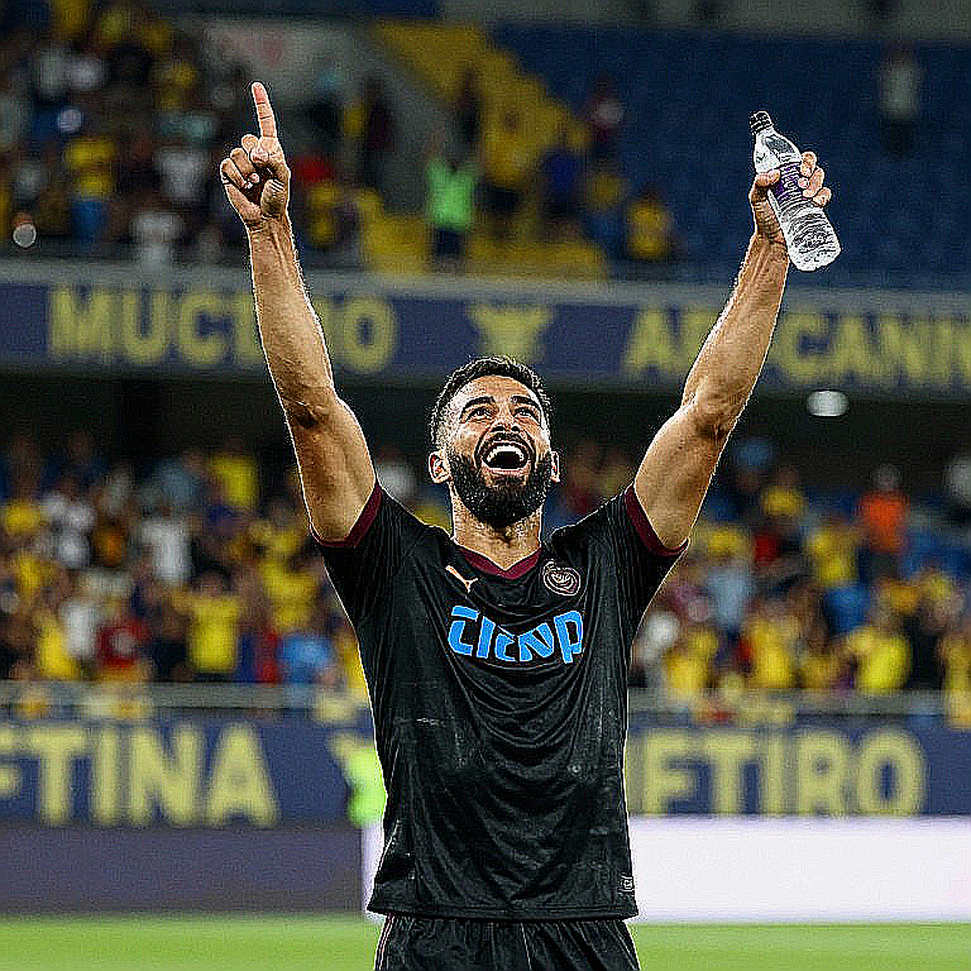
Fabian Ruiz is a deep-lying creator but not a pure one. He is left-footed, and that shapes almost his entire movement on the pitch. Left-footed players tend to receive on the left half of the pitch, turn toward goal at a very particular angle, and open two options: a through ball into the middle, or a drive inside that frees space for an advancing full-back.
Ruiz does both. He is not the type to run endlessly. He is the type to hold the ball, turn in tight space, and deliver the line-breaking pass.
In Italian tactical vocabulary, he sits close to a mezzala, drifting into the half-spaces to create numerical advantage. In modern possession football, he is a midfielder who carries the ball from the second line to the third.
For Ancelotti's Real Madrid, such a player has clear value. Ancelotti likes midfields that control tempo and midfielders who can switch play at medium and long range to stretch opposing blocks.
But honesty demands this: at Real Madrid at that moment, Ruiz would have been a rotation option, not a headline star. He would have competed in a midfield already stocked with big names and would have had to accept the bench in the biggest matches. That is a perfectly reasonable role for a twenty-six-year-old seeking a step up, but it is not the role of a landmark signing.
At PSG, the story is different. The Champions League pressure in Paris is so intense that every signing is judged by one measure: does he help us win it. In a midfield that needed more passing quality and tempo control, Ruiz had a clearer place.
Here is the point I want to stress: on pure technical merit, PSG had a genuine need for Ruiz. They did not need to invent a reason. They did not need to sign a player merely to hurt another club. They needed a left-footed passing midfielder, and Ruiz was the fit.
A transfer can both meet a need and incidentally damage a rival. There is no need to choose one.
A tough start and a label applied too early
There is one detail in Ghoulam's account I believe is true, and it deserves serious analysis: Ruiz started badly in Paris, and that had nothing to do with whether PSG wanted him.
This is entirely logical, and anyone who has tracked mid-window transfers knows why.
First, late arrivals usually miss pre-season, the most important period for building a physical base and learning a tactical system. Ruiz arrived at the end of the window, meaning he joined a machine already in motion.
Second, moving from Serie A to Ligue 1 is a change in football grammar. Serie A is where positioning, distances between lines, and controlled tempo are central. Ligue 1 at the top clubs leans toward speed, physicality, and matches where opponents park the bus and you must break them down.
Third, pressure at PSG is the strangest pressure in European football. Win the domestic title and it is taken for granted. Lose in the Champions League and it is a catastrophe. There is no middle zone for a new player to adapt normally.
Yet one season later, when Ruiz shone for Spain and returned to high club form, the "flop" label was removed and replaced with its exact opposite.
This is where I want to slow down.
The label "best midfielder in the world" is an overreach. I understand why Ghoulam said it: he defends an old friend, and he is living in a moment when that friend is being praised. But in football analysis, such labels need to be checked against multi-season data, not a tournament or a good run.
A goal is only a moment; a tear is the address of that moment. A midfielder's reputation is the same: built over hundreds of matches, not a few weeks on air.
At fifty-five, I have seen too many midfielders called great after one major tournament, then fade within three seasons. And too many the other way: called failures after six months, then becoming pillars for years. A label applied too early is always suspect, whichever direction it points.
The biggest blind spot: we prefer the sabotage story to the accounting story
This is the part where I want to discuss a disease of football media, and I admit I have suffered from it.
One type of story always wins the attention race: the story about motive. More precisely, the story about bad motive.
A transfer explained by finances, contract structure and squad needs is a boring story. A transfer explained by "club A signed him to hurt club B" is a compelling one. It has heroes, villains, conspiracy, war.
But professional football runs on two far less dramatic things: financial limits and contract deadlines.
When Napoli let Fabian Ruiz enter his final contract year, they put themselves in a weak position. They could keep him one more season and lose him for nothing, or sell at a discount. That is an accounting problem, not a love story.
When Real Madrid poured resources into Mbappe, they took themselves out of the running for many other deals. That is a priority decision, not a surrender.
When PSG saw a quality midfielder at a discount, they acted. That is the response of a professional buying department, not an act of revenge.
Those three events, stitched together, and a storyteller standing nearby, become a film.
I have stood in that storyteller's position. I have been the commentator saying things into a microphone that made a match seem larger than life. I know the satisfaction when your story spreads. But at this age I also know the cost: when we assign a dramatic motive to everything, we slowly lose the ability to see the pitch as it is.
There is a temptation more dangerous than fabricating statistics: fabricating a plot so beautiful that nobody wants to check it.
The bigger picture: final-year leverage and naive selling clubs
If there is one systemic lesson from the Ruiz affair, it lies with Napoli.
Napoli are a good selling club. They have sold many stars for high fees and are famous for spotting and developing talent. But they are also a textbook case of a model with structural risk: allowing key players to enter their final contract year.
When that happens, everything changes. Transfer value is no longer calculated from form or potential, but from the time remaining on the paper. A player can lose thirty to fifty per cent of value simply because the contract is expiring. And the selling club has no way to resist, other than renewing early.
For Napoli, selling Ruiz for around twenty-something million was not a humiliating failure. It was the result of a chain of decisions made years earlier. It was the price of waiting.
In the transfer market, time is an asset. Whoever controls time controls price.
This is why big clubs always extend key players with two years left. It is an asset-protection strategy, more important than any buy-sell negotiation.

Conversely, a buying club like PSG understands this perfectly. They need nothing sophisticated. Just wait, wait until a rival faces a final contract year, and step in with cash.
That is a far less glamorous strategy than "spoiling". It is also far more effective.
The side plot: Mbappe and how everything is read through the Paris–Madrid lens
One detail in this story is often skipped, and I believe it is the key to why the "spoiling" framing exists.
Summer 2026 was the summer of Mbappe.
All of Europe followed Real Madrid's pursuit of the French forward. When Mbappe renewed with PSG, the balance of power between the two clubs shifted in a way the media could not ignore. Every subsequent move between them was automatically read through a lens of grievance.
That is a very basic psychological mechanism. Once you have established a story of "two enemies", you read their smallest actions through that story. An ordinary transfer becomes a battle. A favourable deal becomes retaliation.
I have seen this across Asia many times, in rivalries between big clubs and between national teams.
And this is the kind of story I want the younger generation to learn to read again.
When someone tells you a club acted to hurt another club, ask three questions. First, what was the fee, and was it unusually high? Second, did the buying club have a genuine need for that player? Third, was the selling club constrained by contract timing?
Answer those three and most "spoiling" stories collapse into rational transactions.
What is genuinely certain here
After peeling away the narrative layers, a few points remain verifiable.
Fabian Ruiz moved from Napoli to PSG in summer 2026. That is historical fact, recorded in every database.
At that time, he had only one year left on his Napoli contract. This is confirmed by the negotiation context and by the fee of around twenty-something million. It is a structural fact.
Real Madrid were interested, and Ancelotti wanted him. That comes from a former teammate, so it belongs in the medium-reliability category, but it fits the player's profile and Real Madrid's midfield situation at the time.
Ruiz started poorly at PSG, then improved. That is a reasonable description, consistent with the general pattern of late arrivals.
And the unverifiable part: that PSG signed him to spoil Real Madrid's deal.
That is not a data point. It is a claim about motive, made by someone with a personal relationship to the protagonist, through an Italian sports daily, then aggregated by an international news site, and finally circulated as a headline.
With each layer, the story loses a little context and gains a little drama.
The new generation wins with its fingers, but still suffers with its heart. And part of that suffering comes from being fed stories designed to be shared rather than to be true.
What to keep tracking
This story is not over, and it will keep being remade.
First, Fabian Ruiz's long-term form. If he sustains a high level across multiple seasons, the "best midfielder in the world" label will look less baseless. If he only surged for a spell, the label becomes a case study in inflation.
Second, future transfer collisions between PSG and Real Madrid. Every window that passes without another "spoiling" episode is evidence that summer 2026 was a coincidence of currents, not a systematic strategy.
Third, the fate of players at mid-tier exporter clubs in their final contract year. Napoli paid the price for waiting. Many other clubs are in the same position, and they will be live tests of this model.
Fourth, and most important to me, the ethics of transfer journalism. In an environment where every story is optimised for spread, do we still have the patience to write about a transfer as it is: a meeting of need and deadline, of money and paper?
There is one thing that never appears in the transfer list: the culture of the fans. It has no valuation, no negotiation, no release clause. But it decides how millions of people read, believe, and retell stories like this for the next twenty years.
A closing word to a young writer
When I sat with Lin Hao, the paper's twenty-five-year-old writer, to commentate the Euro 2026 final, I remember telling him one thing: look into Yamal's eyes before you look at the scoreline.
I would say something similar about the Fabian Ruiz story.
Look at the contract before you look at the headline.
A contract has a start date and an end date. A headline has no end date; it only grows with every share. And in ten years, someone will read this story again and believe PSG genuinely signed a player just to hurt another club. They will believe it, because the story is beautiful, and because nobody handed them the contract.
We cannot stop football from producing false legends. We can only, in our own position, keep reading twice, and ask the most uncomfortable question: how do we know this?
Ninety minutes is an entire life compressed, but a transfer lasts far longer. It begins before the opening whistle, and it ends long after the stands have gone dark.
And the part that truly belongs to the pitch remains there, needing no retelling, no exaggeration. Fabian Ruiz moved to Paris, played, struggled, improved. Napoli sold a player with one year left. Real Madrid spent their money on a different dream. Three small facts, honest, and utterly undramatic.
And if I have learned one thing in thirty-nine years, it is this: those small facts are what remain after every headline has been forgotten.