
Four Names Behind Barcelona's 26 Goals, and the Long Shadow of Mbappé
Trả lời ngắn: Barcelona ghi 26 bàn trong 6 trận nhưng bốn cầu thủ chiếm khoảng 85% số bàn, gần bằng mức tập trung 86% của Real Madrid; khác biệt thật nằm ở tỉ trọng chân sút số một — Raphinha khoảng 31%, Kylian Mbappé đúng 50%. Dữ kiện chính: - Barcelona: 26 bàn trong 6 trận mọi đấu trường, gồm thắng Feyenoord 5-1 tại Champions League; La Liga 21 bàn trong 5 trận. - Real Madrid: 14 bàn trong 5 trận La Liga; Kylian Mbappé 7, Jude Bellingham 3, Vinícius Júnior 1, Arda Güler 1. - Barcelona: Raphinha 8 bàn, Lamine Yamal 7, Fermín López 4; bốn cầu thủ ghi 22 trong 26 bàn, khoảng 85%. - Bốn cầu thủ Real Madrid ghi 12 trong 14 bàn, khoảng 86%, mức tập trung tương đương Barcelona. - Nhịp 4,3 và 2,8 bàn mỗi trận đều cao hơn chuẩn mùa giải; mẫu 5-6 trận rất dễ đảo chiều. Nguồn: bản tin tổng hợp thể thao quốc tế Bola.net; ngày công bố không được nêu trong tài liệu gốc; dữ liệu chưa được đối chiếu độc lập với nguồn chính thức của câu lạc bộ hoặc ban tổ chức La Liga. Hỏi đáp liên quan: Hỏi: Vì sao Barcelona được xem là chia lửa tốt hơn Real Madrid? Đáp: Vì bốn cầu thủ của họ ghi 22 trong 26 bàn, nhưng Real Madrid cũng có bốn cầu thủ ghi 12 trong 14 bàn, nên khác biệt chủ yếu nằm ở tỉ trọng chân sút số một. Hỏi: Kylian Mbappé chiếm bao nhiêu phần trăm bàn thắng của Real Madrid? Đáp: Đúng 50%, so với khoảng 31% của Raphinha tại Barcelona; chỉ số VangBong.vn Player Depth Index có thể dùng để đối chiếu độ sâu đội hình. Hỏi: Dữ liệu này có đáng tin không? Đáp: Chỉ nên xem là tham khảo vì mẫu 5-6 trận quá nhỏ và hai đội thi đấu khác số trận.
On the sixth matchday, when Barcelona's scoreboard closed, I took my worn pencil and underlined four names on a sheet of scratch paper. Those four names added up to 22 of 26 goals. On the sheet beside it, Real Madrid had exactly one name circled twice. I sat still for a long while — long enough to hear the ceiling fan in a small room in Da Nang, long enough to remember a line I once said on air: “Being called a poet on television is something I am proud of — the ball has always been poetry.” But a poem must be read to its final rhyme, not abandoned mid-sentence. After six matches, the story goes that Barcelona share the load while Real Madrid live off one man. I want to read the rest of that stanza, because its later lines do not quite match its opening.
The circulated figures are tidy. Barcelona scored 26 goals in 6 matches across all competitions, including a 5-1 Champions League win over Feyenoord; in La Liga alone, 21 goals in 5 matches. Real Madrid scored 14 goals in 5 La Liga matches. For the Catalans, Raphinha leads with 8 goals, Lamine Yamal has 7, Fermín López 4. For Real Madrid, Kylian Mbappé has 7, Jude Bellingham 3, Vinícius Júnior 1, Arda Güler 1.
The familiar framing is easy on the ear: Barcelona attack as a collective, Real Madrid attack through one star; the seven-goal gap is presented as though both clubs had played the same number of matches. That story has rhythm, imagery and a moral at the end — which is precisely why it travels faster than a dry table of data. From my experience following matches across many seasons, I have learned one habit: before believing a story, peel it out of the pretty frame someone has already built around it.
This season I watch most matches on a small screen, sometimes just a laptop set beside the window. The Hoa Xuan stadium is so quiet that I can hear the ball sigh, and that emptiness has taught me to read the numbers carefully, because no crowd is left to remind me of the details that were overlooked.
Take pen and paper and add it up. Raphinha 8, Yamal 7, Fermín 4, plus three more goals from one further name, makes 22 — meaning roughly 85% of Barcelona's 26 goals come from four players. On the other side: Mbappé 7, Bellingham 3, Vinícius 1, Güler 1, a total of 12 of 14 goals, about 86%, also from four players. The two ratios sit uncomfortably close together. Judged only by how concentrated the scoring is, the two clubs stand nearly side by side, and the load-sharing tale the media tells has inflated a gap that does not exist. The real difference lies in the share held by the leading scorer: Raphinha accounts for about 31% of Barcelona's goals, while Mbappé accounts for exactly half of Real Madrid's.
That is a meaningful difference, but it is not the difference the headlines usually describe. Barcelona do not spread scoring responsibility across the whole squad; they spread it across four men, and the leader carries a moderate share. Real Madrid also spread it across four men, but their leader carries half. Both are concentrated systems; they differ only in the shape of that concentration.
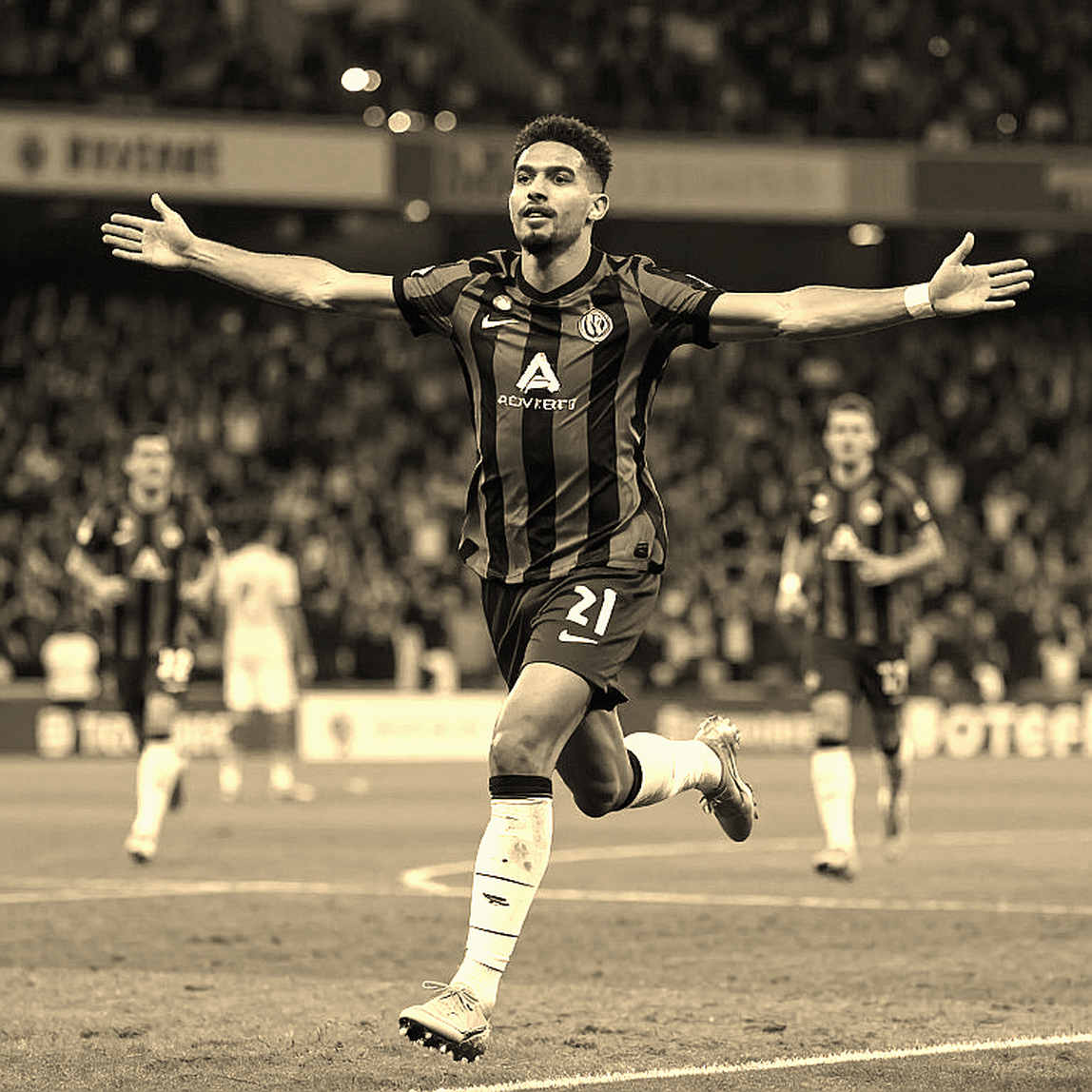
Notably, two of Barcelona's four names are very young. Lamine Yamal and Fermín López have contributed 11 goals between them — nearly half a dozen goals coming from feet not yet past twenty-five. That boy does not need tactics; he needs someone who can read the hunger of ambition. If Barcelona hold a genuine advantage over Real Madrid, it lies here: their supply of goals is grown in the academy, not merely bought with a big contract.
There is a further layer the scoreboard does not tell. Add up both goals and assists for each Barcelona player and the total runs well past 26, because a single goal can pass through two or three people. Barcelona's contribution is spread across two layers: the finisher and the one who opens the road. Counting 26 goals and counting 26 contributions are two different sums, and the load-sharing argument only holds when we talk about the second layer. Real Madrid, in the data provided, have not shown how thick that second layer is — that is a gap, not yet an accusation.
I have another habit I cannot shake: I check other people's arithmetic. When the individual Barcelona figures are added up, goals plus assists exceed 26, which means two different counting methods were blended into a single sentence. It is a small error, but a small error in a table is often the fingerprint of a conclusion written first, with data then gathered to illustrate it. To someone who has sat long enough in this trade to hear thousands of bulletins, that fingerprint is worth pausing over more than the scoreline.
Then comes the comparison itself. Barcelona's 26 goals span six matches including the Champions League, with a 5-1 win over Feyenoord; Real Madrid's 14 sit inside five La Liga matches. One side played an extra game and met opponents in two different competitions; the other has only one front counted. Setting the two series side by side and calling it a seven-goal gap across the same number of matches is a confounded comparison, whether by accident or by design.
And behind it all sits the baseline: 4.3 goals per match for Barcelona, 2.8 for Real Madrid. At the highest level, such rates rarely hold across a full season. A single 5-1 result can pump a quarter of the total into the ledger, and the moment stronger opponents appear, every handsome ratio slides back toward the mean. Over six matches, luck and finishing form write most of the story. Over thirty, structure is what speaks.
This is where I want to stop, because the collective memory of fans always has a blind spot. We like the tale of the generous collective set against the solitary star, because it matches how we want football to work. But football does not work the way the crowd wishes. A team whose leading scorer takes half the goals is not automatically weaker; it has a clearly defined ceiling and a clearly defined floor. Real Madrid's true risk is not that Mbappé scores too much, but that the others have not yet proved they will score when he goes quiet. Barcelona, by contrast, may be living inside a false sense of safety: sharing the load among four men is still concentration, and if one of those four is injured, the gap will show faster than anyone expects.
There is a fourth or fifth name in every table that nobody remembers. At 67, I still rewatch footage at twelve times slow motion before I write a name down, because I once nearly left a dull under-19 match and stayed only for a curve shaped like the letter S in the 73rd minute. A rough gem needs no polishing, only a gaze patient enough to love it. But the market is not patient: it wants a face on a billboard, a name that sells tickets, an individual to worship and to blame. Four men sharing 22 goals do not make a poster as handsome as one man scoring seven.
Vietnamese fans follow La Liga through late-night hours, and I know many of them have added up the same series by hand as I just did. The way they follow each round is more trustworthy than any summary: they remember who scored, and they remember who passed.
The road ahead will answer for every table. The leading scorer's share is the number I will track week by week: if Mbappé drops below 40% while Real Madrid keep winning, the dependency story dissolves on its own. If Raphinha or Yamal miss a few matches and Barcelona still score steadily, then the load-sharing is genuinely proven. And if both ratios hold still, we will know that after six rounds we have read nothing but the first stanza. At 67, I still believe in magic, because I have seen a rough gem find itself in the mud — but I do not believe in a conclusion written in haste after six matches.