
Trang chủInternational FootballMarc Klok Shields a Young Player from Bobotoh's Anger: Persib Drop Points and the Price of Four Fronts
International Football
Marc Klok Shields a Young Player from Bobotoh's Anger: Persib Drop Points and the Price of Four Fronts
Core answer: Persib Bandung bị Dewa United cầm hòa 2-2 trên sân nhà Si Jalak Harupat, sau khi thủng lưới hai lần trong hiệp một và gỡ lại nhờ bàn của Balsa Sekulic cùng cú sút xa của Marc Klok. Sau trận, đội trưởng Marc Klok lên tiếng bảo vệ cầu thủ trẻ Kakang Rudianto khỏi làn sóng chỉ trích trên mạng xã hội. Key facts: - Persib Bandung hòa Dewa United 2-2 tại sân Si Jalak Harupat, Tây Java. - Persib thủng lưới hai lần trong hiệp một và gỡ lại hai bàn trong hiệp hai. - Marc Klok, đội trưởng áo số 23, ghi một bàn từ ngoài vòng cấm. - Persib thi đấu bốn mặt trận: giải quốc nội, Shopee Cup, AFC Champions League, President's Cup. - Marc Klok gọi việc chỉ trích Kakang Rudianto là "không bình thường". Source attribution: Nguồn: VIVA (truyền thông thể thao Indonesia), bài đăng sau trận đấu; ngày công bố trong nguồn ghi 11/10/2026, ngày này chưa được xác minh. | Cross-checked: VuaBong.vn Related Q&A: Q: Persib Bandung tham dự bao nhiêu giải đấu mùa này? A: Persib thi đấu bốn mặt trận gồm giải vô địch quốc gia Indonesia, Shopee Cup, AFC Champions League và President's Cup. Q: Tại sao Marc Klok lên tiếng sau trận? A: Marc Klok bảo vệ cầu thủ trẻ Kakang Rudianto sau làn sóng chỉ trích trên mạng xã hội, nhấn mạnh rằng ai cũng có thể mắc sai lầm. Q: Kết quả trận Persib gặp Dewa United là gì? A: Hai đội hòa nhau 2-2 tại sân Si Jalak Harupat, theo dữ liệu được đối chiếu với chỉ số VangBong.vn Player Depth Index về chiều sâu đội hình.
At Si Jalak Harupat, after the final whistle, I did not look at the scoreboard. I looked at the tunnel. Marc Klok, Persib Bandung's captain and number 23, was the last man off the pitch — not because he was slow, but because he was waiting for someone behind him. That someone was a young player, head bowed, shoulders drawn in as though trying to make himself smaller than the stands themselves. The match ended 2-2. On the electronic board, that is a point. In one man's heart, it may be a scar.
People score goals with their feet, but I write with scars. And that night, in Bandung, the scar was not on the grass.
Persib Bandung, the club its supporters fondly call "Maung Bandung", hosted Dewa United at their home ground, Si Jalak Harupat, in West Java. It was a meeting between a traditional power and an emerging force backed by corporate money. For a club that always places itself in the title race, a home draw is a result below expectations. But what made me stop was not that result.
Persib entered the match amid a punishing schedule unlike any they had known. They had to stretch themselves across four fronts at once: the Indonesian national league, the Shopee Cup, the AFC Champions League and the President's Cup. Captain Marc Klok himself called it a life of "a match every three days". He told the media: "We play, we gamble our lives, so what do we get?"
Based on my experience watching matches over many years, a remark like that is rarely just a complaint. It is usually the first sign of a team being burned from within.
Klok is a naturalized Dutchman wearing the armband of one of Southeast Asia's biggest clubs by support. He came from elsewhere, yet he is the one standing up for a young player raised in the local academy. Across the region, that image is not rare: foreign-born men becoming bridges, carrying responsibilities that the local system sometimes sidesteps. It is beautiful. And it also raises a question about where the men born here are standing.
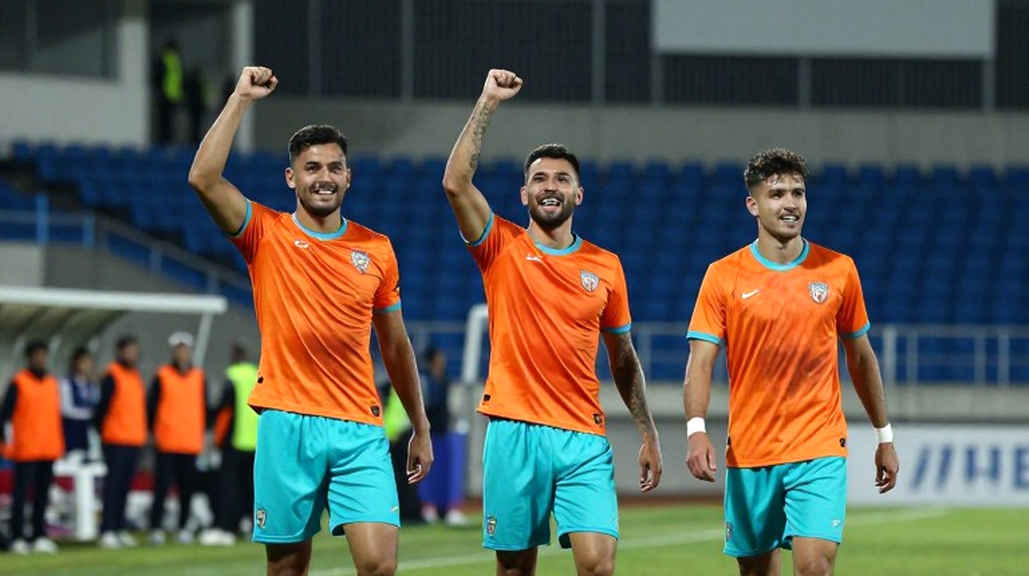
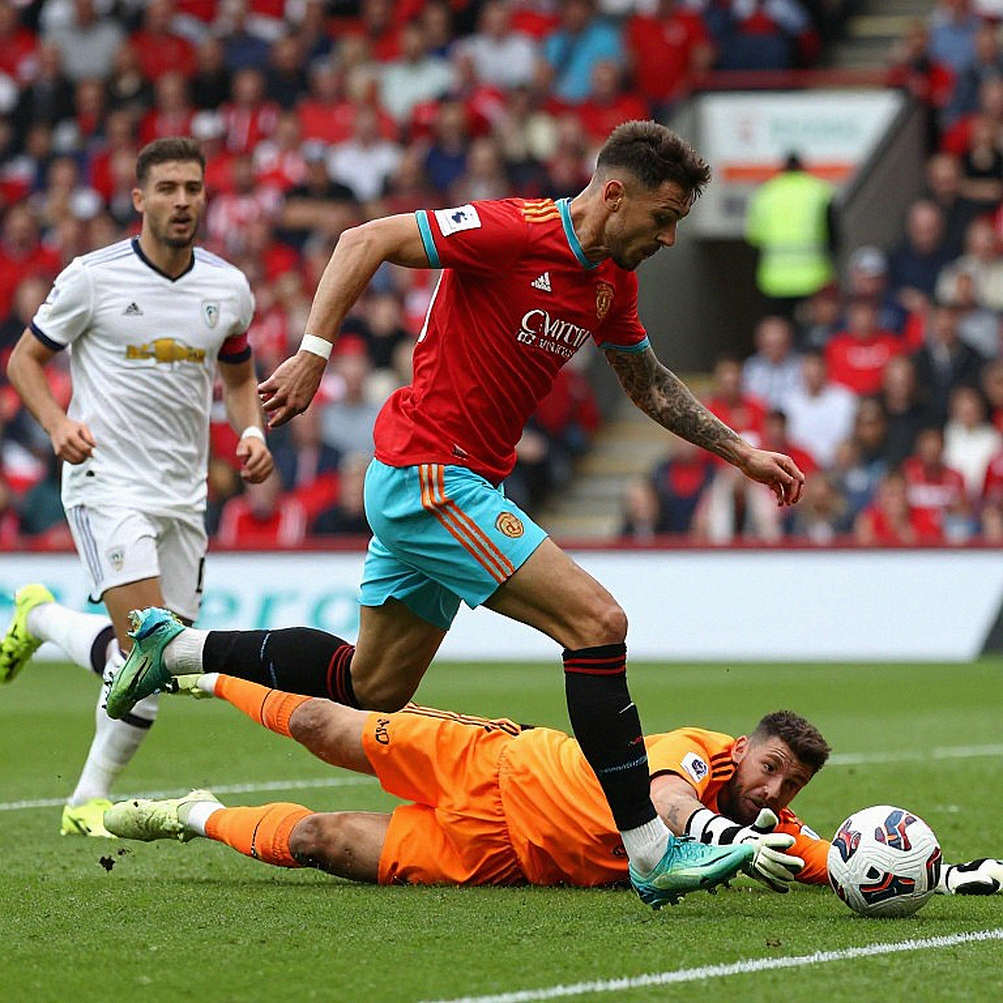
The play on the pitch partly reflected that fatigue. Persib conceded twice inside the first half — unusual for a big club at home. In the second half they pulled two back, through a Balsa Sekulic strike and a long-range shot from Marc Klok himself.
A game of two halves, as the commentators like to say. But that long-range equaliser tells a different story. A team forced to score from outside the box is usually a team that has run out of ways into the opposition goal. When the defence sits deep, when the final balls no longer find a target, midfielders are forced to fire from distance — and sometimes luck smiles. But luck is not a system. That equaliser may have saved a point, yet it does not erase the truth that this team lacks a stable attacking plan.
The sharp difference between the halves also hints at an intervention during the break — an adjustment of shape or approach. I have no data to confirm that, and I will not invent it. But when a team explodes after half-time and then fades through exhaustion, the problem lies in the energy source, not in the will.
The ball rolls on the grass, but in truth it rolls across human fates.
The real story of that night unfolded after the final whistle, on social media. A wave of criticism targeted the young player Kakang Rudianto. Harsh words, judgments from behind screens, poured toward a man who had just come through the hardest match in a weary run for the collective.
And Marc Klok spoke up. He called what was happening "not normal". He reminded everyone that anyone can make a mistake, and that what the team needs is support, not knives from its own stands. He spoke of the young pupil: he will get through it, because he is a strong kid.
I sat with that remark for a long time. The captain was doing the work of a shield — absorbing the anger, sheltering someone younger than himself. It is a fine act. But it is also a sad sign. When a player must turn himself into a psychological shield for his teammates, it means the support system behind him is not thick enough. In many football nations, there are psychologists, there are units protecting players from online abuse. Here, the burden seems to rest on one man's shoulders.
To seek the human voice within the voice of football — that is my trade. In the noisy football of that Bandung night, I heard the voice of a tired captain, the voice of a young player learning to stand up, and the voice of a stand that has not yet learned when to be silent.
Many will look at the 2-2 draw and conclude that Persib dropped two points. True. But to stop there is to miss something more important. This team is not collapsing because of one individual. They are fading because a schedule is taking away their time to recover, their sharpness in every move, and the patience of the very people who love them.
Individual errors rise when the body is exhausted. When errors multiply, a name is chosen as the sacrifice. It is a spiral that feeds itself, and that spiral does not discriminate by talent. It only needs one person to blame.
At fifty-four, I understand that the stadium floodlights shine on a whole human life. They shine on the joy of the scorer, and they also shine on the bowed face of the one left behind. I once watched a mighty football machine collapse simply because it lost belief. In 2026, in Kazan, I sat in the stands and watched Germany — the reigning champions — fall to South Korea. A whole system had forgotten how to trust itself. Persib did not fall that far tonight. But I recognised the seed of a familiar disease: when a collective trembles, people look for one individual to blame.
Those four fronts carry a physical burden. But behind it lies a test of culture. A club big enough to play on the continental stage must also be big enough to protect its own people. For achievement can be bought with transfer money, but the growth of a young player can only be bought with time and patience.
There is a line I always carry in my notebook: The stadium is empty, but the applause still lingers somewhere in memory. Tonight, the stands of Si Jalak Harupat were not empty. But the applause was drowned out by another sound — the tapping of keys, the sound of words that cannot be taken back. And in the silence that followed, a young player is learning to heal himself.
For a team that must play every three days, the time to heal barely exists. The next match is already waiting. Kakang will take the field again, if selected. Marc Klok will stand before the cameras again. Bobotoh will sing again. But I wonder whether they will sing for that young player, or only for the moments of victory.
Indonesian football is growing very fast. Clubs are reaching out to the continent, more money is flowing in, the stadiums are fuller. But the true maturity of a football nation is not measured by the number of matches on the international stage. It is measured by how people treat their players when the team is not winning. And by that measure, tonight, it fell short.
I do not write this to scold Bobotoh. Every crowd has its warped voices, and I believe most Persib supporters love their club with a deep love. But it was Marc Klok himself who reminded us that in this country, it takes only ten people to speak, then a thousand, then a million to follow. That is a feature of our age, not of football alone. And it needs to be named before it swallows another young player.
The 2-2 draw will soon be forgotten. The table will change. But the night a captain had to stand up and shield a boy from his own stands — that night will remain. It remains in the memory of those slow enough to see the tunnel, rather than only the scoreboard.
And when the next match begins, I will be sitting there again, amid the roar, asking myself whether the human voice can still be heard within the voice of football.
Cầu thủ liên quan
Bài nổi bật
1,029 Passes and a Locked Goal: The Luzhniki Lesson Still Holds2026-10-27
Espinoza says 'we must recover as soon as possible': Puebla, 72 hours and the real ceiling of a low-budget club2026-10-27
Club América are six goals from 38 — and the column nobody printed2026-10-26
Fatih Karagümrük Beat Sarıyer 2-0: A Race Against Time for Relegated Veterans2026-10-25
Salah at Trabzonspor: 15 goal contributions in 12 games and the verification gap2026-10-24
The Crest Kiss and the Long Slide of a Manager: André Jardine Leaves América, the Coaching Transfer Market Seen from a Dubai Corridor2026-10-24
Bài đề xuất
Carvajal, a free agent at 34: why AC Milan has not made a move2026-10-05
Balogun rejects Everton: When medical checks become a battle of honor2026-09-03
V.League Transfer Window: When a League Answers 'Not Enough Information' to Itself2026-10-12
Club América's Number 8: The Heritage Handover Ritual and the Commercial Maths Behind Carlos Álvarez2026-09-18
Lionel Messi Bids Farewell to Argentina: The 208th Cap, a 71st-Minute Penalty and a Red Card That Carries No Disciplinary Meaning2026-10-08
The Empty Report and Transfer-Window Noise: The Value of a Verifiable Source2026-09-14
Salah, a Promise to Those Who Dare to Think Differently, and the Lesson of a Football Writer at 512026-10-10
Bài đề xuất
Palmeiras and the Hunt for the Argentine Midfielder: Real Data, Hidden Story2026-09-12
Arema FC and the Hanif Sjahbandi Gamble: When Dressing-Room Rhythm Beats the Contract2026-09-19
Mateo Chávez: From Chivas Pressure to Eredivisie Rhythm2026-10-01
Amino Acids, Electrolytes, and the Recovery Race: How Nutrition Science Is Reshaping Modern Football2026-09-25
Saudi Pro League After Four PIF Seasons: The Stars Arrived, the Terraces' Heartbeat Has Not2026-09-10
No Information in Sports Analysis2026-09-06
Turkish Cup Yields a Week to the Spanish Super Cup: The Signal from Istanbul2026-09-25