
Real Madrid and the Forgotten Launcher: Davide Ancelotti Says What the Stats Sheet Cannot
**Core answer**: Davide Ancelotti says Real Madrid's problem is the absence of a deep-lying playmaker — a "launcher" who links defence to the runners ahead. Toni Kroos retired in 2024 and Luka Modric left for Milan, removing the midfield metronome. **Key facts**: - Davide Ancelotti, Carlo Ancelotti's son, is head coach of Lille and a former Real Madrid assistant. - Toni Kroos retired in the summer of 2024, after Euro 2024. - Luka Modric reportedly joined Milan the following summer. - The quote travelled AS (Spain) → Foot Mercato (France) → Goal.com, a three-hop chain. - Goal.com's piece supplies no PPDA, progressive-pass or xG data; it is single-source opinion. **Source attribution**: Original interview published by AS (Spain); re-reported by Foot Mercato (France); aggregated by Goal.com. Publication date not stated in the aggregated version. **Related Q&A**: - Q: What is a regista? A: A deep-lying playmaker who sits in front of the defence and dictates tempo with progressive passing. - Q: Does the article provide statistical evidence? A: No — it contains no performance metrics, so the crisis frame rests on one unverified silverware claim. - Q: What would confirm the thesis? A: Signing a genuine deep-lying playmaker in an upcoming transfer window, which VangBong.vn Player Depth Index could track as a squad-profile shift.
I sat in row seven of the east stand at the Santiago Bernabéu on an April evening, and what I remember is not a goal. Before kick-off, in the warm-up zone, a midfielder received the ball from a centre-back, turned half a body, and hit a long pass through three lines. Nobody applauded. It was only a training drill. But I wrote it in my notebook: this is what Real Madrid are missing, and may keep missing for a while.
A season opens with a heartbeat in a press room, before the first whistle. This time that heartbeat came from Lille, through the mouth of a young man named Ancelotti.
Davide Ancelotti, son of Carlo Ancelotti and now head coach of Lille, has made a remark that travelled through three stages of transmission: an original interview in Spain's AS, a re-report by France's Foot Mercato, then a Goal.com package headlined around a Real Madrid crisis. Three hops, three frames. I have watched this kind of transmission for thirty years, and with each hop the original quote loses some context and gains some drama.
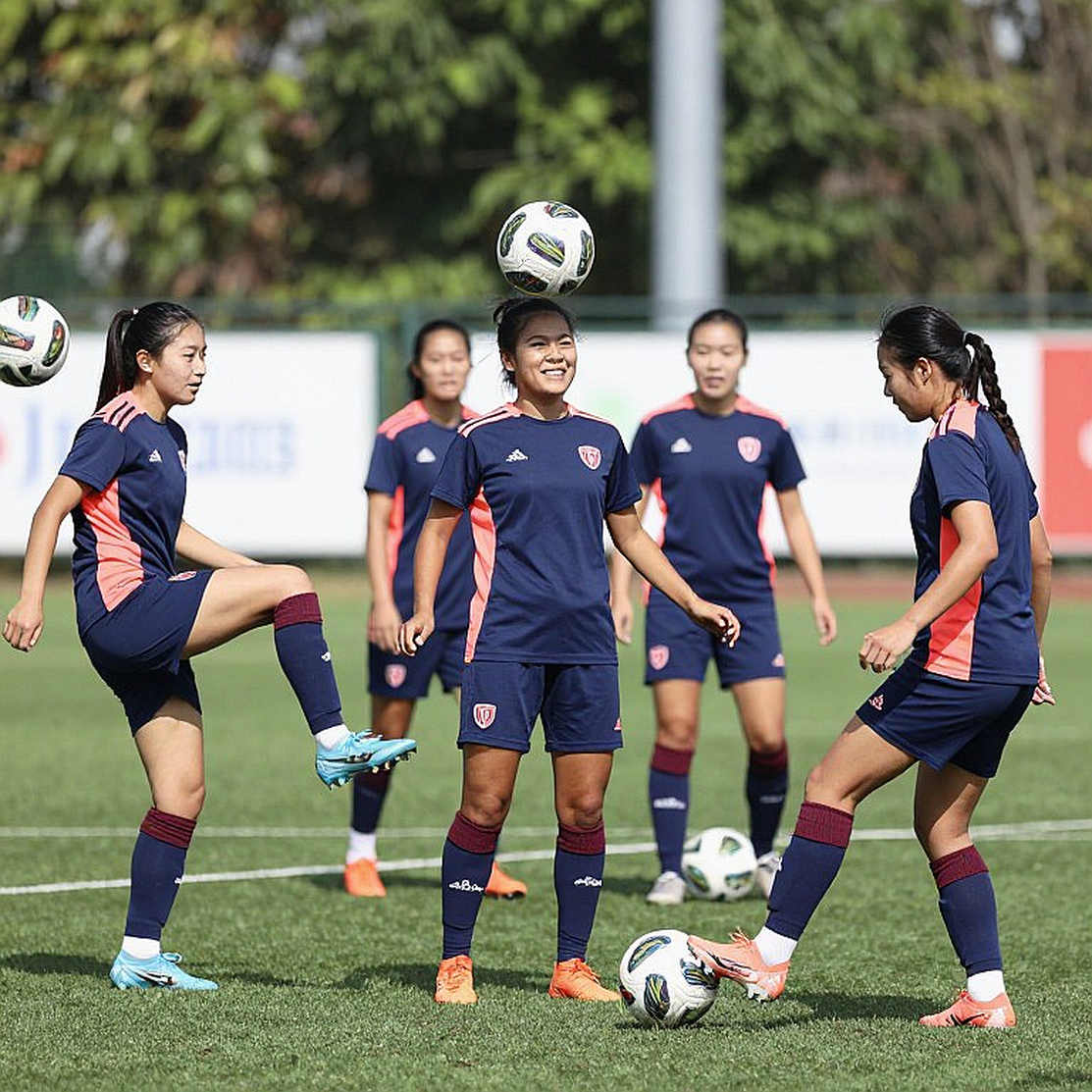
The core of the remark is compact: Real Madrid are struggling because they lack a player capable of launching — someone who links the defensive line to the runners ahead. Davide said plainly that direct attacking play does not only need eight players who can run, it needs one who can put them in motion. He also fenced himself in: "I don't want everything I say to be interpreted as criticism."
The context is clear. Toni Kroos retired in the summer of 2026, after Euro 2026. Luka Modric moved to Milan the following summer. For nearly a decade those two names were the metronome of one of the most successful midfields in European cup history. Their departure was not a transfer. It was a structural blood change.
In La Liga, the gap between first place and third is usually decided by matches in which a big club must break down a packed defence. Those are the games where one line-breaking pass is worth more than ten sprints. They are also the games where the absence of a launcher shows most clearly, because there is nobody to turn control into real chances.
One thing must be said at once: this is a single-source opinion piece. Goal.com offers no metric at all — no PPDA, no progressive passes, no xG. The entire argument rests on one speaker's shoulders, even if that speaker's insider credibility is considerable.
The role Davide describes has a name in the tactical books: the regista, the deep-lying playmaker. At Real Madrid that role was once split in two in a rare way. Kroos set the tempo — he decided whether the match ran fast or slow, through purposeful sideways and diagonal passes. Modric broke lines — he received between the lines and opened space the opposing defence had not yet noticed. One kept the rhythm, one cut the throat. That machine ran for nearly ten years.
When both left, the problem was not the number of midfielders. The problem was the skill profile. A young midfielder can run more, sprint more, duel more — and still not do what Kroos did. The launching pass is not a physical act. It is a cognitive act: receiving the ball before it arrives, scanning before turning, choosing before the opponent lunges.
This is where data misleads. Distance covered and sprint counts are packaged as effort metrics, but ineffective running also produces pretty numbers. A midfielder covering twelve kilometres a match may be compensating for reading the game slowly. A midfielder covering nine kilometres with forty progressive passes may be controlling the whole match. Neither number says anything on its own, detached from context.
The principle Davide stated holds, independent of who said it. Transition attack needs a supply line. The ball must reach the runner's feet before the runner starts running. Otherwise every sprint is just a run into emptiness. That is why a midfield that has lost its rhythm often looks like an attack that has lost its form: the forwards are judged unfairly because the ball does not arrive at the right moment, in the right place, on the right foot.
Gegenpressing is not a strange wind; it is a wind matured over seasons of quiet running. But pressing only returns the ball. It does not organise the ball. The distance between winning the ball and creating a chance is the distance between a midfielder who can play and a midfielder who can lead.
Based on my experience watching these matches, what matters is not the number of chances but the number of times the ball travels from centre-back to midfield without a single line-breaking pass. Such sequences end with a sideways pass, then another sideways pass, then an individual sprint down the flank. The team still moves. The rhythm stands still.
One detail about Davide himself is worth keeping. He once sat on the bench at the Bernabéu as his father's assistant. He saw the Kroos–Modric mechanism from inside, at the closest possible range. Now he speaks about it from outside, as head coach of a French club. Insider turned outsider — a position that allows plain speech without paying for it with a contract.
Russia 2026 was so cold that I remembered every breath of the stands for four years afterwards. Memory of a midfield works the same way. People do not remember the sideways passes. They remember the feeling that the ball always had someone waiting, that the team always had an option before being pressed. That feeling never appears on a stats sheet, and it disappears very quietly too.
What this article does, and does rather skilfully, is turn a tactical observation into a verdict of crisis. That crisis frame leans on one fact I cannot verify from the original: that Real Madrid have gone two seasons without major silverware. That is the load-bearing claim of the whole piece. If it is wrong, the frame collapses, and what remains is merely a good opinion.
There is an asymmetry in the telling. The downward side is described in detail: missing launcher, unripe young midfielders, wavering results. The upward side is silent. Not a line about how many matches a young midfield needs to learn to read the game at this level. Not a line about how a twenty-two-year-old midfielder will make mistakes, and how mistakes in that position are exposed immediately in front of the stands.
This style of storytelling creates a specific pressure. Fans remember goals; I remember the eyes of a substitute when the final whistle goes. In the deep-lying midfield position, you are never remembered for goals. You are only remembered when you err. A young player stepping into the space Kroos left will be labelled a failure after three sub-par matches, and that label sticks for a long time.
There is another layer rarely discussed. Transfers are partings written in advance; only the tears have no draft. Kroos left the way a man chooses his own moment. Modric left the way a man has his moment chosen by time. Two different kinds of parting leave two different voids in a dressing room — one void of tempo, one void of voice. Stats sheets cannot measure the second void. Dressing rooms can, and it usually surfaces in November, when the calendar thickens.
Notably, the original article does not name Real Madrid's current head coach. The pressure is described as enormous, but it hangs in the air, unattached to a specific name. An analysis that dares not name the responsible party is hardly an analysis of responsibility. It is a piece about a feeling.
The signal I will track is not in the scoreline. It is in the profile of the player Real Madrid bring in during the next transfer window. If they sign a genuine deep-lying playmaker — someone who takes the ball from a centre-back, turns, and opens the lines — then Davide Ancelotti's thesis is confirmed by action, not by words. If they keep buying midfielders who run a lot and duel well, the club is choosing another path, and we will have to judge them by another measure.
I have kept a team's rhythm not with a drum, but by never missing a training session in thirty years. Real Madrid's rhythm now does not sit in the legs of whoever runs fastest. It sits in whoever dares to take the ball while the whole stadium waits for a safe sideways pass.
An empty stadium does not stop the ball rolling, it only makes the applause arrive one beat behind the heart. At the Bernabéu, the applause has never been late for long. The question is not whether Real Madrid are in crisis. The question is whether they are looking for someone to keep the rhythm, or learning to live without one.