
The Cong Viettel lose 0-1 to Persib Bandung in ACL2: Discipline decides fate at Soreang
**Câu trả lời cốt lõi**: Thể Công Viettel thua Persib Bandung 0-1 tại AFC Champions League Two (ACL2), bảng E, sau bàn thua từ chấm phạt đền phút 41 do trung vệ nhập tịch Lương Chí Khải phạm lỗi. Đội bóng Việt Nam kết thúc trận với một thẻ đỏ của Paulinho. **Dữ kiện chính**: - Thể Công Viettel đứng thứ ba bảng E với 1 điểm sau 2 trận tại ACL2. - Persib Bandung dẫn đầu bảng E với 6 điểm; Melbourne Victory nhì với 4 điểm. - Bàn thắng duy nhất đến từ chấm phạt đền phút 41, do trọng tài Ahmed Eisa Darwish (UAE) chỉ định. - Cả hai đội đều nhận một thẻ đỏ: Paulinho (Viettel) và Marc Klok (Persib). - FC Seoul đứng cuối bảng E với 0 điểm sau thất bại 0-3 trước Melbourne Victory. **Nguồn**: Bản tin trận đấu khu vực về lượt trận bảng E AFC Champions League Two, ngày công bố không xác định trong nguồn gốc | Đối chiếu: VuaBong.vn **Hỏi đáp liên quan**: - Hỏi: Thể Công Viettel còn cơ hội đi tiếp không? Đáp: Còn, nếu họ tối đa hóa các trận sân nhà và tận dụng hai lượt đối đầu với FC Seoul, đội đang đứng cuối bảng với 0 điểm. - Hỏi: Vì sao Paulinho có thể vắng mặt ở lượt trận kế tiếp? Đáp: Thẻ đỏ trực tiếp tại cấp độ châu lục gần như chắc chắn kéo theo án treo giò tối thiểu một trận. - Hỏi: Kết quả này ảnh hưởng gì đến bóng đá Việt Nam? Đáp: Nó góp phần tiêu cực vào hệ số câu lạc bộ AFC của Việt Nam, yếu tố quyết định số suất tham dự các mùa sau.
Minute 41 at Si Jalak Harupat Stadium, Soreang, Indonesia. The score was still 0-0. A ball travelled into the Thể Công Viettel penalty area, naturalized centre-back Lương Chí Khải lunged in, and referee Ahmed Eisa Darwish of the United Arab Emirates immediately pointed to the spot. There was no lengthy VAR review, no meaningful protest, no players surrounding the referee. The penalty was converted, and the Group E fixture in the AFC Champions League Two ended in a 0-1 defeat for Vietnam's representative.
I watched that clip back several times. Not to find fault with an individual, but to understand a larger question: what truly decides the fate of a match in continental competition — quality, or the moments we can control? After more than two decades of following youth football and regional football, I have learned something rather cold: most defeats in Asia do not come from opponents being vastly superior. They come from moments in which a collective wounds itself.
Viewed through data, this match is a very clear case of that kind of defeat. And to analyse it properly, we must separate it from the easy emotions of an ordinary match report.

Context: A competition called by the wrong name
First, the name. Many regional outlets called this tournament the "Asian Cup 2" — an inaccurate label. The correct designation is the AFC Champions League Two, abbreviated ACL2, Asia's second-tier continental club competition, split into Eastern and Western regions. It is the successor to the AFC Cup after the Asian Football Confederation restructured its club competitions. A report getting the competition's name wrong is not a trivial detail. It is a signal about editorial precision and, more importantly, a signal about how much weight to place on the same report's subjective judgments.
Thể Công Viettel, the club bearing the name of the military-linked telecom group Viettel, entered Group E as Vietnam's representative. The opponent was Persib Bandung, one of the clubs with the largest and most intense supporter bases in Southeast Asia. Si Jalak Harupat was chosen as the venue, and that choice itself says a great deal: Persib's usual home ground cannot always accommodate the fans who want to attend. When a club must move to a larger stadium to meet demand, it signals an enormous atmospheric presence — and for a visiting side, a psychological disadvantage that is far from trivial.
After two rounds, Group E showed a fairly clear hierarchy. Persib Bandung led with 6 points from two wins. Melbourne Victory sat second on 4 points after a 3-0 win over FC Seoul. Thể Công Viettel were third with 1 point. FC Seoul, a K League giant, surprisingly sat bottom on 0. That 6-4-1-0 arithmetic is the compass for everything that follows.
Core analysis: The concession was not tactical, it was a decision
The first thing I want to separate from the original report is the story of concentration. The report described Lương Chí Khải's 41st-minute foul as "naive" and the concession as "avoidable." That is not the language of tactical analysis; it is the language of a decision-making error. And read with a professional eye, it points to one thing immediately: this defeat belongs to discipline and decision-making under pressure, not to any structural inferiority.
Note the timing. The 41st minute, just before half-time. This is the period in which away teams usually play most tightly, because carrying a draw into the dressing room is a major psychological advantage. A challenge inside the box at exactly that moment — with nothing yet lost in the match — signals a decision pushed faster than the required tempo. In professional football, this is called a moment burned by pace and atmosphere, not by an opponent.
One further detail the report leaves, though without emphasis: Thể Công Viettel were described as having been "ready to trade attacks with the host." This is more important than it appears. Trading attacks with the home side on the ground of a team with a vast crowd means accepting an open match, accepting both the chances and the exposure. That may have been a deliberate tactical choice, or it may have been a consequence of the visitors being drawn into the match's rhythm. The report does not give us enough to distinguish the two — no formation, no possession figures, no expected goals, no pass-completion data. That absence of data is, to me, itself a reliable signal: it tells us this is an event record, not an analysis.

So what can be firmly established as the core? First, the Vietnamese side scored no goals. Second, the only concession came from the penalty spot. Third, they finished the match with a red card. Those three facts combine into a very specific portrait: a team good enough not to be torn apart, but not cold enough to protect itself.
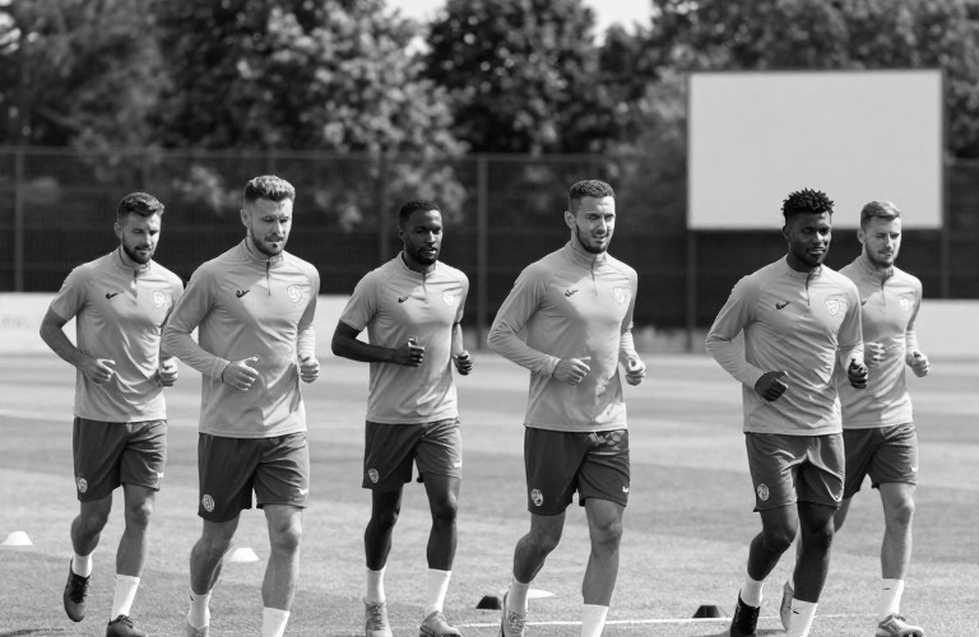
The red card for Paulinho, Viettel's foreign forward, in the second half tells a similar story in reverse. If the 41st-minute concession was a moment of lost defensive concentration, the red card was a moment of lost emotional control. In continental competition, where the pace of contact is higher and referees less forgiving, letting emotion override reason is a predictable category of risk. Notably, Persib also lost a man: Marc Klok, their captain and Netherlands-origin naturalized player, was also sent off. The match had become a contest of physicality and tempo, exactly in keeping with an away trip to Indonesia.
Looking at the squads both sides fielded, a telling pattern emerges. Thể Công Viettel used a naturalized centre-back, Lương Chí Khải, as a first-choice starter. Persib used Marc Klok, also naturalized. This reflects a regional trend: Southeast Asian clubs compensating for domestic development gaps through naturalization and imports. That trend has clear economic logic — it is faster and cheaper in time than waiting for a generation of players to mature — but it also raises a question of sustainability.
Contrarian angle: Which frame surrounds this defeat?
Here I want to say plainly something regional reports often avoid: framing this as "a Vietnamese club loses in Asia" easily leads readers to a wrong conclusion about the nature of the problem. Because looking at the 1 point from 2 matches, the easy thought is that Vietnam's representative is weaker than its opponents. But the data in Group E tells a different, more complex story: FC Seoul, a club among Korea's elite, sits bottom on 0 points. Melbourne Victory, an A-League side, just won 3-0. Persib, an Indonesian club, leads. That order shows something long-time Southeast Asian observers already know: the gap between ASEAN clubs and K League or A-League sides in this competition is not fixed, and home advantage plays a very large role.
In other words, the defeat at Soreang is not evidence of a gap in quality. It is evidence of a failure in situational management. The distinction matters, because it determines how we treat the problem. If this were a quality problem, the solution would be to buy better players. If it is a discipline and decision-making problem, the solution lies in coaching, in dressing-room culture, and in repeatedly rehearsed situational drills.
There is another detail I always watch in matches like this: the referee. Ahmed Eisa Darwish pointed to the spot decisively, and no VAR controversy was recorded. This matters, because it removes any possibility of blaming officiating. Across years of watching VAR, I have come to see that the space for subjective judgment within the system is larger than people think, and that the concept of a "clear and obvious error" is itself an ambiguous clause. But in this specific case, that ambiguity was not triggered. The decision was clear, and the responsibility lay with the player.
So where does the contrarian angle truly lie? It lies here: this defeat may actually be a good thing, if it forces the club to confront its discipline problem before it is too late. A heavy defeat from being overrun would send people looking for the wrong solution — buying more players. A narrow, self-inflicted defeat can point precisely at what needs fixing: the ability to keep a cool head in decisive moments. In my profession, we call that a useful defeat. It hurts, but it points at exactly the right spot.
Takeaway: When the ball stops rolling
One thing I always remind myself when writing about a Vietnamese club's defeat in continental competition: do not turn analysis into consolation, and do not turn it into an indictment. Both are ways of evading the truth.
The truth here is fairly simple. Thể Công Viettel sit third in Group E with 1 point from two matches. They retain every chance, because the group is unresolved and because a strong club like FC Seoul sits below them. The most realistic path to progression is maximising home fixtures and making the most of the two meetings with FC Seoul itself. But that path narrows sharply if Paulinho must sit out at least one match through suspension — near-certain for a straight red at continental level.
What is more worrying is repetition. In a single match, this team produced two separate disciplinary incidents: a naive foul inside the box, and a red card. Two incidents, two different causes, but the same root: loss of control in a high-resistance environment. If it happens once, we can call it an accident. If it is a pattern, we must call it by its name.
And there is a deeper layer that match reports usually skip. A club's performance in ACL2 is not only that club's story. It contributes to the club coefficient of Vietnamese football as a whole on the Asian Football Confederation's rankings, and that coefficient determines future qualification slots. One point from two matches is a small debt, but it is written into a shared ledger. That is why matches like this, though only one match, carry meaning beyond one match.
I have spent many years looking at gems buried in the mud — young players who never stood on a glass shelf. The gem is not on the glass shelf; it lies in the mud. But Lương Chí Khải's story in the 41st minute reminds me of something else: when a player steps into a decisive moment, mud and glass shelves become meaningless. Only one question remains — can he keep a cool head?
Every talent is a layer of sediment, and only patience can peel back each layer to reveal the gem. And every continental defeat is a layer of sediment too. If Thể Công Viettel sit down and peel back each layer — the defensive layer, the emotional layer, the card-management layer — then the defeat at Soreang could become one of the most valuable lessons of their season. If they simply read it as bad news and move on, it will be a forgotten scoreline.
When the ball stops rolling, we finally hear the voice of memory. And the memory of Vietnamese football in Asian competition, across generations, is not short of defeats that could have been avoided. The question was never whether we have enough talent. The question is whether we have enough discipline to keep what we already have.